
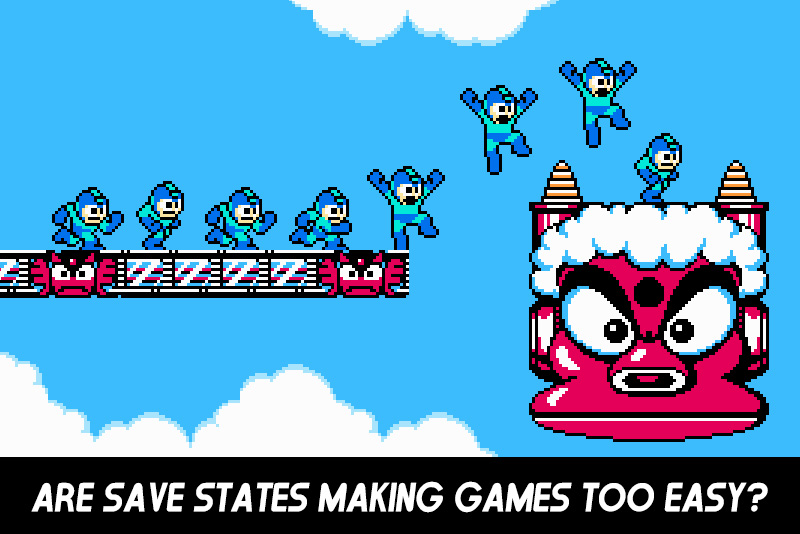
The accusation has followed save states around for a quarter of a century: they make retro games too easy, they make modern gamers weak, they turn sacred challenges into content to be scrubbed through with a safety net. It was already the argument when this site first raised the question in 2014, prompted by Nintendo’s own marketing — the 3DS Virtual Console’s Restore Points were being sold, cheerfully, as a way to rewind your mistakes. A decade of re-releases, mini consoles and subscription libraries later, save states are not a shady emulator feature any more. They are the default way most people now experience most classic games. So let us finally give the question a fair trial.
A brief history of cheating time

Save states were born in emulation’s scrappy early days. By the late nineties, programs like ZSNES let players snapshot a game’s entire memory to disk and restore it at will — a trick the original hardware could never perform. Through the 2000s the feature spread exactly as fast as emulation did, acquiring a slightly contraband reputation: real fans, the thinking went, used passwords and battery saves like the designers intended.
Then the rights holders adopted it. Nintendo built Restore Points into the 3DS and Wii U Virtual Consoles. The NES and SNES Classic mini consoles made suspend points a headline feature. Flash cartridges brought states to original hardware. Nintendo Switch Online’s classic libraries ship with rewind built in — hold a button and watch your mistake unhappen. Modern re-releases go further: the Mega Man Legacy Collection added a rewind button, and retro compilations now advertise challenge modes built around the assumption that states exist. When Nintendo itself markets the safety net, the contraband era is over.
The case for the prosecution
The purist argument deserves its strongest form, because it is not really about difficulty. Classic games were designed as economies of tension. Limited lives, sparse checkpoints and long boss run-ups were not (only) cruelty or coin-op inheritance — they shaped how a game felt. The final level of a hard platformer is a different experience when failure costs you twenty minutes than when it costs you a button press. Stakes manufacture meaning: fear of the pit is what makes clearing it euphoric. Save states anywhere, used without restraint, quietly delete that emotional arc and replace mastery with persistence. The game becomes a document you page through rather than a mountain you climb.
There is a subtler charge too. States teach habits — reckless play, save-scumming before every jump — that make players worse at the games themselves. A generation raised on rewind, the argument goes, never develops the pattern recognition, patience and route-planning that hard games were designed to instil. The skill ceiling of the medium drops to meet the floor.
The case for the defence
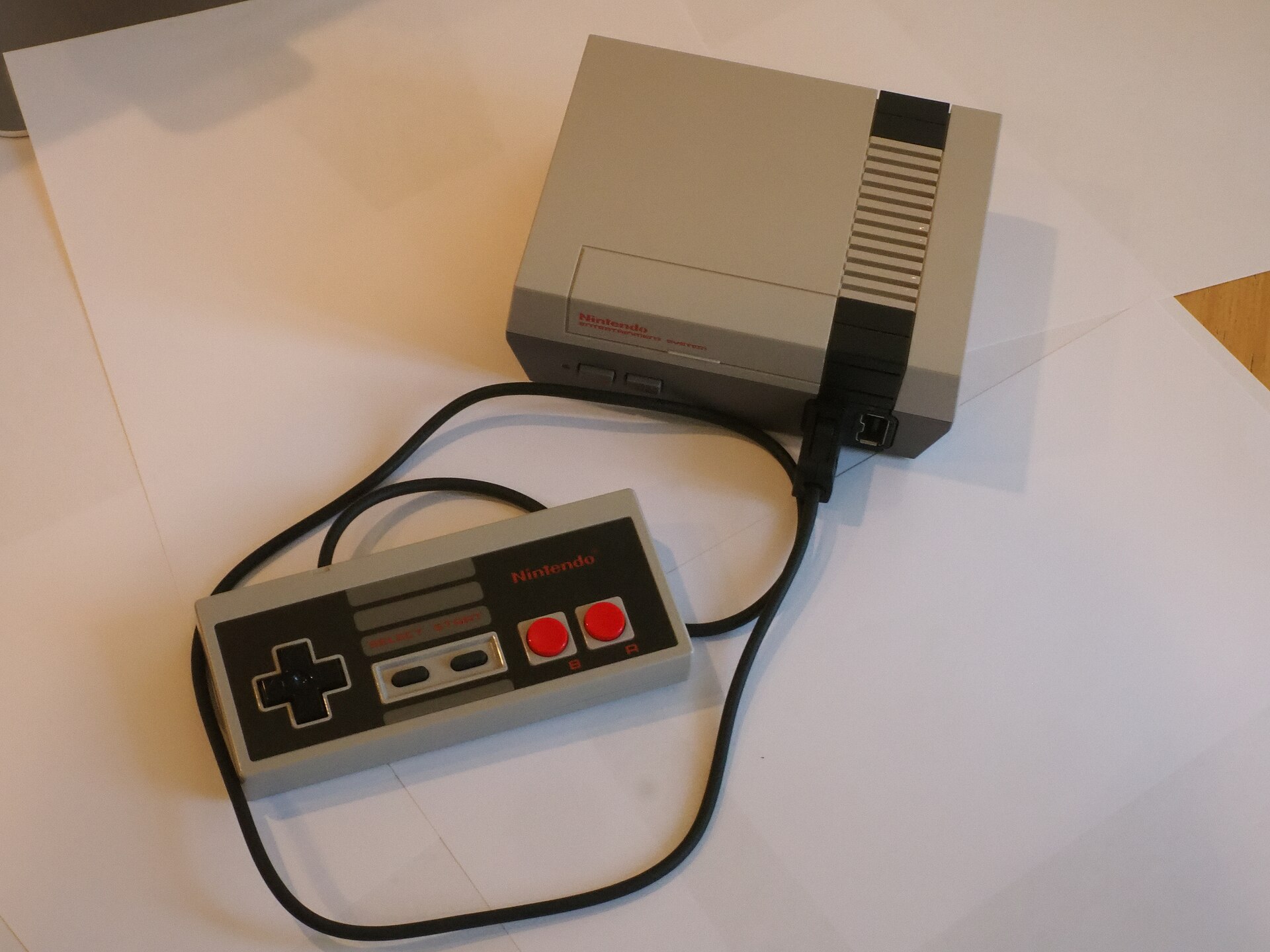
Begin with a demographic fact: the audience for retro games in 2026 is largely adults with jobs, children and ninety free minutes a week. The twelve-year-old who could throw a whole Saturday at Battletoads is now a forty-year-old who gets one evening. For that player, the choice is not “save states or the pure experience” — it is “save states or never finishing the game at all.” A feature that converts abandonment into completion is not weakening the audience. It is the only reason the audience still exists.
Then consider what states actually unlock. Speedrunners use them as laboratory equipment, isolating a single jump and repeating it two hundred times to perfect a technique they then perform unaided, live, under pressure — state-assisted practice producing the purest unaided play in the medium’s history. Tool-assisted speedruns use frame-by-frame states to probe a game’s physics so deeply they amount to research papers. Accessibility advocates make the simplest point of all: players with motor impairments, fatigue conditions or slower reaction times were locked out of entire genres by design assumptions made in 1989. Save states are, for them, not a crutch but a door.
And the designers’ intent argument cuts both ways. Many classics were made brutal for reasons nobody defends now — rental markets that punished short games, arcade economics transplanted to the living room, difficulty tuned in a fortnight before mastering. Treating every checkpoint gap in 1991 as sacred intent is less like respecting art and more like respecting an accident.
We were never pure to begin with
The prosecution’s case quietly depends on a golden age that did not exist. The supposedly uncompromised retro era was saturated with sanctioned shortcuts. Passwords were printed in magazines and passed around playgrounds like scripture. The Game Genie — a cartridge whose entire purpose was rewriting games’ rules — sold in the millions and survived a lawsuit from Nintendo itself. Strategy guides walked you past every trap. Strategy itself aside, plenty of classics shipped with level selects, debug menus and thirty-life codes that the developers put there on purpose and the magazines happily published. The Konami Code is not a cheat that corrupted a generation; it is a nursery rhyme. Retro gaming’s past was never a monastery. It was a playground with the fence half-open, and everyone knew it.
Modern game design has quietly settled the argument, too, by absorbing it. When Celeste — one of the most demanding platformers ever made — shipped with an Assist Mode offering invincibility and infinite stamina, it framed the options not as cheating but as hospitality: the mountain is the same, the climbing gear is your business. Remasters now routinely mix the eras, pairing original difficulty with rewind and state support, and letting players graduate between them. That graduation is the part of the debate nobody models. Plenty of players begin a classic with states as scaffolding, then quietly take the scaffolding down — finishing Castlevania assisted in March and unaided by Christmas. The safety net does not just catch people. It teaches them to walk the wire.
The verdict: a tool, not a temptation
Here is the distinction the whole debate keeps missing: a save state is not a way of playing. It is a way of choosing how to play, and the choosing belongs to the person holding the controller. The player who states their way through Ghosts ‘n Goblins has had a lesser experience than the player who masters it — and a greater one than the player who, without states, would have quit at the second level and never seen the rest of a masterpiece. Leaderboards and speedrun categories already handle the fairness question with surgical precision: state-assisted and unaided runs are simply different disciplines, like bouldering with and without ropes.
What has actually changed since 2014 is the framing. Nintendo no longer apologises for Restore Points; it prints them on the box. The culture followed: “weak gamers” turned out to be busy gamers, disabled gamers, curious gamers — people for whom the safety net is the difference between a hobby kept and a hobby lost. The games, meanwhile, have not got easier. Battletoads is exactly as savage as it was in 1991. The turbo tunnel does not care about your restore points; it merely permits you to reach it a second time before bed. Save states did not weaken retro gaming. They kept it alive long enough for a new generation to discover how strong it always was.