

Before there were apps, there were Game & Watch games: single-game LCD handhelds, each one a tiny marvel of beeps, silhouettes and ruthless high-score chasing. Game & Watch Gallery 2 gathers six of them onto one Game Boy cartridge, wraps them in a museum of extras, and then — this is the clever part — remakes every one with Mario characters for anyone who finds the originals a little austere. It is one of the most generous retro collections Nintendo has ever put out, and it has lost almost none of its charm.
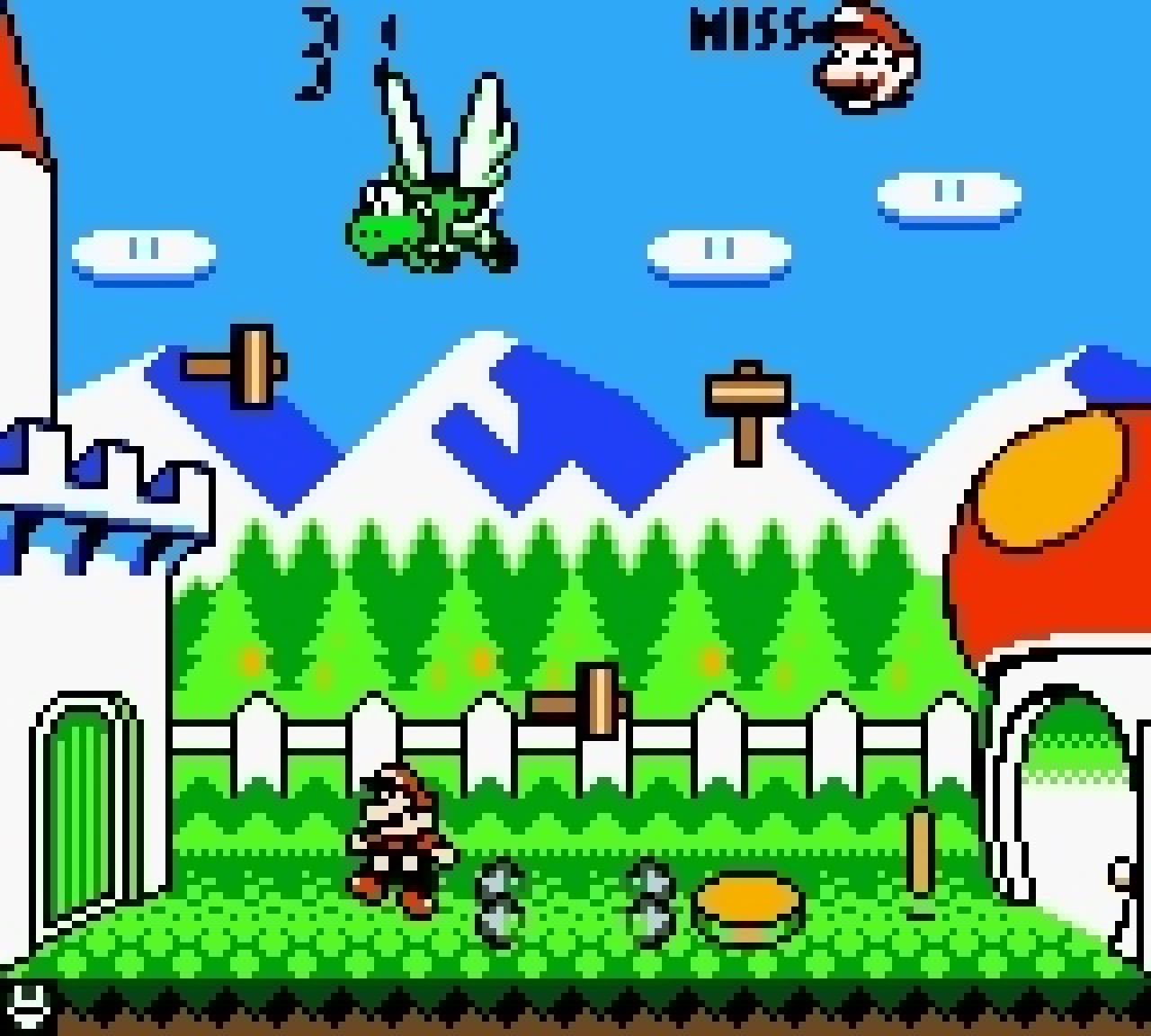
Gallery 2 in action: the classics, redrawn. Screenshot via Wikipedia
What’s in the box
The line-up is Parachute, Helmet, Chef, Vermin and Donkey Kong, with Ball — the very first Game & Watch game, from 1980 — tucked away as an unlockable. The idea in every one is score attack in its purest form. Catch the parachutists before they hit the water. Dodge the falling tools and get through the door. Flip food into the pan and keep it off the floor. Whack the animals away from the garden. Every 200 points earns a star, stars unlock the extras, and the extras keep you playing long after you should have put the thing down.
Each game comes in two flavours. Classic mode is the LCD original, faithfully reproduced down to the ghost images of every sprite position on the unlit display — demanding, unforgiving, and completely addictive once a high score gets under your skin. Modern mode redraws everything with Mario, Luigi, Peach, Yoshi and Bowser in the starring roles, adds little twists of its own, and is altogether gentler — though several of the modern games start at a crawl before the pace picks up, and a couple outstay their welcome on the easiest setting before they bare their teeth.
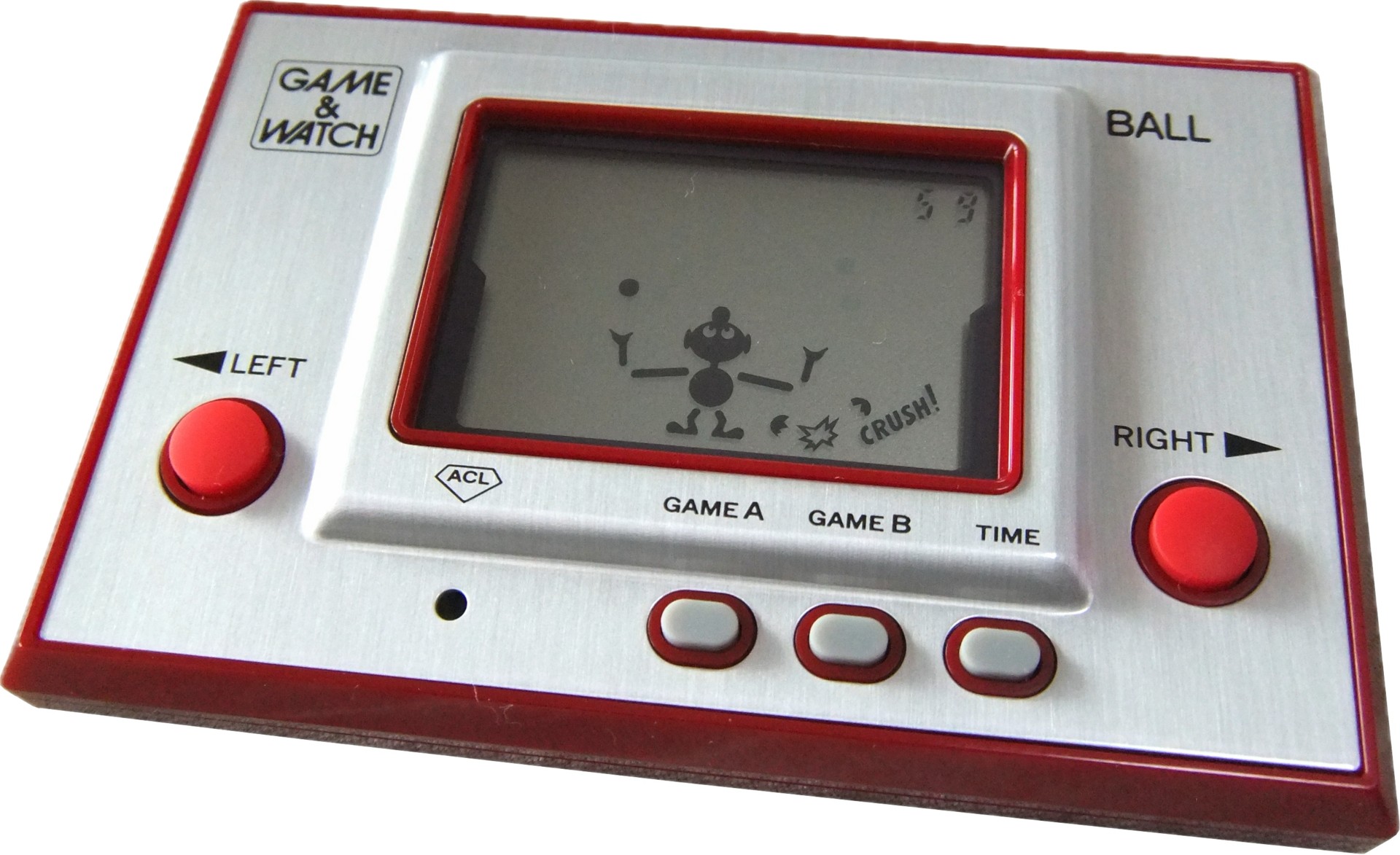
Where it all started: Gunpei Yokoi’s Game & Watch line, 1980 onwards. Photo via Wikimedia Commons
The extras make it
What lifts Gallery 2 above a simple compilation is everything around the games. There is a museum that walks you through the Game & Watch line’s history, a music room for the (genuinely excellent) soundtrack, and a gallery of unlockables that rewards the star-collecting habit the games instil. Nintendo understood, even in 1997, that these little LCD toys were history worth preserving, and the presentation treats them that way — with affection rather than irony.
And the games themselves? They are as old as video games get — older than most of the people playing them — and the design is so stripped-back that there is nothing in them that can date. Move, catch, dodge, whack. The classic modes are brutally hard to score big on; that was true in 1981 and it is true now, and it is exactly why a three-minute session turns into an hour of “one more go”. The modern modes are the friendly door into the same addiction.
How to play it in 2014
The original cartridge plays happily on anything from a Game Boy Color to a Game Boy Advance, and second-hand copies remain cheap. The tidiest route, though, is the 3DS Virtual Console release, which puts the collection on a backlit screen with save states for your star progress. Either way, this is a few pounds for six pieces of gaming history, presented by people who clearly loved them.
Verdict: A model retro collection. Six tiny masterpieces of design economy, two ways to play each, and a museum’s worth of extras around them. The classic modes will humble you; the modern modes will charm you; the star counter will keep you. Essential for the handheld historian.
This review replaces our original August 2014 post, which carried a review by Conrad Garcia-Hauzer of Retro Garden — our thanks to him. The original comments are preserved below.
Great post. I love the older retro games. Those screen shots of Mario are so old school. 🙂