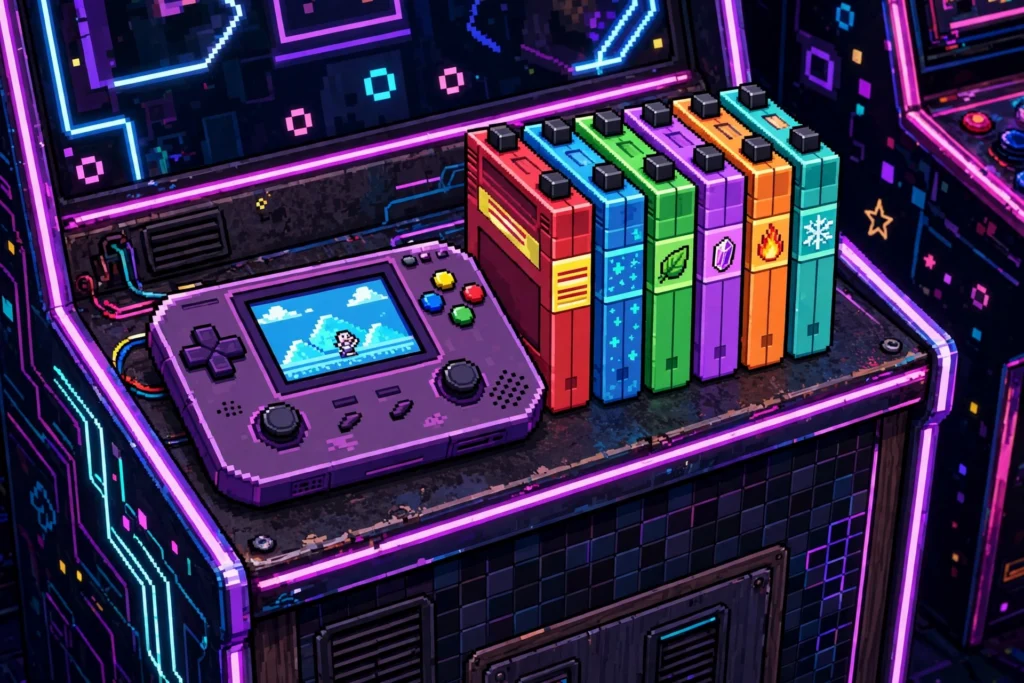
The Evercade pitch is the opposite of everything else in modern retro gaming. No downloads, no accounts, no storefront that can be switched off: you buy a physical cartridge, in a box, with a manual, and the games on it are yours in the most old-fashioned sense. Blaze Entertainment has built a library of sixty-plus cartridges that way — licensed collections spanning arcade, console and home-computer history — and the catalogue is now big enough that a new owner faces a real question: where do you start?
Here. These are the ten Evercade cartridges to buy first, ranked by the only metrics that matter for a physical collection: how good the games are, how well they play on Evercade hardware, and how much history each little cart carries. Every cartridge here works across the Evercade family — the original handheld, the EXP and EXP-R, the VS and VS-R home consoles and the bartop and mini arcade machines — unless noted. Prices hover around the usual £18/$20 per cart, which makes most of these the cheapest legal way to own what’s on them.
The ten to buy first
10. Data East Collection 1
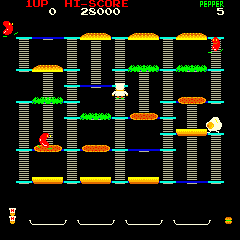
Start the collection where so many arcade memories started: with Data East. BurgerTime is the headliner — Peter Pepper sprinting across ingredient scaffolding, dropping burger layers on pursuing sausages — and it remains one of the purest score-chasers of the golden age. Around it sits a cross-section of Data East’s catalogue: the platforming of Joe & Mac, the curious Bad Dudes energy, and enough oddities to remind you this was the company that never met a strange idea it wouldn’t ship.
As a first Evercade purchase it’s a sampler of everything the system does well: short, sharp arcade games that suit a handheld, save states that respect your time, and a manual that treats them like history rather than ROM filler.
9. Worms Collection 1
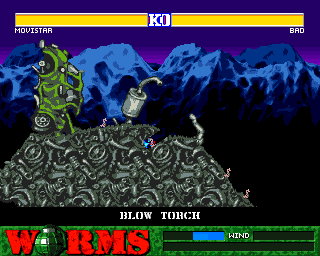
Some cartridges are history lessons. This one is a party. Worms Collection 1 brings together the original Worms — Team17’s turn-based artillery masterpiece, where heavily armed invertebrates reduce a landscape to craters one bazooka at a time — with Worms Armageddon, for many fans the series’ peak, and Worms Blast rounding out the package.
On the VS consoles in particular this is the cart that never leaves the machine when friends are over. Pass-the-controller Worms on a TV, with save states and modern display options, is as close to a guaranteed good evening as retro gaming offers — and the original game’s hand-drawn chaos still looks superb on the EXP screen.
8. Codemasters Collection 1
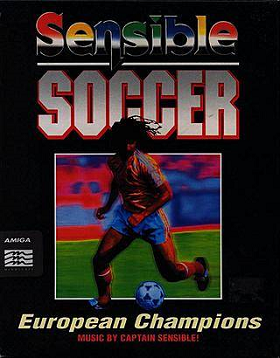
For British and European players of a certain age, this cartridge is a time machine with a contents list: Sensible Soccer, the definitive top-down football game — all swerve, speed and aftertouch — alongside Micro Machines, Cannon Fodder’s tiny soldiers, the Dizzy-adjacent budget charm and deep cuts from the days when Codemasters ruled the £3.99 shelf and the bedroom-coder charts alike.
What earns it a top-ten slot is range. Sports, racing, war and whimsy on one cart, much of it from the Amiga and Mega Drive scene that American collections routinely ignore. If your retro heart beats in PAL, buy this one early.
7. Interplay Collection 1
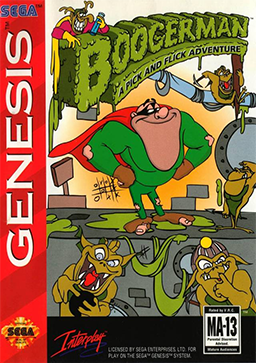
Earthworm Jim is the name on the marquee — Shiny’s surreal run-and-gun, still one of the most beautifully animated games of the 16-bit era — but Interplay Collection 1 is smarter than a one-hit cart. Boogerman brings its proudly disgusting pick-and-flick platforming, ClayFighter contributes claymation fighting-game weirdness, and the rest of the lineup digs into Interplay’s 8 and 16-bit back catalogue with a curator’s eye.
This is the cartridge that best shows off Evercade’s licensing hustle: games that were tangled in rights limbo for years, back on a shelf, in a box, for the price of a takeaway. Jim alone justifies it. The company he keeps makes it essential.
6. Bitmap Brothers Collection 1
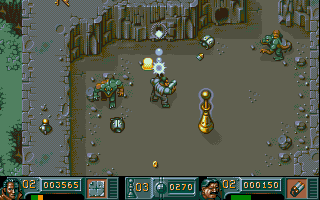
The Bitmap Brothers were the rock stars of British game development — sunglasses, magazine covers, and a house style of chrome, steampunk and immaculate pixel art. Their first Evercade collection is a greatest hits that actually deserves the name: The Chaos Engine’s co-op Victorian shooting, Speedball 2’s brutal future sport, Xenon 2’s shooter grandeur and the strategy of Gods and Magic Pockets-era experiments around them.
Two-player Chaos Engine on a VS is a genuine event — a game designed for shared screens, back on a shared screen. If the Amiga years mean anything to you, this cart isn’t optional. If they don’t, it’s the best introduction to them Evercade sells.
5. Technos Arcade 1
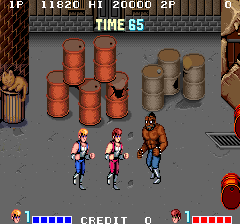
A note on formats: the Arcade collections are built for Evercade’s arcade-friendly hardware — the VS consoles, EXP handhelds and the Alpha bartops — and Technos Arcade 1 is the strongest argument for them. Double Dragon in its arcade form is the headliner: the 1987 original that turned side-scrolling brawling into an industry, elbow drops and all, joined by its sequels and stablemates from the company that essentially invented the genre’s grammar.
Arcade versions matter here — these are not the compromised home ports many of us grew up with. They’re the real boards’ worth of pixels, with dip-switch-era difficulty intact and save states to save your wallet the quarters.
4. Duke Nukem Collection 1
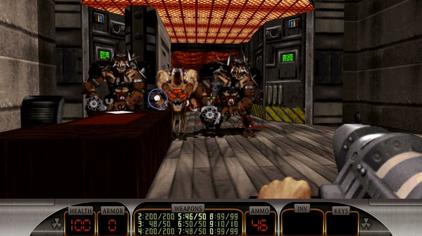
The most modern-feeling cart on this list is built around a 1996 shooter. Duke Nukem Collection 1 pairs freshly remastered versions of the original Duke Nukem and Duke Nukem II platformers — rebuilt for Evercade with new features — with Duke Nukem 3D, the Build-engine classic that made interactive toilets and shrink rays part of FPS history.
It earns its ranking for effort. Blaze could have dumped ROMs; instead the early games got genuine restoration work, and 3D on a cartridge-based handheld ecosystem still feels faintly impossible in the best way. Come get some — legally, physically, and without a single download.
3. Atari Arcade 1
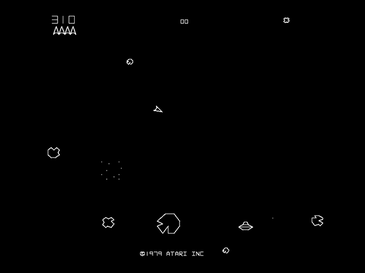
If Technos Arcade 1 is about the brawler, Atari Arcade 1 is about the foundations of the entire medium. Asteroids, Centipede, Lunar Lander, Warlords and their golden-age siblings — the games that built the arcade industry between 1979 and 1983 — collected with the care of a museum exhibit and the convenience of a cartridge.
Warlords alone, in four-player form on a VS, justifies the price: it remains one of the greatest party games ever coded. And there’s a particular pleasure in playing the oldest games on this list on the newest hardware Blaze makes — vector-sharp, pause anywhere, no cabinet required. History, playable.
2. Namco Museum Collection 1
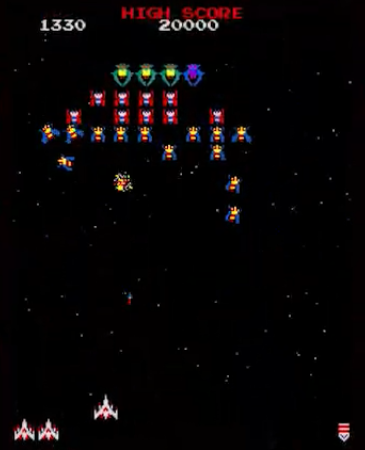
It was the first Evercade cartridge, and two hardware generations later it might still be the best value in the catalogue. Namco Museum Collection 1 leads with Pac-Man — the actual arcade Pac-Man — and then refuses to coast: Galaga, Dig Dug, Xevious, Galaxian, Mappy and a run of deeper Namco cuts fill out a lineup with almost no filler.
Galaga deserves its screenshot above: the dual-fighter rescue mechanic is still one of the great risk-reward systems in arcade design, and on the EXP’s screen, in Tate-friendly form, it’s sublime. Every format has a flagship cartridge. For Evercade, this is the one they’ll be reprinting for years — start your collection where the collection started.
1. Tomb Raider Collection 1
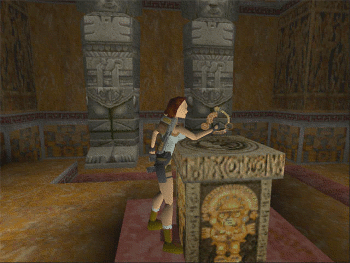
The cartridge that proved Evercade could play in the big leagues. Tomb Raider Collection 1 puts Lara Croft’s first three adventures — the 1996 original that redefined 3D gaming, plus Tomb Raider II and III — onto a single physical cart, licensed, complete, and playable across the Evercade line. A few years ago these games were a licensing rumour. Now they’re a shelf item.
Why number one? Scale, significance and signal. Scale: three substantial adventures where most carts offer arcade sessions. Significance: the original Tomb Raider is one of the most important games ever made, and its tank controls and grid-based climbing have aged into a deliberate, almost puzzle-like pleasure. Signal: if Blaze can land Tomb Raider, the Evercade library’s ceiling is nowhere in sight. Every collection should start with a statement. This is the statement.
Before you buy: three Evercade ground rules
Check the range, not just the game. Evercade cartridges come in colour-coded families. The red-boxed collections — most of this list — are the home and console carts, built for the handhelds and the VS consoles alike. The purple Arcade range, including Technos Arcade 1 and Atari Arcade 1 above, is made for the VS, VS-R, EXP, EXP-R and the Alpha bartops, where the arcade aspect ratios and controls get their due. The box always shows which systems a cart supports; a minute checking beats a disappointed evening.
Buy the headliners first, the deep cuts second. Blaze keeps the flagship cartridges in print and rotates the niche ones, so the sensible order is the order of this list: secure the Namcos, Ataris and Tomb Raiders while they’re at standard price, then hunt the homebrew and single-publisher carts, which are the ones that quietly drift out of stock and onto the second-hand market at silly prices.
Update once, then forget about it. Newer Evercade hardware updates its firmware over Wi-Fi and occasionally a cartridge gains fixes or bonus unlocks — Duke Nukem’s remasters are the famous example. Update when a new cart arrives, then get back to the system’s whole point: no storefront, no subscription, just a shelf that keeps growing. Ten carts in, you’ll understand the appeal. Sixty in, you’ll need a bigger shelf.
A sixty-cart library is a lot of shelf. These ten are the shelf’s foundation — the arcade, the Amiga years, the 16-bit wars and Lara Croft, all in boxes.
Build outward from here and the Evercade reveals its real strength: it’s the only modern retro ecosystem that still believes a game should be a thing you own, lend, shelve and hand down. The next ten — the homebrew collections, the arcade sequels, the computer carts — are a list for another day. For today: start with these, and start with Lara.