Everyone knows the Super Nintendo’s headline act. Super Metroid. A Link to the Past. Chrono Trigger. Super Mario World. The SNES library is so top-heavy with masterpieces that a game could be genuinely excellent — original, polished, ahead of its time — and still end up as a footnote, buried under the weight of the most famous catalogue in gaming history.
This list is for the footnotes. Twelve SNES games that were overlooked because they launched late, launched only in Japan or Europe, launched with a rental-only whisper, or simply launched in the same season as something with a bigger marketing budget. Every one of them holds up in 2026. Every one of them is easier to play legally today — through re-releases, fan translations and modern collections — than it was on release day. And yes, before the comments start: EarthBound is not here. EarthBound has a cult the size of a small country now. These twelve are still waiting for theirs.
The countdown
12. Metal Warriors (1995)
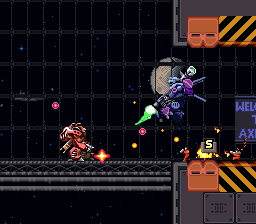
LucasArts and Konami took the Assault Suits formula — giant anime mechs, weighty movement, destructible everything — and built the SNES’s best mech game around one brilliant idea: your pilot is not the mech. Take too much damage and you eject, a tiny human with a jetpack and a pistol, suddenly very aware of how big everything else is. Find an empty suit — a spider-legged walker, a flying unit, a rolling ball of guns — climb in, and the fight changes completely.
It also had a split-screen versus mode that ruined friendships years before that became a genre. Metal Warriors sold poorly, never left North America, and complete copies now change hands for silly money. Play it however you can: nothing else on the system feels like it.
11. DoReMi Fantasy: Milon’s DokiDoki Adventure (1996)
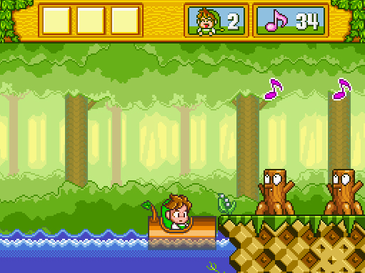
Milon’s Secret Castle on the NES was a famously baffling game. Its Super Famicom sequel is the opposite: a warm, generous, storybook platformer where Milon blows bubbles to trap enemies, collects musical notes to restore colour and sound to a fairy kingdom, and bounces through some of the prettiest 2D art the SNES ever produced. Every world is a fairy tale with its saturation turned up.
Hudson never released it in the West in the cartridge era — it finally arrived via the Wii Virtual Console in 2008, complete with an official translation it had waited twelve years for. If you like your platformers kind rather than cruel, this is the SNES’s best-kept secret.
10. Wild Guns (1994)
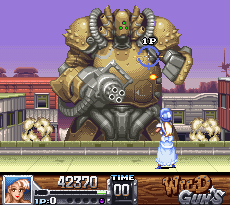
Natsume’s Wild Guns is a cabal-style shooting gallery — you stand in the foreground, move a crosshair, and dodge-roll while the background tries to kill you — dressed in the best steampunk-Western art direction on the system. Clint and Annie blast robot gunslingers, armoured trains and a final boss that fills half the screen, across levels that demolish themselves around you as you shoot.
It was a late, small release that reviewers loved and shops barely stocked, which is why original cartridges became collector bait. The excellent Reloaded remake finally fixed the availability problem. Either version: this is forty minutes of concentrated arcade joy.
9. Hagane: The Final Conflict (1995)
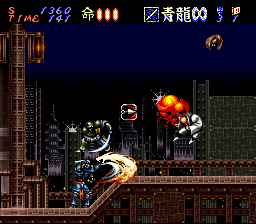
A cyborg ninja with a sword, a grappling chain, grenades and a somersault that doubles as an attack, sprinting through a techno-feudal Japan that wants him dead. Hagane plays like Shinobi and Strider had a child raised by Treasure: relentless, stylish, and hard enough that the somersault’s invincibility frames are not a trick — they’re a survival tool.
Its fame is partly an accident of distribution: in North America it was sold largely through rental chains, in tiny numbers, so the cartridge became one of the SNES’s genuine holy grails. Strip the price tag away and the game underneath still earns the reputation — this is top-tier 16-bit action that almost nobody got to rent.
8. ActRaiser (1990)
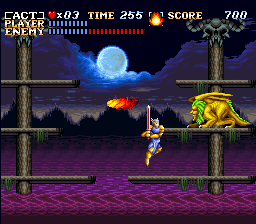
Hear me out. ActRaiser was a launch-window hit in 1990, but mention it today and you’ll get blank looks from people who can name every SNES RPG hero. That’s a crime, because Quintet’s debut is still one of the most original games ever made: you are a god. Half the game is side-scrolling action, descending to Earth to clear the monsters out. The other half is a gentle city-builder — you direct your people’s growth, shoot down demons harassing them, cause earthquakes to clear farmland, and listen to their prayers.
Yuzo Koshiro’s orchestral score, unheard of on a cartridge at the time, ties it together. The Renaissance remake added depth; the original’s simplicity is its purity. A masterpiece hiding in plain sight.
7. Secret of Evermore (1995)
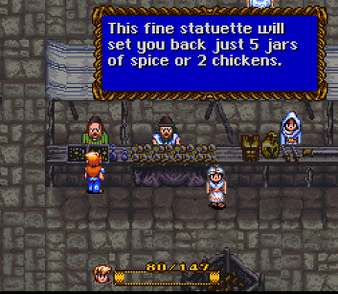
The only RPG Square of America ever built in-house got an unfair reputation at birth — the playground rumour was that it somehow cost the West a different game, and it spent thirty years apologising for existing. Forget the rumour. Secret of Evermore is a witty, inventive action-RPG in the Secret of Mana mould: a boy and his shapeshifting dog blunder through a world built from B-movie eras — prehistory, antiquity, a gothic medieval age, a robot future — trading bones and beads as currency and mixing alchemy ingredients instead of casting from an MP bar.
Jeremy Soule’s first major score (yes, that Jeremy Soule) is ambient in a way no other SNES RPG dared. Played today, it’s charming, funny and genuinely different. It never deserved the footnote treatment.
6. E.V.O.: Search for Eden (1992)
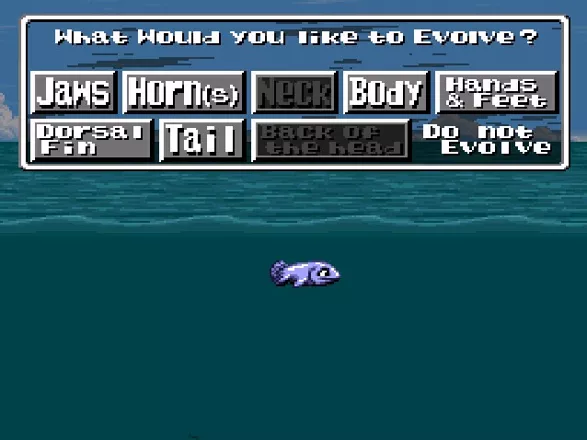
There has never been another game quite like E.V.O., and the industry has had three decades to copy it. You begin as a fish in Earth’s primordial seas. You eat other creatures, earn evolution points, and spend them in a body-part shop: bigger jaws, a horn, fins, armour, a longer neck. Then come the amphibians, the dinosaurs, the ice age, the mammals — 4.6 billion years of natural history as an action-RPG, with Gaia herself narrating your progress toward Eden.
Almanic’s oddity reviewed respectably and sold modestly, and Enix never revisited it. Every creature-builder and survival-evolution game since owes it royalties of respect. Weird, earnest, quietly profound — the definition of a hidden gem.
5. Soul Blazer (1992)
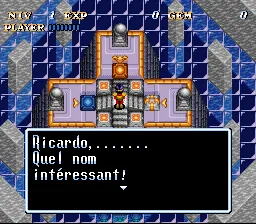
The world has been stolen. In Soul Blazer, a demon called Deathtoll has traded every living soul on Earth for gold, and you — a divine warrior — restore creation one lair at a time. The loop is hypnotic: clear a dungeon floor’s monster lairs, and with each one sealed, a person, an animal, a house, a bridge reappears in the town above. A mayor. A dog. A tulip. Progress you can walk around in.
It is the first part of Quintet’s loose Gaia trilogy, and the simplest — which makes its theme land hardest. Restoration as gameplay, years before that became a genre. Commercially it was a modest Enix release that the Zelda comparisons of the day steamrolled. Played now, it feels like a prophecy.
4. Illusion of Gaia (1993)
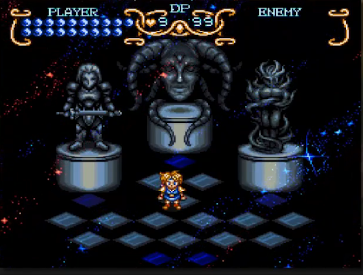
Quintet’s second Gaia game sends Will, a schoolboy with telekinetic powers, across the actual ancient world — the Nazca lines, Angkor Wat, the Great Wall, the pyramids — chasing his missing father’s expedition and a comet that is changing the Earth. Will transforms into the knight Freedan and the liquid shadow-being Shadow to fight through them, and the story keeps veering into territory no 1993 children’s game was supposed to touch: slavery, famine, a pig who saves the party in the most upsetting way possible.
Nintendo published it in the West and it sold respectably — then fell out of the canon anyway, squeezed between its own siblings. Of the trilogy, it’s the one with the biggest heart. The middle child deserves better.
3. Demon’s Crest (1994)
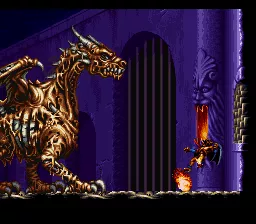
Firebrand — the red gargoyle who tormented Arthur through the Ghosts ‘n Goblins series — headlined three games, and this SNES finale is one of Capcom’s finest 16-bit productions full stop. Demon’s Crest is a dark, non-linear action-adventure: collect elemental crests to transform — flight, ground-smashing, underwater forms — and re-explore a gothic demon realm that opens up Metroid-style, chasing a rival demon who stole the crests’ power and, with it, the world.
It is gorgeous, moody and genuinely challenging, with multiple endings gated behind how much of it you actually conquer. It also sold terribly in 1994, because the market wanted mascots with attitude, not a sombre gargoyle in a demon civil war. Their loss. Our gem.
2. Live A Live (1994)
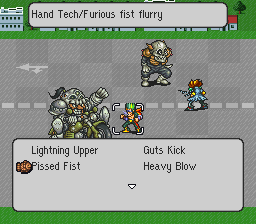
Seven short stories in seven time periods — a caveman, a ninja, a kung-fu master, a gunslinger, a wrestler, a psychic kid in near-future Japan, a robot in deep space — each with its own mechanics, art style and a young composer called Yoko Shimomura. Then the stories converge, and Live A Live reveals what it was really about all along, in a final act so ahead of its time that games are still copying it.
Square never localized the Super Famicom original. For 28 years it was the connoisseur’s import, kept alive by a fan translation, until the 2022 HD-2D remake finally let the West in officially. Either version earns this spot: it’s not just a hidden gem, it’s a lost landmark.
1. Terranigma (1995)
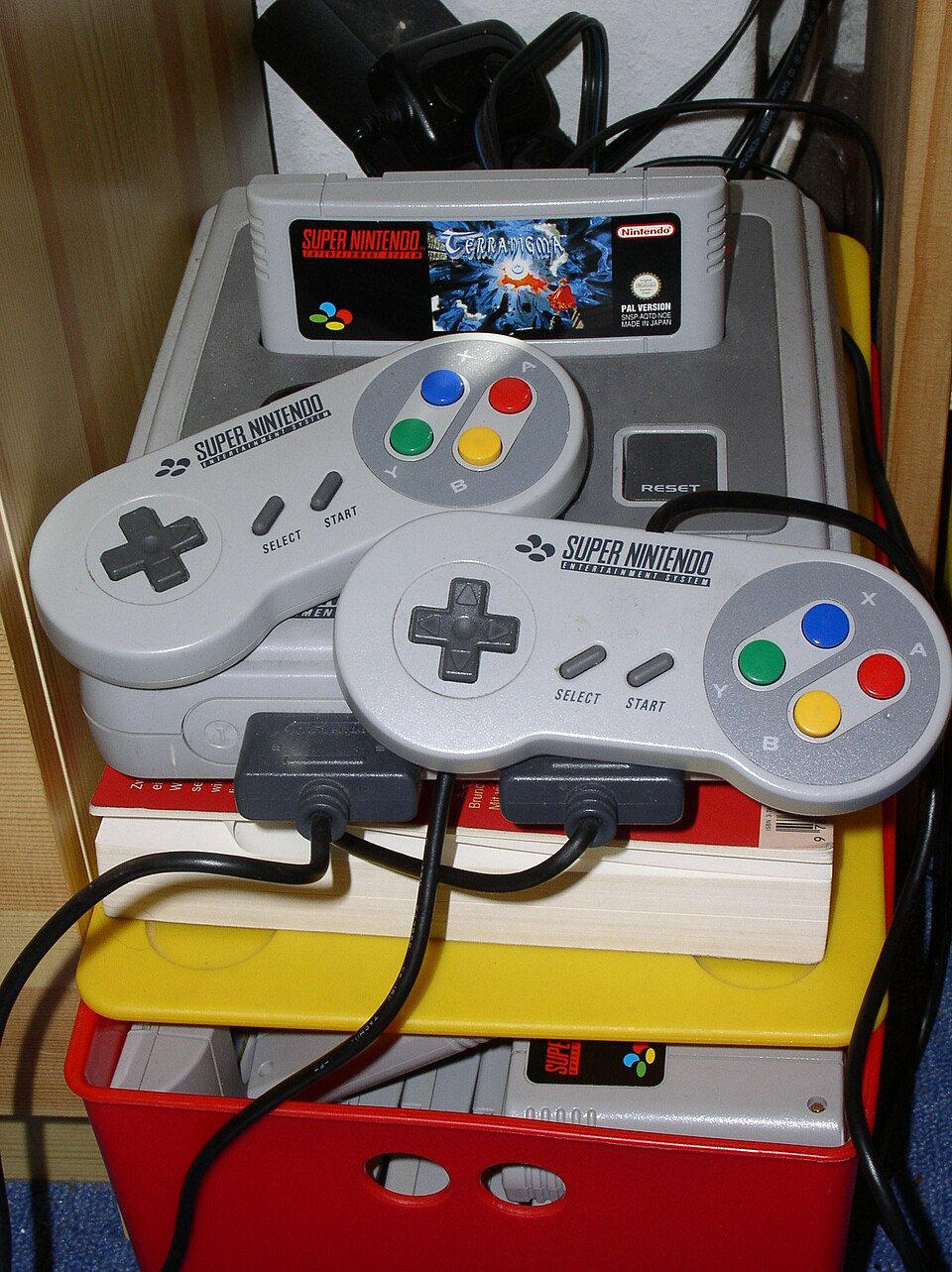
Was there ever any doubt? The finale of Quintet’s Gaia trilogy is the most ambitious game on this list and one of the most ambitious on the console: you play Ark, a troublemaker from a village in the Earth’s hollow underworld, who resurrects the continents, then evolution itself — plants, birds, animals, humanity — then shepherds civilization from mud huts to modern cities, knowing the whole time that completing the mission means erasing his own world. It is an action-RPG about creation with a genuinely devastating ending.
Why is it a hidden gem? Because Enix’s American branch closed before it could ship there. North America simply never got Terranigma — Europe and Japan did, in 1996 and 1995 — and rights tangles kept it unreleased for decades. An announced modern re-release should finally fix that. Until then, the faithful already know: this is the SNES masterpiece with an asterisk, and the asterisk is an accident of corporate timing.
The SNES canon is settled. The SNES catalogue isn’t — and it’s deeper, stranger and better than the canon suggests.
That’s the joy of this console thirty years on: the famous games are famous for a reason, but the second shelf is full of work this good. Mech suits you can abandon mid-battle. Evolution as an RPG. A gargoyle’s sombre masterpiece. A game about resurrecting the Earth that a whole continent never got to buy. Pick any one of these twelve for your next retro night and you’ll come away with a new favourite — and that’s a promise the headline act can’t make anymore, because you already know how those go.