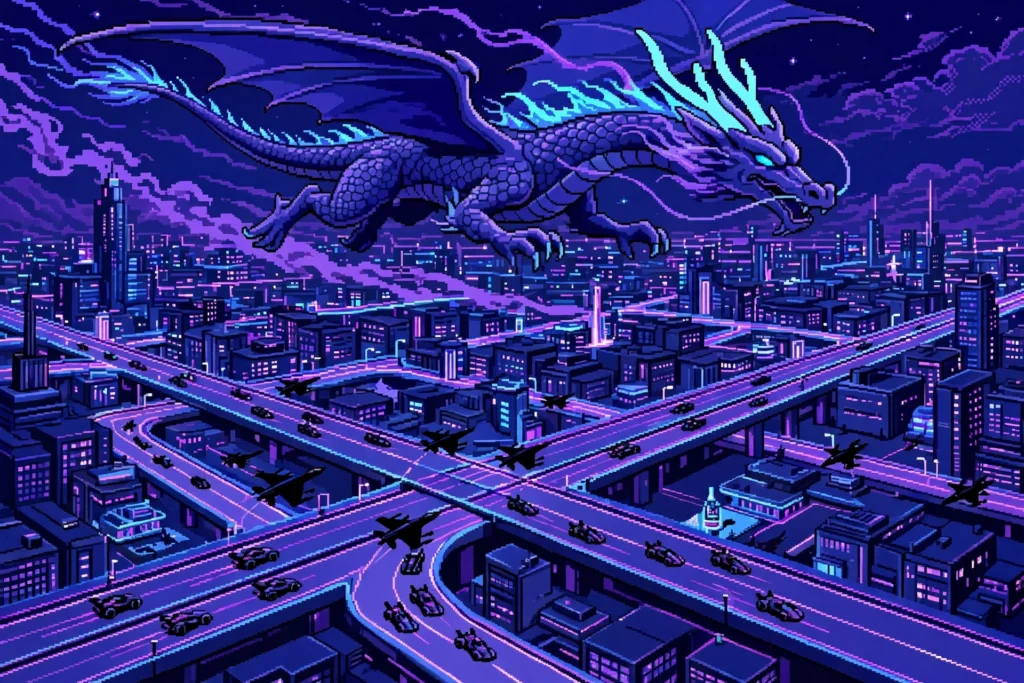
The Sega Saturn lost the war in America and Europe, and I have made my peace with that. The surprise launch, the $399 price tag, the PlayStation undercutting it by a hundred dollars, Bernie Stolar telling a trade show that “the Saturn is not our future” — the obituary writes itself. But losing a console war is not the same as having no games. In Japan the Saturn was a paradise. It outsold the Nintendo 64 there, arcades ports poured in, and developers treated it as what it actually was: the last great 2D powerhouse, a machine built for sprites, scaling, and arcade boards brought home intact.
That is the Saturn I collect for, and the one this list celebrates. Fifteen essentials, ranked by how much I still reach for them — and by how unfair it feels that so few people played them at the time. A warning before we start: this library has become brutally expensive. Several games below cost more now than the console did at launch. That is not a reason to stay away. It is a reason to choose wisely, and to know exactly which discs are worth the hunt.
The Countdown
15. Die Hard Arcade (1996)
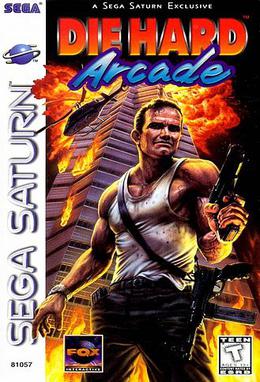
I start here because Die Hard Arcade is pure, stupid joy, and joy counts. Released in Japan as Dynamite Deka — it had nothing to do with the film until Sega of America slapped the license on it — this is a 3D beat-’em-up where I punch terrorists, swing pipes and brooms, and occasionally fire a pepper spray can into a man’s face. The combat is chunky and deliberate, quick-time events break up the brawling, and the whole campaign takes under an hour. That brevity is the point. This is an arcade quarter-muncher built for two players on a couch, shouting at each other. Modern beat-’em-ups learned polish. Few learned this looseness.
14. Fighters Megamix (1996)
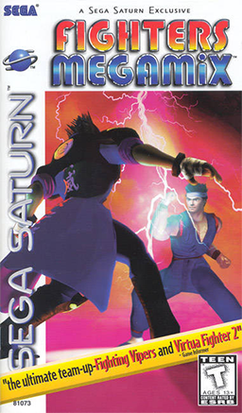
Only Sega in 1996 would look at Virtua Fighter 2 and Fighting Vipers and think: put them in the same game, then add a palm tree, a car, and the Daytona USA Hornet as playable fighters. Fighters Megamix is AM2 at its most generous — 32 characters, two fighting systems colliding, unlockables buried everywhere, and a single-player mode that actually rewards you for exploring it. I will not pretend it is the most balanced fighter on this list. It is not even close. But as a celebration of everything Sega’s arcade division was doing at its peak, nothing else comes close. It is a party disguised as a fighting game, and I still throw it on.
13. Virtua Cop 2 (1996)
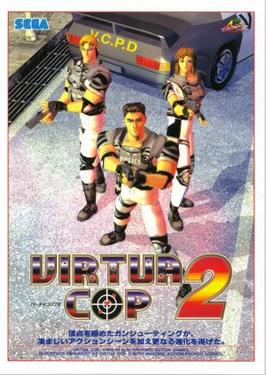
A light-gun game lives or dies on its home conversion, and Virtua Cop 2 on Saturn, played with the Stunner gun, is the arcade in my living room. The draw is simple: bad guys pop out of windows, off rooftops, and from behind barrels, and I have a split second to decide who is a threat and who is a screaming bystander. The sequel adds branching routes, a car chase, and much better set pieces than the first game. I know every stage by heart at this point, and I still chase the perfect run. No analogue stick, no twin-stick shooter, has ever replicated the snap satisfaction of a real light gun on a CRT.
12. Magic Knight Rayearth (1995)
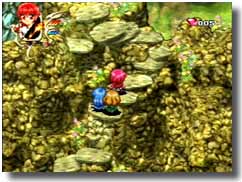
Magic Knight Rayearth should not work — a top-down action RPG based on a CLAMP manga and anime, developed by Working Designs’ source material handled with unusual care — and yet it charms me every time. Hikaru, Umi, and Fuu swap in and out with a button press, each with her own element and weapon, and the whole adventure moves at a pace most 16-bit RPGs never managed. Working Designs’ translation, the last Saturn game officially released in North America in 1998, is playful to a fault, full of jokes that purists grumble about. I do not grumble. It is colorful, heartfelt, and mercifully short, and in a library short on translated RPGs, that matters.
11. Saturn Bomberman (1996)
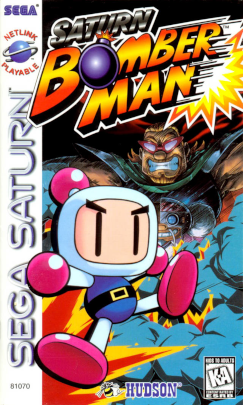
Every Bomberman is good with friends. Saturn Bomberman is the one I measure all the others against. The single-player game is a solid, sprawling Hudson Soft platform-bomber with dinosaur mounts that grant extra powers, but the real headline is multiplayer: eight players on two multitaps, and ten — ten — if you link two consoles and two televisions together. I have done the eight-player version exactly twice in my life and I still talk about both nights. The arenas are readable, the revenge carts keep eliminated players in the game, and the chaos scales perfectly. If you own a Saturn and a multitap, this is not optional. It is the system’s best party game, full stop.
10. Shining the Holy Ark (1996)
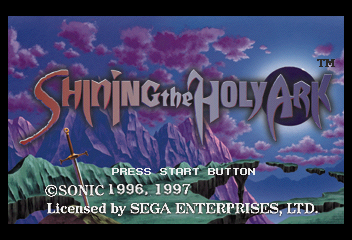
Before Camelot made Golden Sun, they made this: a first-person dungeon crawler that took the Shining in the Darkness formula and gave it warmth, color, and a proper story tying into Shining Force III. I crawl grid-based dungeons in smooth 3D, trigger turn-based battles rendered with some of the Saturn’s prettiest sprite work, and hunt for pixies — hidden fairies who ambush enemies at the start of combat if I find their hiding spots first. That one mechanic turns every wall into a question. Holy Ark is slow, deliberate, and completely absorbing, the kind of RPG that rewards a notebook and a free weekend. Dungeon crawlers rarely feel this inviting.
9. Sega Rally Championship (1995)
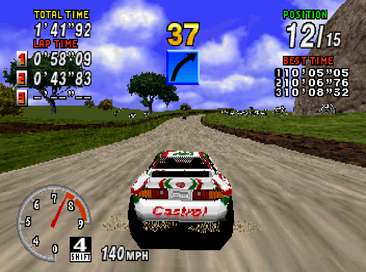
Three cars. Four tracks. That is the entire content list, and Sega Rally still earns this spot because no racing game of its era feels better minute to minute. AM3 understood something nobody else did in 1995: different road surfaces should change everything. Tarmac, gravel, and mud each pull at the car differently, my co-driver barks “easy left, maybe” over jumps I cannot see, and the Celica and Lancia Delta slide with a weight that feels earned rather than scripted. I can finish the championship in fifteen minutes. I have probably done it two hundred times. This is the Saturn’s essential arcade racer, and the home port, frame rate compromises and all, keeps the soul intact.
8. Virtua Fighter 2 (1995)
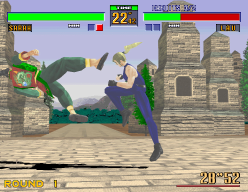
Virtua Fighter 2 sold over two million copies on Saturn, making it the system’s biggest hit, and for once the bestseller was also the benchmark. AM2’s port runs at a high resolution no PlayStation fighter matched, and underneath the clean polygons sits the most honest fighting system ever made: three buttons, no fireballs, no meters, just positioning, timing, and reading the other player. Akira’s combos still take me real practice. Sarah still humiliates me. I respect this game more than I love some higher entries, because it never cheats and never panders — it simply asks me to get better, and rewards me every single time I do. Every 3D fighter since lives in its shadow.
7. Radiant Silvergun (1998)
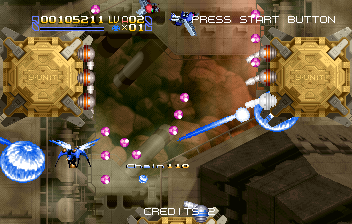
Treasure made Radiant Silvergun for the Saturn and the ST-V arcade board, never released it in the West at the time, and somehow built the most demanding shoot-’em-up I have ever finished — mostly by not finishing it. I carry seven weapons at once, all available from the start, and the game becomes a puzzle: which gun solves this boss, this bullet pattern, this chain of same-colored enemies? Chaining by color multiplies my score and powers up my weapons, so survival and scoring are the same problem. It is punishing, beautiful, and scored by Hitoshi Sakimoto like an opera. The 2011 Xbox port finally made it affordable. The Saturn original remains the grail, and it earns that status.
6. Dragon Force (1996)
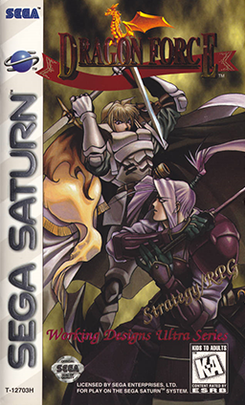
Two hundred soldiers on screen at once, in 1996, on a console everyone said could not do spectacle. Dragon Force is a real-time strategy RPG where I pick one of eight rulers of Legendra, raise armies, duel generals, and unleash charges of a hundred sprites colliding in glorious chaos. Diplomacy, castle sieges, and a genuine branching story sit underneath the fireworks, and Working Designs’ translation gave it real personality in the West. I lose entire evenings to “one more campaign turn.” No other Saturn game — honestly, no other game of its generation — does scale like this. When people call the Saturn underpowered, this is the disc I put in the tray.
5. Shining Force III (1997)
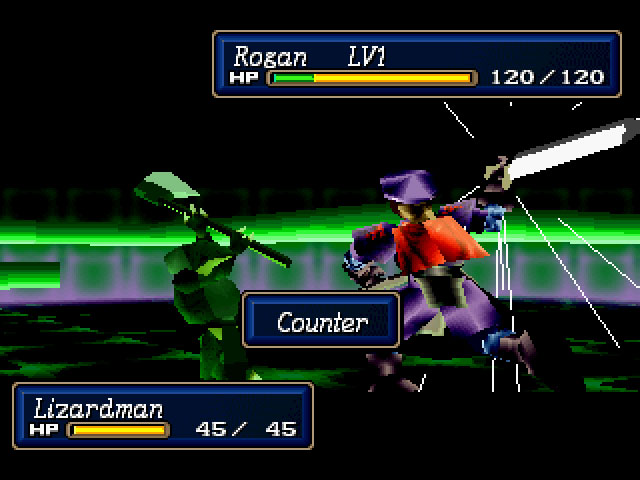
Shining Force III is my favorite tragedy on this list. Camelot built a three-scenario epic — the same war told from opposing sides, with decisions in one disc echoing into the next — and Sega of America translated only Scenario 1. Even incomplete, what we got is superb: grid-based tactical battles in smooth 3D, a weapon and friendship system that rewards keeping units paired, and a story with genuine political weight. I have played fan translations of the other two scenarios, and they confirm this was the Saturn’s answer to Final Fantasy Tactics. Finishing in the top five on the strength of one translated third tells you how good that third is.
4. Guardian Heroes (1996)
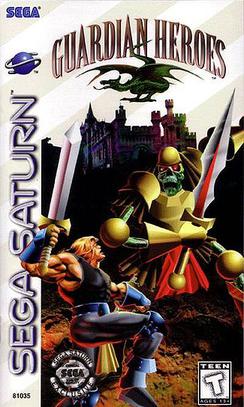
Treasure took the beat-’em-up, split it across three fighting planes, added experience points, branching story paths, magic spells, and a six-player versus mode, and produced the game I have replayed more than any other on this system. Guardian Heroes moves like a brawler and thinks like an RPG: I level up between stages, choose which kingdom to betray, and ride the undead hero’s AI rampages through screen-filling boss fights. The sprite work is enormous and expressive, the soundtrack swings from jazz to metal, and every run ends differently. It later reached Xbox with online play, which is wonderful — but the Saturn disc, slowdown and all, is where it lives for me.
3. Panzer Dragoon II Zwei (1996)
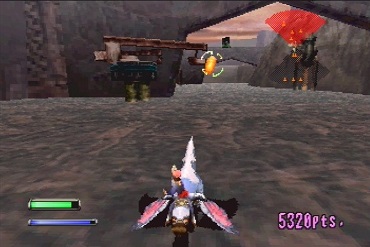
Zwei took everything the launch-day Panzer Dragoon promised and actually delivered it. My dragon evolves over the course of the game based on how I fly, branching routes reward replays, the berserk attack clears a screen in one furious burst, and Team Andromeda’s art direction — muted ruins, impossible biology, a language invented for the series — makes every stage feel like a place that existed before I arrived. As a rail shooter it is generous and fair in a way the first game was not. As a piece of world-building it has almost no equal on the system. Saga may be the masterpiece, but Zwei is the one I hand to newcomers. Start here. You will understand immediately.
2. NiGHTS into Dreams (1996)
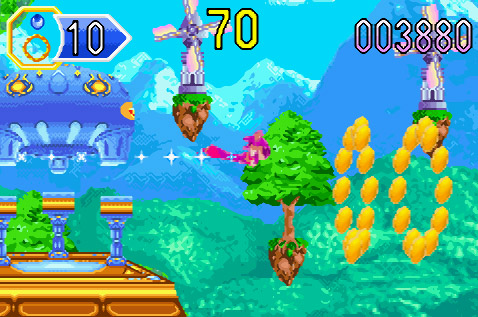
Sonic Team made a game about flying through dreams, scored like an arcade racer, and bundled it with a brand-new analogue controller — and the Saturn’s most original game still has no real sequel problem, because nothing else plays like it. I am not really completing levels in NiGHTS. I am chasing links, looping through rings and chips, building a score attack run against the clock while the Nightopia’s inhabitants live out tiny simulated lives below me. It baffled magazine reviewers in 1996 who wanted a Mario 64 answer. It is not that. It is a game about the feeling of flight itself, joyful and strange, and the Christmas NiGHTS bonus disc remains the best freebie Sega ever gave away.
1. Panzer Dragoon Saga (1998)
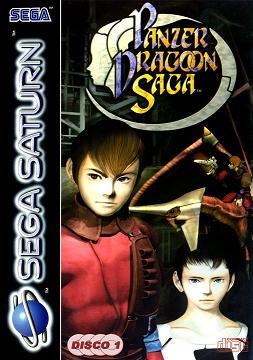
There was never another choice for number one. Sega released Panzer Dragoon Saga in tiny numbers in 1998, as the Saturn was dying in the West, and Team Andromeda answered by making the finest RPG of its generation. The rail shooter’s world becomes a fully explorable RPG: I ride my dragon through 3D towns and ruins, and in battle I circle enemies in real time, hunting weak points while a gauge governs every shot and spell. The dragon morphs to fit my play style. Edge’s story is quiet, sad, and fully voice-acted in the series’ invented language. Four discs, roughly twenty hours, no filler. Copies now sell for many hundreds of dollars, and for once, I understand why.
How to Play These Today
Start with the honest options. Several of these games have escaped the Saturn: Radiant Silvergun and Guardian Heroes are on modern Xbox and PC storefronts, NiGHTS got an HD remaster, and Virtua Fighter 2 is bundled into seemingly every Sega collection and even playable inside some Yakuza games. Those versions are cheap, legal, and excellent, and for a first taste they are where I send everyone.
For the rest — Saga, Dragon Force, Shining Force III, Saturn Bomberman — original hardware is still the main road, and the road has gotten friendlier. An optical drive emulator or a flash cartridge that fits the Saturn’s cartridge slot lets you run disc images from SD storage and saves a dying laser, and fan translations have finally opened the Japanese library, including the rest of Shining Force III and the system’s deep bench of imports. A Japanese Saturn plus an Action Replay for region-free play remains the cheapest entry point, because Japanese copies of many games on this list cost a fraction of the American releases. Buy the console for the library, not a single grail disc, and let the expensive ones come to you slowly.
The Saturn did not lose because it had no games. It lost with some of the best games ever made sitting on shelves nobody walked past — our job now is simply to keep playing them.