Everyone remembers the Sega CD as the add-on that dragged gaming onto compact disc, but Sega was late to its own revolution. NEC got there first. The PC Engine CD-ROM² launched in Japan in December 1988 — the first CD drive ever sold for a games console — and reached America as the TurboGrafx-CD in November 1989, when most of us were still blowing on cartridges and marveling at the idea of a save battery.
And here is the part history undersells: NEC’s little drive did not just arrive first, it matured first. The Super CD-ROM² upgrade in 1991 gave developers real memory to play with, the TurboDuo folded everything into one sleek machine in 1992, and the Arcade Card in 1994 squeezed out a final, glorious wave of games. For about six years, if you wanted to hear what CD-ROM actually meant — real orchestras, real voices, anime that moved — this was the library that proved it.
The tragedy is how much of it stayed in Japan, and how expensive the survivors are now. But taken disc by disc, this might be the strongest CD library of the entire 16-bit era: RPGs with fully voiced cinemas, shooters with heavy-metal soundtracks pressed straight onto the disc, and one vampire hunt that still embarrasses games made decades later.
So here is my ranking — the twelve TurboGrafx-CD and Super CD games that made the strongest case for the shiny disc, counted down to the one I would hand anyone who still thinks CD-ROM was a gimmick. Argue with the order all you want. That is half the fun.
The countdown
12. Cosmic Fantasy 2 (1992)
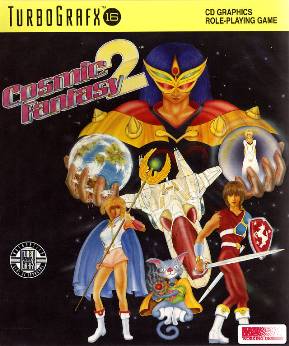
For a lot of American players, this was the moment the CD argument clicked. Cosmic Fantasy 2 is, mechanically, a fairly ordinary turn-based RPG — young hero Van, a villain named Galam, dungeons, random battles, the usual. But every so often the game stops and an anime scene plays, with drawn characters, camera moves, and actual spoken dialogue. In 1992, on a home console, that felt like witchcraft.
Working Designs localized it with their usual warmth and cheek, and the sci-fi-meets-fantasy story — complete with Pico, the wisecracking cat companion — has more heart than its simple battles suggest. Plenty of RPGs on this list are better games. None of them did more, this early, to show a Western audience what a disc could do for storytelling.
11. Dungeon Explorer II (1993)
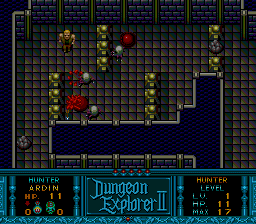
The original Dungeon Explorer was a HuCard gem; the CD sequel is that idea with the volume turned all the way up. This is Gauntlet rebuilt as a proper action RPG — a roster of character classes from fighter to bard, sprawling dungeons full of monster generators, passwords and orbs to manage, and a quest that sprawls far beyond the first game’s modest map.
The killer feature is the one this hardware did better than anyone: five players at once on a TurboTap, shouting over each other as the screen fills with enemies. Add a voiced, scene-setting introduction and a CD soundtrack, and you have the definitive multiplayer dungeon crawl of the 16-bit era. Solo it is good. With four friends and a pizza, it is unbeatable.
10. Star Parodier (1992)
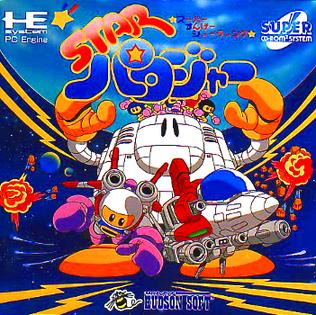
Hudson Soft looked at its own Star Soldier series, looked at Konami’s Parodius, and decided the TurboGrafx-CD deserved a joke shooter of its own. Star Parodier lets you fly three ships: the Caesar fighter from Star Soldier, Bomberman dropping bombs from a little craft of his own, and — my eternal favorite — the PC Engine console itself, flinging HuCards at enemies.
Under the silliness sits a genuinely well-built cute-’em-up: bright stages, generous power-ups, a bouncy CD soundtrack, and boss fights against giant versions of Hudson mascots. It never left Japan officially, which is a crime, because this is the most purely cheerful disc on the system. Some games proved CD-ROM was the future. This one proved the future could grin.
9. Sapphire (1995)
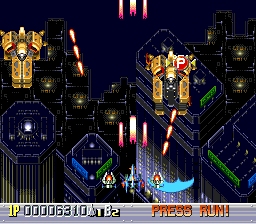
Ginga Fukei Densetsu Sapphire is the TurboGrafx-CD’s final boss: a 1995 vertical shooter that demands the Arcade Card, the RAM expansion most owners never bought, and spends every kilobyte of it. Hudson filled the disc with pre-rendered polygonal enemies — a technique the base hardware had no business attempting — and wrapped it in a time-hopping story about a squad of police pilots chasing a criminal through ancient Egypt, feudal Japan, and deep space.
The shooting itself is solid rather than revolutionary, but as a technical showpiece nothing on the format touches it. It is also infamous as one of the most bootlegged games ever made, because original copies sell for prices that make collectors weep. Play it however you legally can; just play it.
8. Ys IV: The Dawn of Ys (1993)
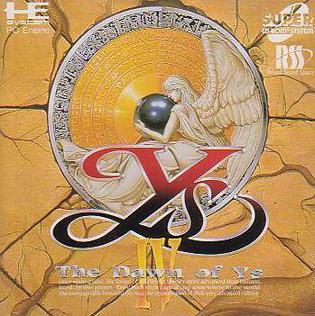
Ys IV has the strangest family tree in RPG history: Falcom handed its scenario to two different studios, producing two different games — Hudson’s Dawn of Ys for the Super CD and Tonkin House’s Mask of the Sun for the Super Famicom. With respect to the SNES version, Hudson’s is the one people still argue about in reverent tones.
Adol’s journey into Celceta refines the series’ bump-into-enemies combat into its fastest, smoothest form, then pours CD resources over everything: long voiced scenes, a huge arranged soundtrack, and boss fights with real scale. It never officially left Japan, but a fan translation — complete with a full English dub — finally opened it up. The definitive Ys of its era, hiding behind a language barrier for twenty years.
7. Gate of Thunder (1992)
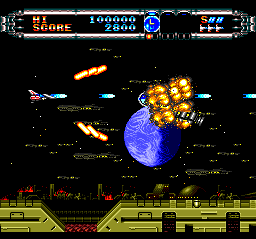
If you bought a TurboDuo in 1992, this is the disc that sold you on your purchase. Gate of Thunder came packed in — on a legendary compilation disc alongside Bonk’s Adventure, Bonk’s Revenge, and a hidden Bomberman — and it played like a mission statement: a horizontal shooter from the Thunder Force school, with a transforming support ship, three selectable weapons, and screen-filling bosses.
What elevates it is the audio. Those searing, guitar-driven CD tracks, streaming off the disc with no chip-tune compromises, announced that the soundtrack wars were over and CD had won. The difficulty is tuned fair, the pacing never sags, and thirty years on it remains the friendliest entry point into this whole library. Every Duo owner started here. Most of us never really left.
6. Nexzr (1992)
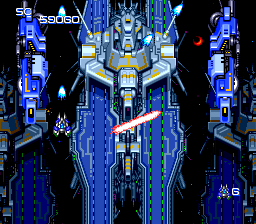
Naxat’s Nexzr is the purist’s pick on this list, and I mean that as enormous praise. This is a vertical shooter stripped of every distraction: no shop, no gimmick weapon system, just your ship, a piercing main shot, support options, and some of the tightest stage design the PC Engine ever hosted. It served as an official Summer Carnival ’92 competition game, and you can feel that score-attack DNA in every wave.
Then there is the presentation. Gorgeous mecha battleships unfold across the screen while one of the Super CD’s finest soundtracks — melodic, driving, unmistakably CD — pushes you forward. Nexzr never got a Western release and rarely tops casual lists. Put it in front of any shooter fan for ten minutes and watch that change.
5. Lords of Thunder (1993)
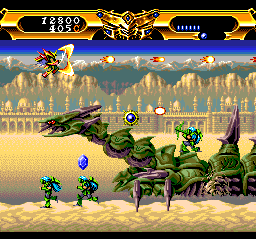
Take Gate of Thunder’s engine, trade the spaceship for a flying suit of enchanted armor, and crank the soundtrack until the speakers beg for mercy. Lords of Thunder — Winds of Thunder in Japan — sends the knight Landis across the kingdom of Mistral, choosing your stage order, buying elemental armor between levels, and dueling bosses the size of the screen.
The fantasy art direction still looks sumptuous, but the audio is the headline act: full-throttle metal guitar recorded for CD, the kind of soundtrack Sega CD owners were promised and TurboGrafx-CD owners actually got. A Sega CD port exists and is perfectly decent; the original is a system seller. If this list has a coolest game — not best, coolest — this is it, and it is not close.
4. Dragon Slayer: The Legend of Heroes (1992)
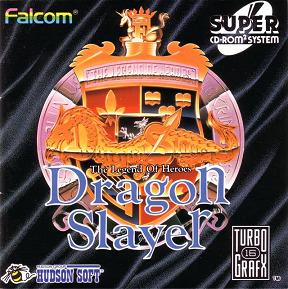
Long before Trails became a genre unto itself, Falcom’s Legend of Heroes saga made its console case on this disc. You play a young prince whose kingdom falls to monsters on his sixteenth birthday, and what follows is a big, warm, traditional JRPG — towns, dungeons, a growing party, and a story that knows exactly when to twist the knife.
What the CD bought Falcom was presence: voiced story scenes, lushly arranged versions of the score, and room for a quest that feels genuinely epic by 1992 standards. The combat even offers an auto-battle option years before that was fashionable. Hudson’s American release gave Western players one of the format’s best RPGs in English, no import required. The series is still running today. It started, in the West, right here.
3. Ys Book I & II (1990)
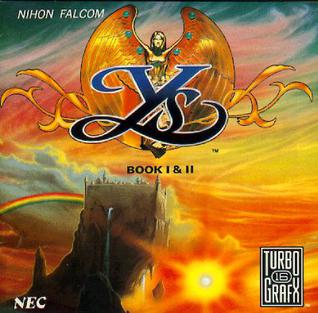
This is the disc that started it all, and I do not just mean for this list. Ys Book I & II combined Falcom’s first two Ys adventures into one continuous epic — Adol Christin’s arrival in Esteria, the climb up Darm Tower, the floating land of Ys itself — and in 1989 and 1990 it was unlike anything a home console had ever produced. Critics noticed: it collected game-of-the-year honors and is often credited as the first CD-ROM game to truly prove the medium.
The bump-combat takes ten minutes to learn and the quest is compact, but the presentation was a revelation: Yuzo Koshiro’s melodies in full CD arrangements, spoken dialogue, an animated finale. Every RPG on this list is standing on this disc’s shoulders.
2. Snatcher (1992)
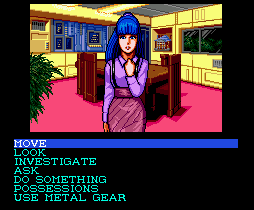
Before Metal Gear Solid made him famous, Hideo Kojima made this: a cyberpunk graphic adventure about Gillian Seed, an amnesiac investigator hunting robot body-snatchers through Neo Kobe with only a wisecracking navigator robot for backup. The Super CD-ROM² version — Snatcher CD-ROMantic — is the edition that shows why Kojima needed the disc in the first place.
CD storage meant a script that could sprawl: hours of fully voiced Japanese dialogue, atmospheric redbook audio, and animated scenes that a cartridge could never have held. The menu-driven investigation looks simple today, but the writing, the dread, and the sheer cinematic confidence were years ahead of the medium. Westerners mostly know the Sega CD port. The PC Engine original got there first, and got there complete.
1. Castlevania: Rondo of Blood (1993)

Was there ever any doubt? Rondo of Blood is not just the best TurboGrafx-CD game; it is the best classic Castlevania, full stop, and it is only possible because of the disc it shipped on. Richter Belmont’s rescue mission unfolds across branching stages stuffed with secrets — hidden maidens to save, alternate routes, a second playable character in Maria Renard, whose dove-and-kitten arsenal turns the game’s difficulty inside out.
Then the CD flexes: a pounding arranged soundtrack, an animated opening narrated in German, voiced scenes, Item Crash super-moves, and animation so fluid the sprites feel hand-inked. Konami kept it in Japan for fourteen years, which only gilded the legend. When it finally went worldwide, everyone discovered what importers already knew. The future NEC promised in 1989? It sounded, and played, exactly like this.
The verdict
Look back over that list and notice what is missing: the filler. The Sega CD drowned in grainy full-motion-video experiments, but the TurboGrafx-CD library went the other way — it treated the disc as room to breathe. Room for orchestras and guitar solos. Room for voices, for anime, for quests twice the size of their cartridge rivals. The format’s best developers were not showing off a novelty; they were building the template every CD console after it would follow.
The TurboGrafx-CD did not just arrive at the CD-ROM era first. For about six years, it was the CD-ROM era — everyone else was catching up.
So if your retro shelf has a TurboGrafx-CD-shaped hole in it, start with Gate of Thunder for the shooters, Ys Book I & II for the history, and Rondo of Blood for the masterpiece. Then come back and tell me where my ranking went wrong. I will be here, headphones on, somewhere over Mistral, still defending it.