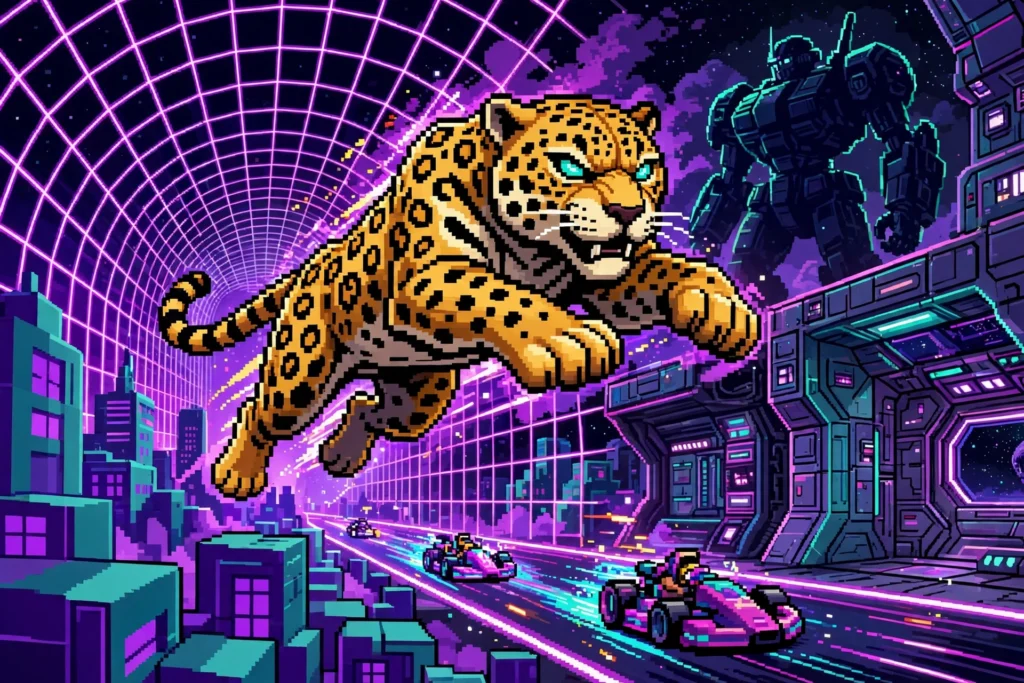
Let’s start with the honesty, because the Atari Jaguar demands it. This is not a long list drawn from a deep well. The Jaguar limped onto shelves in November 1993, sold somewhere around a quarter of a million units, and was quietly put out of its misery by 1996. Its entire cartridge library runs to about fifty games. Fifty. The Super Nintendo got more than that in a good quarter.
And then there was the marketing. Atari waged the bit wars with a straight face and a calculator: the Jaguar ran two 32-bit RISC processors — nicknamed Tom and Jerry, because of course they were — so Atari added the numbers together and declared it the world’s first 64-bit console. “Do the Math” the ads sneered, and the entire industry did the math, and the math did not save it. The controller was a phone keypad welded to a gamepad. The Jaguar CD add-on arrived late, broke often, and looked like a toilet seat. The Jaguar became a punchline, and punchlines are forever.
But here’s the thing nobody tells you about punchlines: sometimes they’re hiding genuinely great games. When the Jaguar was good, it was startlingly good — blessed with a handful of developers who understood the weird hardware and wrung things out of it that had no business running on a dying Atari console in 1994. The bottom of this library falls off a cliff, and we’ll get to that. The top of it? The top of it holds up against anything its era produced. These are the fifteen that prove it.
The good stuff: 15–11
15. Zool 2 (1994)
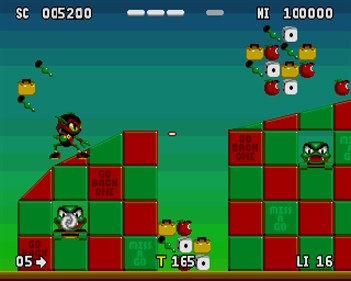
Gremlin’s candy-obsessed ninja — an ant-like alien shinobi, long story — got his sequel as a Jaguar exclusive, and it’s the best version of a mascot platformer most people never played. Zool 2 is fast, garish, and slippery in the way all Gremlin platformers were, but the Jaguar version throws in a second playable character, bigger levels, and some of the most confident 2D art on the system. It’s derivative of Sonic the way every 1994 platformer was derivative of Sonic. It is also, minute for minute, more fun than it has any right to be.
14. Missile Command 3D (1995)
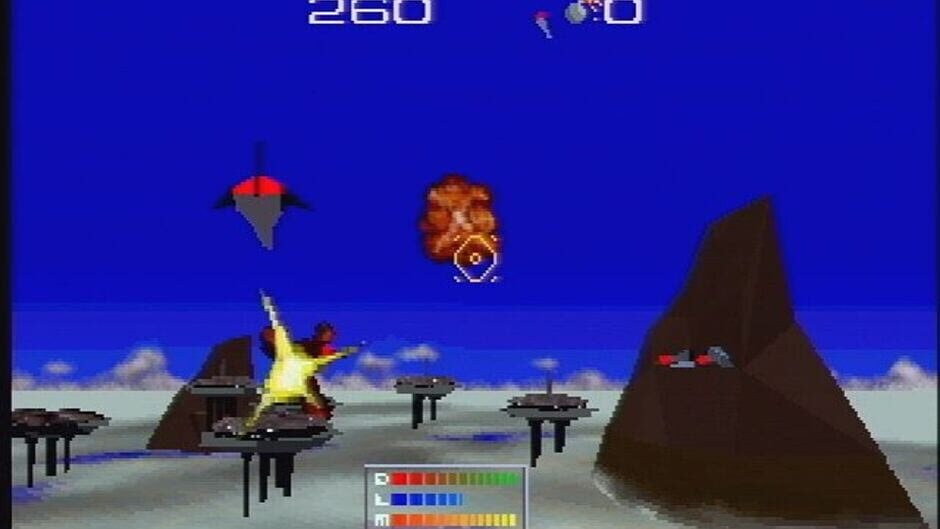
Atari honoring Atari. This late release takes the 1980 arcade classic — defend six cities from nuclear annihilation, a premise that used to keep people up at night — and rebuilds it three ways: the original game, an enhanced version, and a polygonal 3D mode that puts you inside the defense grid. The pad is no trackball, and we’ll concede that up front. But as a package it’s respectful, playable, and quietly one of the most polished things Atari published in the Jaguar’s final year.
13. Hover Strike (1995)
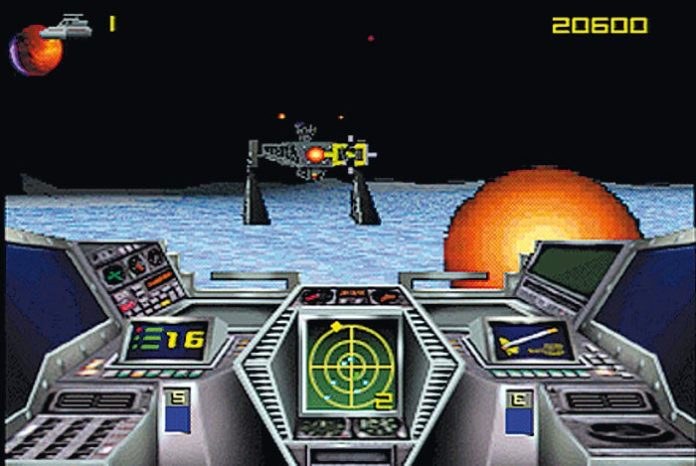
A hovercraft tank game built on texture-mapped terrain that the Jaguar renders with more ambition than sense — the frame rate wobbles, and we won’t pretend otherwise. But Hover Strike’s mission-based campaign, night raids, and radar-hunting tension give it a shape most early 3D shooters lacked. It feels like a dispatch from an alternate timeline where Atari kept making weird, earnest military sims forever. Flawed, fascinating, and better than its reputation.
12. Super Burnout (1995)
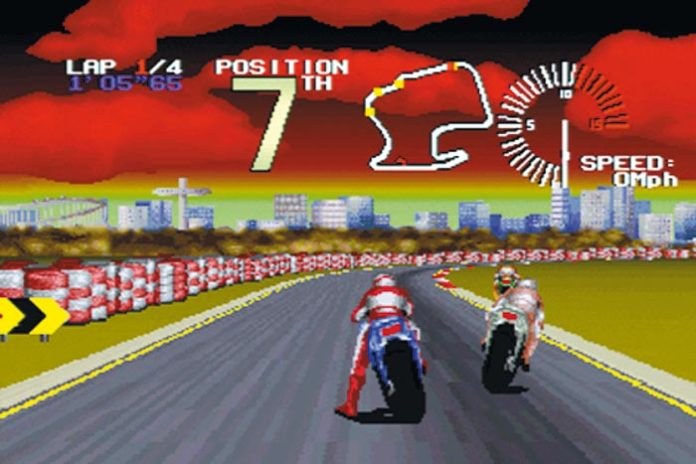
Every “the Jaguar couldn’t do 3D” argument quietly ignores that its 2D hardware was a monster. Super Burnout is a super-scaler motorcycle racer in the Hang-On tradition, and it runs at a silky pace that makes most 32-bit racers of the day look like they’re moving through soup. Eight tracks, Grand Prix mode, split-screen versus, and a sense of speed that still lands. It does one thing — velocity — and it does it better than almost anything on the system.
11. Cannon Fodder (1995)
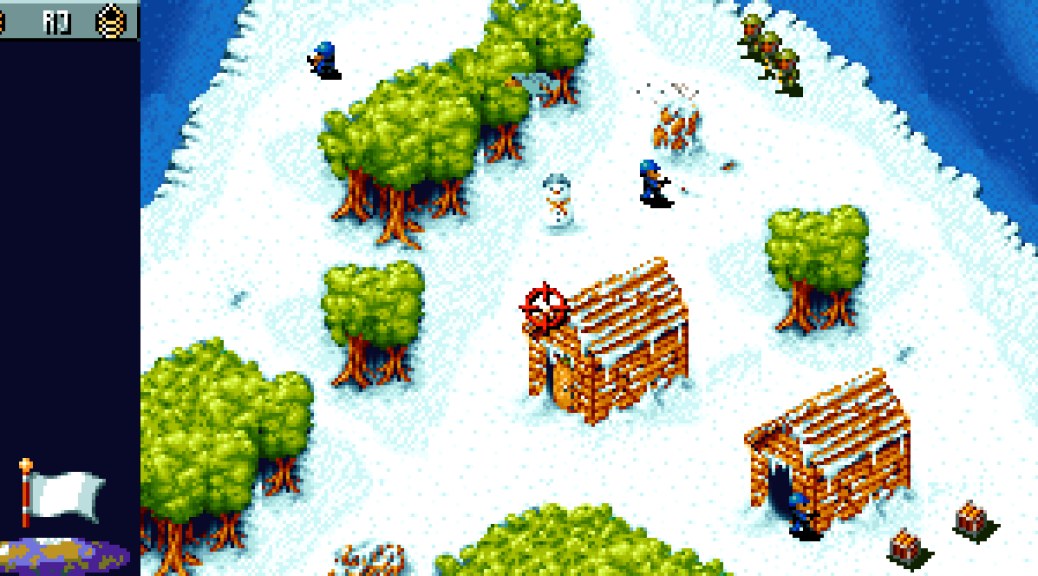
Sensible Software’s Amiga masterpiece — “war has never been so much fun” — made the trip to the Jaguar intact, and it’s arguably the best home version that doesn’t involve a mouse. You guide a squad of named, mortal little soldiers through isometric missions, and the game’s genius is the graveyard that fills up between levels, each cross a kid you got killed. The pad controls work better than they should. A war game with an actual conscience, hiding on a console nobody bought.
The heavy hitters: 10–6
10. Power Drive Rally (1995)
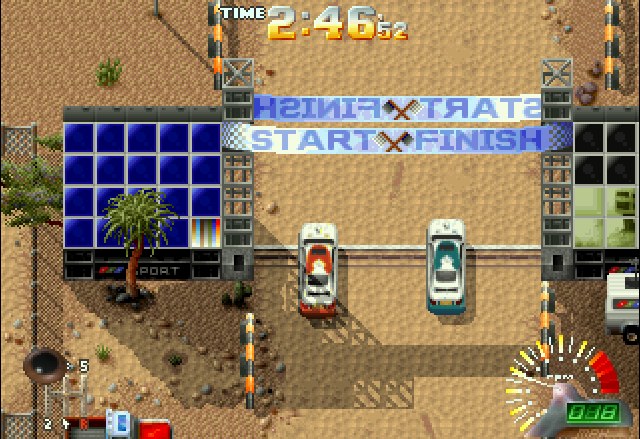
The Jaguar’s true hidden gem. Rage Software’s top-down rally game is gorgeous — lush, detailed courses viewed from above, weather and night stages, cars that slide with exactly the right amount of disobedience. It’s challenging in the way the best rally games are challenging: every corner is a negotiation between your ambition and physics. Criminally overlooked in its day because it launched on a console that was already a trivia question. Find it, play it, join the small church of people who know.
9. Wolfenstein 3D (1994)
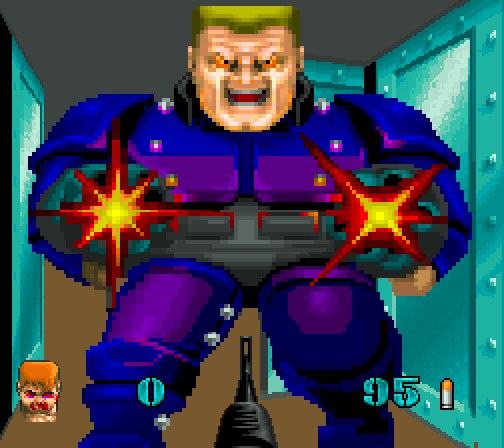
The Jaguar port of id’s grandfather of shooters is how you do a port: all six episodes, full speed, and — unlike the famously neutered SNES version — completely uncensored, swastikas, guard dogs, and Hitler intact. The sound thumps, the action never stutters, and there’s even a map on the pause screen, a mercy the original never offered. It’s the version id themselves seemed proudest of in the 16/32-bit port wars, and twenty minutes with it tells you why.
8. Atari Karts (1995)
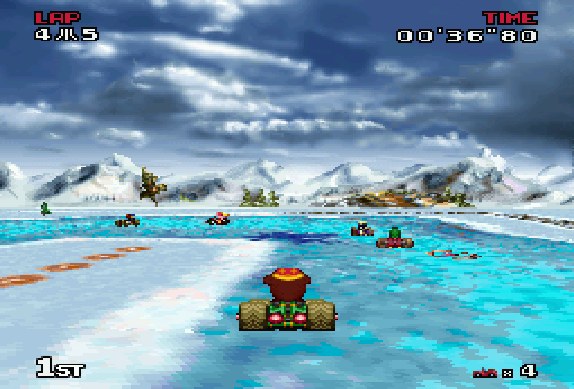
Yes, it’s Mario Kart with the serial numbers filed off — item boxes, cutesy racers, a grinning mascot named Bentley Bear in the driver’s seat. Shameless. Also: genuinely excellent. Miracle Designs built one of the smoothest pseudo-3D racers of the era, with colorful tracks, tight handling, and two-player split-screen that turns friends into enemies with professional efficiency. Originality is a virtue, but so is execution, and Atari Karts executes. Sometimes the clone really is that good.
7. Battlemorph (1995)
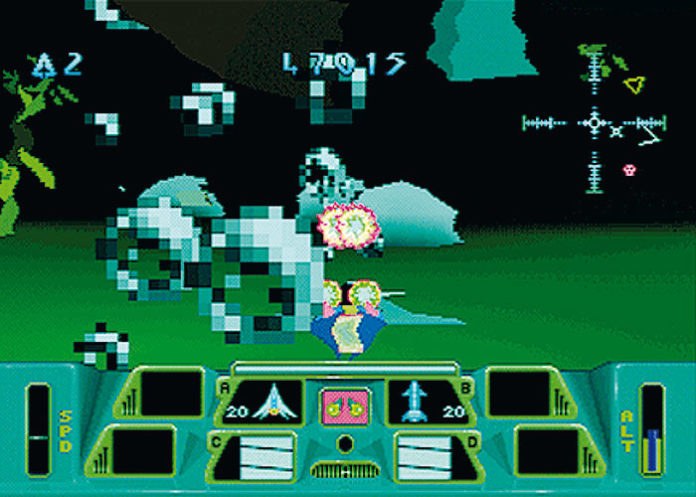
The Jaguar CD’s finest hour — a low bar, a toilet-seat-shaped bar, but Battlemorph clears it with room to spare. Attention to Detail took their launch title Cybermorph, absorbed every criticism (yes, including that voice), and built something bigger and stranger: fifty missions across eight worlds, morphing between fighter, tank, boat, and submarine forms, with a frame rate that finally behaves. It’s the game Cybermorph was apologizing for not being. If you own the CD unit and one game, this is the one.
6. Defender 2000 (1996)
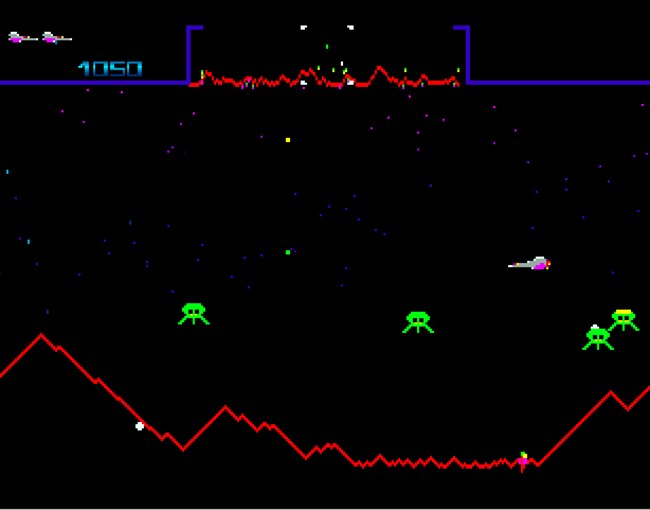
Jeff Minter takes Eugene Jarvis’s Defender — already one of the most intense arcade games ever made — and pours his entire psychedelic soul into it. Three modes, including the original and a Plus variant, all wrapped in the kind of visual overload that makes your eyes water in the best way, backed by a thumping techno soundtrack. It’s ferociously hard, because Defender is ferociously hard, and Minter understood that the difficulty is the game. A master remixing a master. Released as the console died, bought by almost no one, revered by everyone who did.
The essential five
5. Iron Soldier (1994)
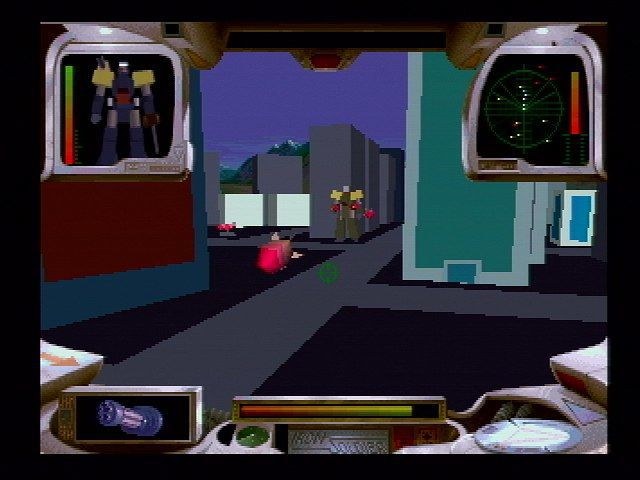
You are a forty-foot robot, and the city is your argument. Iron Soldier drops you into fully 3D urban battlefields to stomp an evil corporation’s war machine flat, one building, tank, and helicopter at a time. The flat-shaded polygons moved with a smoothness that embarrassed most early PlayStation efforts, and the mission structure — rescue this, raze that, survive the other thing — gave the stomping genuine shape. There is a primal joy in this game that fancier graphics have never improved: being very large, in a city that is suddenly very small.
4. Rayman (1995)
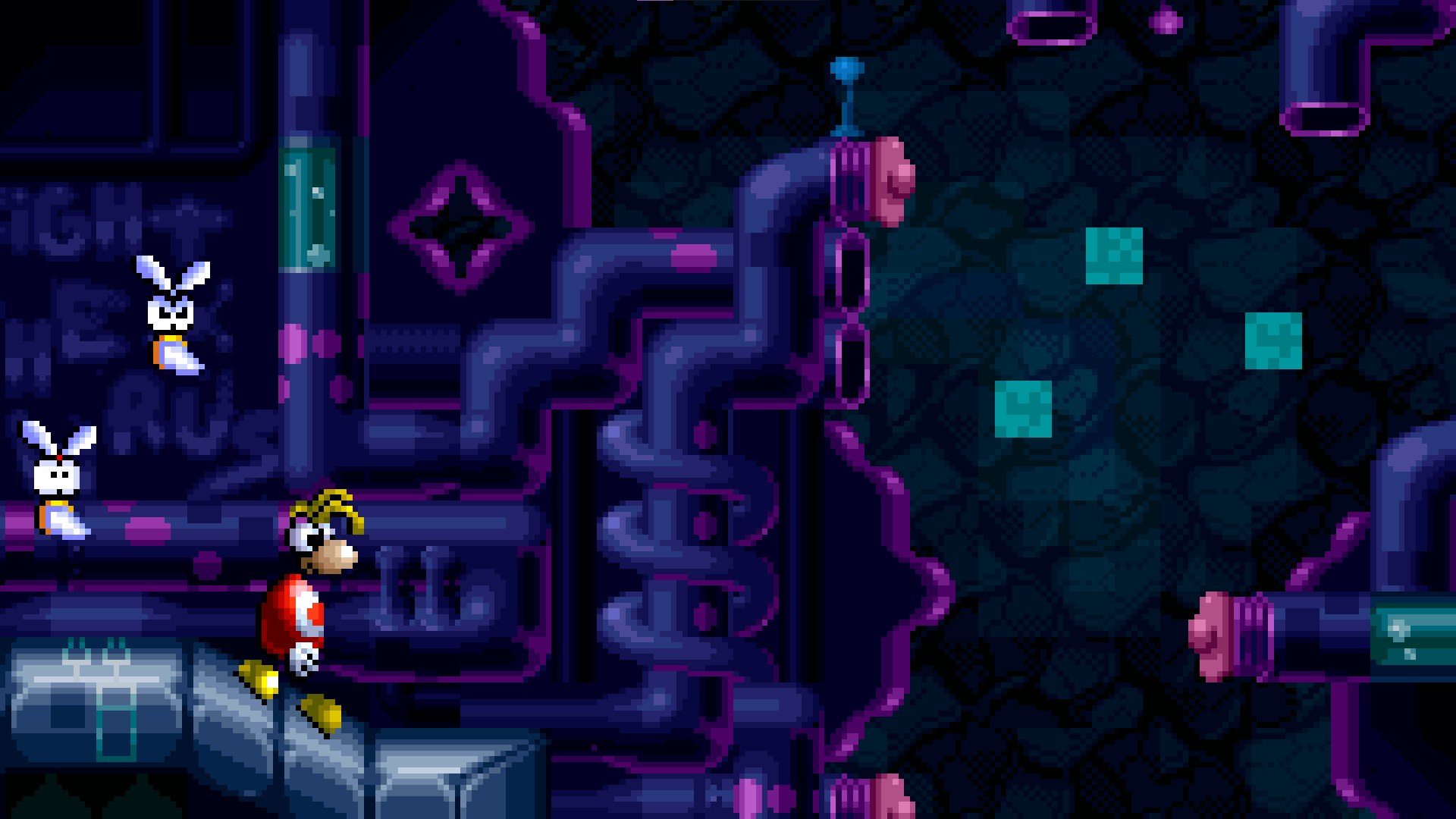
People forget Rayman debuted here, before the PlayStation and Saturn versions made it famous. Michel Ancel’s limbless hero arrived on the Jaguar fully formed: hand-drawn worlds of impossible color, animation that still embarrasses games made decades later, and level design that starts as a stroll through a storybook and ends as an endurance trial. The Jaguar original holds its own frame-for-frame against its more celebrated siblings. When people ask what 2D gaming could have become if the industry hadn’t sprinted into polygons, this is the answer you show them.
3. Doom (1994)
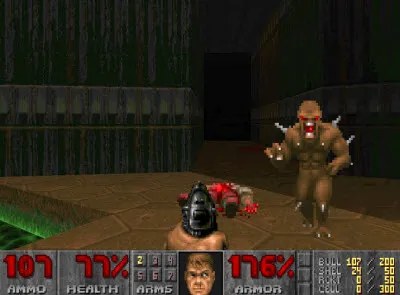
Every console wanted Doom; the Jaguar got the version to beat. id supervised this port personally, and it shows: full-screen, fast, and faithful in a way the SNES attempt could only dream about, with two-player deathmatch over the JagLink cable as a trophy feature. Honesty requires the caveats — cartridge space cost a few levels, and the music is absent mid-game, which changes the mood more than you’d think. But as a demonstration of what the hardware could do in the right hands, nothing else came close. This is the port that made Jaguar owners feel, briefly, like they’d bet correctly.
The top of the Jaguar library isn’t a consolation prize. Alien vs Predator, Tempest 2000, Doom — put them against anything from 1994 and they stand their ground.
2. Tempest 2000 (1994)
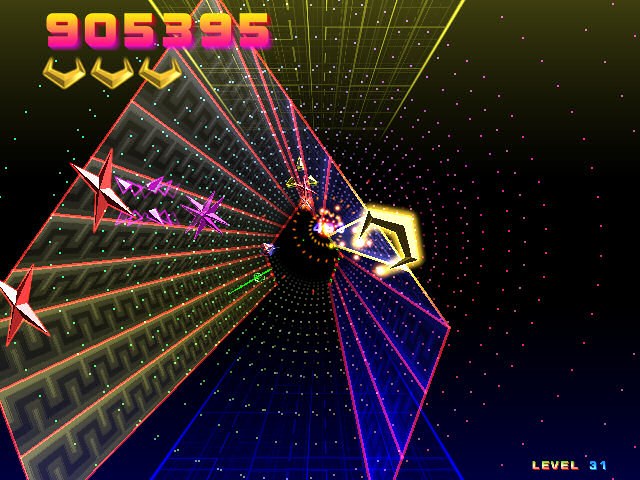
The killer app. Jeff Minter took Dave Theurer’s 1981 arcade classic — blast down a wireframe tube at things climbing up to kill you — and rebuilt it as a full sensory event: melt-o-vision graphics, particle explosions, and a techno soundtrack so good it got its own CD release. It is, without serious argument, one of the greatest arcade remakes ever made, the rare update that makes the original look like a rough draft. Tempest 2000 sold Jaguars. People bought the console for this game, played it until their eyes glazed, and considered the money well spent. Some of them are still playing it.
1. Alien vs Predator (1994)
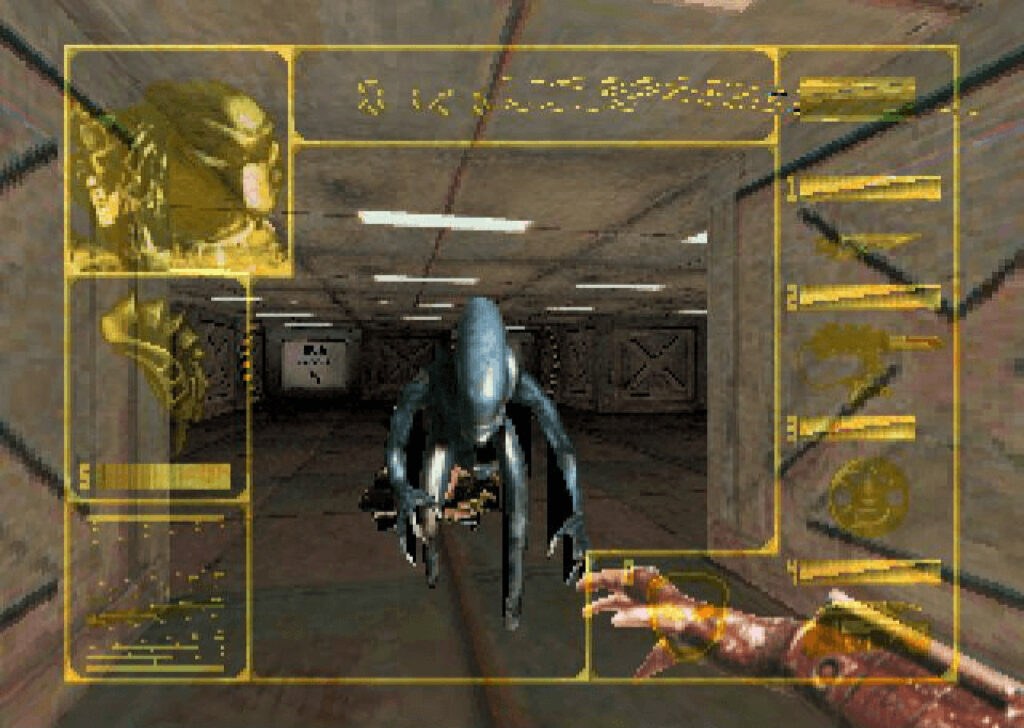
Rebellion’s masterpiece, and the Jaguar’s signature game. Three full campaigns — Colonial Marine, Alien, Predator — three genuinely different ways to move through the same doomed space station, years before that structure became an industry habit. As the Marine, you’re under-armed prey in a motion-tracker nightmare of ventilation shafts and failing nerve. As the Alien, you’re a wall-crawling ambush with a tail. As the Predator, you’re the apex bully the movies promised. It was scary in 1994 in a way console shooters simply weren’t yet — atmospheric, patient, cruel. First-person gaming on consoles was a novelty act when this landed; Alien vs Predator treated it as the future, and it was right. If the Jaguar is remembered for one cartridge in a hundred years, it’s this one.
The bottom line
So where does that leave the Jaguar? Honestly assessed: it’s a fifteen-game console wearing a fifty-game library like a borrowed suit. Below this list, the quality doesn’t decline — it evaporates, into half-finished ports, tech demos with price tags, and Kasumi Ninja. We will not be writing “The 15 Best” follow-ups for the bottom fifteen.
But judge a library by its best, and the Jaguar earns its shelf space. Its finest games weren’t accidents — they came from developers like Rebellion, Jeff Minter, and id, who looked at Atari’s strange, doomed hardware and saw possibility instead of a punchline. The 64-bit math was marketing. The games at the top of this list were not. Do the math on those.