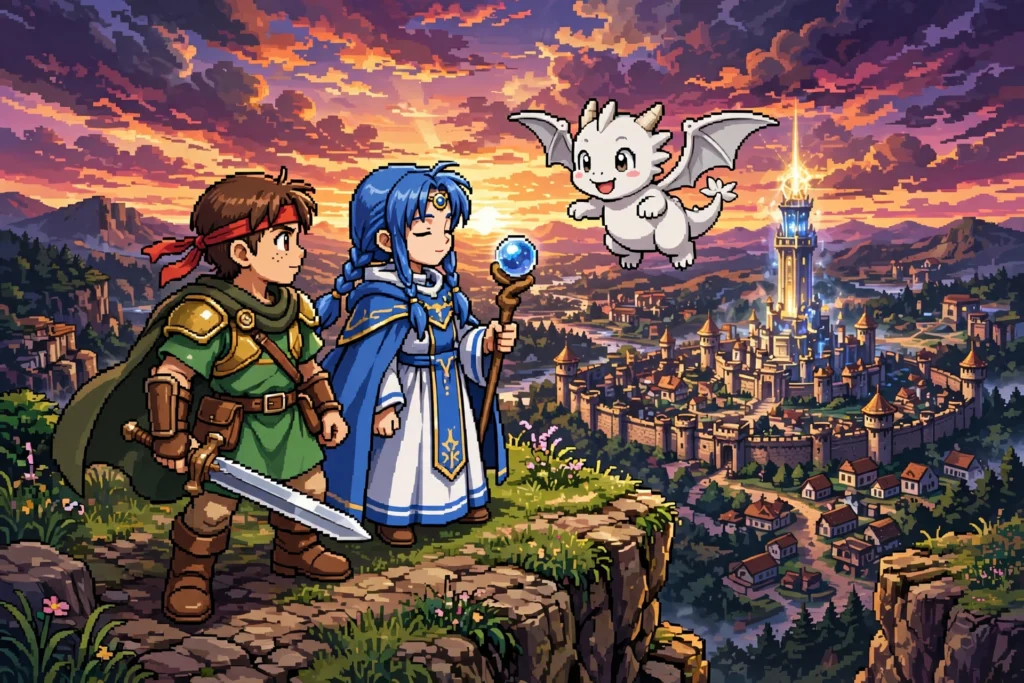
Ask somebody what the Sega CD was for and they’ll say Night Trap. Sewer Shark. Grainy full-motion video of actors who needed the work. And sure, that stuff happened — but it happened on the same machine that quietly assembled one of the finest RPG libraries of the 16-bit era, disc for disc maybe the strongest any console managed. We’ve argued on this site before that the Sega CD saw the future. This little shelf of role-playing games is the best evidence we have.
The numbers look like a joke: barely a dozen true RPGs in North America, on an add-on that sold a fraction of the Genesis. But look at the names. Two of the most beloved JRPGs ever localized. A strategy-RPG epic so big it needed extra hardware to finish. Falcom, Westwood, New World Computing, FTL — PC royalty and Japanese masters sharing one black plastic tray. This is the list, ranked by one fan’s affection and twenty years of arguments.
First, the Working Designs factor
You can’t talk about Sega CD RPGs without talking about Working Designs, the tiny California publisher that treated localizations like events. Full-color manuals with foil-stamped covers. Disc art variants. Translations written by people who clearly loved the material, stuffed with jokes, warmth, and the occasional pop-culture gag that made purists clutch their pearls. They also tinkered — difficulty tweaks, rebalanced encounters — and argued, mostly correctly, that a great adaptation beats a literal one.
Working Designs brought over four of the games on this list, and without them the Sega CD’s RPG shelf is a trivia question instead of a legacy. When the company closed in 2005, an era ended. These discs are its monument. The rest of the shelf came from everywhere — Sega itself, Falcom, Hudson, and the great PC houses — which is part of the charm: for one brief moment, everybody’s RPG traditions shared a single spindle.
The list
1. Lunar: Eternal Blue
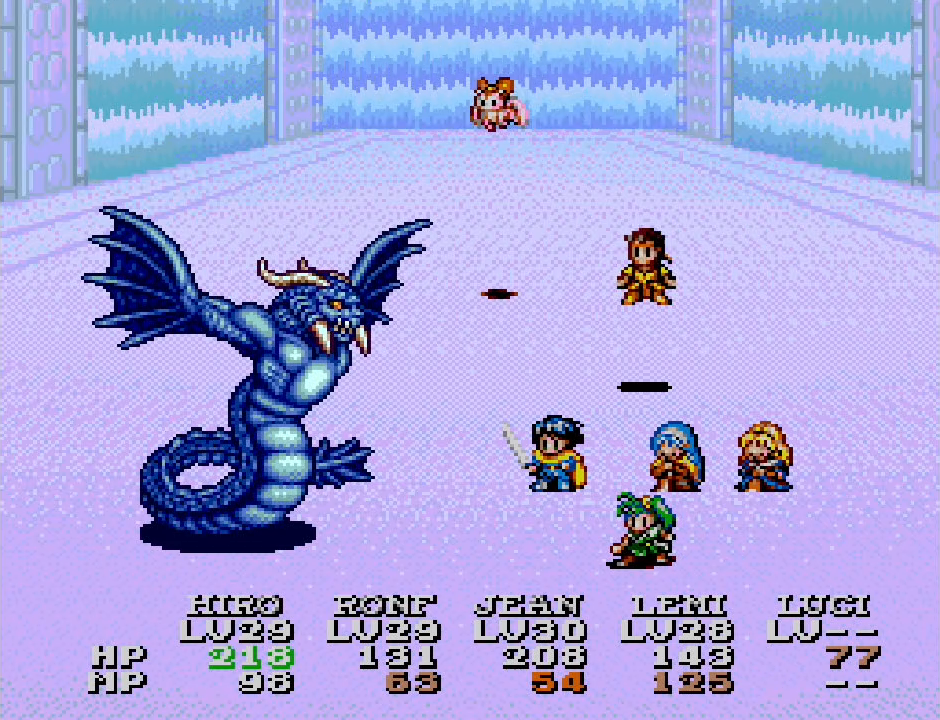
The best game on the Sega CD, full stop — and the argument isn’t really close. Set a thousand years after the first Lunar, it follows Hiro, a young treasure hunter, and Lucia, a mysterious girl from the Blue Star who arrives with a warning and a curse. Everything the original did, Eternal Blue does bigger: a longer quest, funnier writing, more animated cutscenes, more voice acting, and an emotional range that swings from genuinely hilarious to quietly devastating. Ruby, your baby-dragon sidekick, remains the gold standard for mascot characters.
Working Designs’ localization is the company’s masterpiece — peak-era WD, confident enough to let scenes breathe and land their jokes. They also toughened the game up for the West, a house habit that made the boss fights genuine ordeals and the victories sweeter. There’s even a substantial post-game epilogue, a rarity in 1995, for players not ready to say goodbye. If the Sega CD is remembered for one disc, make it this one.
2. Lunar: The Silver Star
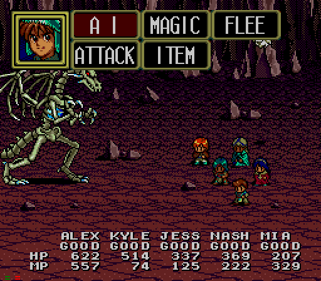
Before Eternal Blue refined it, The Silver Star invented it — and in December 1993, nothing on a home console felt like this. Alex, a boy from the village of Burg, dreams of following his hero Dragonmaster Dyne; what he gets is a journey across a world where dragons are dying, a Magic Emperor is rising, and his childhood friend Luna’s singing voice matters more than anyone understands. Animated cutscenes. Voice acting. A real CD soundtrack. On a Sega Genesis add-on, while cartridge games were still beeping.
The story is classic shonen-manga comfort food — prophecy, friendship, a villain in Ghaleon who steals every scene he’s in — and Working Designs’ script gave it a warmth the genre hadn’t seen in English before. Later remakes polished it, but the Sega CD original has a scrappy sincerity the remakes never quite recaptured.
3. Shining Force CD
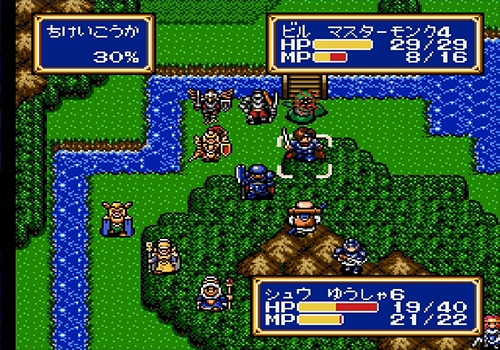
Four games wearing a trench coat. Shining Force CD packs in remakes of the two Game Gear Shining Force Gaiden titles, a third book that continues their story with an original campaign, and a fourth “museum” book that throws your army against a gauntlet of past bosses. The grid-based tactical combat is the Genesis Shining Force formula at its purest — position your birdmen, centaurs, and mages, watch the little zoomed-in battle animations, suffer when the AI crits your healer.
One glorious period quirk: the later books required the Sega CD Backup RAM cartridge, because the system’s internal memory couldn’t hold the campaign. Even the save files were epic. The CD format earned its keep in the soundtrack, too — the Gaiden scores rearranged with a richness the Game Gear could never have dreamed of. Sega published this one themselves, no Working Designs needed, and it’s the most pure strategy you can spin on the hardware.
4. Popful Mail
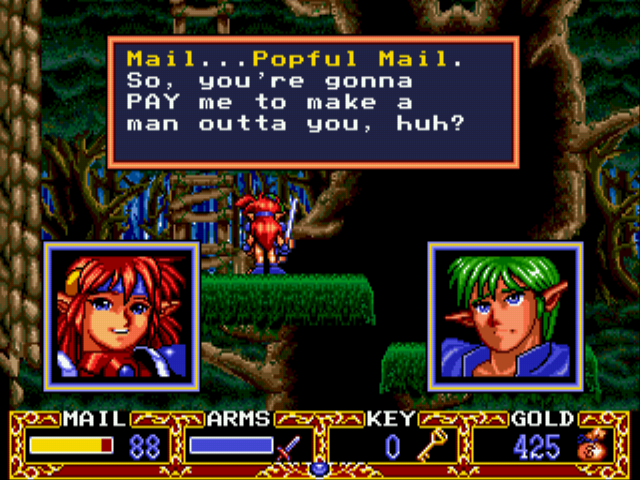
The most charming game on this list, and Falcom’s brightest afternoon. Mail is a bounty-hunting elf with a sword and a mercenary streak; her hunt for a rogue wizard pulls in Tatt, a gentle magician, and Gaw, a winged gremlin who communicates mostly in his own name. You swap between all three on the fly, each with different weapons and movement, through candy-colored stages that play like an action-RPG got loose in a platformer.
Working Designs went full Saturday-morning cartoon on the localization — big voices, bigger jokes — and early on, Sega reportedly considered rebranding the whole thing as a Sonic spin-off. Thankfully cooler heads prevailed. Bouncy, funny, and criminally overlooked.
5. Dark Wizard
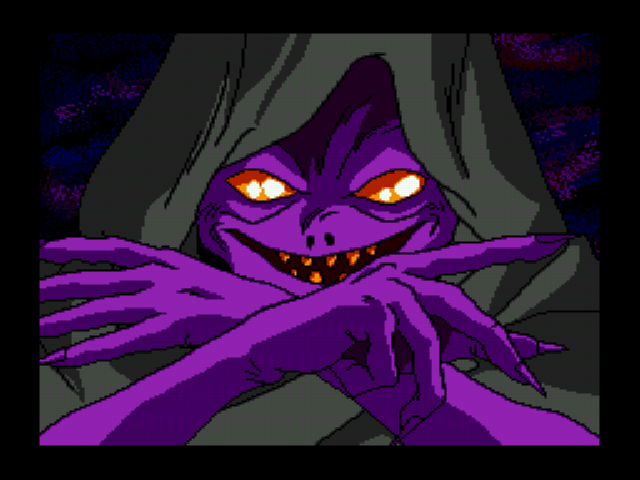
Sega’s own swing at the strategy RPG, and it’s enormous. A demon god stirs, his servant schemes, and you — choosing one of four rulers, each commanding different peoples and unit types — raise armies on hex-grid battlefields to stop him. Summon monsters, hire mercenaries, level your troops, manage whole campaigns that sprawl for dozens of hours apiece. The box bragged about hundreds of hours of gameplay, and for once the brag undershot: four distinct campaigns, each a full strategy game.
Dark Wizard never got a sequel, a remake, or a re-release, which makes the Sega CD the only place this beast lives. For strategy fans, it might be the add-on’s most essential disc.
6. Vay
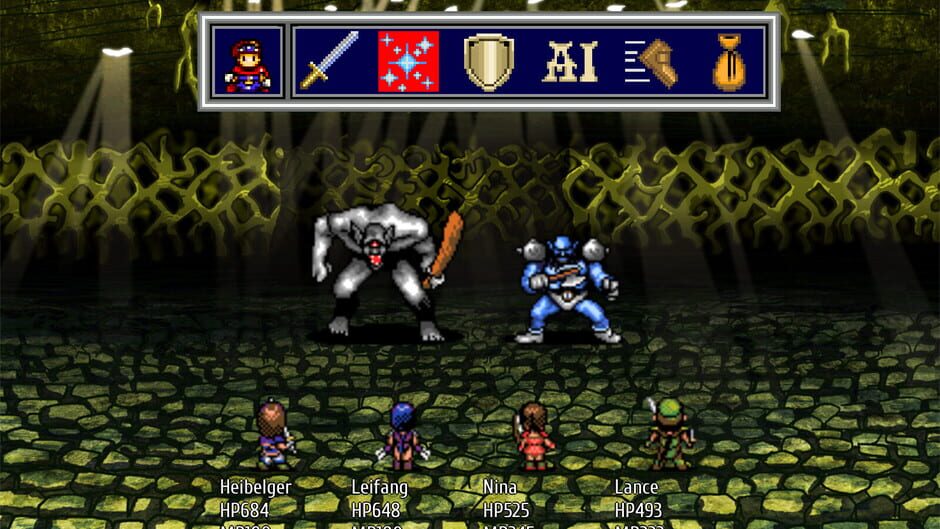
It opens at a wedding. Prince Sandor of Lorath is marrying his beloved Elin when the Danek Empire’s war machines crash the ceremony and carry her off — and the only thing that can fight an empire of robots is the Vay, a legendary suit of living armor lost to time. Mecha in a fantasy JRPG, years before that was fashionable. This was one of Working Designs’ earliest CD localizations, and you can feel them learning the trade: traditional menu battles, a cheerful script, and an encounter rate that will absolutely test your patience.
Vay is the most conventional game on this list. It’s also a perfect time capsule of 1994 — earnest, grindy, and impossible to dislike.
7. Might and Magic III: Isles of Terra
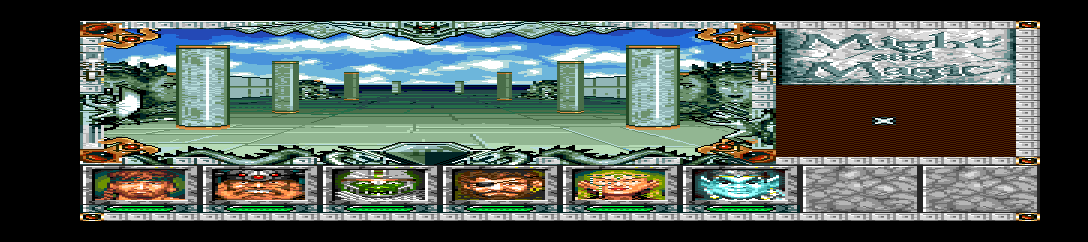
The PC dungeon-crawl aristocracy, on a Sega disc. New World Computing’s third Might and Magic sends your party across the floating Isles of Terra in first person, grid-stepping through towns, castles, and caverns in pursuit of the rogue Guardian Sheltem — a storyline quietly braided into classic CRPG canon. It’s a “blobber” in the best sense: six adventurers moving as one, trading blows in turn-based combat, mapping a world that rewards nosiness.
The Mega CD port stayed on the Japanese side of the ocean, which makes it the import gem of this library — and proof the Sega CD’s RPG reach extended well past the usual JRPG suspects.
8. Eye of the Beholder
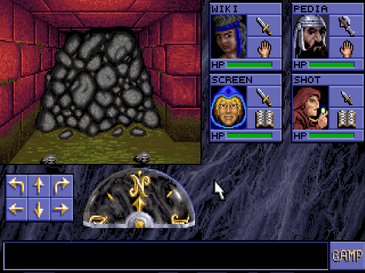
Westwood’s AD&D masterpiece, dragged dripping out of the sewers of Waterdeep. Something is down in the dark beneath the city, and your party of four descends to find it — real-time, first-person, every corridor a rumor of traps and things with too many eyes. The beholder at the bottom, Xanathar, is still one of gaming’s great final exams.
The Sega CD version has a secret weapon no PC ever got: a brand-new soundtrack by Yuzo Koshiro, yes, the Streets of Rage composer, giving the dungeon a strange synth pulse that turns rat tunnels into a nightclub at 3 a.m. It’s the most atmospheric way to play a classic.
9. Dungeon Master II: The Legend of Skullkeep
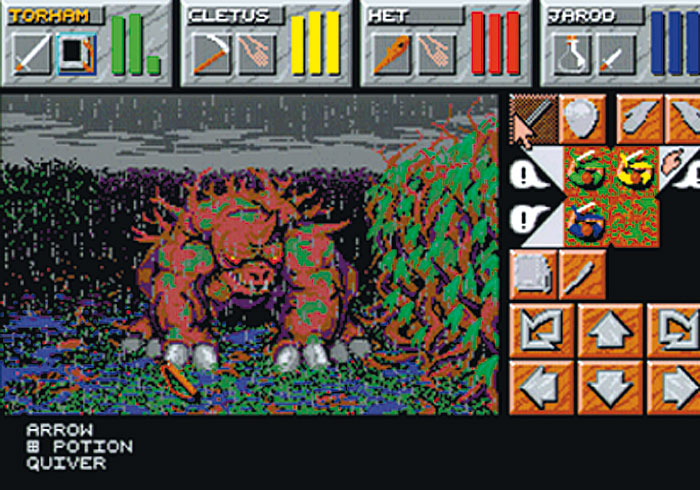
FTL’s Dungeon Master rewired dungeon crawling in 1987; the sequel actually debuted on the Mega CD in Japan, which tells you how seriously this platform took the genre. Back to Skullkeep: real-time exploration, a rune-based magic system you assemble spell by spell, and a new minion system that lets you conjure creatures to haul your loot and watch your back. Rain drums on the castle roof. Torches gutter. Everything wants to eat you.
It’s the thinking player’s crawler — systems stacked on systems, simulated with a devotion modern games rarely attempt. The Sega CD version remains the connoisseur’s cut.
10. Dungeon Explorer
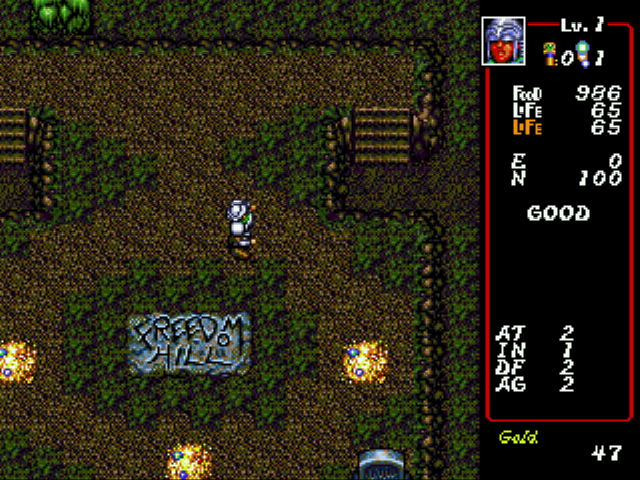
The TurboGrafx-16 cult classic, rebuilt for Sega CD with redrawn graphics and a CD soundtrack — and it brought friends. Dungeon Explorer is Gauntlet grown up: choose your class, from fighter to elf to warlock, and hack through monster-spawner dungeons in top-down co-op for up to four players. Under the arcade surface is a real RPG skeleton — stats, classes with genuinely different playstyles, and dungeons that punish lone wolves.
On a couch, with a multitap and three friends, this was the Sega CD’s best multiplayer night. Death costs you dearly, revivals are frantic, and the arguments over who grabbed the food are a genre unto themselves. It still slaps.
11. Heimdall
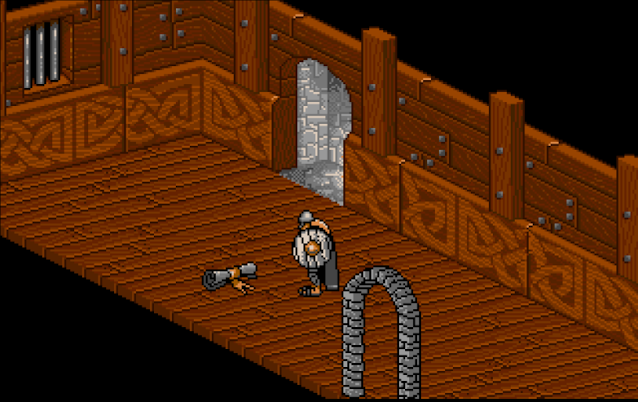
Loki has stolen the weapons of the gods — Thor’s hammer, Odin’s spear, Freyr’s sword — and hidden them in the mortal world. The gods’ answer is Heimdall, a young Viking raised for exactly this errand. Core Design’s isometric adventure-RPG opens with three arcade trials (axe-throwing, pig-catching, ship-board combat) that literally build your character’s stats, then opens into a witty Norse quest full of islands, riddles, and British humor.
It began life on the Amiga, and the Mega CD version carries that computer-RPG DNA proudly: part adventure game, part action-RPG, all personality. A fitting closer — this library always was part console, part computer, entirely ahead of its time.
Little library, long shadow
Count them again: eleven games, give or take an import, on an add-on the industry wrote off as a punchline. But this shelf taught a generation what CD-ROMs were actually for — not grainy video of somebody’s garage band, but voice, music, animation, and scale in service of story. Lunar’s remakes carried its torch for decades. Working Designs’ house style — the premium packaging, the human translations, the sheer love — is the template every boutique publisher since has followed, knowingly or not.
The Sega CD’s RPG library wasn’t big. It was dense — every disc a argument that this strange little add-on deserved better than its reputation.
So the next time somebody reduces the Sega CD to a couple of FMV jokes, hand them a controller and a copy of Eternal Blue. The little library speaks for itself. It always could. It just needed people willing to listen past the static.