Mini consoles had a good run, but they always had a lie at the centre of them: a Commodore 64 with a keyboard you cannot type on is not really a computer, it is a souvenir. Retro Games Ltd seems to have reached the same conclusion. Its next machine, THEA1200, is a full-size recreation of the Amiga 1200 — the real wedge shape, at the real size, with a working keyboard you are actually meant to use — and it is now set to launch on Friday 4 December 2026 at £169.99 in the UK, around $189 in the US and €189.99 in Europe. It was supposed to arrive on 16 June. The delay is frustrating, it is also the most encouraging thing about the whole project, and this piece is about why.
The delay, honestly explained
THEA1200 has had a longer road than most. Teased in 2023, knocked sideways by the long-running legal dispute over Amiga OS rights, it was re-unveiled at Gamescom in August 2025 with pre-orders opening that November and a June 2026 launch date. Then, in May 2026, Retro Games’ chief technical officer Chris Smith signed a statement pushing it to December. The hardware, he said, is complete — but global chip shortages and rising plastic production costs had eaten the schedule, the knock-on effect hit the machine’s operating system, and “the OS isn’t yet where it needs to be.” Rather than ship a more basic OS that “wouldn’t do justice to THEA1200,” they chose to be late.
That sentence matters more than the date does. A games carousel is easy; every mini console has one. What Smith is describing is a machine whose software — a real, usable Amiga desktop — is the product, and which fails if the desktop feels like a costume. Retro hardware lives or dies on exactly that kind of honesty. We would rather wait six months for the computer than get the souvenir on time.
A computer, not a console with a keyboard glued on
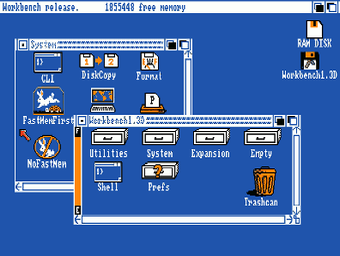
Here is the specification that separates THEA1200 from its own little brother, THEA500 Mini. The keyboard works — all of it, full size. Workbench 3.1 is included, and the machine can boot directly into the desktop instead of the games carousel, with the bundled two-button USB “tank” mouse in hand. An eight-button, CD32-style USB gamepad is in the box for the games, along with an HDMI cable and a USB-C power cable — though note, and budget for it, that the AC power adapter itself is sold separately and needs to be a 3-amp one. Around the back: four USB ports, HDMI out, USB-C for power.
Under the hood it emulates the A1200’s AGA chipset as well as the older A500’s OCS and ECS modes, which between them cover effectively the whole classic Amiga library. There are save and resume features, four save slots per carousel game, and display options including CRT-style filters for those of us who cannot look at a raw pixel without flinching. None of that is exotic in 2026. What is exotic is the invitation the hardware makes: sit down, type something, open a paint package — PPaint, the Amiga’s much-loved art standby, is slated to be in the bundle — and make something, the way the original machine’s owners did between games. Minis get switched on and off. Computers get lived on.
The 25 games: adventures first, and one genuine event
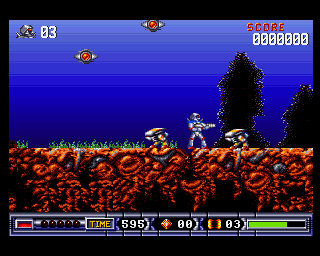
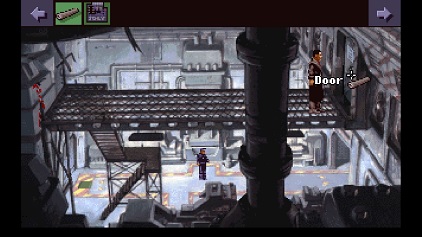
The built-in library of 25 is smarter than the usual greatest-hits shuffle. The Turrican trilogy covers the action crowd, Ruff ‘n’ Tumble and Slam Tilt bring platforming and pinball, and Wings and Alien Breed: Tower Assault are there for the shooters. But the centre of gravity is Cinemaware and the adventure games: Defender of the Crown I and II, It Came from the Desert I and II, The King of Chicago, Lords of the Rising Sun, Rocket Ranger and S.D.I., alongside Revolution’s Beneath a Steel Sky and Lure of the Temptress. That is a library chosen by somebody who understands that the Amiga’s soul was never only in its arcade ports.
And then there is the headline: The Settlers II: Gold Edition. The Settlers II never had a proper Amiga release in its era — its arrival on the platform, some thirty years later, is a genuine event in Amiga land, the kind of “impossible port” story this scene runs on. Building your little road-and-flag economy on a machine wearing an A1200’s face is exactly the sort of full-circle moment these recreations exist to create.
Bring your own: USB, WHDLoad and an open door
A fixed library of 25 would still leave THEA1200 as a very good souvenir, so the most important line in the spec sheet is the open one: you can load your own legally owned software from USB — floppy images, hard-drive images and CD-ROM images — with WHDLoad support built in. Anyone who read yesterday’s guide to playing Amiga games today knows what that means in practice: the vast WHDLoad catalogue of hard-drive-installable classics, running from a menu, no floppy swapping, no thirty-year-old disks shedding their oxide into a drive. It turns the machine from a museum piece into a platform — your platform, stocked with your games, your demos, your old Deluxe Paint experiments if you still have them.
That openness is also the answer to the purist’s objection, which deserves a fair hearing. No, this is not original hardware: it is emulation in a beautiful case, without the A1200’s expansion trapdoor, its ageing capacitors or its increasingly alarming second-hand prices. If you want the real machine, restored and accelerated, that hobby is thriving and this site celebrates it regularly. THEA1200 is for everybody else — and for real-hardware owners who would like one Amiga in the house that simply works, every time, on the big TV, when a friend asks what the fuss was about.
Who should actually buy one?
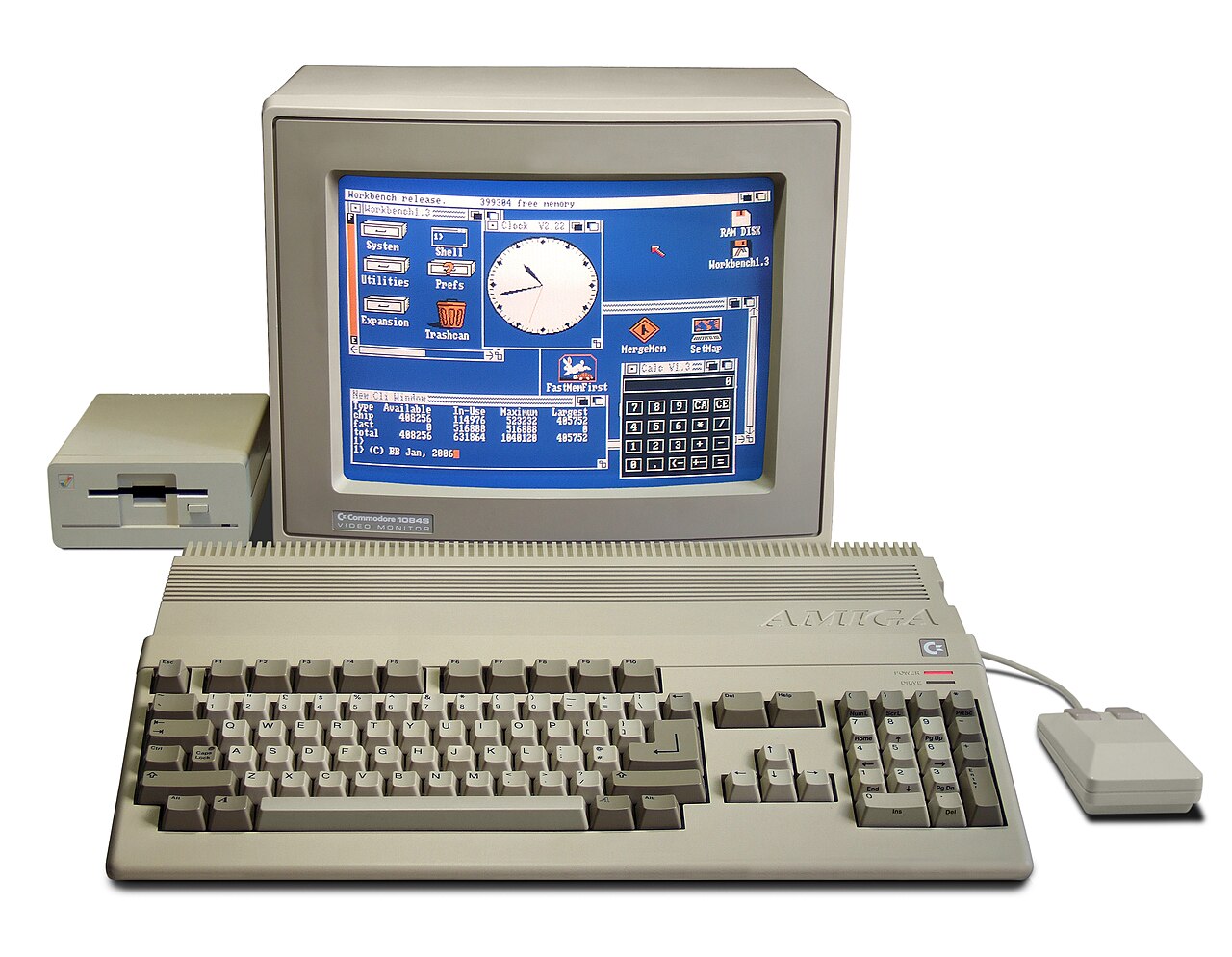
At £169.99 this is not mini-console money, and it should not be judged as one. Judge it against the cost and weekend-consuming effort of buying, recapping and modernising a real A1200, or against an FPGA setup, and the proposition sharpens: a new, warrantied, HDMI-native Amiga that boots to Workbench, plays the AGA library, sideloads your own collection and sits on the desk looking exactly right. If your Amiga memories are purely of games, THEA500 Mini already serves you for less. If your memories include the desktop — the icons, the Shell, the tracker software, the demoscene — the keyboard is not a gimmick. It is the whole reason this machine exists, and it is why the December delay, spent getting the OS right, is the best news THEA1200 could have given us.
A mini is switched on and switched off. A full-size computer invites you to stay. That is the bet THEA1200 is making — and it is the right one.
Pre-orders are open now ahead of 4 December; UK buyers in the first production run even get a collector’s issue of Zzap! Amiga in the box, which tells you exactly who this machine thinks its people are. Whether it earns a permanent place on the desk will come down to that OS — the thing they stopped the launch to fix. We will review it properly when it lands. For now: the full-size retro computer, the format THEC64 full-size proved people wanted, is coming for the Amiga at last — six months late, and quite possibly all the better for it.
🕹️ Shopping for the hardware?
We keep current prices and a full buying guide for this one over at our sister store, My Arcade Cabinet.