Before the cartridge wars, the front line of gaming ran across the kitchen table. The ten games below span a quarter of a century — from a haunted house with a hair-trigger chimney to the card game that ate the world — and they share one quality no console could ever quite copy: everything that happens, happens to a physical thing you can pick up, knock over or fire across the room. Some are strategy landmarks. Some are barely controlled chaos. All ten earned their place in the cupboard, and most can still be bought, borrowed or dug out of an attic today.
10. Ghost Castle (1970)
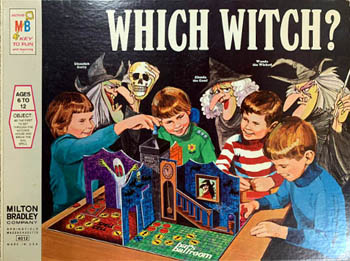
Milton Bradley sold this in America as Which Witch? and in Britain as Ghost Castle, but the ritual was identical everywhere: a cardboard haunted house stands in the middle of the board, players creep through its four rooms, and sooner or later somebody has to drop the ball down the chimney. Where it rolls decides which trap springs — a suit of armour topples, a broom sweeps, a staircase gives way — and any explorer caught in the wrong room is sent back to the start. There is almost no strategy in it. That is precisely the point. The whole game is a held breath, and for a generation of children it was their first experience of a machine that could betray them at random.
9. Dragster (1976)

Every other game on this list moves its pieces with dice, cards or rules. Dragster moves its four little racing cars by having you flick a marble at them. Connect cleanly and your car surges down the strip; catch it a glancing blow and it veers off at a sulk. Getting the weight of the flick right is a skill that evaporates the moment excitement takes over, which is immediately, so games dissolve into a marble-skittering free-for-all around the table legs. As a simulation of drag racing it is hopeless. As a machine for generating shouting, it has few equals from its decade.
8. Pac-Man (1982)
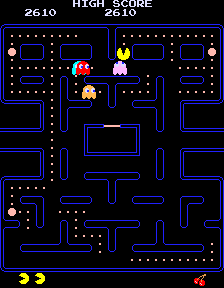
Arcade mania produced dozens of board game conversions, and most were dice-crawls wearing a licensed hat. Milton Bradley’s Pac-Man is the one that understood the assignment. Up to four players race chunky Pac-Man figures around the maze, and the figures genuinely eat: push yours down over one of the white marbles and it swallows it into a little tray. Two dice drive each turn — one moves your Pac-Man, the other moves a shared ghost — and a yellow power pellet lets you turn the tables and chomp a ghost for bonus marbles. It is simple, tactile and noisy in all the ways the arcade game was, and it remains the high-water mark of the whole conversion craze. (Its shelf-mates Donkey Kong and Frogger are worth a look too.)
7. Lost Valley of the Dinosaurs (1985)
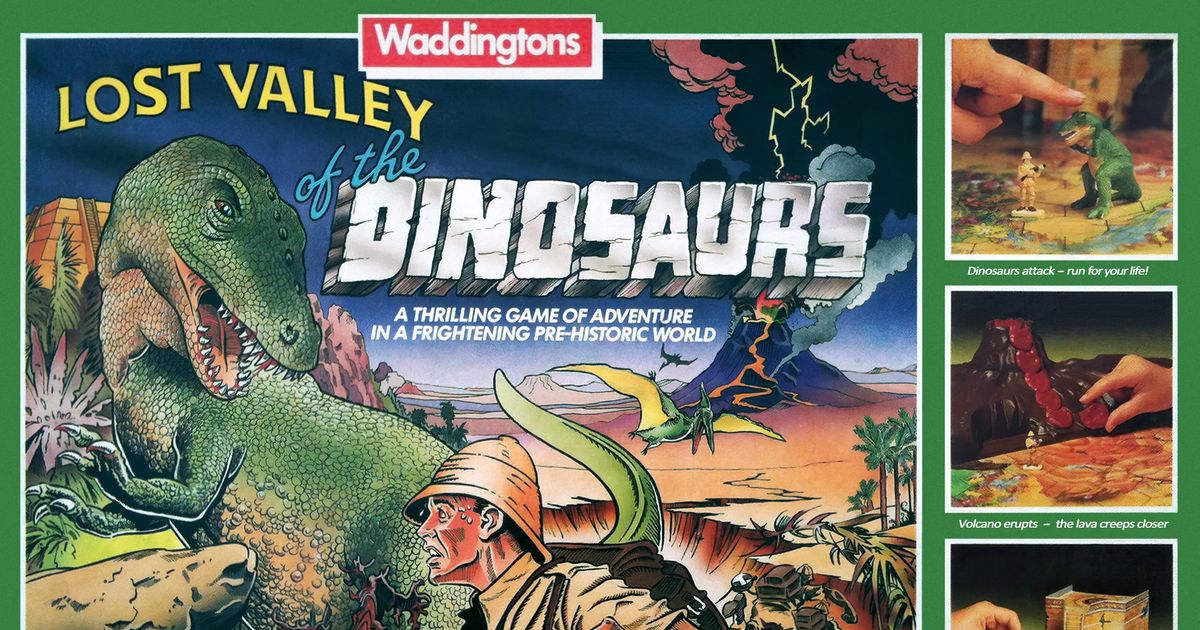
Waddingtons never did things by halves, and this is their gloriously overproduced adventure: a three-dimensional valley, a temple full of gold coins, and an expedition race to haul three of them out again. Between you and the exit stand a stomping T-Rex, a pterodactyl that swoops down and carries off the unlucky, a swamp monster in the middle of the board, and a volcano that leaks red plastic lava across the escape route as the game goes on. It is aimed squarely at children and makes no apology for it — every component is a toy first and a rule second. Plenty of modern family games are cleverer. Very few are this much fun to simply look at.
6. Dungeon! (1975)
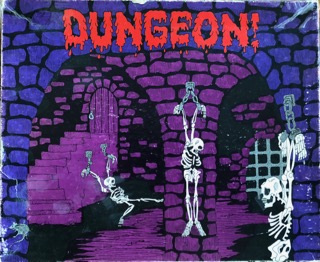
One of the most repeated claims in gaming history has this as a forerunner of Dungeons & Dragons. The truth runs the other way, and is more interesting: TSR published D&D in 1974, then David Megarry’s Dungeon! a year later, boiling the roleplaying experience down into a board, a fistful of monster and treasure cards, and a race. Pick a hero — the mightier the hero, the more treasure they must haul out — descend through six levels of escalating monsters, fight with dice rolls, grab the gold and get out alive. Combat is brutally luck-driven and death can arrive on turn one, but the shape of the next fifty years of gaming is all here in embryo. It has been reissued repeatedly, including modern editions from Wizards of the Coast, which tells you how well the distillation worked.
5. Escape from Atlantis (1982)
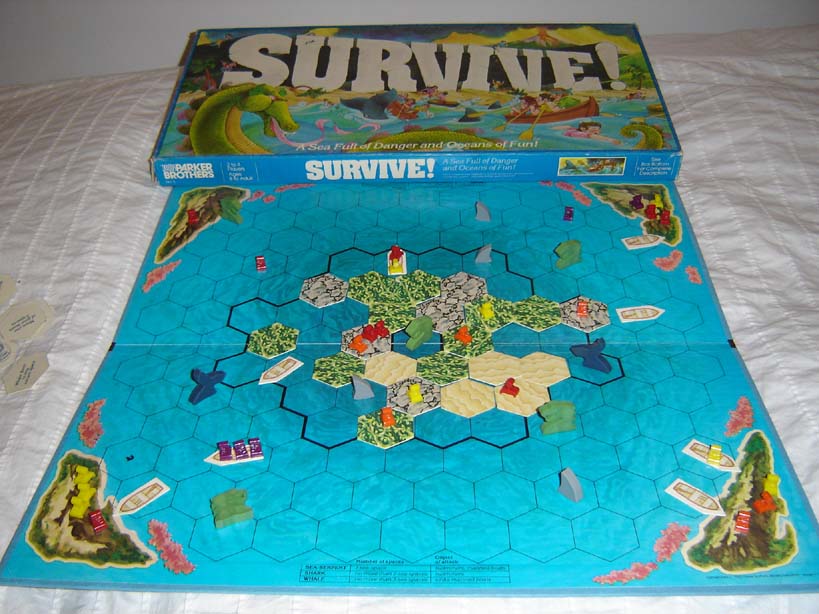
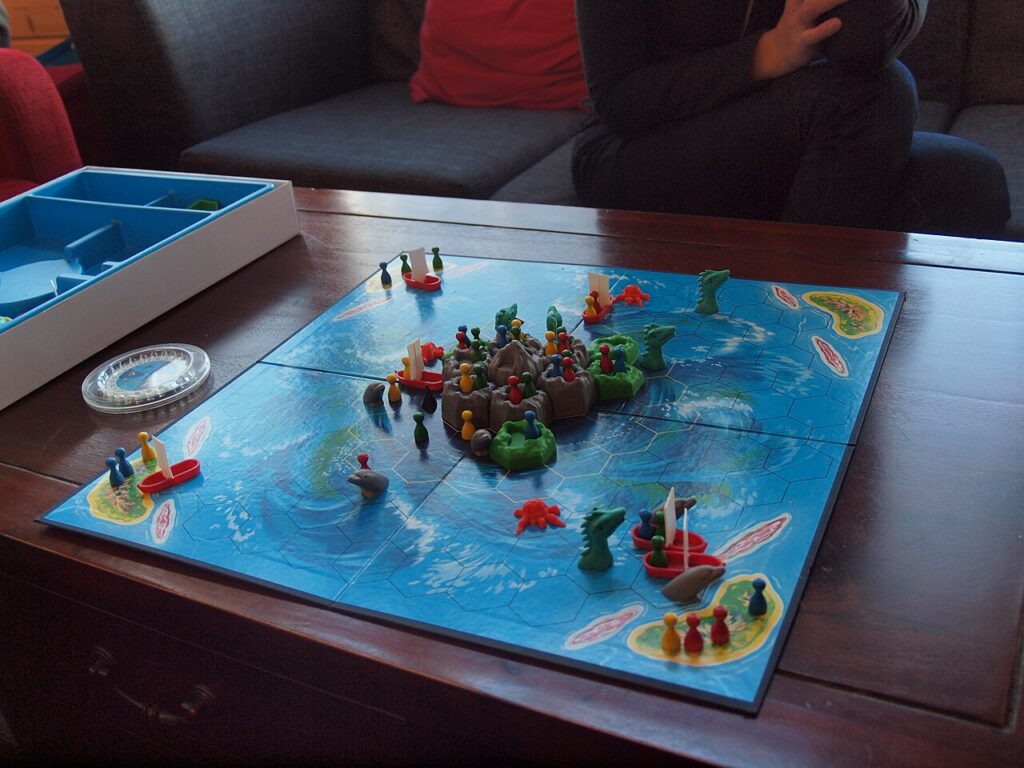
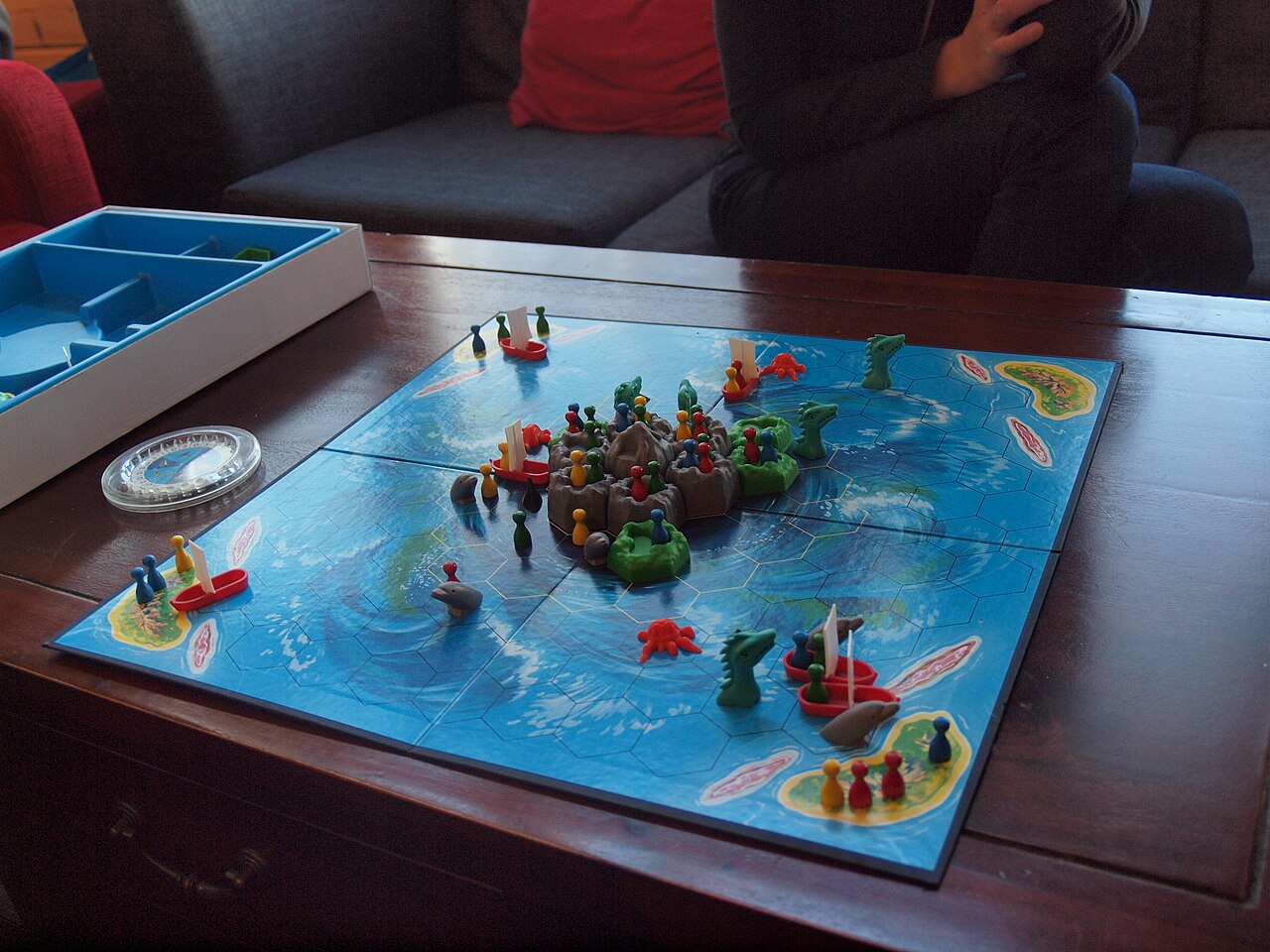
Julian Courtland-Smith’s sinking-island race appeared from Waddingtons in Britain as Escape from Atlantis and from Parker Brothers in America as Survive! — and under either name it is the meanest family game ever boxed. Your explorers start on an island that is literally dismantled as you play: a land tile is removed every turn. The race to the shore islands runs through water patrolled by sharks that eat swimmers, whales that smash boats, and sea serpents that take both. The genius cruelty is that moving the monsters is part of your turn, so every player spends half the game steering disaster into everybody else’s swimmers. It came back in print as Survive: Escape from Atlantis! and has never really gone away since.
4. Crossbows and Catapults (1983)
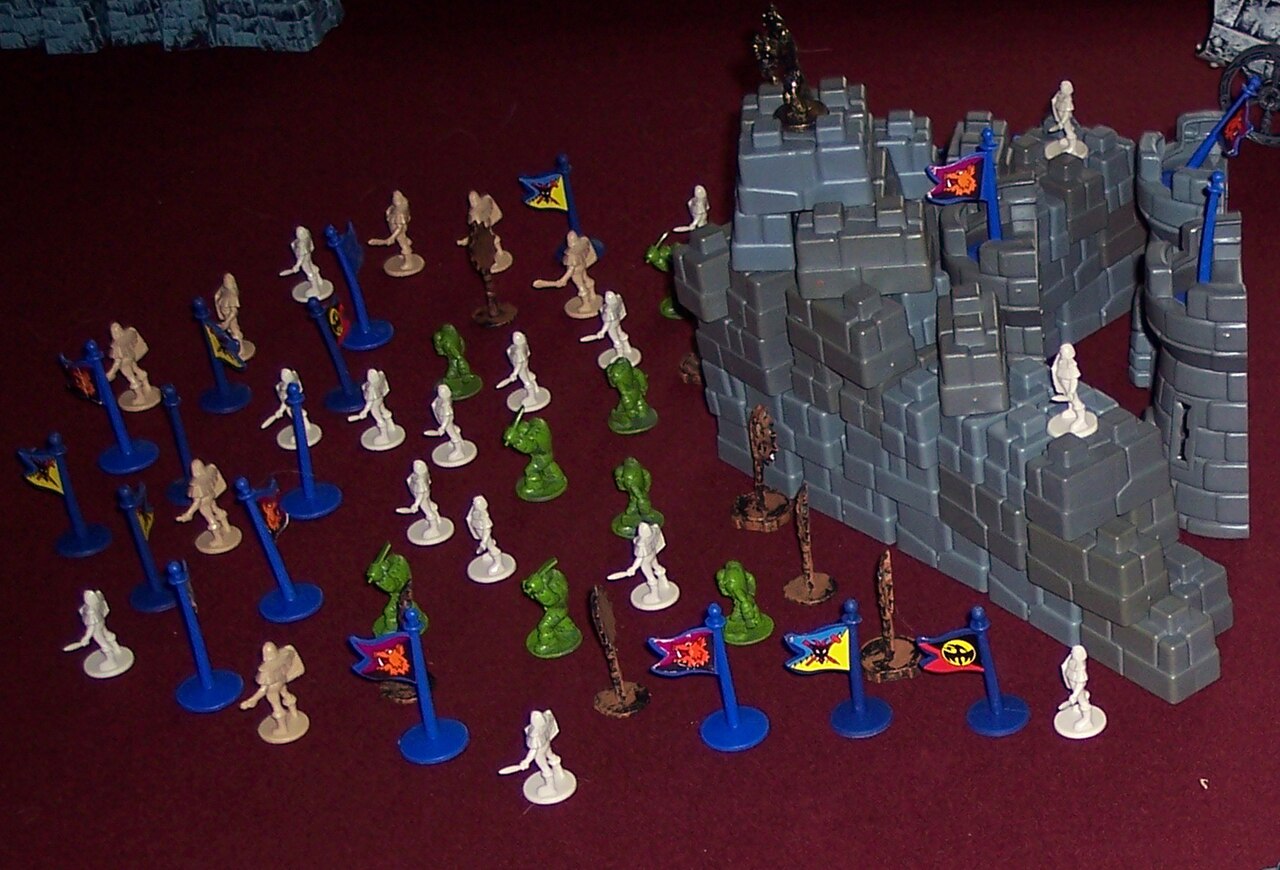
Lakeside’s siege game is the only entry here where the box contains actual artillery. Each player builds a castle from interlocking wall bricks, mans it with little warriors, and then takes turns firing rubber-band crossbows and catapults at the other side’s masonry until somebody’s flag falls. The building phase rewards care — a well-braced wall genuinely survives longer — but the game lives in the physics: a perfect shot that sends an entire tower sliding across the carpet is a memory children carry for decades. It returned in 2007 as Battleground, with knights besieging orcs, and the modern version keeps the one rule that matters: if it can be knocked down, it will be.
3. HeroQuest (1989)
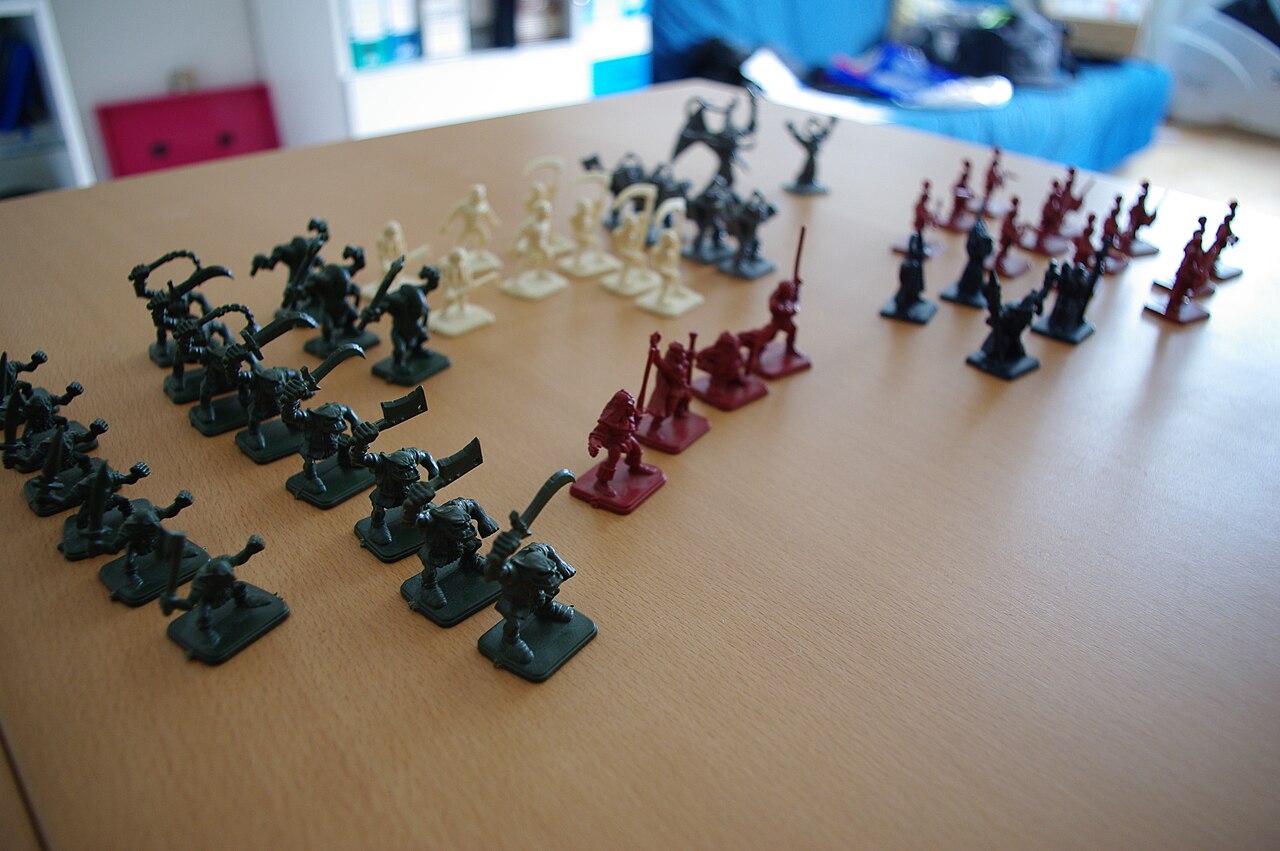
If one game on this list can claim to have changed lives, it is this one. A joint production between Milton Bradley and Games Workshop, designed by Stephen Baker, HeroQuest put one player in charge of the dungeon — Zargon in America, Morcar in Britain — and sent four heroes (barbarian, dwarf, elf, wizard) through quest after quest of plastic doors, cardboard furniture, treasure traps and lurking chaos warriors. The board never changed; the furniture and blocked doorways rebuilt it into a new labyrinth every time. For thousands of kids it was a first taste of roleplaying and a first step toward the full Warhammer hobby, which was, of course, exactly the idea. Gremlin turned it into a fine computer game in 1991, and Hasbro’s crowd-funded revival in 2021 proved the dungeon door never really closed.
2. Space Hulk (1989)
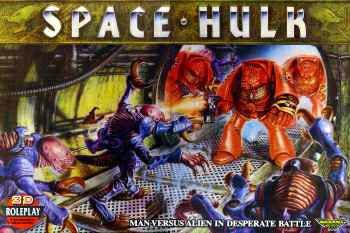
The same year, Games Workshop published the tensest two-player game ever put in a box. A squad of Space Marine Terminators boards a derelict starship infested with Genestealers, and Richard Halliwell’s design wrings Aliens for every drop of dread: the alien player places blip counters whose true numbers stay hidden until a Marine rounds the corner and finds three Genestealers where he hoped for none. The Marines have the firepower and a merciless countdown; the aliens have infinite patience and every corridor. It is superbly balanced, endlessly reconfigurable through its interlocking corridor tiles, and it has been reprinted in edition after edition — the fourth, in 2014, sold through and promptly became a collector’s item all over again. Seek out a first edition and you’ll find the cruellest detail of all: the Marine player originally played against a sand timer, every order issued with the grains running out, which is precisely the pressure the fiction demands and precisely why so few boxed games have ever made two people sweat like this one. The video game adaptations keep coming. The cardboard original is still the one to beat.
1. Magic: The Gathering (1993)
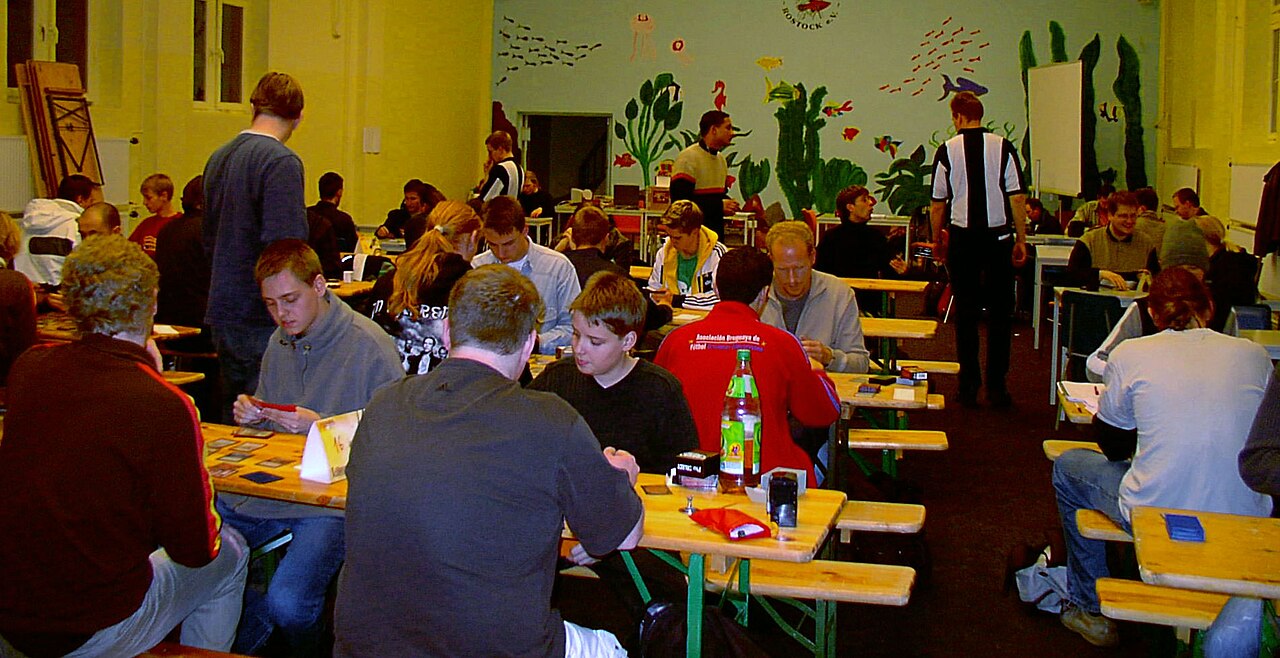
Strictly a card game rather than a board game, and it tops the list anyway, because nothing else here bent the future around itself quite like Richard Garfield’s invention. Two wizards, twenty life points each, a deck built — and this was the revolution — bought, traded and customised card by card. Win by force, or by emptying the other wizard’s library. Published by Wizards of the Coast in 1993, Magic invented the trading card game as a category, built the tournament scene around itself, and cleared the road for Pokémon and Yu-Gi-Oh! to become planetary phenomena. Everything else on this list is a beloved object. Magic is an ecosystem, still growing three decades later — the strongest possible evidence that the table was never just a waiting room for the television.
The One That Got Away
Every top ten is an argument, so let the record show the loudest objection: Games Workshop’s Talisman (1983), the magical quest game whose adventurers spent entire afternoons circling a board of increasingly lethal regions, has a legitimate claim on at least three places here — and HeroQuest, its younger, more famous stablemate, is what became of the same impulse with a bigger budget behind it. Talisman survives gloriously in print and digital form. It loses this particular fight on a technicality: when the cupboard door opens and the boxes come out, it is the ten above that people reach for first. Your top ten will differ. That, in the end, is what the table is for.
Keep reading: Outsold by Nobody in France: The Top Ten Oric-1 Games · One Coin, No Continues: Gradius, R-Type and the Lost Art of the One-Credit Clear