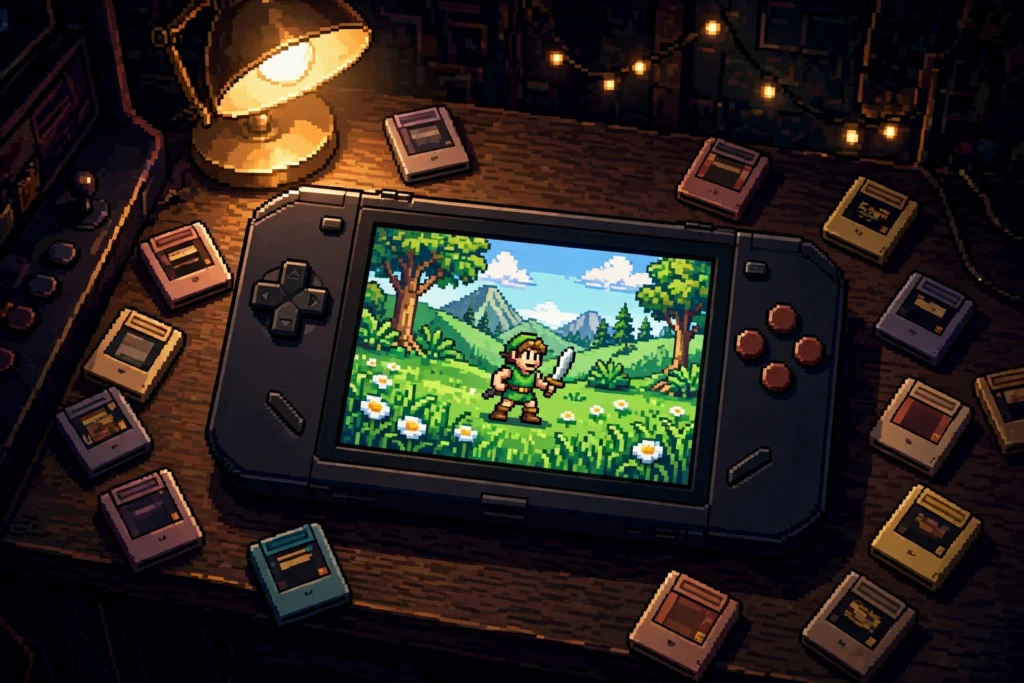
At a glance: Analogue Pocket · FPGA handheld by Analogue, first released December 2021 · Plays Game Boy, Game Boy Color and Game Boy Advance cartridges natively, with adapters for Game Gear, Neo Geo Pocket Color, TurboGrafx-16 HuCards and Atari Lynx · 3.5-inch, 1600×1440 display · $219.99 for the console, Dock sold separately · Our score: 9.0
Short answer: yes, if you own the cartridges. That sentence does almost all of the work in this review, so let’s be clear about it up front. The Analogue Pocket is a beautifully built FPGA handheld that plays your actual Game Boy, Game Boy Color and Game Boy Advance carts — and, with adapters, four more handheld libraries — on the best screen ever fitted to a portable retro machine. In 2026 it remains the most pleasurable way to play a handheld library you already own. If you don’t own cartridges, though, you are not buying a console so much as volunteering to start collecting the most counterfeited, repriced library in the hobby, one $40 cart at a time. Whether the Pocket is worth it is really a question about what’s already on your shelf.
What you’re actually buying
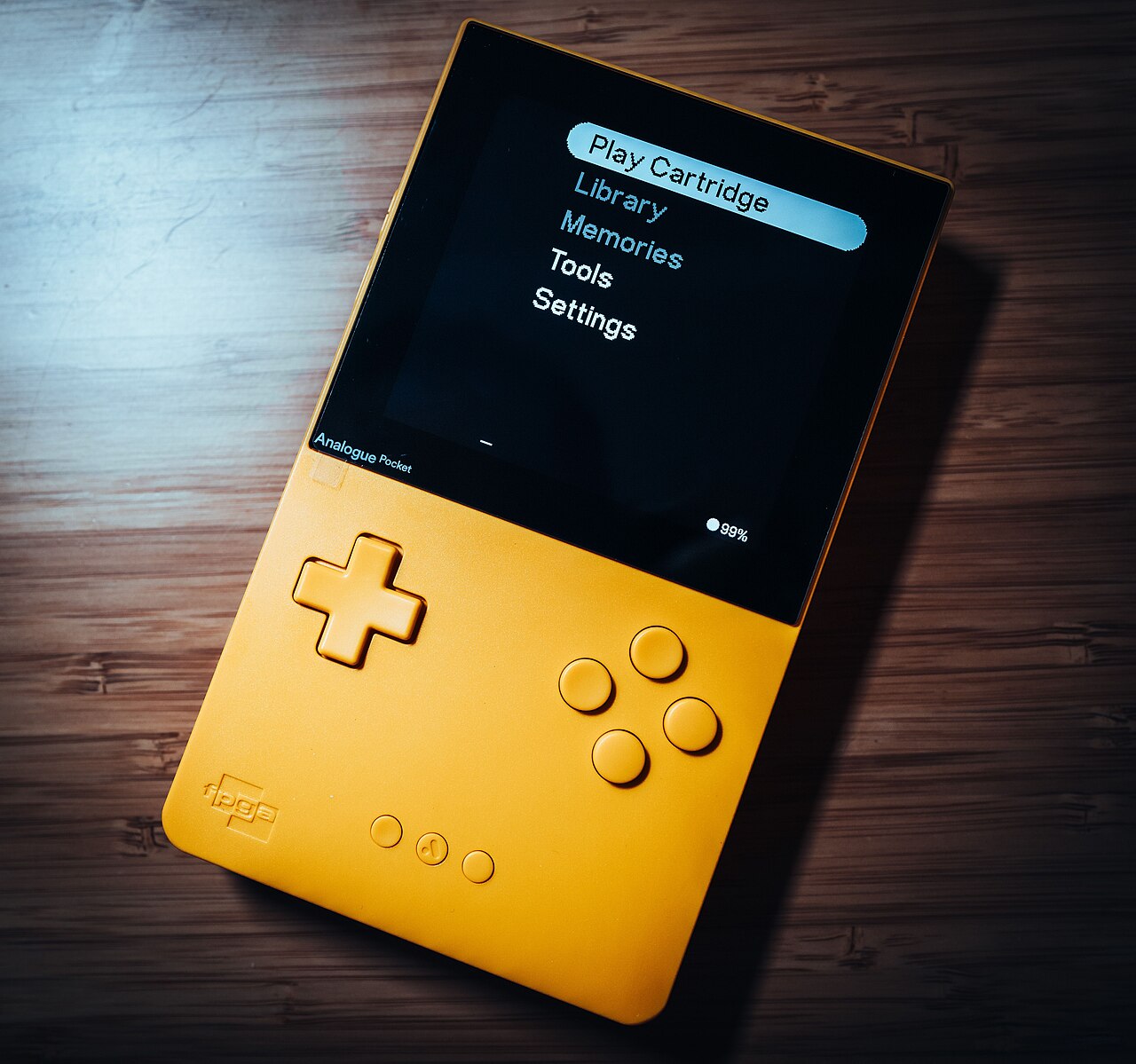
Analogue’s pitch has been the same since the Super Nt: no software emulation. Inside the Pocket, an FPGA chip is configured to behave like the original handheld hardware, so your cartridge talks to what is, electrically speaking, a Game Boy — just one built in the 2020s. The result is the thing software emulation on a cheap handheld still fumbles: timing that feels right, audio that lands where it should, and effectively no input lag between your thumb and the screen. It is the same argument that makes MiSTer FPGA worth it for the TV, shrunk into a machine that fits in a coat pocket.
The hardware itself is the other half of the pitch, and it earns it. The shell feels dense and expensive, the buttons and D-pad are properly judged rather than merely present, and the whole thing has the deliberate, designed quality of a product made by people who stared at a 1989 Game Boy for a very long time. This matters more than spec sheets suggest. A retro handheld is an object you hold for hours; the difference between “good enough” plastic and this is the difference between a tool and a favourite thing.
The screen is the whole argument
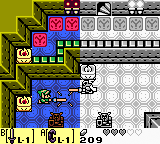
Plenty of devices can run a Game Boy game. None of them show it like this. The Pocket’s 3.5-inch display runs at 1600×1440 — exactly ten times the Game Boy’s resolution in each direction — which means original pixels map perfectly, with no shimmer, no uneven scaling, and detail you genuinely did not know the artists put there. Analogue’s display modes recreate the look of an original DMG screen, a Game Boy Pocket, a Game Boy Light and more, down to the ghosting and the pea-soup palette, and they are good enough to settle the “original screen or modern screen” argument by simply offering both.
Advance games benefit just as much, with the wider screen filling the panel sensibly and colours that finally look the way they were drawn rather than the way a front-light-starved 2001 panel muddied them. If you have ever squinted at an unmodded GBA under a desk lamp, the first minute with a Pocket is a small revelation. This display alone is why owners evangelise, and it is why comparisons that stop at “but an emulation handheld costs $80” miss the point of the object.
Cartridges, and the ritual that comes with them
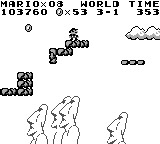
The Pocket plays carts. Not images of carts, not a folder of files with the names half-right — the actual plastic you blow on out of habit even though you know better. There is a real, unquantifiable pleasure in that ritual, and Analogue knows it is the product: the slot’s grip, the click, the library on your shelf staying a library instead of becoming a menu. Save states, screenshots and per-game display settings soften the original hardware’s cruelties where you want them softened, and your original save batteries keep working as they always did — which is to say, replace the ones in your thirty-year-old carts before they take a completed save with them.
The honest caveat lives here too. The native slot covers the full Game Boy family — original, Color and Advance, an enormous combined library — but every other system needs an adapter, sold separately, and adapters have a habit of being announced, delayed and bundled. Game Gear, Neo Geo Pocket Color, TurboGrafx-16 HuCards and Atari Lynx are all covered on paper; in practice, check that the adapter you want exists in stock before pricing the dream. And a warning every Pocket owner learns: the second-hand cart market is full of reproduction fakes, especially for Pokémon and the pricier Advance titles. Buy carts you can inspect, from sellers you can return to.
The library, played properly

What does “worth it” look like across a month of evenings? It looks like Tetris as a ten-minute ritual that eats an hour. It looks like Link’s Awakening and its Color edition played back to back, the pocket-sized Zelda that argues — convincingly — that constraint was the Game Boy library’s greatest producer. It looks like the Mario Land games’ weird, wonderful detours, the Donkey Kong ’94 puzzle-platformer that might be the best game Nintendo ever made for the machine, and a Castlevania or two reminding you that handheld difficulty used to be a contact sport.
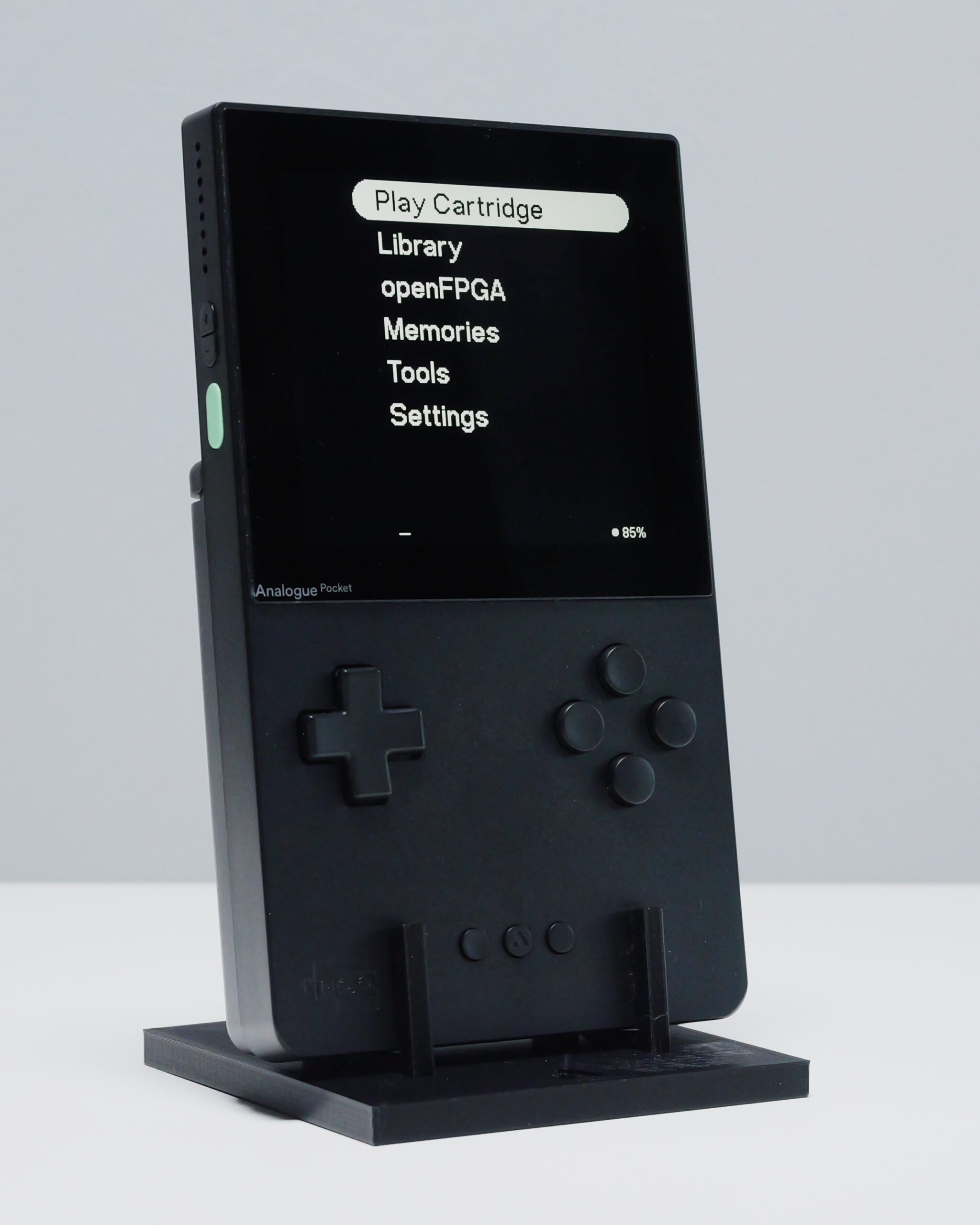
The Advance library is where the Pocket stops being a Game Boy tribute and becomes a two-generation machine: Metroid Fusion and Zero Mission, the Golden Sun pair, Advance Wars, Fire Emblem, Mario Kart: Super Circuit, and a shelf of RPGs that never needed to be “for a handheld” as an apology. Add the fact that the same FPGA platform, through its openFPGA programme, also runs community cores for other systems — a legitimate second life as a general FPGA handheld for homebrew and freely available cores — and the value case stops resting on nostalgia alone. The cartridge slot is the headline; the platform underneath it is the fine print that aged best.
The Dock, the bill, and the honest total
Now the arithmetic, because Analogue ownership is a la carte. The console is $219.99 in its standard black or white finishes, with limited colours and special editions appearing in batches that sell through quickly — availability has improved since the famine years, but “check the site, buy when it’s there” is still the realistic pattern. The Dock, which puts the Pocket on your TV at up to 1080p and pairs modern controllers, is $99.99 and is genuinely excellent — it is also, for many buyers, not optional in spirit, which makes the real entry price closer to $320 before a single adapter, case or screen protector. Adapters add more. None of this is unreasonable for what the hardware is; all of it should be counted before the words “worth it” get signed.
Frame it against the alternatives honestly. A modded original Game Boy Advance with a modern IPS screen is a lovely object and can cost as much once the parts and labour are tallied — and it plays one library, on a smaller screen, with none of the display modes. An emulation handheld costs far less and plays far more, including systems the Pocket can’t touch, but it plays them as files, with emulation’s small compromises in timing and feel, and build quality a clear class below. A MiSTer setup costs more, lives under the TV, and does the FPGA trick for consoles and computers rather than handhelds. The Pocket’s niche is real and, in 2026, still unoccupied by anyone else: your carts, FPGA accuracy, a reference display, in your hands.
On the move: battery, link play and the little things
A handheld lives or dies on the unglamorous details, and the Pocket mostly nails them. Battery life lands in the six-to-ten-hour range depending on brightness and whether you’re playing a native cart or an openFPGA core — a full working day of train journeys, not the two-AA-hours roulette of 1989. It charges over USB-C, sleeps and wakes like a modern device, and the link port is present and correct: original Game Boy link cables work, so two-Pocket Tetris battles and Pokémon trades happen the way they always did, across a cable, with the correct amount of trash talk. The speakers are stereo and surprisingly full, the headphone jack survived the industry’s cull, and the whole machine slips into a jacket pocket without the tactical planning a Steam Deck demands. The little things cut the other way in two places: the cartridge slot’s grip has loosened on some well-travelled units, so a knock can freeze a game the way it could in 1993 — authentic, but not always welcome — and the glossy screen, for all its brilliance, wants a protector from day one. Neither is close to a dealbreaker. Both are the kind of thing you only learn after a year of carrying the thing everywhere, which is rather the point: people do.
The case against, stated fairly
Three objections, all legitimate. First, the ecosystem tax described above: the console’s price is the cover charge, not the evening. Second, Analogue’s software cadence: the Pocket’s operating system and features have improved in steps, sometimes slowly, and openFPGA’s promise depends on community cores of varying polish — buyers who want a finished, static appliance should know the platform still evolves. Third, and most simply: if your handheld retro life is mostly PlayStation, N64 or anything disc-based, this is the wrong machine entirely, and a good emulation handheld or a Steam Deck will serve you better for less. The Pocket is a specialist instrument. Specialists should be bought on purpose.
The verdict
The Pocket is worth it in 2026 if your cartridges are real, numerous and loved. It is the finest Game Boy ever made — it just isn’t a Game Boy, and it isn’t trying to be cheap.
Score: 9.0. Five years on from launch, nothing else does this job: three Game Boy generations on original media, FPGA timing, a display that treats 160×144 pixels as worthy of reverence, and a second career as an open FPGA platform. The bill climbs with every adapter and the Dock, and a collection has to exist — or be worth building, slowly and carefully — for the maths to sing. But if you have the shelf, the Pocket doesn’t just play it. It honours it, one click of a cartridge at a time, and that turns out to be worth paying for.