Short answer: yes — if you play retro games every week, care how they feel, and would otherwise spend the money on two or three original consoles and a decent upscaler. No — if you dabble, if a Steam Deck or a phone already scratches the itch, or if the words "flash an SD card" make your eyes close. The MiSTer FPGA in 2026 is a mature, astonishing platform wrapped in a hobbyist’s assembly project, and whether it’s worth it depends almost entirely on which of those two halves you’ll spend more time with. Let’s do the honest maths, core by core and dollar by dollar.
What you’re actually buying
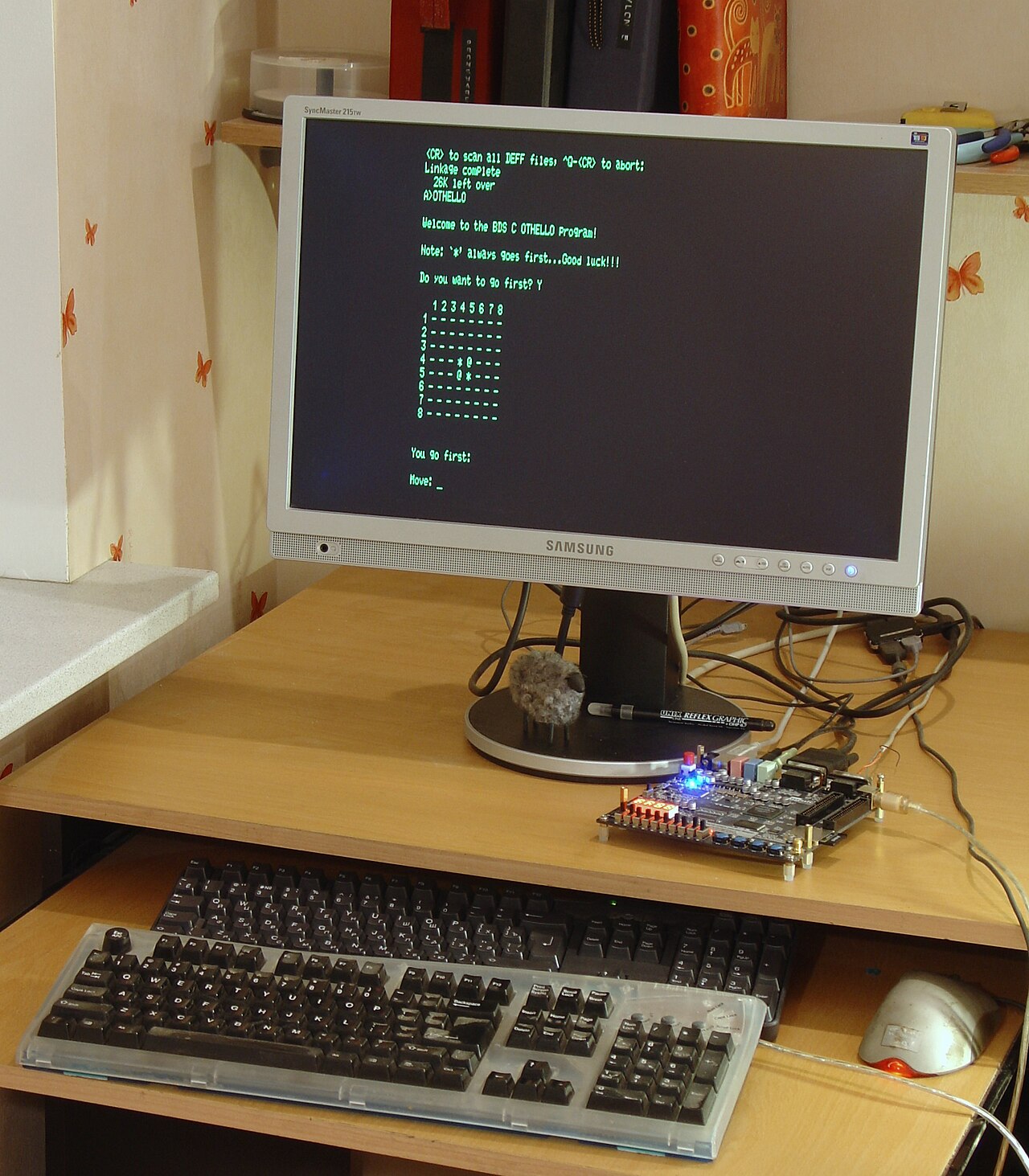
MiSTer is an open-source project, not a product. At its centre sits a Terasic DE10-Nano — an Intel/Altera Cyclone V FPGA development board that was never designed to be a games console — onto which volunteers have spent nearly a decade writing "cores": hardware-level recreations of classic machines. An FPGA doesn’t emulate a console the way software does, by translating instructions on the fly. Its logic gates are physically reconfigured to behave like the original chips, which is why MiSTer games have the timing, the quirks and — crucially — the near-zero input lag of real hardware. When people say FPGA feels different, this is the unglamorous reason: the circuit is the console, reborn in programmable silicon.
That openness is the platform’s superpower and its tax. There is no company, no box on a shelf, no support line. You assemble a stack — the DE10-Nano, an SDRAM module (128 MB covers everything), a USB hub board, an I/O board if you want analogue video for a CRT, a heatsink, a case — flash the software, and join a community wiki. Pre-built units and cheaper compatible routes like Taki Udon’s MiSTer Pi have softened this considerably, but MiSTer still rewards people who enjoy the setup as part of the hobby. If you want the appliance version of FPGA, that’s next week’s article — the Analogue Pocket. This one is the kit car.
The honest bill
Prices drift with the dev-board market, so treat these as 2026 ranges rather than quotes. The DE10-Nano itself runs roughly $200–250 depending on stock and educational discounts — it has crept up over the years and is the single biggest line item. Add a 128 MB SDRAM module ($50–70), a USB hub board ($25–50), an analogue I/O board if CRT output matters ($40–60), a case, power supply, heatsink and an SD card, and a full self-built DE10-Nano setup lands somewhere around $350–550 all-in. The MiSTer Pi route — a compatible clone board sold as near-complete kits, the Turbo Pack historically around $180 — cuts that dramatically and is the main reason MiSTer’s entry price conversation changed. Fully pre-built, cased, tested units from specialist sellers sit at the top of the range, and you’re paying for someone else’s evening with a screwdriver.
Frame that against the alternative. One original console in good order, recapped, with a quality upscaler or a CRT, a flash cart and a modern controller, is easily a $250–400 project — and that’s one system. MiSTer’s bill buys you essentially all of them, in one box, with one power supply and one HDMI cable. The value case isn’t that MiSTer is cheap. It’s that the original-hardware road, walked honestly, is so much more expensive than nostalgia remembers.
Where it sings: arcade and the 8/16-bit consoles
The core library is the argument. NES, SNES, Mega Drive/Genesis, PC Engine, Master System, Game Boy family — these mature cores are, for practical purposes, finished: cycle-faithful, compatible with the enhancement-chip oddballs, and loaded with quality-of-life options original hardware never had. Save states where the hardware allows, cheats, controller remapping, video filters that mimic a good CRT better than most cheap scalers, and output that can go to an HDMI TV and a 15 kHz CRT at the same time. This is the best way to play the 16-bit canon that doesn’t involve a soldering iron.
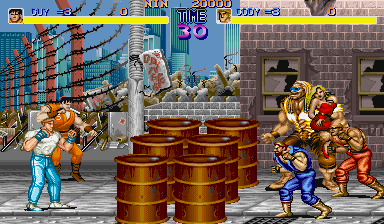
Arcade is where MiSTer stops being an alternative and becomes the only sane option. Hundreds of boards — Capcom’s CPS-1, CPS-2 and CPS-3, Sega System 16, Neo Geo, Konami and Taito boards by the shelf — recreated at the hardware level, many through Jotego’s painstaking JT cores. The original PCB of a beloved board costs hundreds, needs a supergun, a CRT and a tolerance for forty-year-old capacitors. On MiSTer it’s a menu entry, with dip switches. For arcade people, the question was settled years ago.
The top end: PlayStation, Saturn and N64
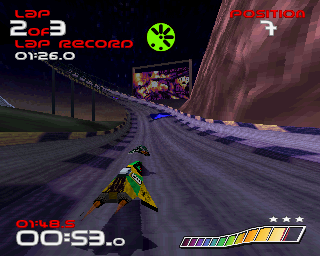
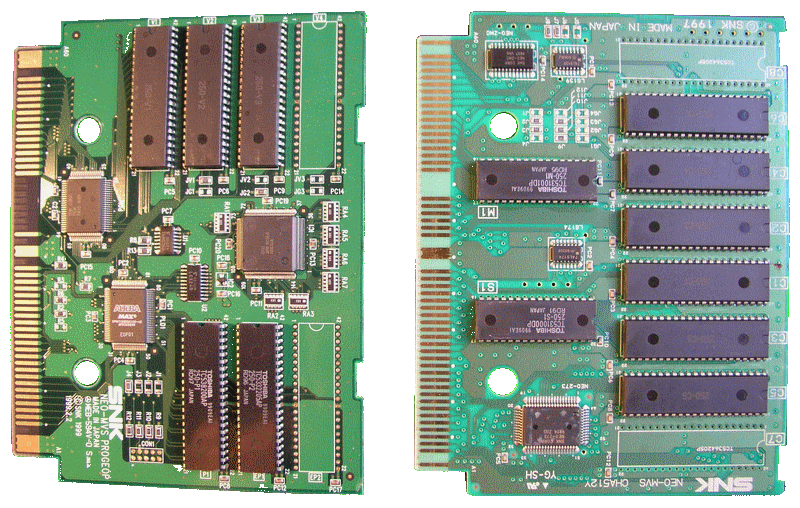
What changed the "worth it" answer most in the last few years is the ceiling. The PlayStation core has matured into an everyday driver — huge compatibility, optional enhancements, and the timing feel that software PS1 emulation on modest hardware rarely nails. The Saturn core, once considered close to impossible on a Cyclone V, runs a large share of the library and keeps improving; it is not finished, and honesty requires saying some favourites still misbehave. The N64 core performs similar near-magic within the board’s memory limits, with a small set of titles beyond reach. A decade ago FPGA meant 8 and 16 bits. In 2026 the same little stack credibly covers the 32-bit generation — the generation whose original hardware is now thirty years old, disc-rotting and laser-dying. That preservation angle is not marketing. It’s the calendar.
And it’s a computer museum, too
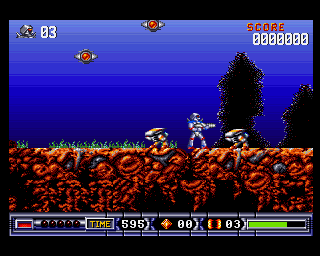
Console coverage gets the headlines, but half of MiSTer’s soul is computing: a superb Amiga core (Minimig, with WHDLoad making hard-drive installs painless), Atari ST, Commodore 64, ZX Spectrum, MSX, Apple II, early PC/DOS via ao486, and dozens more. For anyone whose retro is keyboards rather than joypads, MiSTer isn’t competing with an Analogue box or a mini console at all — nothing else at the price puts a credible Amiga, ST and C64 on the same HDMI cable with this little lag and this much accuracy. The recent arrivals of newer host boards (the DE25-Nano generation) hint the computer side may stretch further still, though today’s verdict is about the platform as it stands.
The CRT question, and your old controllers
One capability separates MiSTer from every mini console and most emulation boxes: with the analogue I/O board it outputs a true 240p signal, at the original refresh rate, to a real CRT — while simultaneously feeding an HDMI display if you want it to. Light-gun games work on that CRT. Original controllers connect through SNAC adapters with effectively zero added lag, so your battered SNES pad and your Mega Drive six-button can stay in service. If your retro ideal is a Trinitron in the corner and games that look the way they looked through the shop window in 1993 — soft, scanlined, glowing — MiSTer is the only modern box that treats that as a first-class feature rather than a filter preset. Plenty of owners will tell you the CRT output alone justified the stack; the HDMI convenience is the bonus, not the headline.
Which route should you take?
The budget route: a MiSTer Pi kit. You give up nothing that matters in core terms — the same Cyclone V-class silicon runs the same library — and the all-in price undercuts a self-sourced DE10-Nano build by a wide margin. Stock comes and goes in waves, so patience is part of the price. The classic route: the DE10-Nano stack, self-assembled. The deepest community documentation, the widest accessory ecosystem, and the satisfaction of a machine you built and understand. Budget an evening for assembly and setup, and buy the SDRAM from a reputable seller — memory is the one place cheap clones bite. The no-screwdriver route: a pre-built unit from a specialist seller. You pay a clear premium over parts, and in exchange it arrives cased, flashed and tested. For a gift, or for anyone whose hobby time is for playing rather than building, that premium is honestly priced. All three routes run the same cores and get the same updates; you’re choosing how much of the hobby you want to be the setup.
The case against, stated fairly
Three honest objections. First, friction: setup, updates, core-by-core settings and the occasional forum spelunk are part of the deal; update_all has made maintenance nearly one-click, but nearly is doing work in that sentence. Second, no cartridges: MiSTer plays images of games, and if the ritual of your own shelf — inserting your cart, holding your controller — is the point of the hobby for you, no core will reproduce that; Analogue built a company on your entirely valid feeling. Third, software emulation has not stood still: a mini PC or Steam Deck with RetroArch costs less, plays more modern-adjacent systems, and is genuinely excellent in 2026. MiSTer wins on latency, accuracy-per-watt, CRT output and arcade depth — not on raw convenience or breadth at the top end. Buy it for what it’s best at.
The verdict
MiSTer is worth it in 2026 if one box, honestly priced against three original consoles, sounds like a bargain. For weekly players, it isn’t close.
Do the sum that matters: price a SNES, a Mega Drive and a PC Engine — serviced, cabled, upscaled, flash-carted — and you’ve spent MiSTer money for a third of MiSTer’s library and none of its arcade boards. Add a PlayStation and a Saturn and the comparison becomes faintly silly. What you’re paying for is the last decade of volunteer engineering that turned a $200 dev board into the most faithful all-in-one retro machine that exists, with the 32-bit generation now inside the tent and the computer wing thrown in free. If you’ll use it weekly, if feel and lag and a CRT on the desk matter to you, if one purchase ending the hardware hunt sounds like peace — yes, worth it, and it has been for a while. The kit-car caveat stands: you’ll hold the screwdriver. Most owners will tell you that turned out to be half the fun.