October 23 is the most loaded date on the Fallout calendar. In the series’ fiction it is the morning in 2077 when the bombs fell and the old world ended; in the real one, Bethesda has turned it into Fallout Day, an annual broadcast celebrating everything the franchise has on the boil. The 2025 edition, streamed on October 23, 2025, arrived carrying heavier expectations than most. Earlier that year Bethesda had shadow-dropped a lavish remake of The Elder Scrolls IV: Oblivion, and the lesson much of the audience took from it was that anything could happen without warning. Add a beloved spin-off turning fifteen, a flagship title turning ten, and a hit television show about to return, and the chat before the stream was full of one specific hope: that New Vegas, at last, was getting the same treatment as Oblivion.
That is not what happened — and a year on, Fallout Day 2025 makes for a fascinating case study in the gap between what a showcase announces, what its audience hears, and what eventually ships. Almost everything Bethesda promised that day did arrive, some of it very well indeed. But the running order matters. The headline was a tenth-birthday edition of Fallout 4. The surprise was a first-ever trip to a Nintendo console. The consolation prize was a big cardboard box. And tucked into the Fallout 76 segment was a single forward-looking line — the promise of proper native versions for PlayStation 5 and Xbox Series consoles in the following year — that would take the longest of all to come true. Here is the broadcast as it happened, and where every item on its slate stands in October 2026.
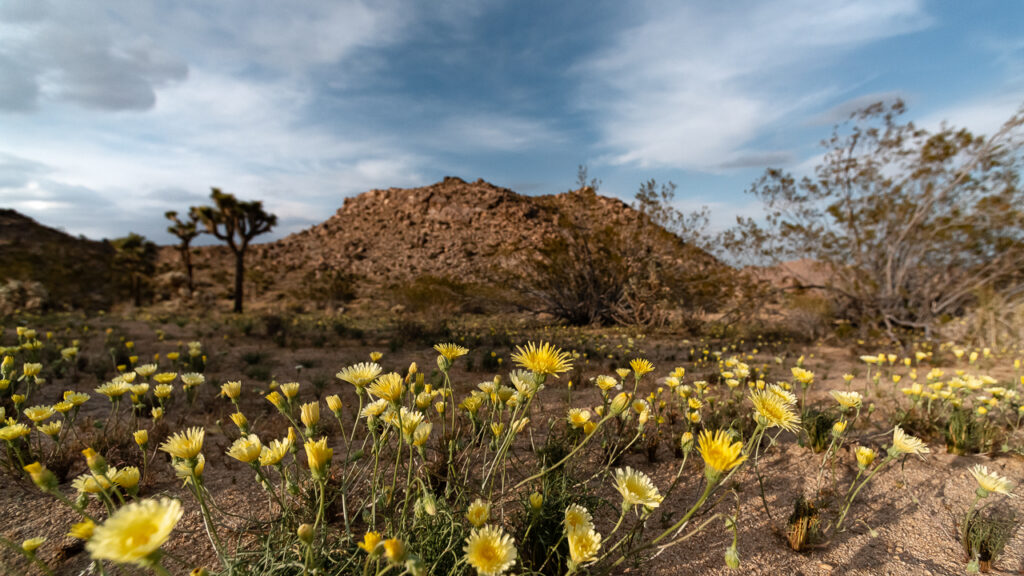
The Mojave Desert near Joshua Tree, California — the real landscape that Fallout: New Vegas turned into gaming’s most argued-over wasteland. Photo: Joshua Tree National Park / Carmen Aurrecoechea, via Wikimedia Commons.
The headliner: Fallout 4 gets the full anniversary treatment
The broadcast’s centrepiece was Fallout 4: Anniversary Edition, a definitive repackaging of the 2015 role-playing game built to land on November 10, 2025 — exactly ten years to the day after the original release. Bethesda assembled everything the game had accumulated over a decade into a single purchase: the base game, all six official add-ons, and a bundled library of Creation Club content billed at more than 150 pieces (153 in the final count). The six add-ons split neatly into the three story expansions — Automatron, with its rogue robot menace; Far Harbor, the fog-drowned island off Maine that many players still rate as the game’s finest hours; and the raider playground of Nuka-World — plus the three settlement-building Workshop packs: Wasteland Workshop, Contraptions Workshop and Vault-Tec Workshop.
The genuinely new element was structural rather than narrative. For the first time, Fallout 4 gained an in-game Creations menu, modelled on the systems already running in Skyrim and Starfield, letting players browse, download and manage community-made content — including paid work from Bethesda’s Verified Creator Program — without leaving the game. Existing owners were not asked to buy the whole thing again: an Anniversary Upgrade bundled the add-ons and Creation Club library, a cheaper Creations Bundle sold the Creation Club content alone, and both routes were open to players accessing the game through Game Pass or PlayStation Plus subscriptions. The edition launched across PlayStation 5, PlayStation 4, Xbox Series X|S, Xbox One and PC, building on the native current-console update Bethesda had shipped in April 2024, and it quietly added Xbox Play Anywhere support on day one.
How did it land? Roughly, at first. The November 10 launch ran straight into the rocks that veteran players had predicted: the new Creations infrastructure stumbled under load, some buyers struggled to access content they had paid for, and the update broke a swathe of existing mods — Bethesda had warned in advance that anything touching the main menu was at risk, but the breakage ran wider than the warning implied. Pricing sharpened the grumbling. At $59.99 for the full edition and $39.99 for the upgrade, the package asked real money for a ten-year-old game whose Game of the Year edition routinely sold for a fraction of that in sales, and the standalone Creations Bundle sank to a “mostly negative” reception on Steam. Bethesda responded with a two-patch plan, the first arriving in the week of November 24 and a second following in the first half of December, and the edition settled into what it was probably always meant to be: not an event for the faithful, who owned most of it already, but the obvious front door for the wave of newcomers the television show kept delivering.
A vault opens on Nintendo: Fallout 4 comes to Switch 2
The announcement that raised the biggest genuine smile was platform news. Fallout 4: Anniversary Edition was confirmed for Nintendo Switch 2 in 2026 — the first time Fallout 4 itself would appear on a Nintendo console. Bethesda gave no date and showed little of the port during the broadcast, which was wise, because the details only firmed up months later at Nintendo’s February 2026 Partner Showcase, where studio head Todd Howard presented a slate of Bethesda titles for the machine.
The Switch 2 edition launched digitally on February 24, 2026, with a physical code-in-box edition following on April 28. By the standards of big open-world ports to Nintendo hardware, it was received remarkably well: reviewers praised a conversion that kept the Commonwealth intact and ran convincingly both docked and in handheld play, and it sits at a Metacritic score of 80. A decade after release, Fallout 4 had gained an entirely new audience of players whose first wasteland was a portable one — arguably the single cleanest win on the whole Fallout Day slate.
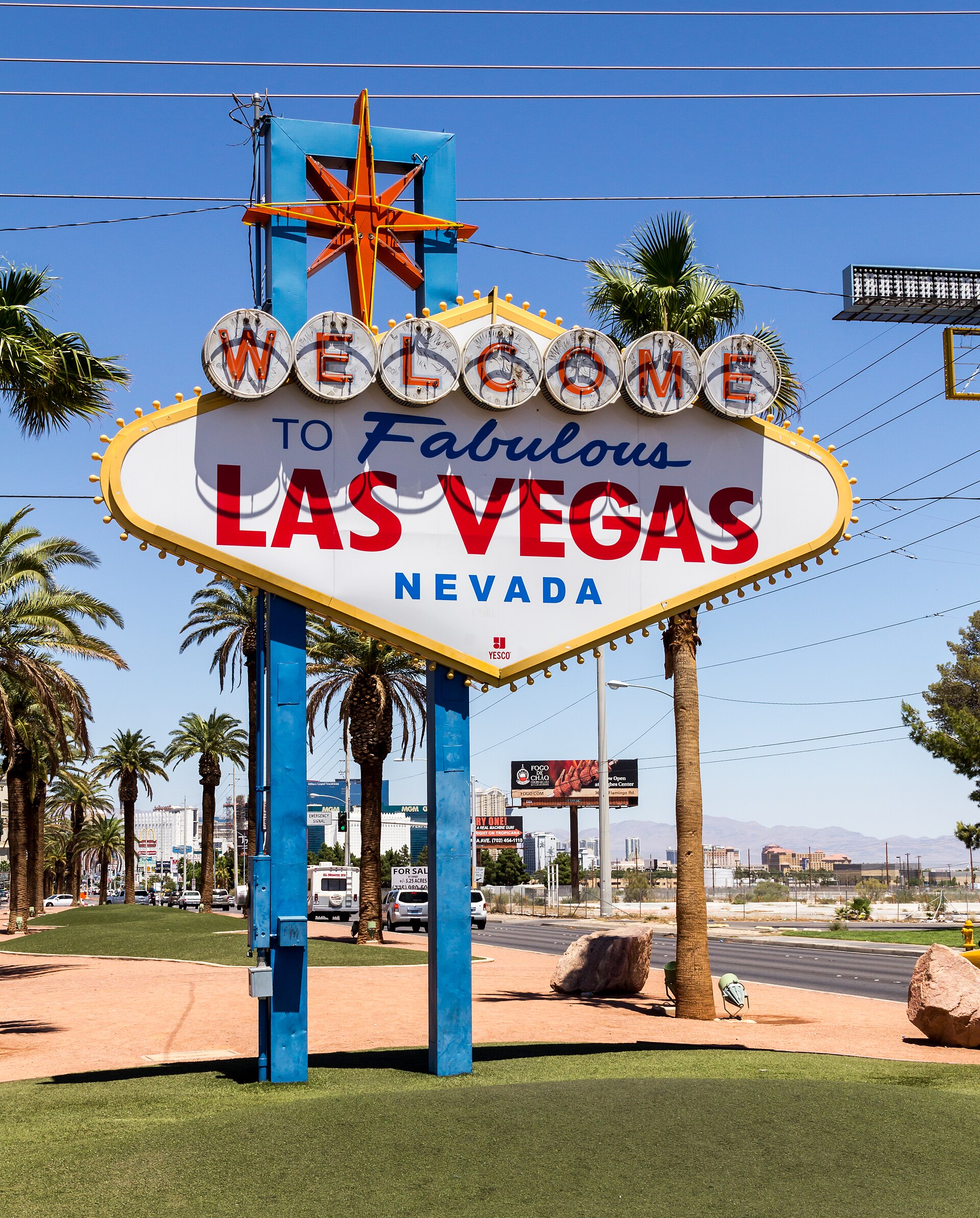
The real welcome sign south of the Las Vegas Strip, raised in 1959. Season 2 of the Fallout TV series and the game’s 15th anniversary both took players and viewers back to New Vegas in the year after the broadcast — but no remake came with them. Photo: Dietmar Rabich, via Wikimedia Commons (CC BY-SA 4.0).
The remake that wasn’t: New Vegas at fifteen
Now for the segment the audience had actually tuned in for. Fallout: New Vegas, Obsidian Entertainment’s 2010 spin-off, had turned fifteen just four days before the broadcast, on October 19. Its reputation has only grown with age; it is routinely placed at or near the top of series rankings, and the second season of the TV show was publicly known to be heading to its setting. The Oblivion remake had demonstrated both the technical route and the commercial appetite. Everything pointed one way — except Bethesda’s announcement, which pointed firmly another. There was no New Vegas remake, no remaster, and no new console version. There was, instead, a box.
The Fallout: New Vegas 15th Anniversary Bundle, sold through the Bethesda Gear Store for $154.99 (with £139.99 and €159.99 price tags overseas), packages a PC digital code for the long-available Fallout: New Vegas Ultimate Edition — the base game plus Dead Money, Honest Hearts, Old World Blues, Lonesome Road, Courier’s Stash and Gun Runners’ Arsenal — with a shelf’s worth of physical memorabilia: an eight-inch PVC statue of Victor, the grinning Securitron who greets you in Goodsprings; a set of Doc Mitchell’s evaluation cards, recreating the game’s opening Rorschach sequence; a Vault Boy enamel pin; woven Mojave Express and NCR Recon patches; and a throwback collector’s big box to keep it all in. Pre-orders opened the day of the broadcast, with shipping set for June 2026 and the game codes to be emailed when the boxes went out.
The reaction was swift and sour, and it is not hard to see why. The game inside the box regularly sells for under five dollars in PC sales; the bundle is PC-only, excluding the console audience entirely; and it offered nothing — no patch, no performance work, no visual touch-up — to the game itself. In the year since, the bundle shipped in its June 2026 window and the remake question has simply refused to die: rumours linking Obsidian or Bethesda to a New Vegas or Fallout 3 revival continued to circulate through 2026, fanned by Howard’s own closing tease (below), but as of this writing nothing has been announced. Fifteen years on, the official way to celebrate New Vegas remains a statue of Victor standing guard over an unchanged game.
Fallout 76: Burning Springs now, native versions eventually
Fallout 76’s segment was the busiest of the show. Its centrepiece was Burning Springs, a free expansion dated for December 2, 2025 and billed as one of the game’s largest map additions: a new, arid region across the river in Ohio, ruled by a super mutant warlord called the Rust King, stalked by desert Deathclaws, and built around two new public events. Its headline system was bounty hunting, fronted by a face borrowed from television — The Ghoul, with Walton Goggins recording new voice work in character. Around it, Bethesda trailed optimisations for the PlayStation 4 and Xbox One versions, ran a free Fallout 1st preview across the Fallout Day week of October 21–28, and then delivered the line that gave the original version of this story its headline: native PlayStation 5 and Xbox Series X|S versions of Fallout 76 were in development for 2026, finally freeing console players from running the game through backward compatibility. Further out still, Fallout Shelter was confirmed to be getting a Seasons system of limited-time themed vaults, a smaller announcement that rounded out a slate touching every living Fallout product.
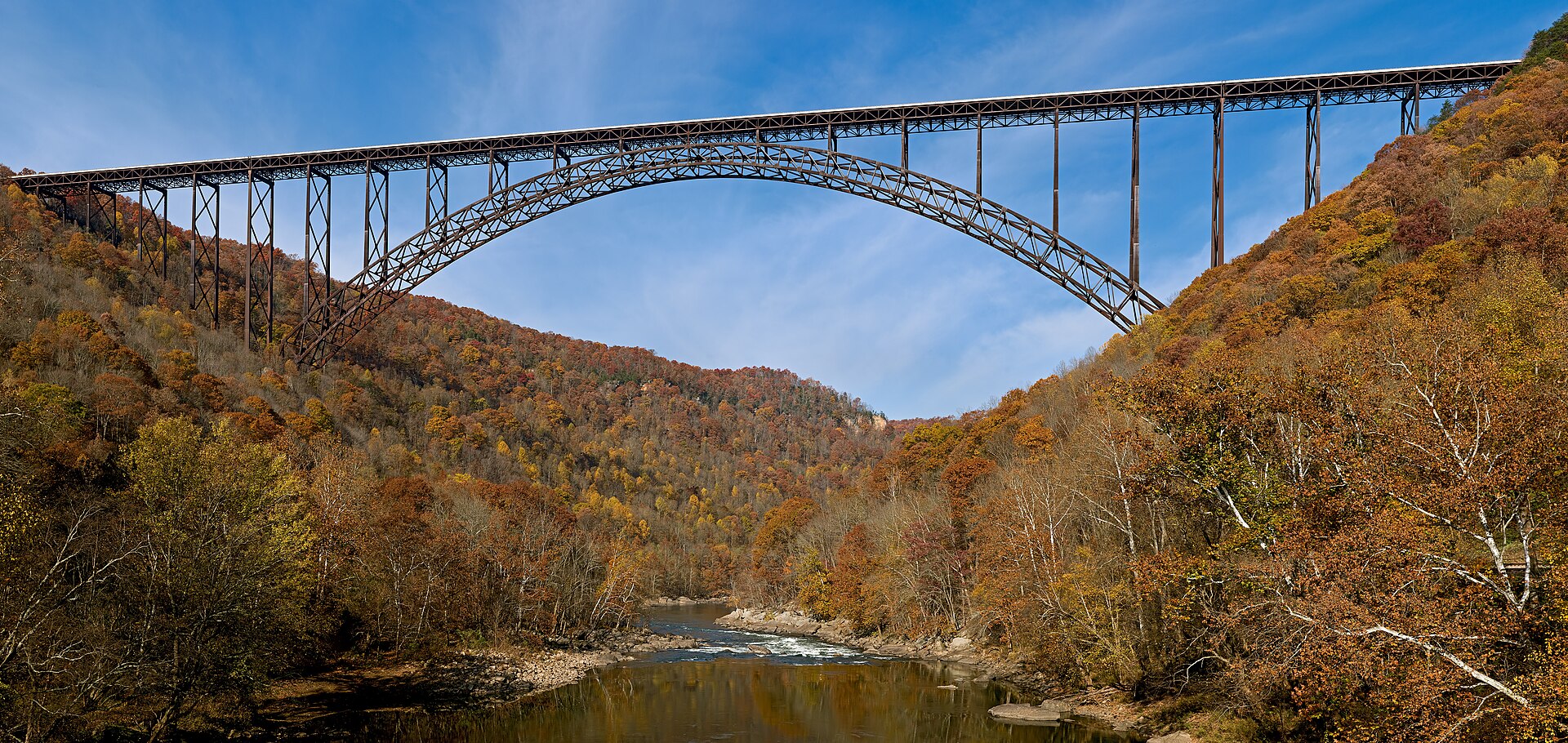
The New River Gorge Bridge in West Virginia, in the heart of the real Appalachia that Fallout 76 recreates. The game’s map kept growing west into Ohio with Burning Springs while its console players waited for the native versions promised in the same broadcast. Photo: JaGa, via Wikimedia Commons.
The follow-through split in two. Burning Springs arrived exactly on schedule on December 2, 2025, launching alongside Season 23, “Blood x Rust,” and it delivered: the Ohio expansion and its bounty boards gave the game a strong winter, timed to perfection against the television show’s return a fortnight later. The native console versions were another story. Announced for early 2026, they slipped — public testing for the PlayStation 5 and Xbox Series builds only opened in June 2026, and the full release finally landed on September 15, 2026, nearly eleven months after the broadcast, bundled with the horror-themed “The Slasher” update and Season 26, “Beware the Blood Moon.” Owners of the existing game upgraded free, though the native build required a fresh full download. What arrived was a solid rather than spectacular generational step — a 60 frames-per-second target with variable refresh rate support, 4K on Xbox Series X and PlayStation 5 Pro, 1440p on the standard PS5, and improved draw distances and shadows — but it closed the last big technical gap in the game’s long rehabilitation. That rehabilitation now has a headline number to go with it: in October 2026, Bethesda announced Fallout 76 had passed 25 million players.
The television tail wagging the wasteland
Hovering over the entire broadcast was Prime Video’s Fallout, whose second season Bethesda treated as a franchise event in its own right. Season 2 premiered on December 17, 2025 — in the event, the first episode dropped a few hours early on December 16 in the US — and rolled out weekly, a change from the first season’s all-at-once release, through to its finale in the first week of February 2026. The season’s story follows Lucy and The Ghoul across the Mojave to New Vegas itself, which made the broadcast’s timing feel almost confrontationally neat: television was taking millions of viewers to New Vegas in the same season that the games side declined to.
The crossover ran in the other direction too. Burning Springs wrote Goggins’ Ghoul into Fallout 76’s earlier timeline as a bounty-hunting fixer in Ohio, a piece of cross-media plumbing the broadcast was happy to underline, and the Anniversary Edition’s whole commercial logic — a tidy, complete, newcomer-friendly Fallout 4 — only makes sense as a net set for viewers finishing the show and looking for a game to play next. A third season had already been ordered before the second premiered, so the tail will keep wagging for some time yet.
The scorecard, one year on
Todd Howard closed the broadcast with the day’s most-quoted and least specific sentence, acknowledging what had not been shown and assuring viewers that the studio was “working on even more,” and looking forward to the day it could be revealed. A year later, the honest scorecard for Fallout Day 2025 reads better than the mood in that day’s comment threads suggested. The Anniversary Edition shipped on time and, after a rocky fortnight and two patches, became the default way into Fallout 4. The Switch 2 port shipped and reviewed well. Burning Springs shipped on the day promised. The New Vegas bundle shipped — and remains a bundle, the remake discourse around it entirely unofficial. And the native Fallout 76 versions, the smallest line in the original announcement, took the longest road of all: promised for early 2026, delivered in September, and worth the wait for the console players who had spent years in backward compatibility.
What Fallout Day 2025 really demonstrated is where the series now lives. With Fallout 5 still queued behind The Elder Scrolls VI and Howard’s “even more” still unrevealed, Fallout is currently a franchise sustained by stewardship — definitive editions, new platforms, a live game that refuses to die, and a television adaptation doing the work of a flagship release. Judged as a launchpad for new games, the broadcast was thin. Judged as maintenance on a series that has to stay alive for years between sequels, it did its job — eventually, and in one case almost a year late, but in full.