The original driving system in Grand Theft Auto was led by veteran programmer Pat Kerr, who’s credited as saving the game’s cars by Rockstar veteran Obbe Vermeij. Some 30 years later, Kerr’s revisited that pioneering vehicle tech in a new demo you can play for yourself.
“In the early days of GTA1 development, the driving just wasn’t fun,” Vermeij recalls. “Then Pat Kerr, who is handy with physics but wasn’t even on the team, dropped in some driving code that fixed it. He’s now published a playable demo using those same ideas. It’s remarkable how much it feels like GTA1—especially the handbrake (space).”
That demo, recreated in JavaScript, shows a “slightly prettier, ‘remastered’ form, for anyone who is interested in seeing or playing” the bones of Grand Theft Auto. With GTA 6 promising fabulously detailed and simulated cars ripping through the streets of fictional Florida, things have obviously changed quite a bit, but this is where the series’ titular auto component got started.
“One weekend in late August 1996, I wrote a 2D physics simulation which later became the basis of the vehicle system in the eventually popular game ‘Grand Theft Auto’ aka ‘GTA,'” Kerr says casually, stressing that this work is independent and not associated with Rockstar, Take-Two, or GTA.
Recent followers might enjoy this short video demonstrating my recent “remaster” of the 30 year old physics prototype which was the basis of the physics in #GrandTheftAutoSee more at: https://t.co/m7rgVt8yH8 https://t.co/Pu8rWcSug5October 7, 2026
“At the core of the system is a simple classical 2D rigid body dynamics simulation,” Kerr explains. “From what I can tell, this approach was not yet common in games at the time (with some notable exceptions), and most game vehicles were done using basic high-school ‘point physics’ (F = ma), with any rotational component being handled by various wonky ‘hacks.’ Using proper rigid-body physics (including torques) handles rotation more coherently.
“On top of that core, I then added a ‘novel’ vehicle simulation layer, based on a simple, approximate, and technically incorrect model of how tyres behave. It was basically a semi-educated guess on my part and, although I knew it wasn’t really physically accurate, it nevertheless seemed to be ‘good enough’ for my purposes at the time.”
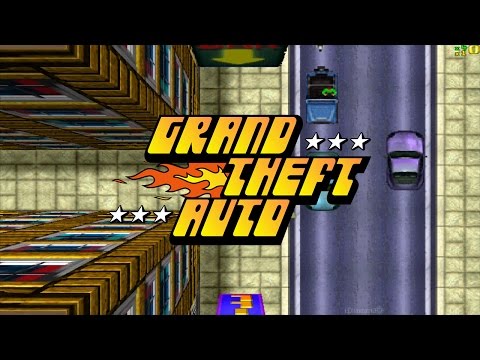
Here’s my somewhat simpler analysis of this driving system demo: I like the way turning feels. More seriously, the movement arm attached to your vehicle is a helpful way to visualize what’s happening physically when turns impact your acceleration, and the red trail indicating the bite of your tires on turns or handbrake maneuvers likewise helps demonstrate these effects. If you played a lot of the original GTA (which, as a reminder, looks like this), this will probably feel familiar.
GTA 6 driving is “the best parts” of GTA 4 but with “the accessibility of GTA 5,” says Rockstar boss.