
Every few years, the Fallout fandom performs its favourite ritual: an unwinnable argument. The occasion, in December 2025, was twofold. The television adaptation returned for a second season on December 17, 2025, carrying its story out of California and into the Mojave — and, timed to that premiere, a reader poll elsewhere asked fans to settle, by ballot, which entry in the series deserved the crown. Polls of that kind measure enthusiasm in the moment. A ranking, done properly, has to do something harder: weigh what each game did first, what each game still does best, and what each one left behind for the games that followed.
That is the exercise here. Eight games are in contention — the mainline releases and the major spin-offs. No reader-vote result is reported or implied below: this is an argued countdown, judged openly on design ambition, the quality and consequence of the writing, critical standing then and since, and historical importance. Disagreement, as the closing section notes, is very nearly the point. This site’s Fallout Day coverage in October 2025 made the same case by volume alone: a franchise filling an annual broadcast with anniversary editions and expansions has a back catalogue worth ranking seriously.
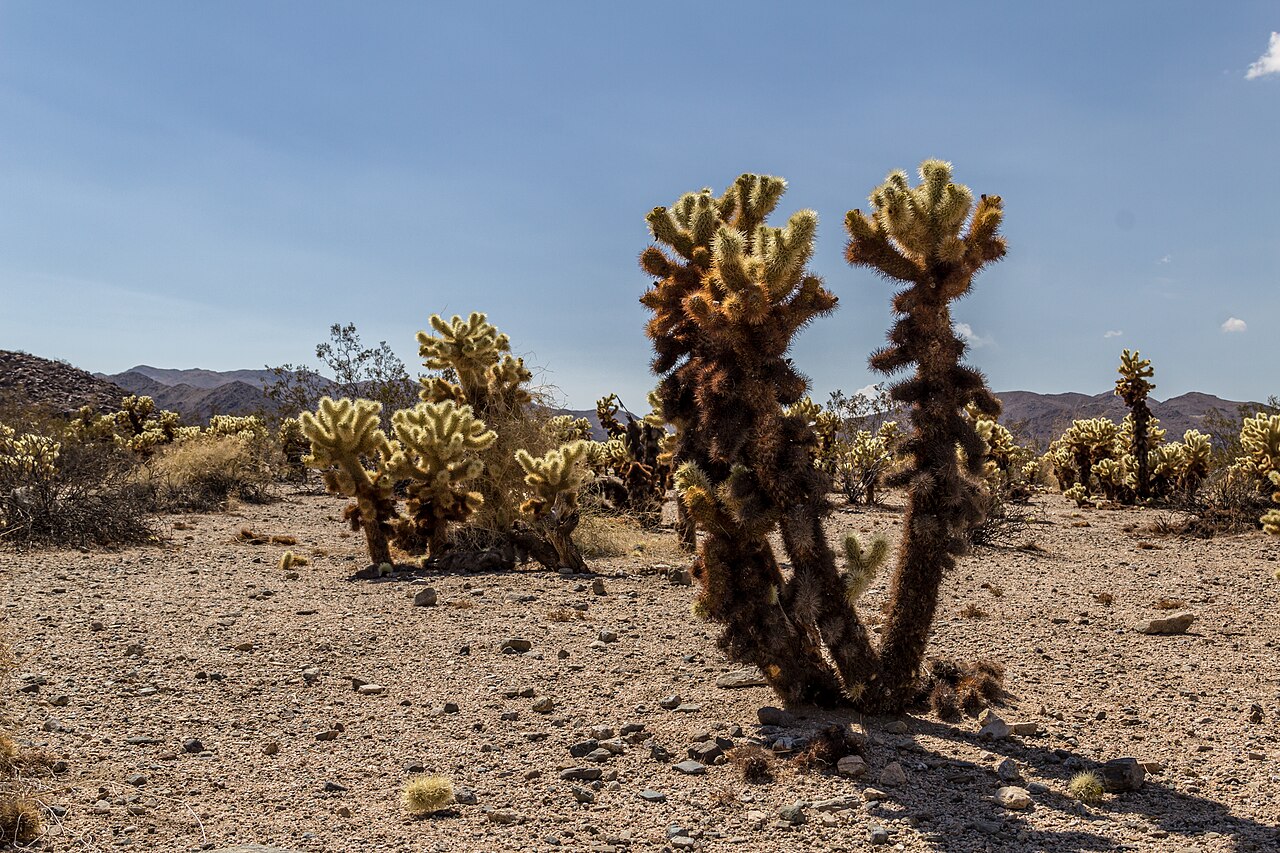
Stand-in photograph: Joshua trees in the Mojave Desert, California — the real landscape several games on this list turned into a wasteland. Photo: Dietmar Rabich, via Wikimedia Commons, CC BY-SA 4.0. No photograph in this article is a game screenshot; each shows a real place or object connected to a game’s setting or theme.
8. Fallout Shelter (2015)

Stand-in photograph: a genuine Cold War civil defence shelter sign, of the kind once fixed to American public buildings. National Park Service photograph, via Wikimedia Commons, public domain.
The smallest game on this list earns its place by proving how far the Fallout idea could stretch. Announced at E3 in June 2015 and released for iOS the same night, Fallout Shelter handed players a cross-section of a vault and a population of dwellers to feed, arm, breed and send out into the wastes. There was no chosen one and no main quest — just the quiet, compulsive management of rooms, resources and little cartoon lives, rendered in the flat, cheerful style of the series’ Vault Boy illustrations.
Critics were warm rather than ecstatic: the iOS version settled at 71 on Metacritic, and the later PC and Switch ports scored lower still, in the low sixties. The industry, though, took it seriously — it won Mobile Game of the Year at the 2016 D.I.C.E. Awards — and the audience was enormous, passing 100 million users across platforms by September 2017 and grossing more than $100 million by mid-2019. Its legacy is breadth: proof that Fallout could be gentle, funny and five minutes long. Later additions, including the Seasons system announced in 2025, kept it alive well past a promotional spin-off’s usual lifespan. It ranks last only because its ambitions are, by design, the narrowest here.
7. Fallout Tactics: Brotherhood of Steel (2001)

Stand-in photograph: Chicago at night — the city near which Tactics set its Midwestern Brotherhood chapter. Photo: Rhys A., via Wikimedia Commons, CC BY 2.0.
The forgotten middle child of the classic era, Fallout Tactics was developed by Australian studio Micro Forté and released in 2001, between the second game and the series’ long hibernation. It stripped the role-playing back to a squad: a Brotherhood of Steel expedition stranded in the American Midwest, fighting a linear campaign with up to six soldiers under detailed player control. Combat could run turn-based, squad turn-based or in real time, with vehicles besides — the most flexible interpretation of the SPECIAL system the classic games ever attempted.
The reception was respectably solid, an 82 on Metacritic, with reviewers praising the combat depth while noting how much dialogue, exploration and choice had been traded away to get it. Its canonical standing has always been wobbly: Bethesda’s Todd Howard once remarked that, for the new owners’ purposes, its story had not happened, yet later games quietly kept its Midwestern Brotherhood detachment, mentioned in both Fallout 3 and Fallout 4. That half-in, half-out status is its legacy: a good tactics game wearing a great RPG’s name.
6. Fallout 76 (2018)

Stand-in photograph: the New River Gorge Bridge in West Virginia — Appalachia, the real setting of Fallout 76. Photo: JaGa, via Wikimedia Commons, CC BY-SA 4.0.
No ranking of this series can be honest without confronting the strangest object in it. Fallout 76 took the series multiplayer for the first time, setting players loose in a West Virginia just twenty-five years removed from the bombs — so early, in fact, that the design shipped with no human non-player characters at all, its story delivered by robots, terminals and recordings. The launch, in November 2018, was rough by any standard, and the critical verdict matched it: 52 on Metacritic for the PC version, the lowest score in the series by a wide margin.
What happened next is the redemption arc the closing section returns to. Bethesda kept building. The free Wastelanders update of April 2020 finally populated Appalachia with people, factions and dialogue trees; years of expansions followed, the map grew, and the player count climbed into the tens of millions, passing 25 million by October 2026. Judged purely as it stands today, 76 offers arguably the series’ most varied map and a genuinely welcoming community. It still ranks sixth, because a ranking must also remember what a game asked of its first players — and because its always-online structure permanently trades away the solitary, decision-heavy character of the games above it.
5. Fallout 4 (2015)

Stand-in photograph: Kenmore Square, Boston — a short walk, in the real world and in the game, from Fallout 4’s version of Fenway Park. Photo: Henry Han, via Wikimedia Commons, CC BY-SA 3.0.
The commercial giant of the series sits, perhaps controversially, in the middle of this list. Fallout 4 arrived in November 2015 with a voiced protagonist, a dialogue wheel, substantially improved shooting, and a settlement-building system that let players raise whole towns out of scrap across its Boston Commonwealth. Bethesda reported shipping twelve million copies for launch, and the game became the entry point for an entire generation of players — a role reinforced a decade later by its Anniversary Edition and a well-received Switch 2 port.
The scores tell a story of respect shading into reservation: 84 on Metacritic for PC and 87 on PlayStation 4, strong numbers that nonetheless sat below the previous mainline game’s. The voiced lead narrowed role-playing freedom; the four-option dialogue wheel often concealed what a character would actually say; and the radiant-quest machinery could make the Commonwealth feel busy rather than meaningful. Against that stand real virtues — the series’ best combat feel, a dense and vertical city to explore, and in Far Harbor an expansion many players rate above the base game’s story. Fallout 4 is the series at its most playable and its least argumentative, which is precisely why it lands fifth.
4. Fallout 3 (2008)

Stand-in photograph: the National Mall viewed from the Capitol in Washington, DC — the real ground Fallout 3 rebuilt as the Capital Wasteland. Photo: Emw, via Wikimedia Commons, CC BY-SA 3.0.
Everything modern about this series starts here. When Bethesda acquired the licence and released Fallout 3 in October 2008, the series had been dormant for a decade, its original studio scattered and an earlier sequel cancelled. The revival was radical: isometric turned first-person, turn-based combat gained the V.A.T.S. compromise, and the action moved to a ruined Washington, DC — a vault childhood, a missing father voiced by Liam Neeson, and a Capital Wasteland dense with familiar landmarks.
Critics responded with the highest scores the series has ever received: 91 on Metacritic for PC and 93 on Xbox 360, accompanied by a shelf of game-of-the-year awards. Long-running fans raised objections that have never entirely gone away — a main quest more linear than the classics’, and an original ending so abrupt that an expansion, Broken Steel, was released to repair it. Yet the historical ledger is not close. Fallout 3 rescued a dead franchise, multiplied its audience many times over, and set the first-person template every subsequent entry has either followed or argued with. It ranks fourth only because three games, on the criteria set out at the top of this list, are better role-playing games.
3. Fallout (1997)

Stand-in photograph: a real steel vault door, at the former Manufacturers Trust Company Building in New York — the heavy door every Fallout journey begins behind. Photo: Beyond My Ken, via Wikimedia Commons, CC BY-SA 4.0.
The original, and still in some respects the purest. Released by Interplay in October 1997 under designer Tim Cain, Fallout very nearly used the GURPS tabletop rules before a licensing split forced the team to invent its own — the SPECIAL attribute system that has powered the series ever since. Its premise is beautifully stark: a water chip has failed, the Vault Dweller has a fixed span of days to find another one, and an isometric California outside the door does not care whether the mission succeeds.
Within that frame sat a density of choice that games twice its size still chase. Quests admitted violent, verbal and sneaky solutions; a character of very low intelligence was locked out of normal conversation and reduced to grunts, yet could still finish the game; and the antagonist, the Master, could famously be argued out of his own plan in dialogue. Ron Perlman’s opening narration supplied the series’ epitaph and thesis in four words. Retrospective scoring puts the game at 89 on Metacritic, and its influence is larger than any number: arriving alongside the late-1990s computer-RPG revival, it established the template of consequence, tone and bleak comedy — retro-futurist Americana curdled into horror — that every later entry inherits. It is the foundation, and foundations rarely take the top spot they make possible.
2. Fallout 2 (1998)
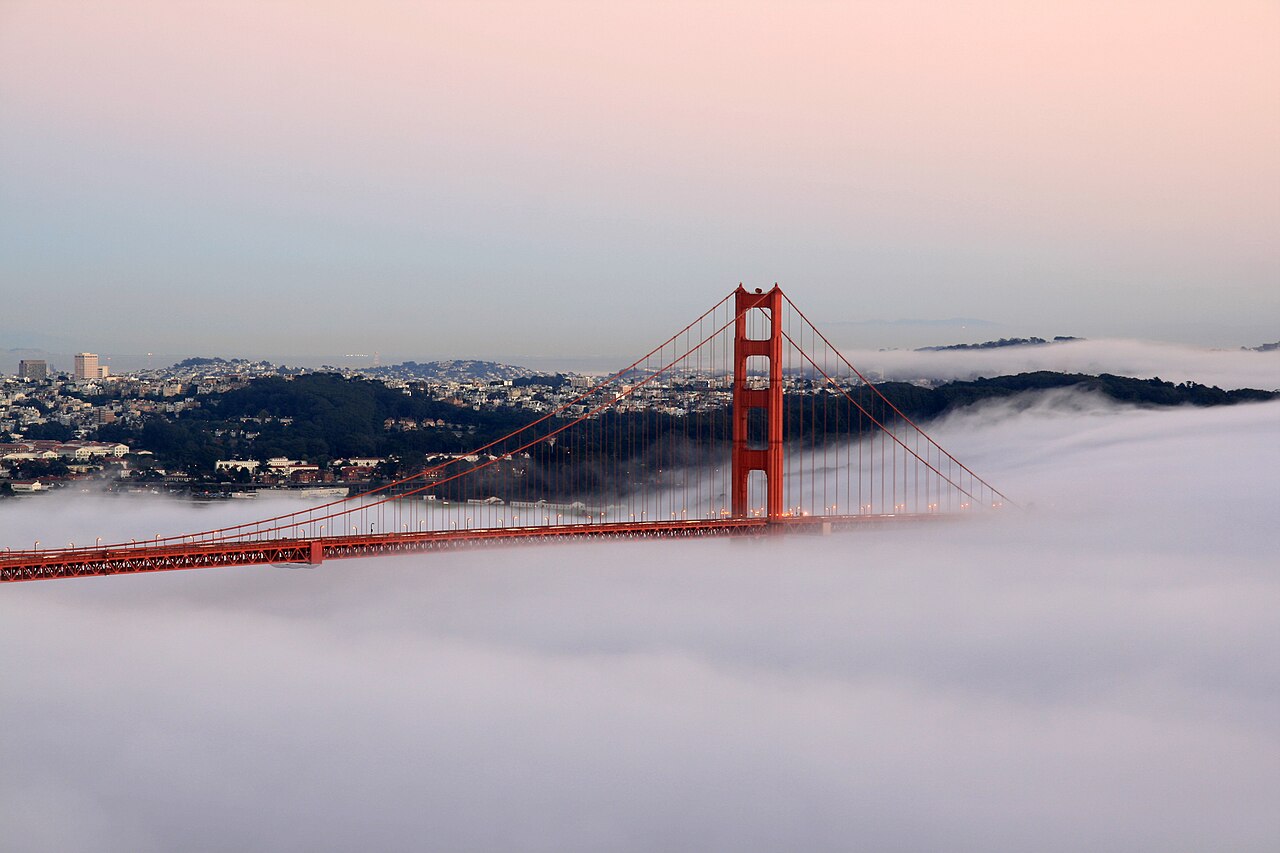
Stand-in photograph: the Golden Gate Bridge at sunset — San Francisco is one of the great destinations of Fallout 2’s enormous map. Photo: Brocken Inaglory, via Wikimedia Commons, CC BY-SA 3.0.
If the first game invented the formula, the second detonated it. Developed by Black Isle Studios and released barely a year later, in 1998, Fallout 2 cast the player as the Chosen One, a tribal descendant of the original hero, hunting a garden-of-Eden creation kit for a dying village — and then let that quest sprawl across a map several times the size of its predecessor’s. New Reno’s feuding crime families, the slaver politics of the Den, a working car, party members with real personalities, and the Enclave, a genocidal remnant of the old American government, all arrived in a single, teeming package.
The launch was buggy, and the score settled at 86 on Metacritic — three points below the original, a gap later generations of fans, armed with restoration patches that reassembled cut content, have spent decades disputing. The case for Fallout 2 as the series’ peak is the case for maximalism: no Fallout world is larger in spirit, none offers more ways to be terrible or decent, and none trusts the player with more rope. Its defenders, concentrated in the series’ oldest communities, regard everything after it as a footnote. This ranking puts one game above it — by the width of a reputation system.
1. Fallout: New Vegas (2010)
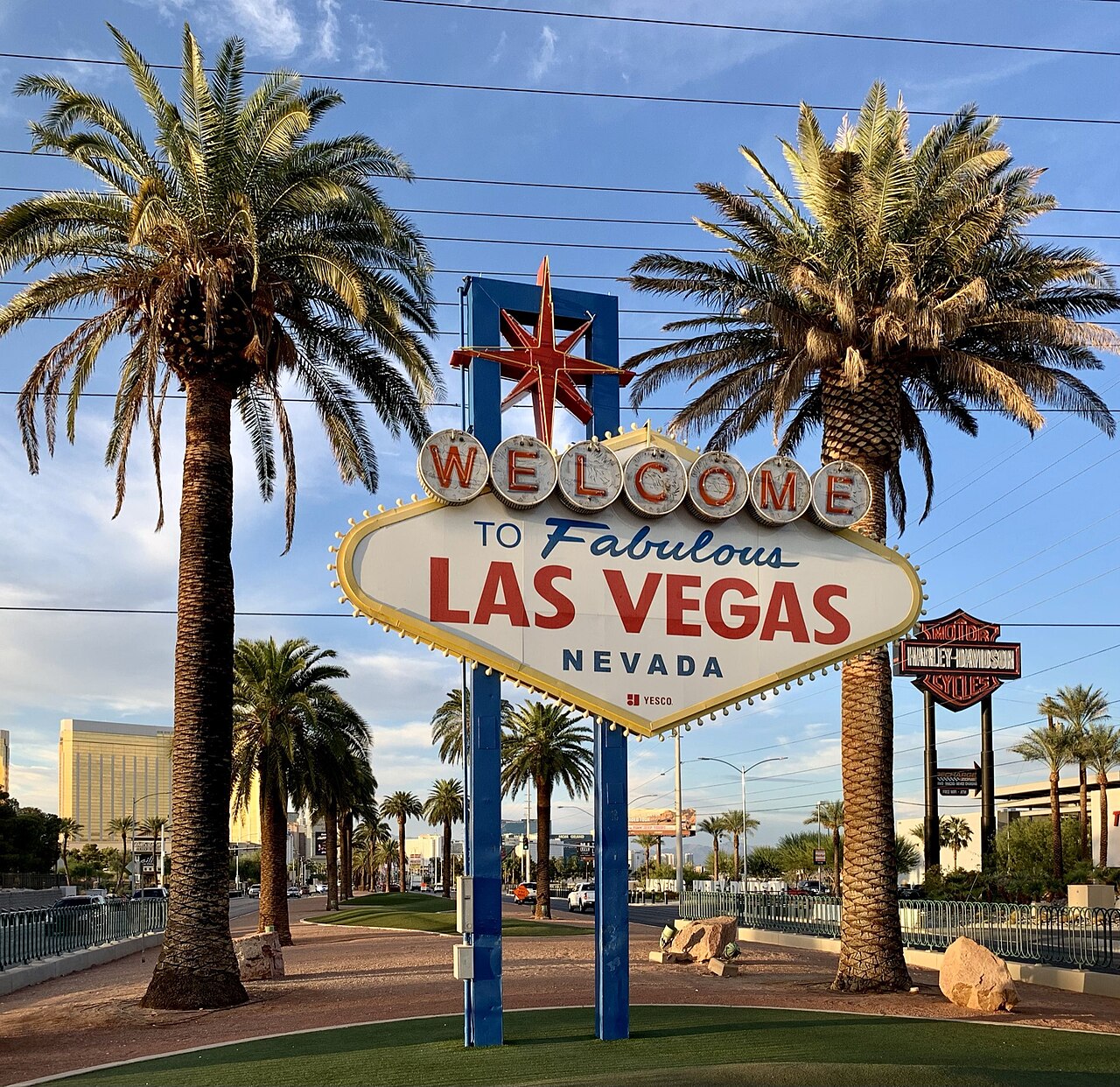
Stand-in photograph: the Welcome to Fabulous Las Vegas sign — the real city’s greeting, in a Mojave the game made into the series’ most contested ground. Photo: APK, via Wikimedia Commons, CC BY-SA 4.0.
The spin-off that ate the series. Handed to Obsidian Entertainment — a studio thick with veterans of the Black Isle games — and built in roughly eighteen months on Fallout 3‘s technology, New Vegas opened with its Courier shot in the head over a poker chip and left in a shallow grave outside Goodsprings. What followed was the finest piece of political engineering in the franchise: a Mojave where the New California Republic, Caesar’s Legion and the enigmatic Mr House fought over Hoover Dam, where every faction kept a separate, remembered opinion of the player, and where the ending could belong to an empire, a republic, a tyrant in a tower — or to the Courier alone.
The contemporary numbers contain the series’ most famous irony. New Vegas scored 84 on Metacritic, one point below the threshold that would have triggered a bonus for Obsidian, and its launch bugs were real and numerous. Time reversed the verdict. Its four expansions — above all the eerie, elegiac Old World Blues and Lonesome Road — deepened the story; Hardcore mode, weapon modification and genuine skill checks restored systems the mainline had streamlined; and a generation of players raised on it came to treat its writing as the standard other RPGs are measured against. The television series’ decision to journey to its city for a second season merely ratified what the fandom had already decided. On ambition, consequence and the quality of its best hours, Fallout: New Vegas is the greatest Fallout game of all time — as this ranking argues it, openly and by a margin its supporters will call obvious and its rivals will call theft.
The state of the debate
Stand-in photograph: ranchland along old Route 66 near Williams, Arizona — the road west, where every argument about this series eventually travels. Photo: inkknife_2000, via Wikimedia Commons, CC BY-SA 2.0.
An honest ranking ends with an honest admission: the argument is not settled, and the fault lines are structural. The oldest split runs between the isometric era and everything after it, and its modern form is the contest between the top two places on this list. Holders of the Fallout 2 standard prize scale, freedom and a world indifferent to the player’s feelings, and tend to see New Vegas as a brilliant inheritor working inside another studio’s engine and constraints. The New Vegas majority — and polling of modern players, when it happens, usually finds one — answers that consequence and writing quality outrank square mileage, and that the faction reputation system did something the classics never attempted.
A second fault line runs through the scores themselves, which history has partially inverted: the critics’ champion, Fallout 3 at 91 and 93, now defends its position mostly on exploration and historical importance, while the game that missed its bonus by a single point at 84 sits atop lists like this one. And a third runs through Fallout 76, whose slow climb from a 52-scored launch to a populated, still-expanding Appalachia forces an awkward question onto every future ranking — whether a game should be judged as it arrived or as it eventually became. The next entry, whenever it comes, will not end the debate either; it will simply give the debaters new ground to fight over, which may be the most Fallout outcome of all.