
SNK did not know, in November 1999, that it was saying goodbye. The company had months of solvency left, the Neo Geo was nearly a decade old, and the arcades that had sustained both were emptying. But if you had told the Garou: Mark of the Wolves team that this would be the last great fighting game of SNK’s golden age — the final Fatal Fury, the last masterpiece the original company would ship — they could hardly have produced a more fitting farewell. Garou is beautiful in a way that still feels slightly impossible: a late-era sprite fighter so fluid, so warm and so confident that it plays less like an ending and more like a promise.
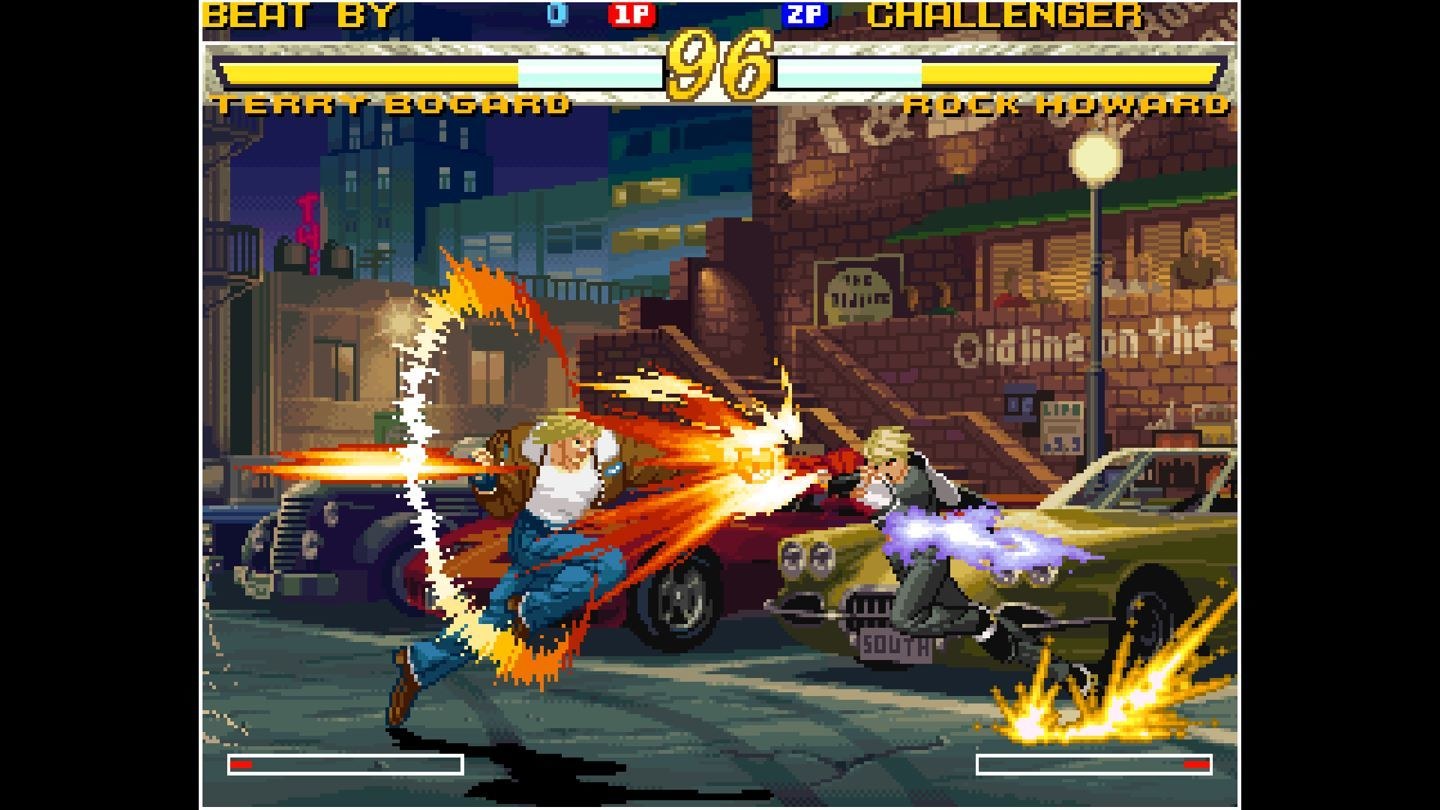
The promise starts with the premise. Garou leaps a decade past the Fatal Fury storyline. Geese Howard is gone, and his son — Rock Howard, raised by Terry Bogard himself — headlines a new King of Fighters tournament in Second Southtown. It is a generational handover both in fiction and in fact: a young cast, mentored by legends, stepping out of their shadows. Terry, the sole returning veteran, wears a bomber jacket now instead of his famous cap and vest, and the redesign tells you everything about the game’s attitude. This is Fatal Fury grown up.
Fourteen Fighters, Every One of Them Alive
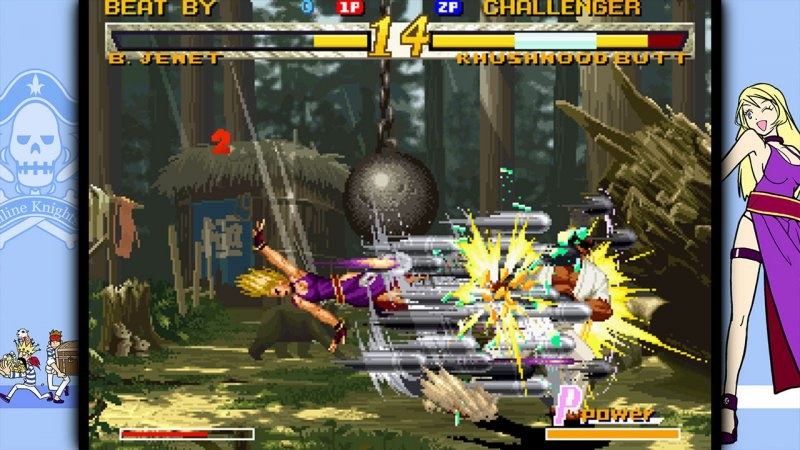
Where its contemporaries chased roster size, Garou chose density. Fourteen characters — twelve regulars plus the boss pair of Grant and Kain — and every one of them animated with a lavishness that borders on showing off. Rock Howard fights with his father’s moves and his father’s nemesis’s moves woven together, a living summary of the series’ whole history, and his sprite seems to move on more frames than physics should allow a Neo Geo cartridge to hold. Tizoc, the masked wrestler, is a mountain of a grappler whose entrances alone are worth the credit. Hotaru Futaba fights with balletic grace, Kim’s sons Jae Hoon and Dong Hwan split their father’s legacy between discipline and showmanship, and the pirate Bonne Jenet leads a crew of sky pirates in one of the great fighting-game entrances.
The bosses complete the picture. Grant, the masked martial artist dying on his feet, fights with tragic dignity. Kain R. Heinlein — Geese’s brother-in-law, the elegant architect of the whole tournament — is one of SNK’s finest final bosses precisely because he is not a cackling monster. He has a philosophy, and the story mode, unusually for the era, bothers to argue with it. Garou’s endings are proper little dramas, and Rock’s in particular lands an emotional punch that fighting games of the period rarely attempted.
Just Defend, T.O.P. and the Art of the Comeback
Mechanically, Garou is SNK’s most refined hour. The headline system is Just Defend: block an attack at the last possible instant and you take no chip damage, recover a sliver of health, and — crucially — can cancel your guard stun into an immediate counterattack. It transforms defence from a passive chore into the game’s most expressive skill. A player who Just Defends well is never really losing; they are loading a spring. Watching a master absorb a multi-hit string, flashing blue with every perfectly timed block, then answer with a full combo, remains one of the great spectacles in fighting games.
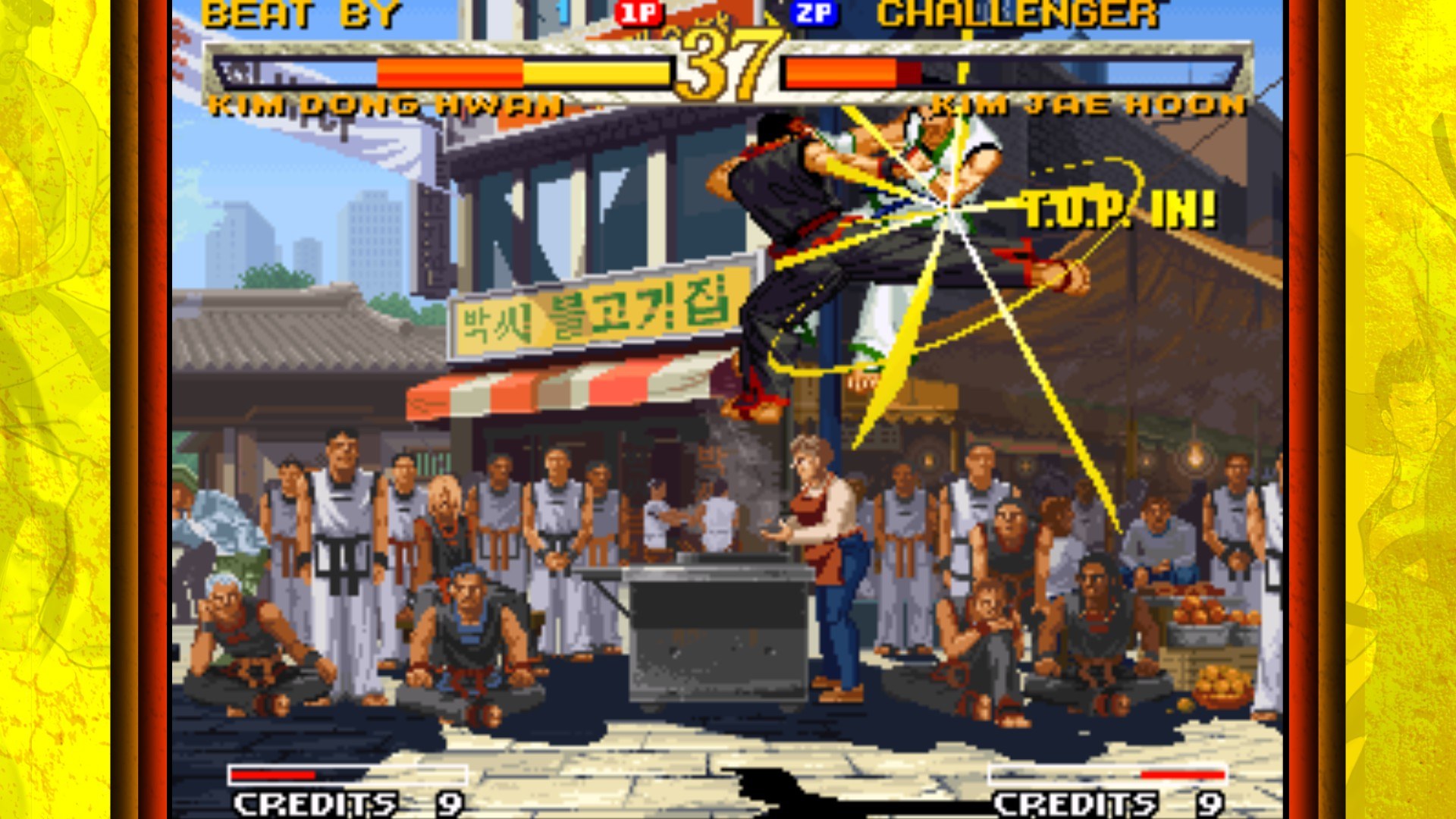
Around it sit systems of equal character. The T.O.P. system lets you designate a portion of your health bar before the match; while your health sits inside that zone, your damage rises, your health regenerates, and you gain access to a unique T.O.P. attack. It is a personalised comeback window — you choose where your fighter is most dangerous, which makes every player’s Garou slightly different. Guard crush punishes the over-cautious, feints and move-breaking keep offence honest, and the whole game runs at a pace that feels modern even now: brisk, technical, and mercifully free of the bloat that was creeping into its rivals.
The Peak of an Art Form
It has to be said plainly: Garou: Mark of the Wolves contains some of the finest 2D sprite art ever put in a video game. Backgrounds glow with late-afternoon light — a harbour at sunset, a bar where the patrons react to the fight, a train that carries the battle across the city. Characters cast shadows, breathe, smirk and slump. Terry’s stage-ending grin, Rock’s jacket flaring as he turns, the way Grant’s cape settles after a technique — the game is a thousand small acts of draughtsmanship, performed on hardware from 1990 by artists who had spent a decade learning exactly how far they could push it. The Dreamcast and later ports kept it alive; the modern re-release with rollback netcode finally gave it the competitive scene it always deserved.
For years, Garou’s story seemed to end on its own cliffhanger — Kain’s revelations about Rock’s mother demanded a sequel that a bankrupt SNK could never make. That the sequel, Fatal Fury: City of the Wolves, finally arrived a generation later is the happiest footnote in fighting-game history, and it happened because nobody forgot this game. Players kept the lobbies warm for twenty-five years on the strength of fourteen characters and a perfect defensive idea.
Call it SNK’s beautiful goodbye, then — but say it the way you’d say it about a band’s final album that turned out to be their best. Garou: Mark of the Wolves is not a relic. It is a masterclass that happens to be old, and the crown jewel of the Neo Geo’s fighting library.
Learning the Wolves’ Game
For newcomers, Garou is among the most welcoming of the classic SNK fighters — not because it is easy, but because its ideas are legible. Pick Rock if you want the whole story in one character, Terry if you want the familiar made new, or Jae Hoon if you want a disciplined, honest fighter whose strength teaches you the system. Spend your first sessions on Just Defend alone: stop attacking, hold your ground, and learn the rhythm of blocking late. The first time you Just Defend an entire super and answer with a round-winning counter, you will understand why this game’s defensive system is still cited by designers a quarter-century later. Set your T.O.P. zone generously at first — Garou lets you feel powerful while you learn, which is a rarer kindness in this genre than it should be.
One historical note completes the picture. Garou reached arcades in late 1999 and the AES soon after, in the twilight of both SNK and its hardware, and period players could be forgiven for treating it as a beautiful footnote. That it instead became a foundation — sustaining tournaments, inspiring its eventual sequel, and standing as the visual benchmark for an entire art form — is the happiest misjudgement in fighting-game history.
Seek it out in its modern re-release if you can, where rollback netcode finally lets Just Defend duels happen across continents the way the designers would have dreamed of, or in any of its faithful earlier ports if original hardware is out of reach. However you arrive, give it more than an evening: Garou’s roster is small enough that a dedicated month can make you genuinely competent with half of it, and that is when the game begins its second life as a conversation between players who know each other’s habits. Few fighting games reward intimacy like this one.
Score: 9.5/10