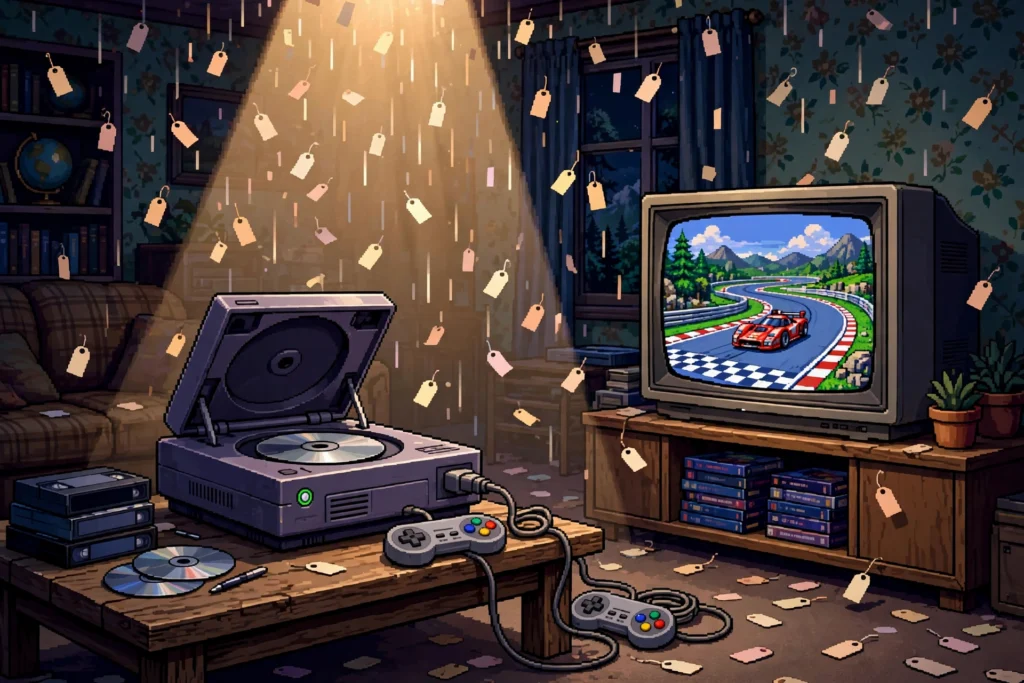
The 3DO has now failed twice, thirty-three years apart, for what turns out to be exactly the same reason. In 1993 it was the most forward-looking games machine on the planet: CD-ROM as standard, a proper 32-bit processor, full-motion video, and a business model borrowed from VHS that was supposed to end the console wars forever. It launched at $699, sold somewhere around two million units, and was discontinued in 1996. Then, in the summer of 2026, a revived Empire Interactive announced it had acquired the 3DO brand and would bring the console back — and abandoned the whole project less than a week later, before a single render, prototype or price had been shown. Two failures, one cause: the 3DO was never one thing owned by one company. It was an idea scattered across a dozen balance sheets, and ideas scattered that widely cannot be sold — in 1993 or in 2026.
The idea was genuinely good
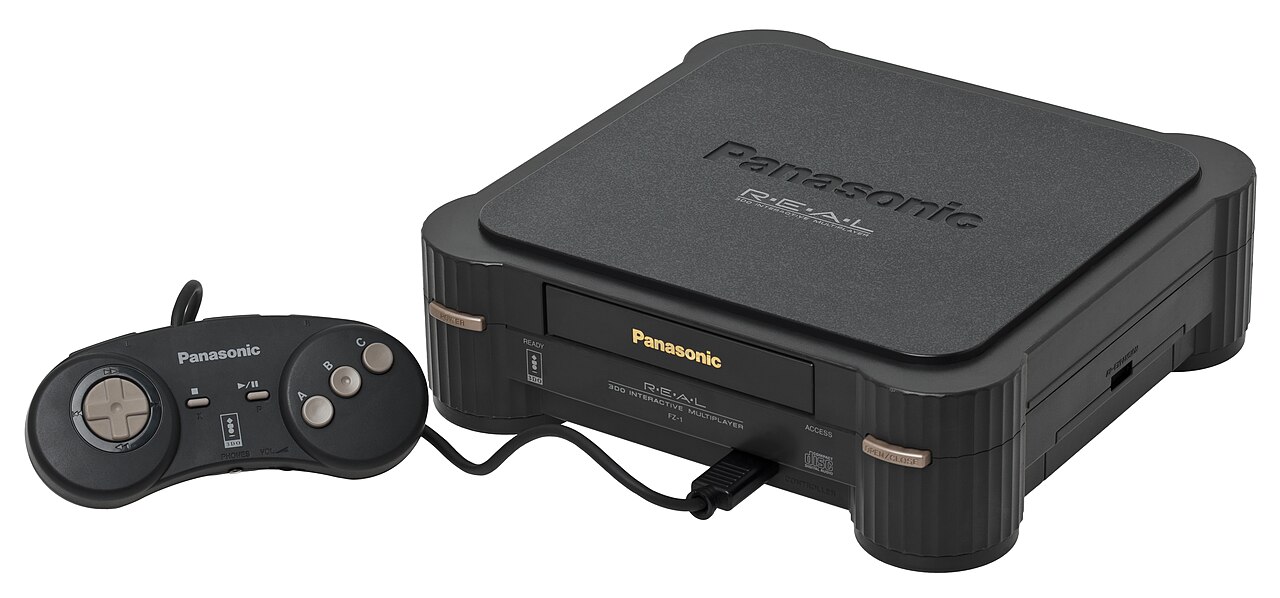
Start by giving Trip Hawkins his due. The Electronic Arts founder looked at the early-nineties console business — Nintendo and Sega as toll-booth operators, charging manufacturers and publishers for the privilege of existing — and proposed the video, audio and PC model instead: one open hardware standard, licensed to anyone who wanted to build it. Panasonic, GoldStar (now LG), Sanyo, Creative and Samsung all signed on. The 3DO Company would design the specification, license it cheaply, take a modest royalty of a few dollars per game disc — far below Nintendo’s cartridge-era fees — and let competition between manufacturers drive the hardware price down, exactly as it had with VCRs.
The machine itself justified the ambition. Designed by Dave Needle and RJ Mical — the Amiga and Lynx team, and it showed — the 3DO paired a 32-bit ARM60 processor with dedicated graphics accelerators, a double-speed CD-ROM drive, a megabyte of video RAM and an operating system that could multitask. Its controllers daisy-chained into each other, so multiplayer needed no multitap. In October 1993 nothing else in a living room looked like the future quite so convincingly. The problem was never the engineering. The problem was the arithmetic the licensing model forced on everyone.
Problem one: $699, and arithmetic nobody could fix
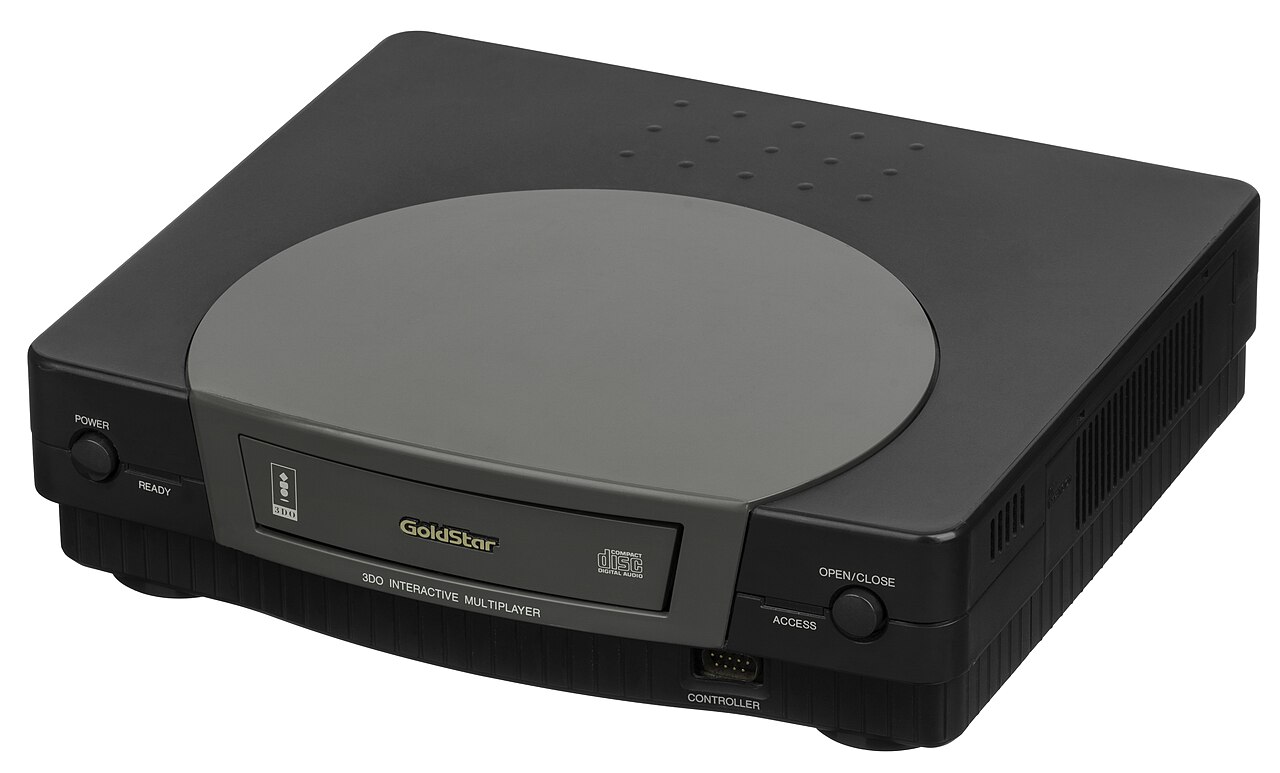
Nintendo and Sega could sell hardware at or below cost because they collected a royalty on every game ever sold for it. The razor was cheap because the blades were theirs. The 3DO model inverted that: The 3DO Company barely touched hardware revenue, and its per-disc royalty was deliberately small. That meant Panasonic had to make its profit on the machine itself — and a cutting-edge CD-ROM machine in 1993, built to turn a profit at retail, cost $699.99. That is roughly $1,550 in today’s money, for a console whose launch line-up’s pack-in was Crash ‘n Burn.
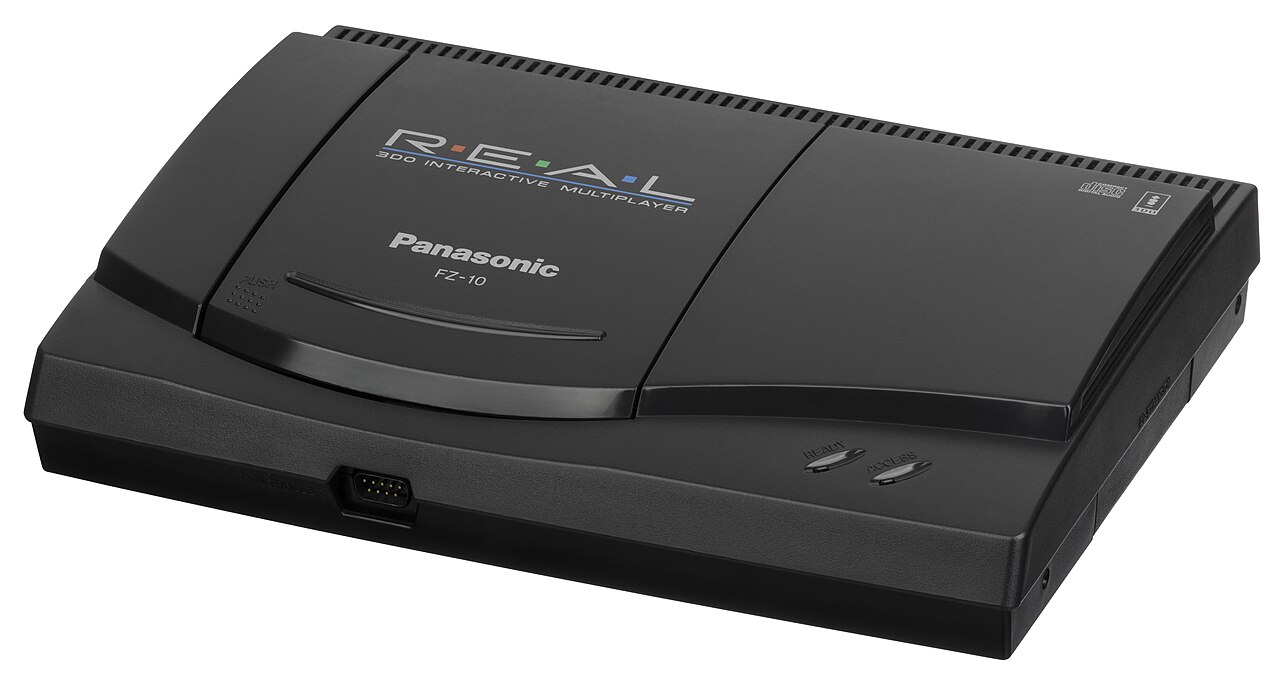
Every participant’s incentives pointed the wrong way. Manufacturers wanted margin, so prices fell slowly — the GoldStar machine arrived at $399 in 1994, Panasonic’s own sleeker FZ-10 matched it, and by then the number hardly mattered. Publishers, enjoying the low royalty, had no platform holder leaning on them for quality, so shelves filled with full-motion-video experiments and PC ports of wildly uneven standard. And The 3DO Company, collecting its few dollars a disc, never built the war chest to fund the first-party killer apps or the loss-leading price cut that might have saved it. Everyone involved behaved rationally. The system died anyway. That is what a structural failure looks like.
Problem two: the software flood, and the killer app that belonged to everyone
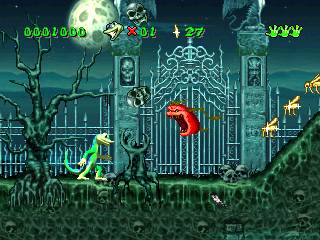
Here is the 3DO’s library in one uncomfortable sentence: its best games were almost nobody’s exclusives for long. The machine had real quality — Crystal Dynamics’ Gex sold over a million copies and gave the system a mascot with actual charisma; the 3DO version of Super Street Fighter II Turbo was for a while the only home version that mattered; Star Control II’s 3DO port, with full voice acting, is still arguably the definitive edition of one of the greatest games ever made. But Gex went to PlayStation and Saturn. Street Fighter went everywhere. The low-royalty, open-standard philosophy that was meant to flood the 3DO with software also meant no manufacturer had any reason to lock anything down. A console is its exclusives, and the 3DO standard was designed, on principle, not to have any.
What filled the gap was the era’s great delusion: interactive movies. For every Gex there was a Night Trap-adjacent FMV experiment, a laserdisc port, an "interactive multimedia experience" that played like a screensaver with delusions of cinema. The CD-ROM’s capacity was real; the industry’s idea of what to do with it, in 1993 and 1994, mostly was not. Shoppers comparing a $699 machine demonstrating grainy video clips against a $199 SNES demonstrating Donkey Kong Country did not need a spreadsheet to decide.
The cruel part: the great 3DO games were great
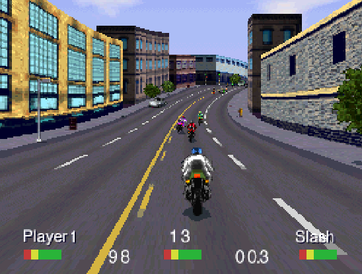
It is worth pausing on what the machine could do in the right hands, because the 3DO’s reputation as a punchline undersells it. EA’s 3DO Road Rash took the Mega Drive formula and rebuilt it with digitised riders, a licensed soundtrack of proper alternative rock, and a sense of speed the 16-bit games could not touch. It reviewed like a system-seller — because it should have been one, on a machine priced to sell systems.
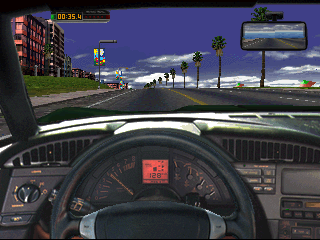
The Need for Speed — yes, that Need for Speed, the one that became a billion-dollar franchise — debuted on the 3DO in 1994, built with Road & Track magazine’s data and a reverence for real cars that no arcade racer had attempted. Add Wing Commander III’s Hollywood-budget space opera, the definitive Return Fire, the strategy of the original — the library’s top shelf stands comparison with anything of its moment. The tragedy of the 3DO is not that the games weren’t there. It’s that they were there on a $699 machine in a $299 world, and within eighteen months they were somewhere else too.
Problem three: Sony did the maths properly
The Sega Saturn arrived in 1994 and the Sony PlayStation followed that December in Japan, and both exposed the 3DO model’s flaw in a single price tag. Sony, a manufacturer and a platform holder in one body, could subsidise the hardware, court developers with excellent tools and a sensible royalty, and spend like a company that owned the whole pipeline — because it did. The PlayStation launched in America in September 1995 at $299, a hundred dollars under the Saturn and less than half the 3DO’s launch price, with Ridge Racer and Toshinden doing the talking. The 3DO’s remaining advantages — a head start and a CD drive — evaporated in a quarter.
Hawkins saw it coming and reached for the classic escape hatch: a successor. The M2, built around dual PowerPC 602 processors, was demoed to genuine excitement in 1995 — and then sold to Matsushita (Panasonic) in a deal reportedly worth $100 million before it ever shipped as a game console. The technology ended its days in interactive kiosks and training systems; a handful of M2 games surfaced decades later as curiosities. By the end of 1996 the original 3DO was discontinued, with lifetime sales around two million against the PlayStation’s eventual hundred-million-plus. The 3DO Company pivoted to making games for other people’s consoles — Army Men, Might and Magic — and filed for bankruptcy in 2003. Failure one, complete: a brilliant standard, priced by its own structure out of the market it created.
Failure two: the 2026 revival that lasted a week
Which brings us to June 2026, and the strangest coda in retro gaming. Işık Şekercigil, a British-Turkish mobile-gaming entrepreneur, announced he had acquired the Empire Interactive name — itself a defunct British publisher — and, under it, claimed to have obtained the 3DO trademark and select game IP, with plans worthy of the original manifesto: a retro 3DO console, remasters of its games, and even a licensable modern 3DO ecosystem, third-party hardware and all. History wasn’t just repeating; it was quoting.
It collapsed in days. Throwback Entertainment, the Canadian company that had acquired the 3DO trademark and associated designs years earlier, stated flatly that those assets "have not been sold, transferred, or licensed" and that there were no plans to sell them; Limited Run Games’ CEO Josh Fairhurst publicly called the revival announcement not legitimate. Şekercigil clarified that what he actually held was a trademark for "The 3DO Company" name, limited to game development and publishing — a different legal object from the 3DO console brand. Console manufacturing rights, he acknowledged, involved Panasonic, GoldStar/LG and at least four other companies. In early July, less than a week after the announcement, Empire withdrew from the project entirely, citing the emergence of multiple parties claiming ownership of the games and the hardware, and an unwillingness to fund prolonged legal disputes over a niche retro market. No hardware, no remasters, no console. Failure two, complete — this time before a product existed at all.
Same cause, both times
Line the two failures up and the symmetry is almost elegant. In 1993 the 3DO died because its value was split among manufacturers who needed hardware margin, a licensor who took too little to fight back, and publishers who owed it nothing — so when Sony arrived owning everything end to end, there was no single throat to grab and no single hand on the wheel. In 2026 it died because its remains are split among a trademark holder in Canada, game rights scattered through companies like Ziggurat (which bought over thirty 3DO titles from Prism in 2020 and did successfully remaster Killing Time), hardware rights tangled up in the successors of Panasonic and GoldStar, and a newcomer holding a company name that turned out not to be the console brand at all. Nobody could sell you a 3DO in 1993 at a price that worked, and nobody in 2026 could assemble the legal right to sell you one at any price.
The 3DO didn’t fail because the idea was bad. It failed — twice — because an idea owned by everybody is owned by nobody.
There is a genuinely sad footnote. The revival economy has rescued stranger machines than this, and the 3DO’s top shelf — Gex aside, most of it locked in licensing limbo — deserves the mini-console-and-remaster treatment its contemporaries got. But a rescue requires a rescuer who actually holds the rights, and thirty years of bankruptcies and asset sales have made sure that no such single party exists. Until someone does the unglamorous decade of paperwork, the 3DO stays what it has always been: the future of 1993, preserved in amber, failing beautifully at regular intervals. Some consoles get revived. The 3DO gets re-failed — and honestly, at this point, that may be the most on-brand legacy in gaming.