
Thirteen years separated Ninja Gaiden 3 from its numbered successor, and that gap shaped every review published when Ninja Gaiden 4 arrived on October 21, 2025. Critics approached the game less as a routine sequel and more as a test: could a series defined by speed, dismemberment and punishing precision still matter in an era dominated by slower, heavier action role-playing games? The broad answer, across dozens of scored reviews, was yes — with qualifications that were almost as consistent as the praise. Combat earned near-unanimous admiration. Storytelling, level design and the handling of a beloved returning hero earned near-unanimous reservations. That split verdict is the real story of the launch, and it is why the original GamesRadar+ review pegged to the older version of this post — a perfect-score notice dated October 20, 2025 — sits at the enthusiastic end of a spectrum rather than outside it.

Shibuya Crossing in Tokyo at night, photographed from above. The photograph shows the real city, not the game: Ninja Gaiden 4 is set in a rain-drenched, near-future Tokyo sealed off after the return of the Dark Dragon.
Ninja Gaiden 4 review scores: the settled numbers, by platform
Aggregator scores settled into a narrow, respectable band rather than a single universal figure, and the platform split matters. Metacritic lists the game at 82 out of 100 on PC and 82 out of 100 on Xbox Series X/S, but 79 out of 100 on PlayStation 5, with each version classified as generally favourable. OpenCritic recorded a recommendation rate of 83 percent from tracked critics, a strong-approval result that broadly matches the Metacritic picture. The difference between the PlayStation figure and the other two reflects the separate pools of reviews counted for each platform, not different content: the game itself, its campaign and its systems are the same across the three versions.
Individual outlet scores explain the spread inside those averages. GamesRadar+ awarded five stars out of five, the maximum, and its Metacritic summary described the result as a genre triumph built on slick, excessive action. IGN scored the game 8 out of 10, GameSpot scored it 8 out of 10, and Shacknews also landed on 8 out of 10. Game Informer went higher, at 8.75 out of 10, while Video Games Chronicle awarded four stars out of five. In Japan, the four Famitsu reviewers each gave 9 out of 10, for a combined 36 out of 40. Lower down the scale, Push Square awarded 7 out of 10 on PlayStation 5, Hardcore Gamer awarded 3.5 out of 5, and PC Gamer in the United States awarded 69 out of 100 — one of the clearest dissenting notices, even though its summary still conceded that the fighting carried the package through weaker additions around it. No major pattern of negative reviews emerged; the disagreement concerned how much the surrounding design dragged on exceptional combat, not whether that combat worked.
A new ninja, an old dragon, and a two-studio gamble
Context helps explain both the excitement and the friction. Ninja Gaiden 4 was co-developed by Team Ninja and PlatinumGames and published by Xbox Game Studios, a partnership that paired the studio that created the modern series with the studio behind Bayonetta and Metal Gear Rising: Revengeance. The game launched simultaneously on PlayStation 5, Windows and Xbox Series X/S, and arrived on Xbox Game Pass Ultimate and PC Game Pass on day one. The story is set after Ninja Gaiden 3, in a quarantined Tokyo drowned in cursed rain after the return of the Dark Dragon, the entity tied to the Dark Dragon Blade in the 2004 series reboot.
The lead character is not Ryu Hayabusa. Yakumo, a young ninja of the Raven Clan, carries most of the campaign, tasked first with killing Seori, the Dark Dragon priestess, and then — after Seori argues that only release can allow purification — with breaking the seals that hold the dragon in check. Ryu remains a major figure, serving as rival, benchmark and playable character in dedicated sections, and series regular Ayane also appears. Signature techniques including the Izuna Drop and the Flying Swallow are available across the cast, a deliberate bridge between the newcomer and the established hero. Critics generally accepted the premise as a sensible way to restart a dormant series; disagreement centred on execution, particularly on how much of the campaign the newcomer actually earns.
What critics praised: combat depth and the blood powers
Praise started, and usually peaked, with the fighting system. Reviewers described combat as exceptionally fast, responsive and layered, built around aggressive pressure rather than patient waiting. Enemies attack in groups, press advantages and punish passive play, while dismemberment opens up Obliteration Techniques that finish wounded opponents. The parry mechanic drew specific attention in several reviews because defence itself is framed as an attack: meeting an incoming strike with a strike can stagger an opponent, keeping momentum forward even when a player is supposedly reacting. GameSpot characterised the overall result as a brutal menagerie of blood spray and stylish action, and argued that the sequel banished memories of the poorly received third game. IGN placed the fighting in rare company, judging it the most enjoyable 3D action combat from that reviewer since Devil May Cry 5, and called the wider package the strongest pure action release since Hi-Fi Rush despite its flaws.
The headline new system is Yakumo’s blood technique, described in game terminology through Bloodbind Ninjutsu and the Bloodraven Form it enables. Building a gauge through combat lets Yakumo reshape a weapon with blood into a larger, harder-hitting form: twin blades extend into a single sweeping tachi, a rapier becomes a drill-like lance, and a staff converts into a heavy hammer, among other transformations. Reviews treated that system as more than decoration for three practical reasons. First, transformed weapons change range and crowd control, so switching forms becomes a tactical answer to enemy composition rather than a cosmetic flourish. Second, Bloodraven attacks can break through guarded enemies and interrupt powerful charged attacks that ordinary strikes cannot stop, giving the gauge a defensive value worth conserving. Third, spending the gauge early for damage competes with holding it for exactly those interruptions, creating the risk-and-reward decision loop that critics repeatedly cited as the campaign’s deepest idea. GamesRadar+ singled out that blood power system as adding a layer allowing players to push beyond normal limits, and The Sixth Axis, which awarded 9 out of 10, described the wider loop as a puzzle in which every tool, including defence, is offensive.
Variety inside Yakumo’s arsenal also scored well. Four main weapon sets, unlockable techniques, challenge rooms known as Purgatory Gates — where voluntarily accepting a health handicap increases rewards — and side objectives issued through terminals give the campaign more texture than a simple corridor of arenas, even for reviewers who disliked the corridors themselves. Performance and presentation received favourable mentions too, with the PlatinumGames engine supporting frame rates up to 120 frames per second on suitable hardware, and several reviews praising boss spectacle and electronic-rock scoring during major fights.

Katana blades exhibited at Matsumoto City Museum in Japan. A museum photograph, not game artwork — included because blade variety is central to the reviewed combat, from Yakumo’s twin blades to Ryu Hayabusa’s established arsenal.
Difficulty: still severe, but no longer a locked door
Difficulty produced one of the most interesting points of consensus, because reviewers agreed on both halves of an apparent contradiction. At its upper settings, Ninja Gaiden 4 remains a severe test, with a Master Ninja tier aimed squarely at series veterans and lengthy battles that Game Informer warned could wear players down even while thrilling them. At the same time, critics noted that the game is the most approachable entry in the series. Hero Mode sits below Normal and Hard, and its assists — including automatic guarding and dodging — can each be toggled individually rather than accepted as a fixed package. Difficulty can also be changed during a run, except where Master Ninja is concerned. Director Masakazu Hirayama explained before launch that the intention was for players to curate the challenge as skill improved, removing assists one at a time. Reviewers who welcomed that structure argued that accessibility and severity coexist here because the hardest content was not diluted to accommodate the easiest settings; reviewers who were cooler on the game, including PC Gamer and PCMag, suggested instead that some of the series’ mechanical complexity had been traded for a simpler, more arcade-like feel. Both readings point to the same underlying design change, interpreted differently.
What critics criticised: levels, story and Ryu’s reduced role
Criticism clustered into three areas, repeated so often across outlets that the pattern qualifies as consensus rather than taste. The first was level design. IGN called the environments bland, pointing to drab streets exchanged for foggy cliffsides, sewers and similar-looking military bases. Other reviewers described linear stages built from arenas joined by corridors, recycled spaces, and traversal interludes — rail grinding, gliding and grapple-led parkour — that some found exhilarating and others found like filler that overstayed its welcome. Game Informer praised the rail and grapple sequences as nearly as enjoyable as the fighting, which shows the divide, but even favourable reviews frequently conceded limited enemy variety and battles that ran long.
The second area was story and character. The campaign runs roughly ten hours in several estimates, and reviewers repeatedly described its plot as predictable, its emotional beats as unearned, and Yakumo as a comparatively thin protagonist — IGN’s review characterised the newcomer in notably unflattering terms while still scoring the game 8 out of 10, a pairing that summarises the launch reaction neatly. Supporting characters deliver substantial exposition, including slower walking sections that puncture the pace, and a late romantic hint drew particular mockery from Game Informer. None of that prevented strong scores, because almost every critic treated narrative as secondary in this genre, but it capped how high many scores could climb.
The third area was Ryu Hayabusa’s allocation. Ryu is playable, retains a familiar and satisfying moveset, and functions as the standard Yakumo must reach — yet multiple reviews argued that his sections retread familiar ground with a simplified arsenal, that the balance between the two leads feels uneven, and that long-time followers expecting a Ryu-led adventure could leave disappointed. TheGamer’s review round-up captured that tension directly: its own reviewer loved the game while wishing Ryu had not been confined to what felt like a cameo-weighted role. Defenders of the structure countered that handing the series to Yakumo was precisely the point, and that Ryu’s relative scarcity gives the sequel a future rather than another lap of nostalgia.
Bosses split opinion in a related way. Some encounters earned praise as tough, spectacular duels with strong music, in the tradition PlatinumGames established with its earlier work. Others were criticised as oversized health pools, teleporting nuisances or gimmick fights padded with weaker spawned enemies. Camera behaviour and targeting also attracted scattered complaints, including in otherwise glowing reviews, though those complaints rarely dominated a verdict.
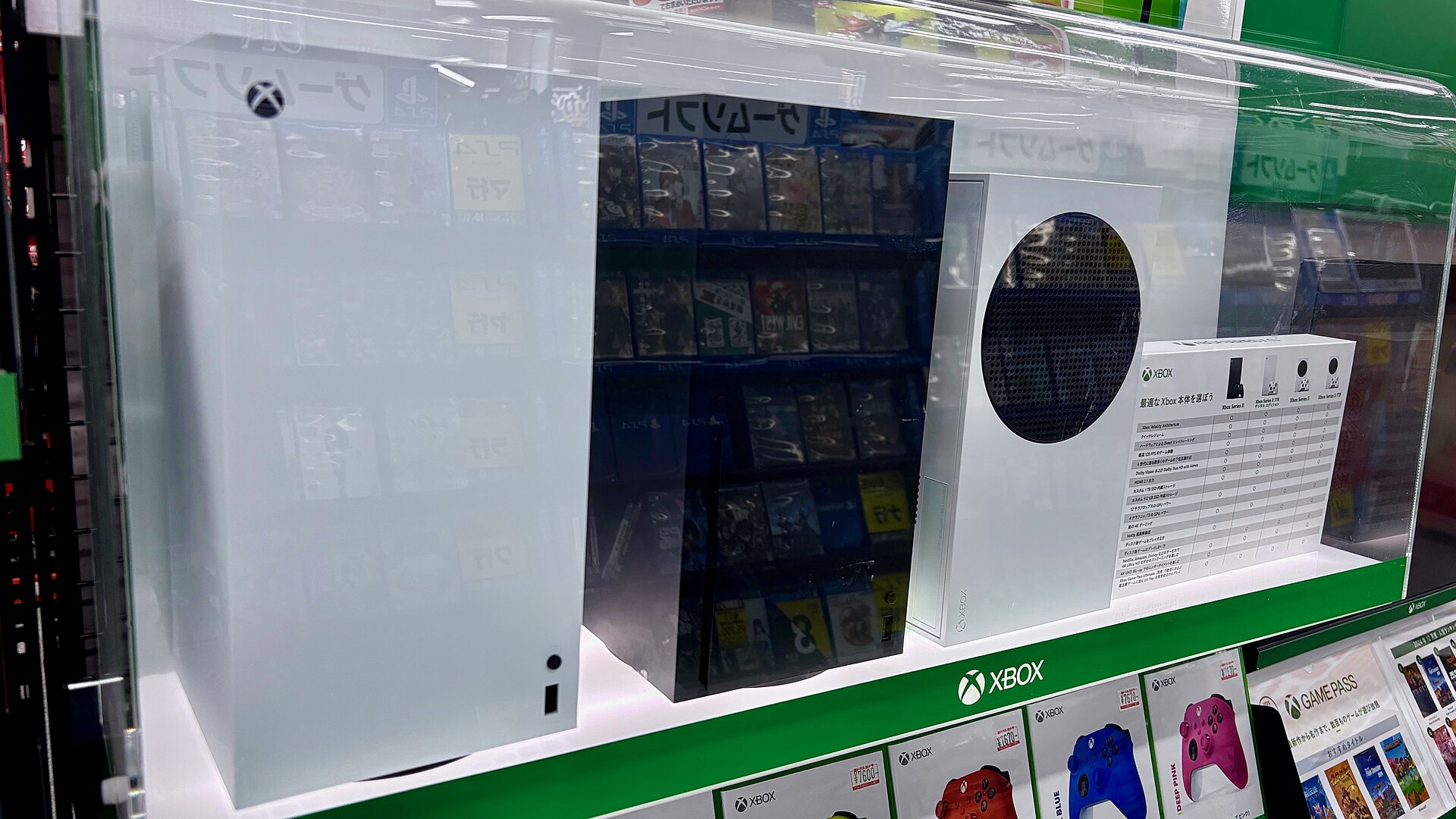
Xbox Series X and Series S hardware, photographed side by side. Ninja Gaiden 4 was published by Xbox Game Studios and launched on Game Pass, while also releasing on PlayStation 5 and PC — where its Metacritic average settled three points higher than on PlayStation.
The hindsight view: awards, new chapters and a niche audience
Reception after launch broadly confirmed the review consensus rather than overturning it. The game was nominated for Best Action Game at The Game Awards 2025 and for Action Game of the Year at the 29th Annual D.I.C.E. Awards, recognition that placed it inside the year’s top action tier without crowning it the consensus winner. Post-launch support followed with a downloadable expansion, The Two Masters, released on March 4, 2026, adding three story chapters set after the campaign, a challenge mode called Abyssal Road, and further weapons, stages and enemies — content aimed precisely at the mastery-and-replay audience that critics identified as the game’s natural home.
Commercial hindsight requires more caution, because no official lifetime sales total from the publisher was available in the sources checked for this feature. Third-party estimates paint a niche rather than blockbuster picture: analytics firm Alinea Analytics estimated roughly 206,000 copies sold on PlayStation 5 among 2025’s Xbox-published releases on that platform, and Steam tracking reported an all-time peak of 11,217 concurrent players at launch. Those figures come with obvious caveats — day-one Game Pass availability suppresses unit sales as a measure of reach, and a PlayStation-only estimate says nothing about total players — so the fair conclusion is limited: the audience found was substantial for a demanding character-action revival, concentrated among genre devotees, and heavily overlapping with players of Devil May Cry 5 and Ghost of Tsushima in Alinea’s crossover data.
Verdict on the consensus
Read together, the reviews describe a comeback with a clear centre of gravity. Ninja Gaiden 4 succeeds at the thing the series exists to do — fast, deep, intimidating combat, now extended by a blood-driven transformation system that rewards aggression and split-second resource decisions — and it stumbles at most of the things around that core: memorable places, a compelling new lead, an even share of the spotlight for Ryu, and bosses consistent enough to match the standard combat. Scores from 69 to a perfect mark, settling at 82 on PC and Xbox and 79 on PlayStation 5, are what that profile looks like in numerical form. For action specialists, critics treated the flaws as survivable and the fighting as essential. For players who need story or exploration to carry a campaign, the same reviews supplied ample warning. Either way, after thirteen years away, the series returned as a live concern rather than a museum piece — and on that point, from GamesRadar+’s perfect score down to its sternest scored critics, agreement was almost total.