
For about a day in September 2025, it looked like a wrong was finally being righted. Mega Evolution had debuted in Pokémon X and Y back in 2013, yet the starters native to Kalos — Chespin, Fennekin and Froakie, and their final forms Chesnaught, Delphox and Greninja — never received Mega forms of their own. The Kanto starters did. So did plenty of older favourites. The home team watched from the bench. Twelve years later, Pokémon Legends: Z-A revealed Mega Chesnaught, Mega Delphox and Mega Greninja at last — and then the fine print landed. Their Mega Stones would not be found in Lumiose City, earned in a side quest or handed over after a boss fight. Greninjite, Delphoxite and Chesnaughtite would arrive one at a time, as rewards for climbing online Ranked Battles seasons in the Z-A Battle Club, a mode that needs a paid Nintendo Switch Online membership before the first match can even start.

Paris, photographed from Montmartre — the real city behind Lumiose City, the single sprawling setting of Pokémon Legends: Z-A. Photo: Jorge Royan via Wikimedia Commons, CC BY-SA 3.0.
A twelve-year wait, ended by a subscription check
The reveal was folded into a busy September 12, 2025 Nintendo Direct, the same showcase that announced the Mega Dimension DLC and its Mega Raichu X and Mega Raichu Y. By September 15, Kotaku was already reporting that excitement had curdled. Part of the irritation was simple arithmetic. The Direct had effectively put price tags around a set of transformations fans considered overdue rather than premium: $30 for the DLC on top of the game itself, and, for the Kalos trio, an online membership that contemporary coverage priced from $3.99 a month. Because each stone headlined a different season, Kotaku reasoned that collecting all three could mean staying subscribed across several months — at least $12 of membership, by its estimate, before skill entered the discussion at all.
That second gate was the sharper complaint. Paying was not enough; a player also had to perform. Ranked Battles in Legends: Z-A are four-player, real-time free-for-alls lasting three minutes, with teams levelled to 50 and a ladder that runs from Rank Z up to Rank A. Whatever a solo player thought of that format — and the Legends games had until then been resolutely single-player adventures — it was now the only road to three headline forms. Fans posting on September 12 made the grievances concrete: anger at having to wait months for a favourite such as Mega Chesnaught, and dismay that none of the three could join a first playthrough of the story, because the stones simply did not exist in the game world during it. A form revealed in marketing, in other words, could not be used in the adventure the marketing was selling — not without leaving that adventure, subscribing, and beating strangers online first.
What the announcement actually said
The Pokémon Company’s own wording, published on the official Legends: Z-A site, was unusually blunt. Greninjite would be the promotion reward for Ranked Battles Season 1, starting October 16, 2025 — launch day. Delphoxite would follow in Season 2, and Chesnaughtite in Season 3, with later seasons to be detailed in due course. The same page stated that the three stones “cannot normally be obtained during regular gameplay,” confirmed that an online membership and a Nintendo Account were required for online features, and capped ownership at one of each stone, so nobody could stockpile duplicates from repeat rewards.
Two softeners were built into that original text, and both matter for what happened later. First, the company said from the outset that stones offered as promotion rewards were planned to be redistributed in future seasons — the exclusivity was seasonal, not permanent. Second, these were promotion rewards, paid out the moment a player ranked up, rather than prizes calculated after a season closed. Nobody would have to finish in some elite percentile to keep a stone; they had to reach a stated rung before the season ended. At announcement time, though, the rungs themselves had not been published. Players knew the shape of the deal — three stones, three seasons, one subscription — long before they knew how steep any individual climb would be.

Café Le Dôme on Boulevard Montparnasse, Paris. Lumiose City’s café-lined streets borrow heavily from Paris — but no café in either city was ever going to hand over a Kalos starter’s Mega Stone. Photo: Mbzt via Wikimedia Commons, CC BY 4.0.
Pokémon has run limited-time events for decades — just not this shape
Long-time players were not objecting to limited windows as such. The series practically invented them. Mythical Pokémon such as Mew, Celebi, Jirachi and Darkrai spent years as creatures that ordinary cartridges simply did not contain, obtainable only through official distributions: in-store events, serial codes, and later Mystery Gift downloads over the internet. X and Y themselves launched with a downloadable Torchic holding a Blazikenite, an early taste of Mega Evolution delivered as a gift. More recently, Scarlet and Violet filled their calendars with Tera Raid events and Mystery Gift drops. Scarcity, deadlines and a bit of theatre around a download are all familiar rituals.
The Kalos stones broke the pattern in three specific ways. A classic distribution asked only that a player show up — connect, claim, done — and the claiming itself was free. The new system charged for admission through Nintendo Switch Online, then added a performance condition on top of the payment, then split the set across three separate windows so that a single month of either money or effort could not finish the job. It converted what had historically been a present, however time-limited, into a ladder. That is why the backlash language kept circling words like “paywall” and “fenced off” rather than the usual grumbling about event dates: the complaint was never really about waiting. It was about a core, single-player pleasure — evolving the starter you had raised — being moved behind a multiplayer turnstile.
Launch day, and a climb to Rank K
The game arrived on October 16, 2025, and Season 1 ran from that day until November 5. When the full details were published, the Greninjite rung turned out to be Rank K — fifteen promotions up a 26-rung ladder, in a brand-new real-time battle system most owners had owned for a matter of days. It was not an impossible target, and the format does hand out points for in-match actions as well as final placement, but as an opening ask it landed exactly as the September critics had predicted: a substantial competitive grind, front-loaded into the launch window, for the most popular of the three starters. Anyone who bought the game a month late, or simply had a busy October, missed the window entirely and settled in to wait for a rerun whose date had not been announced.
It is worth separating this online ladder from the single-player Z-A Royale ranking that structures the story campaign — despite the similar branding, that offline climb is a different system with different rewards, and it never offered these stones either.
The softening came quickly — and it was real
To its credit, the response was fast. On October 30, 2025, before Season 1 had even closed, The Pokémon Company announced that Season 2 would significantly ease the conditions. Greninjite would return as a promotion reward at Rank Y — a single promotion from the starting Rank Z, low enough that TheGamer described it as needing one ranked battle, win or lose. The new headline stone, Delphoxite, was set at Rank S for Season 2 (November 6 to 26), which GameSpot noted was eight ranks lower than Season 1’s Rank K requirement. Points awarded in battle and the rewards handed out after matches were also adjusted upward. The official line, quoted in coverage at the time, was that the stones would be “reissued frequently in future seasons.”
Season 3, running November 27 to December 18, 2025, locked in the pattern that made the whole set mercifully routine: Chesnaughtite debuted at Rank S, while the older stones slid further down the ladder behind it — Delphoxite at Rank V, Greninjite still at Rank Y. By Christmas 2025, then, a newcomer could collect all three Kalos stones inside one season, and the hardest step was Rank S rather than Rank K. The ladder had not been removed, but its teeth had been filed down from a grind to a token effort. What had not changed at all was the turnstile in front of it: every one of those matches still required an active Nintendo Switch Online membership, and no offline alternative had appeared.
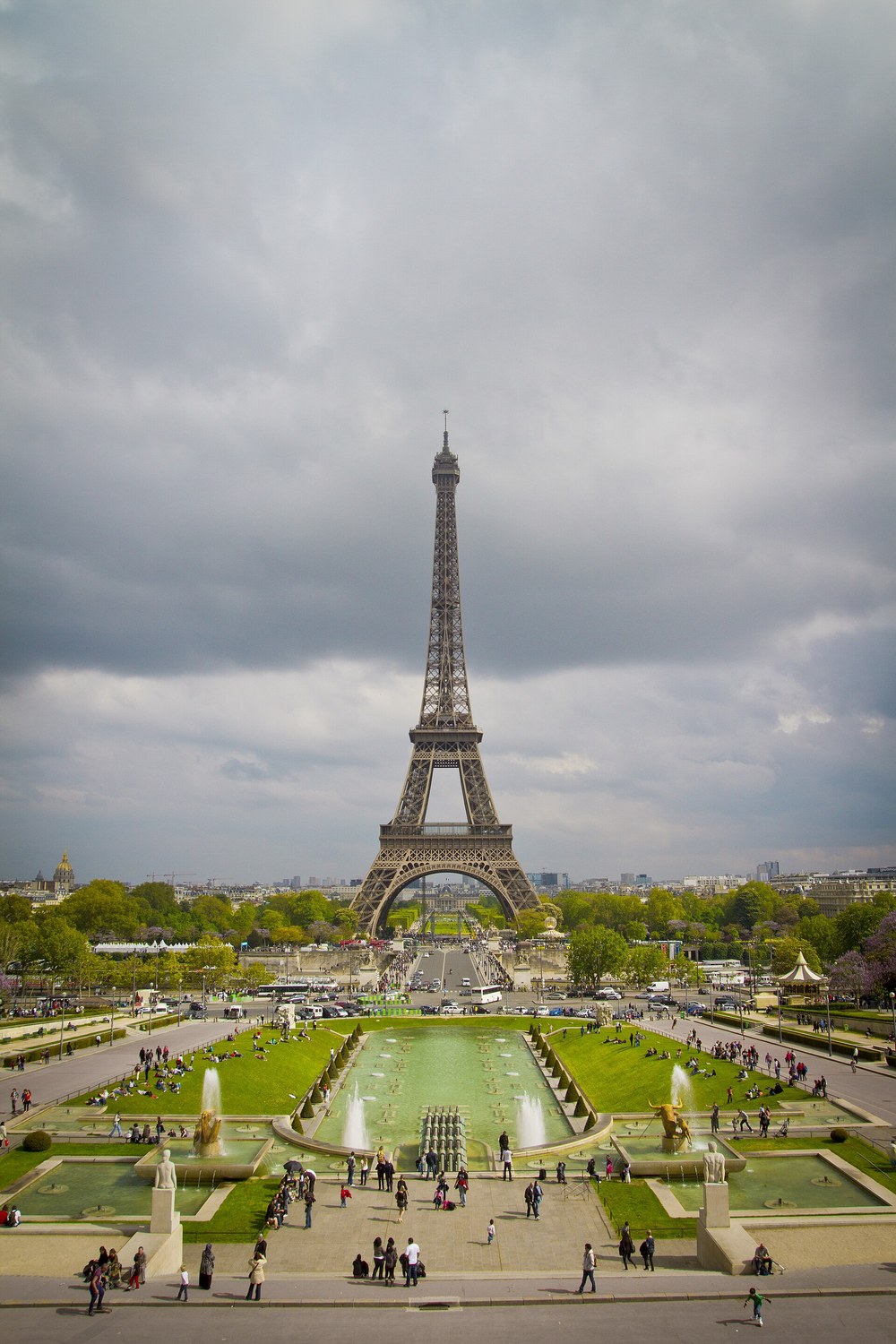
The Eiffel Tower from the Palais de Chaillot, Paris — the viewpoint echoed by Lumiose City’s Prism Tower vistas in Legends: Z-A. Photo: Nick Loyless via Wikimedia Commons, CC BY 2.0.
With hindsight: frequent reruns, an unmoved paywall
The seasons kept their roughly three-week rhythm long after the Kalos trio was complete, and the model immediately reproduced itself. Season 4 offered Baxcalibrite, and Seasons 5, 6 and 7 handed the same treatment to the Hoenn starters — Sceptilite, Swampertite and Blazikenite — confirming that ranked-season stones were not a one-off experiment but the game’s standard way of releasing certain Mega Evolutions. From Season 8, which ran from March 12 to April 1, 2026, Nintendo Life’s season-by-season guide lists every subsequent season’s reward in the same phrase: all previous Mega Stone rewards. The Kalos stones became permanent furniture on the ladder rather than rotating rarities.
The latest checkable record, from the guide updated in October 2026, has the game in Season 18, running October 8 to 29, 2026, with no brand-new stone at all and every earlier stone back as a rank-up prize spread from Rank Y to Rank S. Game8’s breakdown of that season shows the full staircase: Greninjite at Rank Y, Delphoxite at Rank X, Chesnaughtite at Rank W, then the later stones above them up to Blazikenite at Rank S. A player arriving a full year after launch can therefore sweep up the entire Kalos set in a single evening of casual ranked play — a radically friendlier picture than the Rank K launch grind that started the argument.
And yet the original September headline, read a year on, remains technically accurate in the one way that mattered most to its critics. As of that October 2026 record, there is still no way to obtain Greninjite, Delphoxite or Chesnaughtite through regular single-player gameplay, and Ranked Battles still require a Nintendo Switch Online subscription. The controversy did not end with the stones becoming available offline, because that never happened. It ended with the price of admission quietly shrinking — from a fifteen-rung climb in a three-week launch window to a handful of low-stakes matches in any season you like — until most players stopped minding the fence. Whether that counts as a climbdown or as a successful negotiation probably depends on which side of September 2025 you were standing on. What is beyond dispute is the precedent: Legends: Z-A proved that a mainline Pokémon audience will, eventually, accept starter Mega Evolutions as subscription content, provided the ladder is short enough. Future games now know exactly where that line sits.