


So, Sonic Forces. It’s tough to know what to say about it. The game has been out for a while now and admittedly this review is coming a little late, but if Forces shows us anything it’s that the franchise itself needs to slow down and take time for a bit of reflection. Having had longer to digest the game, perhaps we can have a better idea of what went wrong, what went right and just how we got here.
The first trailer for the game in 2016 could be described as confusing. Announced as Project Sonic 2017, many fans (myself included) really didn’t know how to parse what they had just seen. After what had then been years of light, fluffy, Saturday morning cartoon-esque stories, we had a trailer showcasing a seemingly ruined world, overrun by Eggman’s giant Death Egg Robots destroying everything – and wait, Classic Sonic’s here too? Just what is happening? That question, along with the fact that this was being developed by the team behind Colors and Generations, was enough to raise eyebrows and generate significant interest in the title, even alongside the also-announced Sonic Mania. It’s fair to say that expectations were tempered (especially after Lost World) but many fans were expecting a return to the ‘boost gameplay’ that, love it or hate it, has probably been one of Sega’s more successful attempts at doing Sonic gameplay in 3D yet.
So is that what we got? Well, kind of.
 The game is split into three distinct styles – Modern, Avatar and Classic stages. We’ll start with the Modern, as that’s the first one the game throws you into upon starting and arguably the gameplay that many fans were wanting to see more of. Following a foreboding cutscene, the game immediately starts you up in Green Hill Zone, only this time half the zone seems to be covered in sand. It feels like a minor difference, especially when we’ve seen Green Hill for what feels like too many times to count now. Starting on a completely set path doesn’t feel particularly great and the game doesn’t stray too far from that as it goes along. Fans of the boost style will know the differences between it’s three iterations and Sonic Forces’ Modern ends up somewhere a little closer to Colors than either of the other two. Rather than acquiring boost for getting rings, this time it’s only for hitting Wisp crates or smashing enemies which instantly makes the boost feel more like something to be conserved and used when the time is right, whereas Unleashed and Generations tended to feel more like the aim was learning to boost through the whole level effectively. The stages themselves suffer from being rather short, usually over and done with well within the two minute mark and while Generations’ weren’t much longer than that, they felt they had a lot more meat on the bone. Forces is woefully short on alternative paths and the ones that are there don’t generally branch off too far from the main route, making each attempt feel really similar. That’s fine once you’ve mastered the stage and are attempting speed runs but here it sets in almost immediately, leaving little-to-no reason to go back to the stages. The subtle tweaks to the gameplay and physics also have an effect on just how satisfying it all feels and it ends up feeling like a far weaker version of what we’ve already seen before.
Following on from Modern Sonic, the game then reveals to the player what is possibly it’s biggest draw for better or worse, the avatar creator. For many, this was a dream come true – it’s no secret to anybody at this point that Sonic fans have always had a tendency towards creating their own original characters. What’s surprising is that it took Sega this long to try and bank on it. The game doubles down on this feature by making practically every reward you get as you go through the game some sort of unlock for this system. It’s not a particularly deep system and doesn’t really offer that much in terms of base customisation, but there are a lot of clothing and accessory options so if that’s your thing, there’s probably some fun to be had here. The problem is that the gameplay that it all serves isn’t particularly strong; the avatar stages are introduced at this point and the first one isn’t very exciting or inspiring. They do arguably get better as the game goes along and you unlock more ‘Wispons’, weapons that are based on the series’ now seemingly recurring feature, Wisps. These unlock different paths through levels and different ways of dealing with enemies and though this gameplay mix-up is honestly pretty welcome, it doesn’t do enough to offset the linear feeling that these stages also have. Interspersed with QTE events (as are the Modern stages) and cutscenes that remove all control from the player, there are a lot of questionable decisions made here too.
There are a few stages in the game where you control both Modern Sonic and the Avatar character together and these are actually somewhat exciting, if not very engaging. That sounds like an oxymoron so to explain, like much of the rest of the game they are very set piece heavy, but they’re presented so energetically that they at least feel like something, even if that something is just a cathartic boost through dozens of robots as Fist Bump blares.
That leaves the Classic stages – and a lot of fans were asking the same question: “Why?” Classic’s inclusion here feels like nothing but fanservice at this point, as if Sega didn’t feel confident enough that the game would appeal to old-school fans and felt the need to include him to pander to them. As a character he serves absolutely no purpose in the story, having little-to-no impact on events and his stages are mediocre at best, being a poor facsimile of what we got in Generations with added Drop Dash to help tie the game further into Sonic Mania. The levels are again, uninspiring, but at least the short length fits this style – and means they’re over fairly quickly.
All in all, the gameplay of Forces is fairly underwhelming. By no means is it awful – there are some redeeming qualities and on your first playthrough, there’s just enough of a meal here that you might enjoy yourself, but there really isn’t a lot of reason to come back. Even the returning Red Star Rings, usually used to great effect to extend the longevity of the experience, award nothing upon successful collection of all of them. The whole package unfortunately feels very under-developed and given the 4-year gap between this and Lost World, that stings even more.
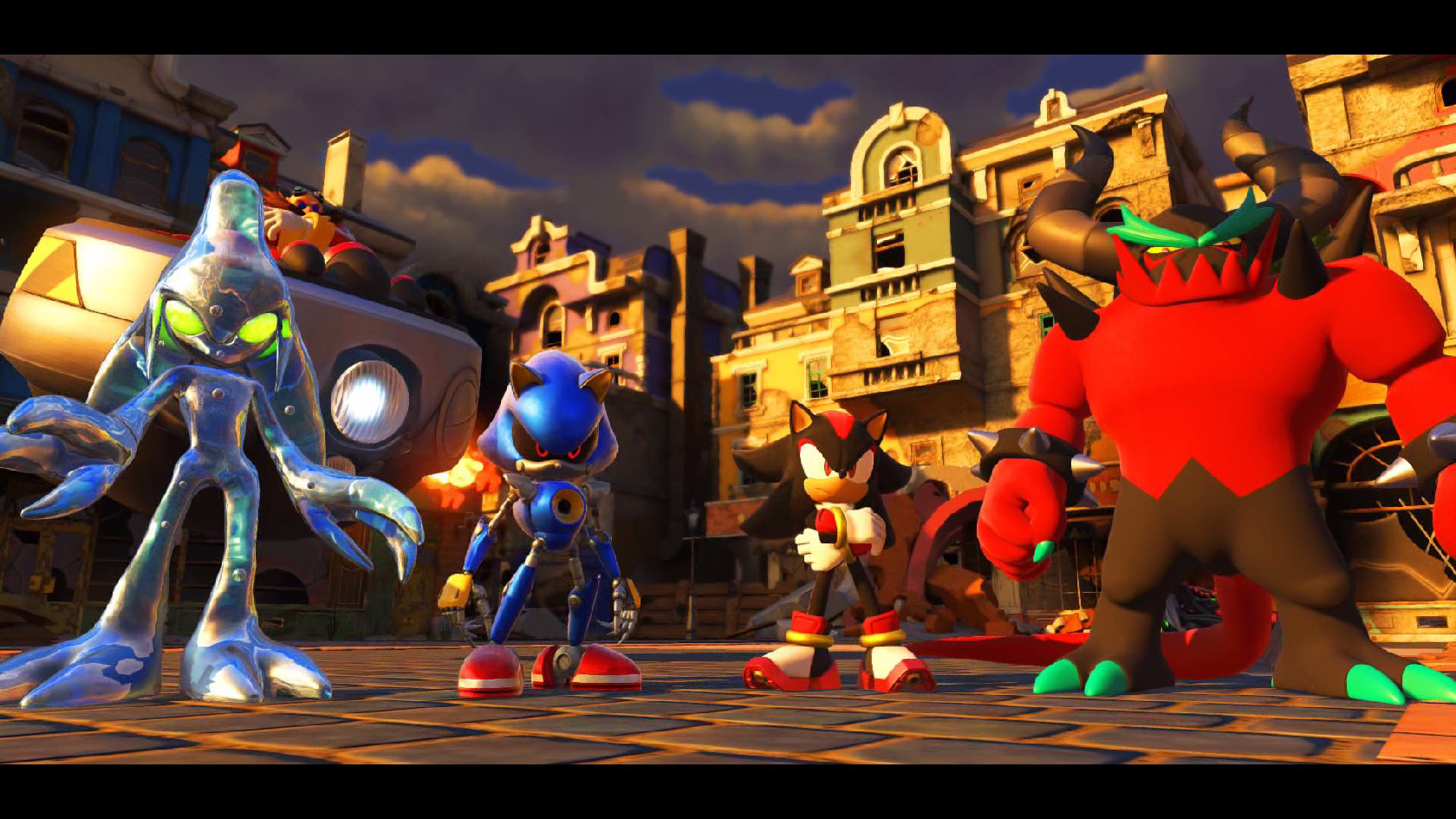 Addressing the story, Sonic Forces at least makes an earnest attempt at pulling off the whole post-apocalyptic, ‘what if Eggman won’ vibe that it advertised but it often feels like it falls flat. The game starts and Eggman is musing over his defeats at the hands of Sonic while preparing to unleash his next ‘invention’. An invention that turns out to be an extremely underdeveloped (are you noticing a pattern here?) character known as ‘Infinite’. Sonic meets up with Tails just as the latter is being attacked by Eggman, before getting his butt soundly kicked by not only Infinite, but also the series rogues’ gallery; Shadow, Metal Sonic, Chaos and… Zavok? Eggman captures Sonic and we get a timeskip of several months before joining the Avatar and the usual collection of Sonic’s friends as they free him from the Death Egg. The rest of the game follows Sonic and the crew as they attempt to wrest the world from Eggman’s grip. The story is actually somewhat enjoyable and campy, the attempts at a grim setting and tone hilariously juxtaposed with the usual cheery voice acting and colourful characters, and the script does have some clever moments (“your insistence is futile”). Where it falls flat is in missed opportunities and plot details that are either unnecessary, Classic Sonic’s entire inclusion for instance, or just disappointing, like Infinite’s backstory. We’re told at the start that the loss of Sonic has taken it’s toll on Tails and he’s ‘lost it’, yet when we see him not five minutes later, he seems to be his usual self and tinkering away at E-123 Omega. Infinite also never gets the attention he really deserves and the character feels forgettable and cheap because of it. Being upstaged by Eggman is one thing, but being unceremoniously sidelined at the eleventh hour is another entirely. He gets absolutely no satisfying conclusion to his arc and just disappears after his last boss fight, leaving you again asking what the point was.
So let’s discuss the presentation because this is probably where the game succeeds the most, though even this is hit-or-miss. Visually the game is very impressive, and even with the Modern levels flying past at incredible speeds, a lot of effort seems to have gone into making this world look detailed and vibrant. Metropolis and Eggman’s Fortress are particular highlights with a lot going on and very busy backgrounds. The differences in design of some elements also adds well to the game’s core juxtaposition, that being the colourful and cartoon-y cast set against the grim, dark tone of the story. Seeing Infinite and Eggman discuss their plans in the bright green environment of Green Hill feels oddly representative of the experience as a whole. The music is where the game misses, but only a little. The three gameplay styles each come with their own musical style, Modern having some really great guitar-infused electronic sounds that are very Ohtani, Classic opting for some retro-sounding chiptune melodies and the Avatar going with a strange techno soundtrack with accompanying vocals. All in all, the package is decent, but Classic Sonic’s stage music really lets the whole thing down and it sounds very poorly produced. The melodies themselves are decent but the instrumentation sounds just terrible, almost as if someone said ‘make it sound like a retro game’ and didn’t put any more thought into it than that and they end up being very simple and uninspired. Obviously music is an extremely subjective topic but I think you’d be hard-pressed to find someone who counts the Classic tracks among their favourite on the soundtrack. The game’s main theme, Fist Bump, is used quite heavily as a motif throughout the game and it does somewhat add a feeling of consistency to the sound design, and some of the best moments in the story use it as an insert song – breaking out of Null Space and into Metropolis as this cheesy and irreverent song plays feels fantastic and really fits the experience, but your mileage here may vary admittedly.
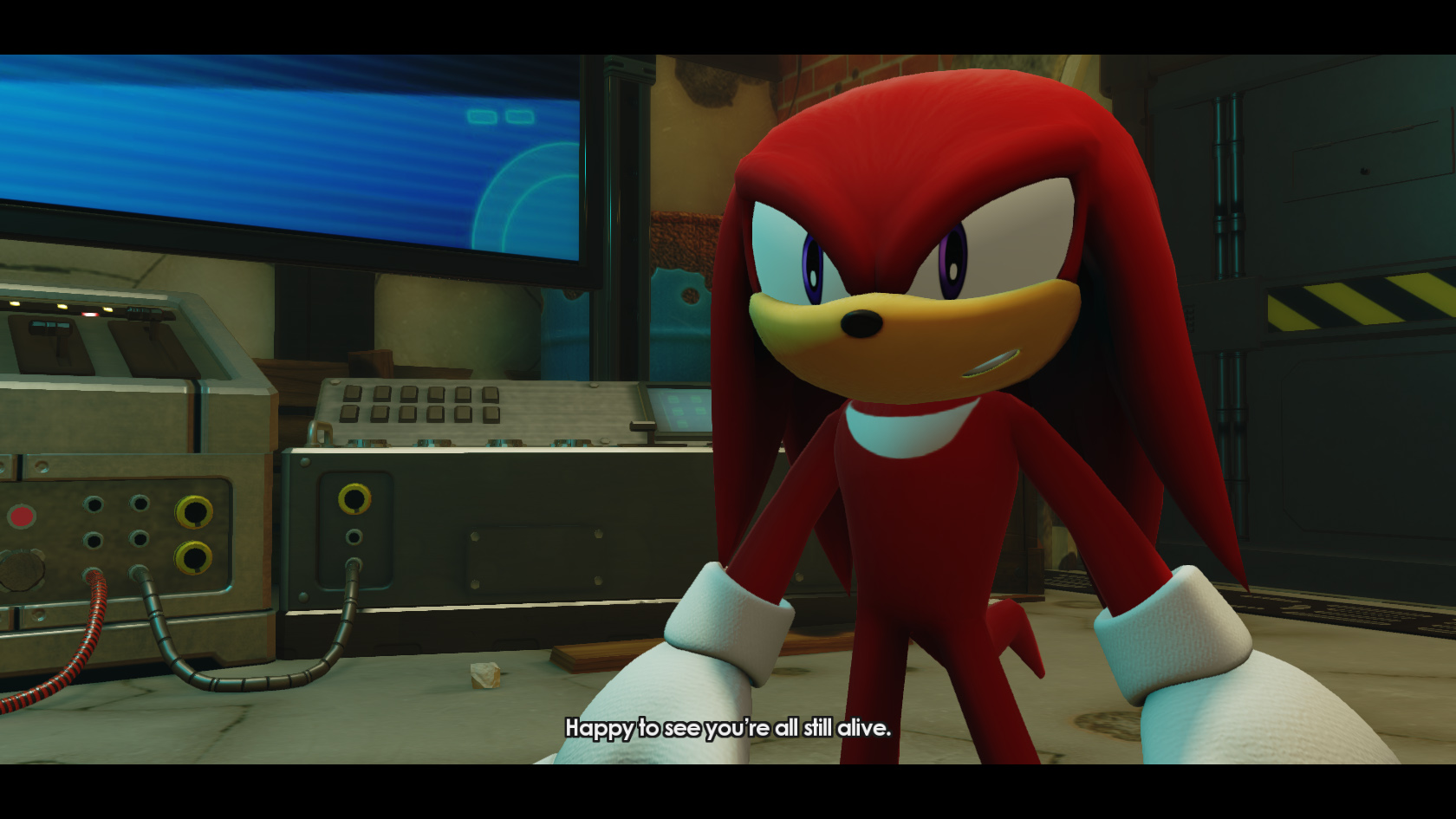 As a package, you hopefully get the impression from this review that Forces is a mixed bag. It has it’s highs and lows, but unfortunately, it does end up being slightly more lows by the end of the experience. It’s disappointing mostly because there was a fair bit of potential here to make something great – the later Avatar stages show promise and the Modern stages would probably be passable if only they were a bit longer and had a few more paths to take. Classic feels consistently like a last-minute addition and they could have probably spent that development time on other elements of the game and got more out of it and I honestly don’t think anyone would have missed it. It all smacks of Sonic Team not really knowing what players want out of a Modern Sonic game and throwing anything that might work at the wall to see what sticks and it drags the whole experience down, as if there’s anything this title could have benefitted from, it’s a bit more focus. Here’s hoping that going forward, the team gets a better idea of what works well in this kind of game and what to improve upon in the future, as well as what to avoid.
The post Sonic Forces – The Retro Review appeared first on Sonic Retro.