Somari Squared: How Mario Conquered Sonic’s World Twice
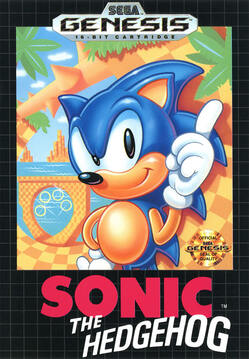
Every playground argument of the early 1990s ended the same way. You were either a Mario kid or a Sonic kid, and crossing over was unthinkable. Nintendo’s plumber stood for careful jumps and cheerful precision. Sega’s hedgehog stood for speed, attitude and a console war fought in television adverts. The two mascots were never supposed to share a game, let alone a cartridge. Which is precisely why Somari refuses to die. It is the name given to two different acts of trespass, separated by more than twenty years: a notorious 1994 Famicom bootleg that stuffed Mario into Sonic’s debut adventure, and a 2015 Mega Drive hack that deliberately rebuilt that trespass on Sega’s own hardware, as a tribute. Understanding Somari means understanding both — and understanding why the second one only exists because the first one was never supposed to.

The Original Sin: Hummer Team’s 1994 Famicom Bootleg
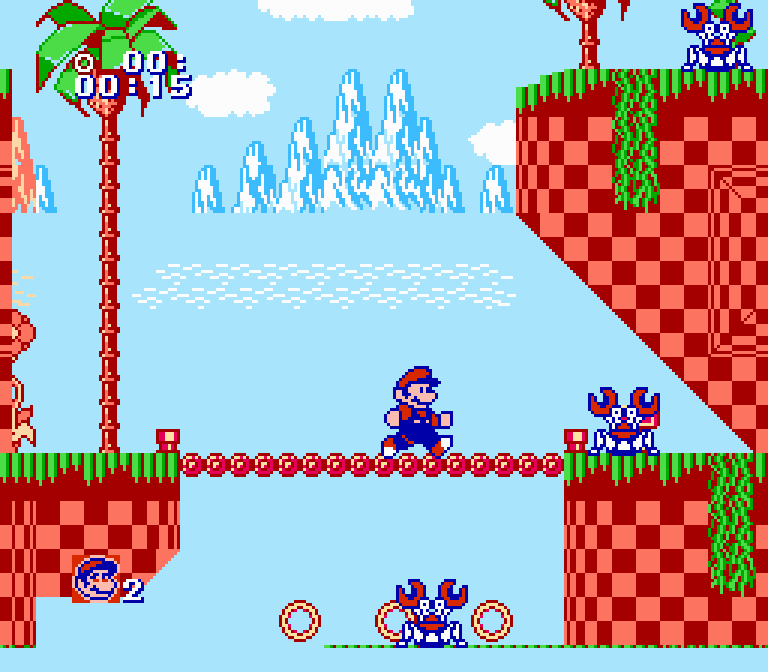
The first Somari appeared in early 1994 for the Family Computer, Nintendo’s 8-bit machine, in the markets where unlicensed cartridges thrived: Taiwan, Hong Kong, Russia and much of Eastern Europe. Its developer was Hummer Team, a Taiwanese outfit founded in 1992 by Hummer Cheng, who had previously worked at Sachen. Hummer Team specialised in a very particular craft — shrinking games built for more powerful hardware down onto the humble Famicom. Their catalogue reads like a dare: a Street Fighter II conversion, a Mario-themed fighting game called Kart Fighter, and, most audaciously, Sonic the Hedgehog with Nintendo’s own mascot in the starring role. The cartridge was published by Ge De Industry Co., and a Taiwanese trademark for the name was registered on 1 March 1994. The title itself is a simple portmanteau, Sonic spliced into Mario, and the character on screen matches the joke: Mario’s head and overalls, borrowed largely from his Super Mario Bros. 3 sprites, wearing the red shoes of Miles “Tails” Prower.
What Hummer Team achieved, technically, deserves respect even from people who disapprove of how it was sold. The Famicom had no business running Sonic. Sega’s 1991 original was designed around the Mega Drive’s faster processor, its wide colour palette and its appetite for huge, looping scenery. Yet Somari recreates Green Hill, Marble, Spring Yard, Labyrinth and Star Light across three acts each, complete with springs, slopes, corkscrew loops and a wrecking-ball duel against Dr. Robotnik at the end of every third act. The one casualty was Scrap Brain, which survives only as a semi-functional zone reachable through save-state tinkering. The special stages, meanwhile, were modelled on the Master System and Game Gear versions of Sonic rather than the rotating Mega Drive mazes — a sensible confession of what the hardware could manage.
A Plumber Running on Hedgehog Physics
The strangest thing about playing Somari is that Mario does not really play like Mario. Hummer Team based his movement on Sonic’s physics from Sonic the Hedgehog 2, so the plumber accelerates down hills, banks around loops and keeps momentum in a way that would horrify his own designers. He can even use the Spin Dash, a move that did not exist in the first Sonic game at all and was imported backwards from the 1992 sequel. Some Mario DNA survived the transplant. Hit an enemy and you shed at most three rings, not the whole hoard Sonic would spill. Certain levels hide secrets high above the visible playfield, a very Mushroom Kingdom habit tucked inside hedgehog architecture. The music follows the Mega Drive arrangements faithfully in structure, if not in fidelity — the Famicom sound chip renders Masato Nakamura’s tunes in a thinner, buzzier dialect that fans either find charming or excruciating, sometimes within the same track. Spring Yard’s theme, oddly, survives the translation better than most.
Reception at the time was a shrug of amazement. Russian magazine coverage treated the cartridge as proof that 8-bit owners could taste the 16-bit generation without buying new hardware, while scoring it modestly and complaining about the difficulty and the controls. Western writers who encountered it later were divided in a more entertaining way: some dismissed it as a train wreck of loose physics, while GameSpy called it a remarkably good conversion and 1UP praised the coding behind it. Both camps were describing the same object. Somari is simultaneously a sloppy product and an impressive engineering exercise, and its legend grew precisely because nobody could quite decide which half mattered more. It was marketed in Hong Kong and Russian magazines through the late 1990s, reprinted by Ka Sheng after Ge De folded in 1995, and hacked in turn into Sonic-starring variants with names like Sonic 3D Blast 5. The bootleg had become a platform of its own.
Act Two: Lone Devil Brings Somari Home to the Mega Drive
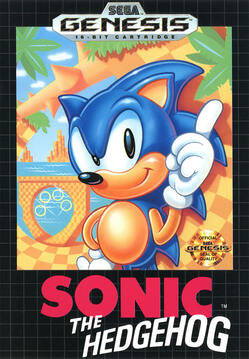
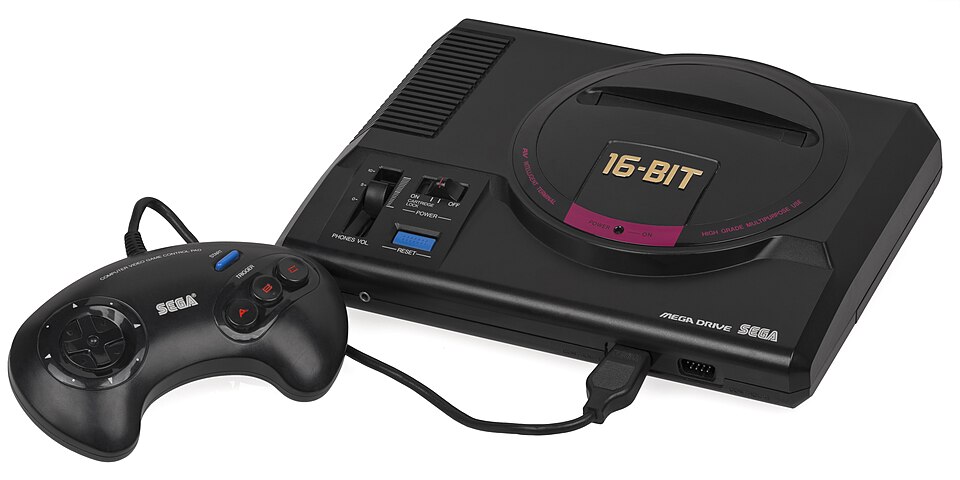
Fast-forward to 2015. The September news that prompted this article’s original stub was not about the Famicom cartridge at all. It was about a fan-made Mega Drive hack titled Somari the Adventurer, created by a hacker known as Lone Devil and released in its version 1.1 form on 19 October 2015. Where Hummer Team had dragged Sonic down to Nintendo hardware, Lone Devil performed the mirror trick: taking the real, original Mega Drive Sonic the Hedgehog and replacing its hero with Somari, on the machine Sonic was born on. This is a crucial distinction that casual coverage often blurs. The 1994 game is an unlicensed commercial bootleg, coded from scratch for profit. The 2015 game is a free fan hack, made openly, credited honestly, and framed from the start as an homage to the bootleg that inspired it.
Lone Devil did considerably more than swap a sprite. Somari arrives with three signature techniques borrowed from across Mario’s own history. His Spin Jump echoes Super Mario World, letting him bounce and drill through badniks from above. A Backflip channels Super Mario 64, useful for reaching ledges that Sonic’s moveset never contemplated. A Double Spin Jump in mid-air nods to Super Mario Galaxy. The standard jump and the Spin Dash remain on the controller for when hedgehog habits serve better, giving the hack a genuinely hybrid moveset: part momentum platformer, part Mario acrobatics. Better still, the hack opens with an entirely new first stage, Mushroom Kingdom Zone — a single act built in the style of Super Mario Bros., all brickwork, pipes and familiar silhouettes, before the game hands you over to Green Hill and the rest of Sonic’s island. It is the crossover level that neither Nintendo nor Sega would ever have shipped, placed exactly where a tribute act should put it: first, as a statement of intent.
Why a Bootleg Deserves a Tribute Act
It would be easy to file Somari under novelty and move on, but its afterlife tells a richer story about how game culture actually works. In the 1990s, for players in Taipei, Moscow or São Paulo, bootlegs were not a footnote to the industry — in many neighbourhoods they were the industry, the only affordable way to play anything at all. Hummer Team’s programmers, working without licences, documentation or permission, reverse-engineered the feel of a rival console’s flagship title on hardware a generation behind. That is demake culture before the word existed, and modern homebrew developers recognise the lineage instinctively. Lone Devil’s hack is best read as a thank-you letter across two decades: the fan scene honouring the pirates, because the pirates, whatever their motives, had kept the playground argument alive in places the console war never officially reached.
There is also a pleasing historical irony in the timing. Mario and Sonic eventually did meet officially, sharing Olympic stadiums from 2007 onwards and brawling together in Super Smash Bros., but those corporate crossovers arrived carefully lawyered and focus-grouped. Somari got there first, twice, with no permission either time — once for money on a Famicom cartridge, once for love on a Mega Drive hack. The 2015 version is the better game to actually play, smoother and more generous than its jittery ancestor. The 1994 version is the more important artefact. Together they form a single, strange monument: proof that the most famous rivalry in games was always, underneath the marketing, a collaboration waiting to happen — and that if the companies would not build it, somebody in a bedroom or a bootleg workshop eventually would.