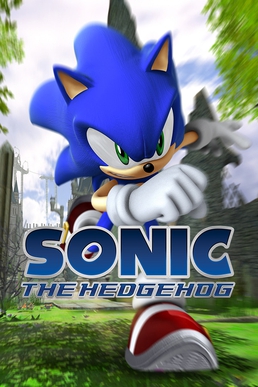
Twenty years ago, on November 14, 2006, Sega threw Sonic the Hedgehog a birthday party and burned the house down. Sonic the Hedgehog — no subtitle, no number, the same name as the 1991 original, because this was meant to be a rebirth — arrived on Xbox 360 as the centrepiece of the character’s 15th anniversary: a next-generation reboot, built on a new engine, with a new world, a new rival, and Hollywood ambitions. What shipped became the most infamous game in the series’ history: a critical catastrophe, a byword for rushed development, and the punchline of a thousand jokes.
And yet. Twenty years on, Sonic ’06 is also something its reviewers never predicted — one of the most discussed, dissected and strangely beloved failures in gaming. This is how a birthday present became a cautionary tale, and how the cautionary tale became a cult.
The Promise: Sonic Grows Up (Again)
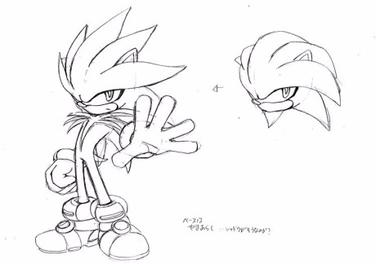
The pitch, in 2005 and 2006, was irresistible. Sonic Team would reboot the franchise for the high-definition era with a more realistic art style, a sprawling human kingdom called Soleanna, and a story told in three interlocking campaigns — Sonic, Shadow, and a brand-new character, the telekinetic Silver the Hedgehog, a time traveller from a ruined future. Physics middleware would make the world reactive. The adventure fields and stage structure deliberately echoed Sonic Adventure, and fans promptly nicknamed the game “Sonic Adventure 3” — a title Sega never used but never really escaped, because the comparison wrote itself. An anniversary, a reboot, a return to the Adventure formula: the expectation stack was enormous before a single disc was pressed.
The Collapse: A Calendar With Teeth
The post-mortem facts are now well established, and they read like a checklist of how not to ship a game. The anniversary fixed the deadline in stone: Sonic ’06 had to be out for the 2006 holidays, on new hardware, whatever state it was in. Midway through development the team was split, with a second group spun off to build Sonic and the Secret Rings for Nintendo’s Wii — halving the workforce on a game that was already behind. Then, in the middle of it all, the series’ co-creator walked out of the building: Yuji Naka, Sonic’s producer and Sonic Team’s founding figure, left Sega in 2006 to found his own studio, Prope. The team was simultaneously learning the Xbox 360 and PlayStation 3, wrestling physics technology it had never shipped with, and building three campaigns, nine playable characters and a hub world — against a date that could not move.
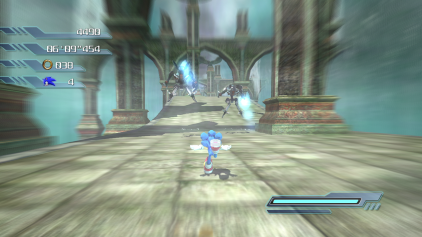
The result was a game released visibly unfinished. The loading became legend: hub areas that loaded for twenty seconds so an NPC could deliver one line of dialogue, then loaded again to hand you the mission, then loaded again to start it. The Mach Speed sections put Sonic on rails at full velocity with controls that treated steering as a polite suggestion. Partner characters bugged out mid-stage; Tails attacked by throwing rings that homed with all the enthusiasm of a shrug. Physics objects jittered, quests soft-locked, and the demo Sega had shown before release — which had received far more focused attention than the sprawling final product — stood as permanent evidence of the game that might have been.
The Demo That Lied
Before the collapse, there was genuine reason to believe. The teaser footage that opened the game’s public life — Sonic streaking through a sunlit forest in cinematic CG — promised a machine flexing new muscles. More damning, in hindsight, were the playable showings: the pre-release demos circulated to press and events were tight, curated slices, and they played well enough to keep hope alive deep into 2006. That contrast became the game’s original sin in the eyes of its first players. Sonic ’06 hadn’t merely failed; it had failed after demonstrating, in controlled conditions, that it knew what success looked like. The finished product’s vast, empty hub world — Soleanna, a pleasant Venetian pastiche populated by citizens who existed largely to trigger loading screens — its three sprawling campaigns, its nine playable characters: all of it had been built at a scale the schedule could not feed. The demo hadn’t been a lie, exactly. It was a shop window on a building that was never finished behind the glass.
The Kiss, the Villain, and the Bits That Worked
What the game is remembered for, beyond the bugs, is the story’s swing for the fences. Sonic ’06 plays its melodrama completely straight: a princess, Elise of Soleanna, carrying a god of destruction sealed inside her (she must never cry, or the world ends); a genuinely sinister villain in Mephiles, a shadow-demon who manipulates every timeline and, at the climax, does the thing no Sonic villain had ever done — he kills Sonic. And then the moment that defined the game’s reputation forever: Princess Elise, a realistic human, reviving the dead hedgehog with a kiss. It was meant to be fairy-tale. It landed as farce, and twenty years of reaction videos have not been kind.
Buried in the wreckage, though, is real ambition struggling to get out. Silver’s campaign — flinging physics objects with telekinesis through the burning future of Crisis City — was a genuinely new idea for the series, and Silver himself survived the wreck to become a permanent cast member. Mephiles remains one of the few Sonic villains fans discuss as actually frightening. The orchestral score, headlined by Zebrahead’s “His World,” is still celebrated outright. And Crisis City itself was good enough for Sega to rebuild it, proudly, as a showcase stage in Sonic Generations five years later. The ingredients of a great game are all in Sonic ’06. They’re just sealed in a broken one.
The Verdict of 2006 — and the Bill
Reviewers were merciless: Metacritic scores in the 40s, “worst game of the year” honours, a reputation sealed within weeks. (One prominent magazine’s 8.5 review became almost as famous as the pans — a reminder that a certain kind of player, particularly a young one meeting Sonic in HD for the first time, could love the game before they’d learned what it was doing wrong.) Commercially, astonishingly, it didn’t matter in the short term: the game sold in the millions anyway, on the strength of the name and the anniversary. What it spent was something harder to earn back — trust.
Sega’s response reshaped the series. Quality assurance was overhauled. Around 2010 the company went further, delisting a swathe of its own back catalogue titles with low review scores — Sonic ’06 among them, never officially re-released, quietly withdrawn from sale as if the anniversary had never happened. The recovery arc that followed — Sonic Unleashed’s groundwork, then the acclaimed Sonic Colors and Sonic Generations — was built under the shadow of 2006, by people determined there would not be another one.

The Second Life: Glitch Hunters and P-06
What nobody predicted was the afterlife. A game this broken turned out to be endlessly watchable and endlessly breakable — speedrunners and glitch hunters spent two decades mapping its fault lines, skipping its worst stages in seconds and finding, under the rubble, a game with real bones. Then the fans did the thing fans now do: they rebuilt it. Project ’06 — P-06, a fan remake led by developer ChaosX, rebuilt in Unity and released in stages from 2019 — re-created the game with fixed controls, restored content and the polish Sega’s calendar never allowed. Played through P-06, the strangest thing happens: Sonic ’06 starts to look like a flawed but sincere Adventure game, which is all it ever wanted to be.
There’s a subtler rehabilitation running alongside the fan rebuild. Sonic ’06 has become a staple of game-development postmortems and design courses — the teachable disaster, picked apart not for laughs but for its unusually complete set of failure modes: the immovable marketing date, the split team, the departed founder, the unfamiliar hardware. Even Sega’s posture softened with time; anniversary retrospectives that once skipped 2006 entirely now nod to it, and its music, its villain and its debut character were all carried forward into games Sega is proud of. A failure this total, it turns out, becomes part of the family history — the cautionary tale told at every reunion.
At twenty, then, the verdict has quietly inverted. Sonic ’06 is no longer really a joke; it’s a case study — the purest example in gaming of ambition murdered by a deadline, of what happens when a mascot, a new console generation and an anniversary all land on the same immovable date. The fascinating failure, it turns out, teaches more than a forgettable success ever could.
Sega threw Sonic a birthday party in 2006 and wrecked the house. Twenty years on, the fans are still in the wreckage — not laughing at it anymore, but restoring it, room by room, into the house it was supposed to be.
Keep reading: First, an Announcement of an Announcement: The Day Sonic Adventure Took the Stage · the Xbox 360 system archive
1 comment