PLAYSTATION 2 · HARDWARE · RETROSPECTIVE FEATURE
Developer: Sony Computer Entertainment · Publisher: Sony Computer Entertainment · Released: October 26, 2000 (North America) · Launch price: $299
Twenty-six years ago tonight, America camped out for a black monolith that played games, movies, and the future.
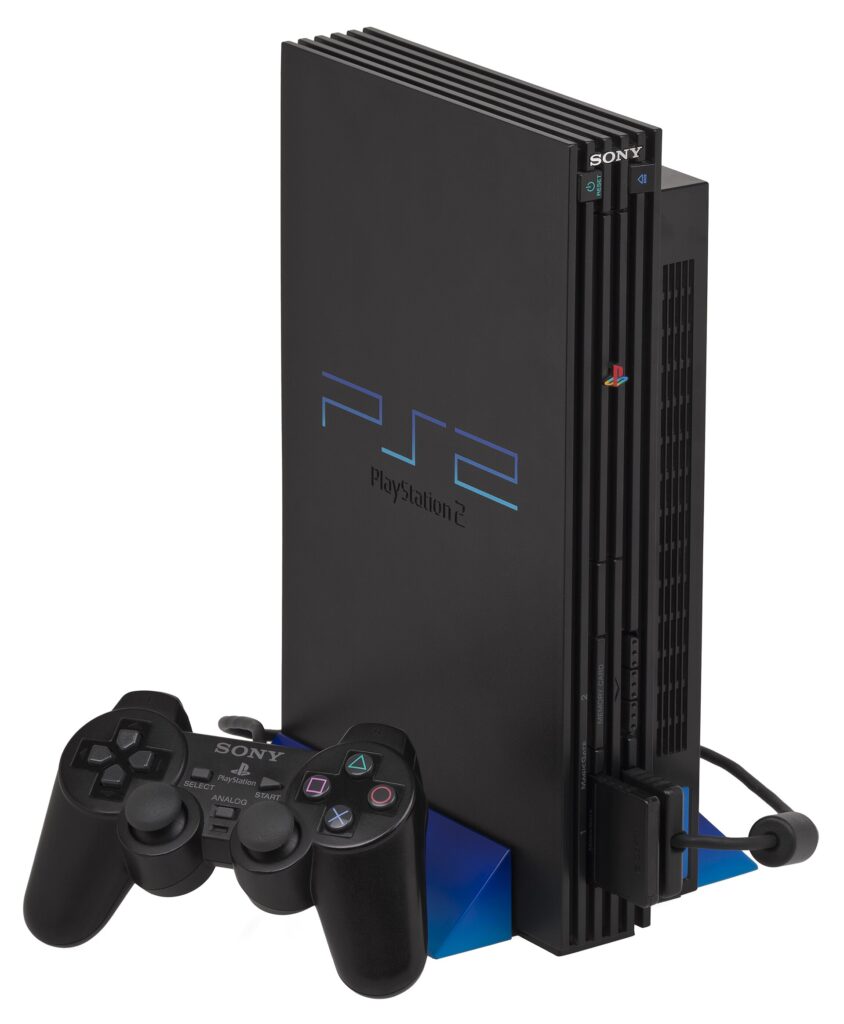
At 12:01 a.m. on October 26, 2000, the doors of electronics stores across America swung open to lines that had been building since the previous afternoon. At Sony’s PlayStation store in San Francisco’s Metreon, more than 300 people — some camped out since early Wednesday — counted down like it was New Year’s Eve. The object of all this devotion was a black, ridged monolith designed to stand thirteen inches tall: the PlayStation 2. Twenty-six years ago tonight, gaming stopped being a hobby you kept in the bedroom and became the centerpiece of the American living room — and it started with a midnight line.
The Road to Launch
By the fall of 2000, Sony did not so much have momentum as gravity. The original PlayStation had steamrolled the Sega Saturn, outlasted Nintendo’s cartridge bet, and turned “PlayStation” into a household word. Its architect was Ken Kutaragi, the Sony engineer who had talked his way into the games business after watching his daughter play a Famicom, founded Sony Computer Entertainment in 1993, and now ran the division as its president. His successor machine was unveiled in March 1999 with a spec sheet that read like science fiction, and a promise to match: movie-quality graphics, in real time, in your home.
Japan got it first. The PlayStation 2 launched there on March 4, 2000, to scenes American gamers watched with envy all summer: close to a million machines sold in the opening days, preorders in chaos, and a national frenzy that doubled as a warning. Analysts, adding up exotic silicon plus a DVD drive, had predicted a price of $399 or more. Sony’s eventual $299 — exactly what the original PlayStation had launched at in America five years earlier — landed like a body blow aimed at every competitor at once.
Inside the Black Monolith
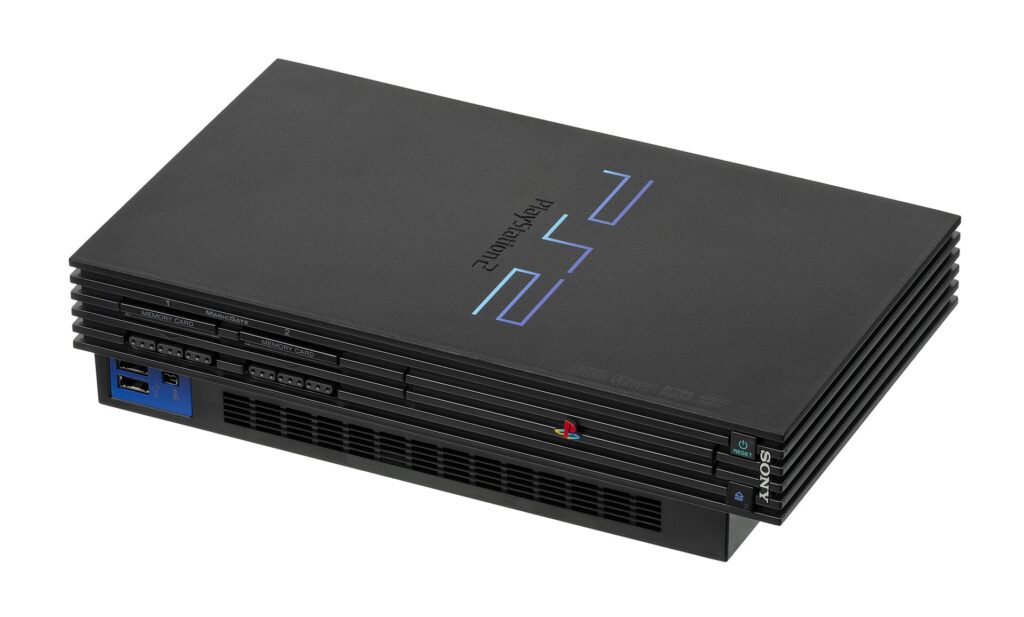
The hardware justified the theater. At its heart sat the Emotion Engine, a custom processor co-developed with Toshiba and running just under 300 megahertz, paired with a dedicated Graphics Synthesizer for rendering and 32 megabytes of memory — double the Dreamcast’s. The disc drive was the real revolution: DVD-ROM, holding many times a CD’s data and, not coincidentally, playing DVD movies out of the box. The industrial design made the ambition physical. Where rival consoles looked like toys, the PS2 was a ridged black slab, styled after a skyscraper, and sold with a stand so it could tower vertically beside the television like a piece of hi-fi equipment that had wandered in from ten years in the future.
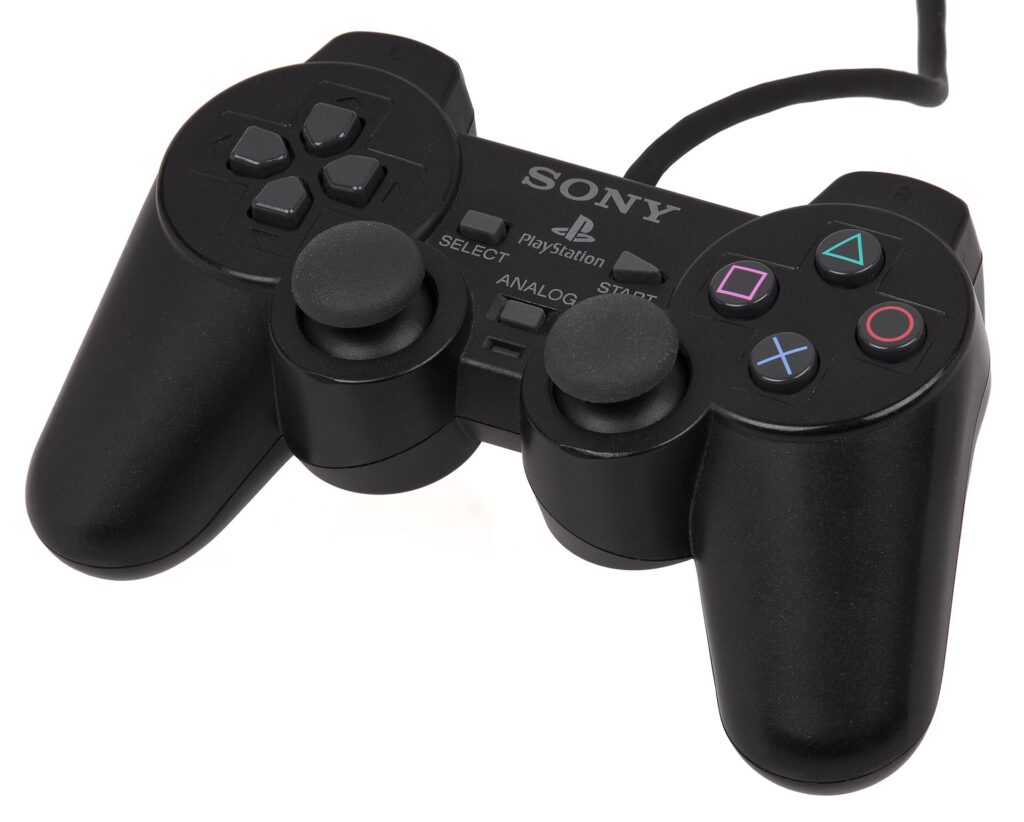
The controller told the same story of evolution over revolution. The DualShock 2 kept the beloved shape of the original and made every face button pressure-sensitive, so how hard you pressed could matter. And underneath it all sat the feature nobody put on the box in the biggest letters, yet the one that may have mattered most on day one: the PS2 played nearly the entire original PlayStation library, and worked with its controllers and memory cards too. Your old games were not obsolete — they were a head start, an instant collection of a thousand titles standing behind the 29 new ones. For a machine launching into a shortage, backward compatibility quietly removed the last sensible reason to wait.
The DVD Trojan Horse
Here is the part that made the PS2 unstoppable, and it had almost nothing to do with games. At $299, the PlayStation 2 was also a DVD player — at a moment when a standalone DVD player could easily cost as much or more, and when most American households still didn’t own one. For millions of families, the PS2 wasn’t purchased as a game machine at all. It was the most attractive ticket into the DVD revolution, and it happened to play Madden.
Sony leaned into the double identity hard, marketing the box as a “computer entertainment system” rather than a toy. It worked on every level at once. Parents who would never buy a console bought a DVD player. Movie lovers who would never touch a controller got one anyway. In Japan, the console had already demonstrated the effect in reverse: demand for the machine helped turn DVD software into a mass market almost overnight. America followed the same script. A whole generation received, under the tree, the Trojan horse that smuggled gaming into the family room permanently — and by the time dedicated DVD players got cheap, the PS2 was already sitting under tens of millions of televisions, having helped make DVD the fastest-adopted home format of its era.
The PS2 didn’t just win a console war. It moved into the living room, plugged into the good TV, and never really left.
Midnight Madness
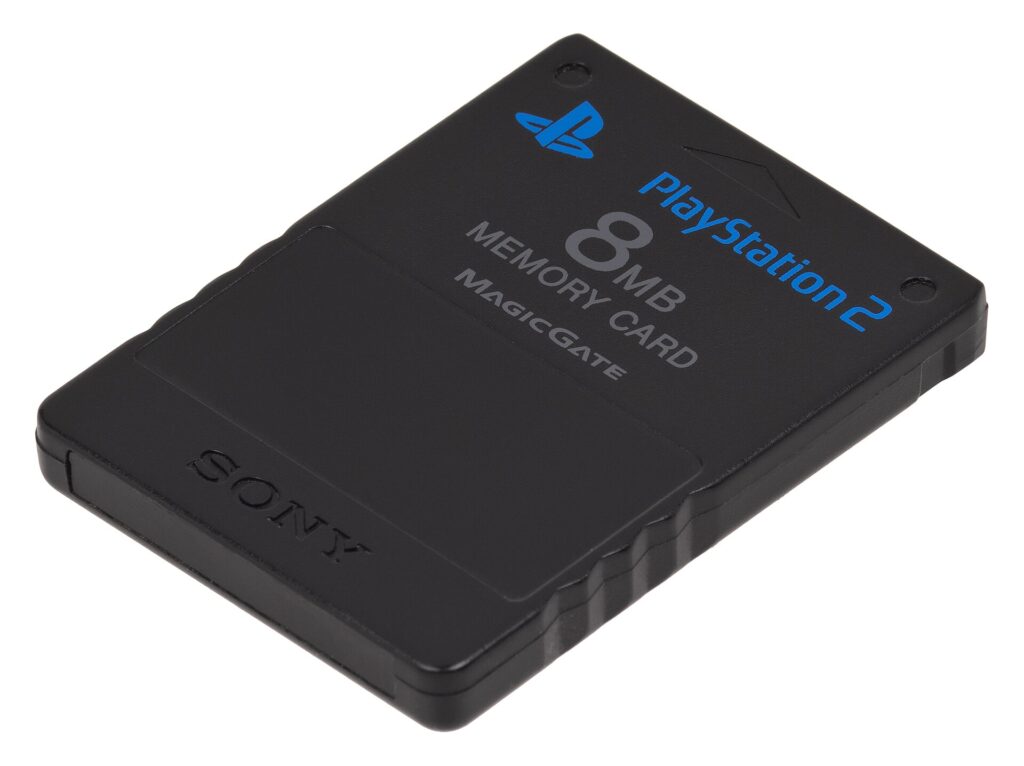
It very nearly wasn’t enough. Component shortages forced Sony to cut its launch plans: instead of the million machines once expected in North America by year’s end, roughly half a million were available on day one. They were gone by morning. The numbers, even starved of supply, were staggering — $250 million in American sales on the first day, dwarfing the $97 million record the Dreamcast had set a year earlier. Sony airlifted roughly 100,000 additional units a week through the holidays, and it changed nothing: the PS2 remained effectively sold out in the United States until March 2001. Resale listings climbed past $1,000. News reports treated empty shelves as a running story. Even the $25, 8MB memory card — sold separately, and required to save most games — became a scavenger hunt of its own.
Many stores received far fewer units than they had taken preorders for — in some cases barely a dozen machines for hundreds of hopefuls — and some chains resorted to vouchers and lotteries to keep crowds orderly. Sony even postponed selling the console through its own website, diverting those units to retail partners instead. Still the lines came, night after night, on rumors of restock trucks. Scarcity did what scarcity does: it turned a product launch into a cultural event. If you got a PS2 in the fall of 2000, you hadn’t simply bought something. You had scored something, and everyone at school or the office knew exactly what that meant.
29 Games Deep, No Single King
What did the lucky half-million play? North America’s 29-game launch lineup was the deepest any console had enjoyed on day one. EA alone arrived with an army: Madden NFL 2001 had already sold some 40,000 copies before the console was in American stores, as fans bought the software in advance and waited for hardware to exist. That almost never happens. It happened here.
The breadth was the story. EA Sports BIG’s SSX — all impossible air and stained-glass skies — was the showpiece, the game that made early adopters feel the generational leap in their hands. Namco brought the arcade home twice with Tekken Tag Tournament and Ridge Racer V. Free Radical’s TimeSplitters carried GoldenEye DNA into a faster, stranger shooter. Rockstar arrived early with two open-road sandboxes, Midnight Club: Street Racing and Smuggler’s Run. Koei’s Dynasty Warriors 2 put hundreds of soldiers on one field; FromSoftware’s Armored Core 2 served the mech faithful; Volition’s Summoner carried the RPG banner; and Sony’s own Fantavision, a fireworks puzzle game, doubled as the friendliest tech demo ever bundled into a launch. Not all of it was great — early games had a shimmery, jagged look magazines happily picked on, and a few of the 29 were plainly rushed to make the date.
Here is the interesting part: there was no Super Mario 64 here. No single, universally agreed system seller that justified the box by itself. The pitch was the pile — 29 games deep on day one, the whole PlayStation 1 library behind them, and a DVD player underneath it all. Breadth, not a killer app, carried the launch, and it rewrote the rulebook: a console no longer needed one masterpiece at birth if it arrived as an entire entertainment center instead.
A Body Blow for Dreamcast
Somebody else was watching those first-day numbers very carefully. Sega’s Dreamcast was a genuinely brilliant machine — first to market, online out of the box, home to Soulcalibur and Shenmue — and it had set the American launch-day sales record the PS2 had just demolished. The PS2 was not the sole cause of what followed: Sega had been losing money for years, on hardware sold at punishing margins and software that never quite covered it. But the PS2’s arrival was a major factor, arguably the decisive one. Its shadow had frozen Dreamcast momentum for a year before it even launched, and now the machine did everything the Dreamcast did while also playing the DVDs America suddenly wanted.
Three months after the PS2’s American launch, on January 31, 2001, Sega announced it was discontinuing the Dreamcast and leaving the console hardware business. A company that had defined a generation as Nintendo’s great rival was out of the hardware fight barely a year into the new one. Nintendo’s GameCube and Microsoft’s Xbox were still months away. For the crucial turn of the generation, the PlayStation 2 stood alone — and it used the solitude well.
The Long Reign
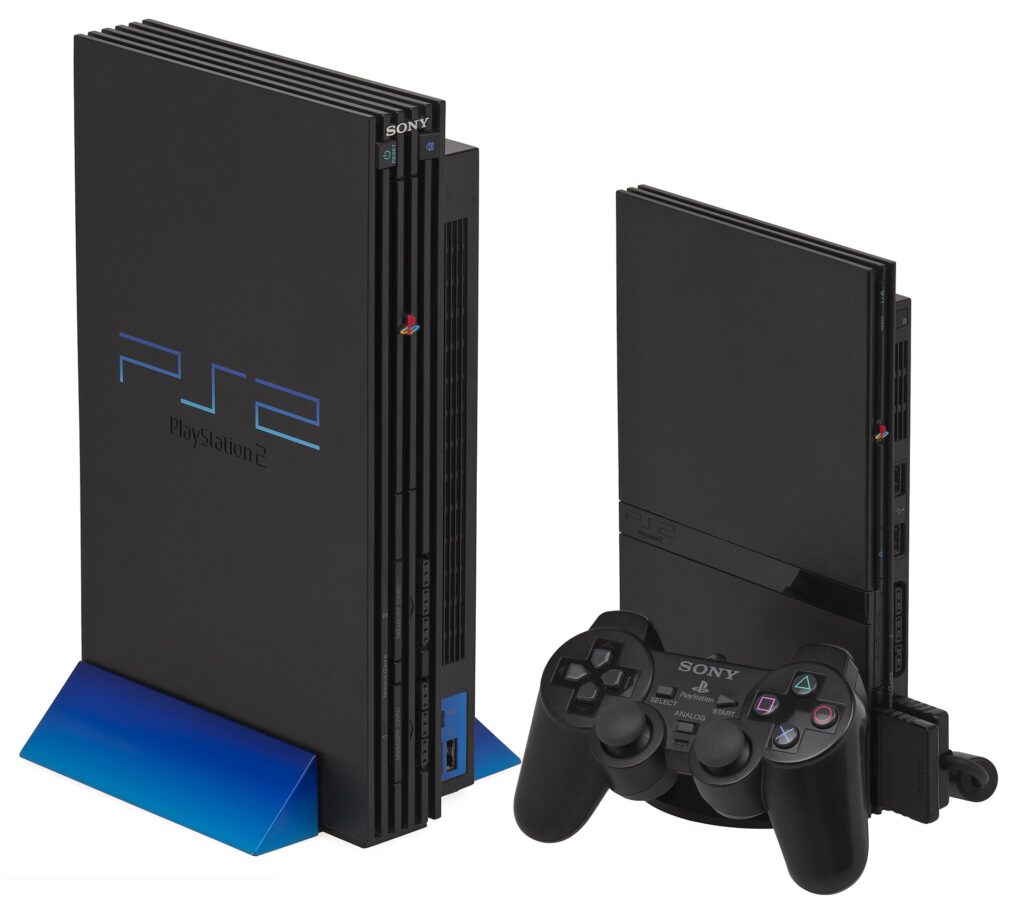
What happened next is the part no launch-day line could have predicted. The PS2 didn’t peak early — it compounded. The murderers’ row of 2001 alone — Gran Turismo 3, Metal Gear Solid 2, Final Fantasy X, Grand Theft Auto III — rewired what games were expected to be, and the hits kept coming for a decade: a library of more than 4,000 games, software sales north of 1.5 billion discs. Price cuts and the slimline redesign of 2004 kept it selling through the decade, powering living-room phenomena nobody had forecast for a game console — EyeToy party games in family rooms, plastic Guitar Hero guitars in college dorms. The DVD Trojan horse kept paying out for years.
Sony kept building PS2s until January 2013 — a production run of nearly thirteen years, spanning two successor generations. And in November 2024, as part of PlayStation’s 30th anniversary, Sony finally confirmed the total the industry had long estimated: more than 160 million units, the best-selling game console of all time.
Playing and Collecting It in 2026
Twenty-six years on, getting into the PS2 is easy; choosing your machine takes a minute’s thought. The original “fat” models are the tanks of the line — roomier, with an expansion bay collectors value — while the 2004 slimline is smaller, quieter in most revisions, and has networking built in. Either way, go in clear-eyed about the moving parts: these are disc machines in their third decade, and the laser is the consumable. A unit that reads silver PS2 DVDs but balks at blue-bottomed CD games, or vice versa, is showing the classic symptom, and a clean, tested console from a seller who will demonstrate both is worth more than a bargain mystery box.
For the picture, the PS2 was built for the televisions of its day. On a modern screen, its component-video output is visibly cleaner than the bundled composite lead ever was, and a good upscaler or HDMI adapter built for the console will get you a tidy, low-lag image without chasing exotic cables — just expect honest standard-definition softness, because most of the library was never high-definition to begin with. Finally, a note collectors already know: the PS2 has a famously active homebrew afterlife. Free McBoot, a long-standing softmod that lives on a memory card, lets most models launch homebrew software at boot without opening the console at all — one reason an unmodified fat PS2 remains such a friendly machine to own in 2026. (It does not work on the very last slim revisions, a detail worth checking before you buy with that plan in mind.)
Why October 26 Still Matters
Every console launch since has chased the template set on this night: the midnight openings, the scarcity headlines, the machine that justifies itself as more than a machine. But the PS2 launch was more than marketing choreography. It was the moment gaming’s center of gravity shifted for good — from the arcade’s twilight and the kid’s bedroom to the living-room TV, from cartridges and rentals to DVDs and cinematic spectacle, from an industry Sega and Nintendo had run for fifteen years to one Sony would define for the next twenty-five. October 26, 2000 is a hinge date: before it, a game console was a toy with ambitions; after it, a game console was the hub of home entertainment, and the mainstream came to it.
The verdict: The most consequential console launch in history — not because of one game, but because of everything the black monolith brought with it: a DVD revolution, a thousand-game head start, and 160 million living rooms. The works, earned.
📅 This launch appears in This Day in Gaming History — October 26 →