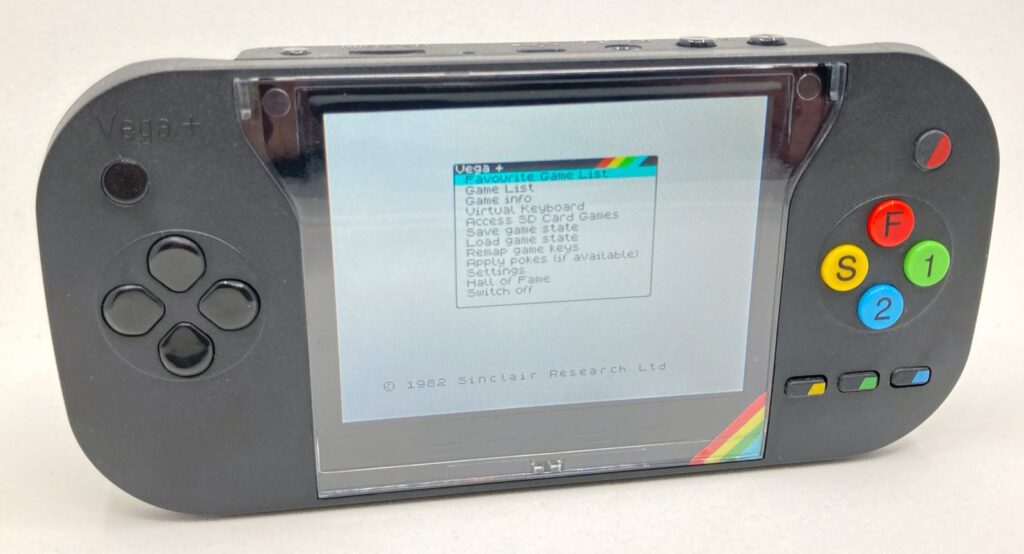
In February 2016, this post announced the ZX Spectrum Vega+ with genuine excitement: the plug-and-play Vega was going handheld, 1,000 games in your pocket, £100 on Indiegogo. The campaign went on to raise around £513,000 from roughly 4,500 backers. Three years later the company was wound up, most backers had nothing, and the few hundred consoles that did ship had become the most notorious objects in British retro gaming. This is the full story of the announcement this post got to make — and everything that happened after it.
The announcement (February 2016, as we reported it)
The original version of this post ran 139 words, and every one of them was a fair report of the pitch. Remember the Sinclair ZX Spectrum Vega, it said — the 2015 plug-and-play with 1,000 built-in games? It’s back, and this time it’s gone handheld. The Vega+ would add an LCD screen and a rechargeable battery to the formula, keep the 1,000 games, the joypad controls and the MicroSD slot for adding more, and still offer composite TV output for the big screen. The design came from Rick Dickinson, who had drawn the original Spectrum in 1982 — the pitch was, in essence, the Sinclair name and the Dickinson shape, pocket-sized. The Indiegogo campaign was live, £100 would secure a console in red, white or blue, and Retro Computers Ltd was looking for £100,000 on a flexible funding scheme — a detail in our original post that turned out to matter enormously, because flexible funding means the campaign keeps the money whether or not the goal is met.
Context made the pitch credible. The 2015 Vega had actually happened: Retro Computers Ltd, with Sir Clive Sinclair’s Sinclair Research behind it, had shipped a real product that real people bought. It wasn’t perfect — reviewers grumbled that a machine bundling hundreds of text adventures really ought to have a keyboard — but it existed, it worked, and it sold. A handheld sequel from the same team was not a fantasy. It was a pre-order.
Half a million pounds
The campaign closed in March 2016 at around £513,000 from roughly 4,500 backers — more than five times the goal. By any normal crowdfunding measure, the Vega+ was a hit before it was anything else. What backers couldn’t see was that the company behind it was coming apart while the money was still in escrow. Retro Computers Ltd was a four-way arrangement with Sinclair Research itself holding a stake, and two of its founders, Paul Andrews and Chris Smith, resigned over what was described as irreconcilable differences while the campaign funds were still being held. Everything that followed — every delay, every contradictory announcement, every public row — happened inside a company whose shareholders were fighting each other. The product was almost an afterthought.
Three years of deadlines
Retro Computers Ltd went on to miss every delivery date it set across three years. Dates were announced, dates passed, explanations rotated — manufacturing, certification, a dispute here, a supplier there — and the tone curdled from apology to combat. At one point the company’s lawyers threatened the BBC over its reporting of the delays, an extraordinary step for a firm whose customers were still waiting for their £100 handhelds and whose best defence would have been to ship one.
The endgame, when it came in 2018, was about the games. In May of that year the company said it had been unable to ship because a partner had requested confirmation that it held the rights to the 1,000 bundled games — and then admitted that it no longer held licensing agreements for most of them. The thousand games, the entire premise of both Vega machines, had evaporated. That summer the company shipped roughly 400 consoles in a “Blankety Blank” configuration — with no built-in games at all. The first backer to report receiving one told Eurogamer he was “quite disappointed”: the few sample games supplied didn’t work, and “the build quality’s not the greatest.” Another recipient called the delivered unit “shambolic and amateur.” The Register, reviewing the machine, concluded that “the entire feel is plasticky and inconsequential” — this about a product designed by the man who designed the ZX Spectrum.
Then the name itself went. Sky, which owns the Sinclair and ZX Spectrum brands, informed Retro Computers that its licence to use them would be revoked on 7 August 2018. The few hundred Vega+ units in the wild had shipped in the last days of a licence their maker was losing — rainbow stripe and all.
The winding-up
On 1 February 2019, Retro Computers Ltd was wound up, on a petition presented by Private Planet Ltd — a company whose sole director, Janko Mrsic-Flogel, had himself been a director of Retro Computers from April 2016 to August 2018. The Vega+ saga ended, as it had been conducted, inside the family. The backers — roughly 4,500 people who had put down £100 each on a handheld Spectrum — became unsecured creditors of a company with nothing left to give them. The majority never received a console. Of the £513,000, what the retro community got was a few hundred gameless handhelds, a Wikipedia entry under “controversies,” and the definitive crowdfunding cautionary tale of the retro era.
If you want the counterpoint — the same community, the same beloved machine, crowdfunding done the other way — it ran a year later and a few posts away on this very site: the ZX Spectrum Next, which raised £723,390, delivered its boards in December 2017 and its finished machines in 2020, and came back for a second campaign that raised £1.85 million. The difference between the two stories was never the idea, the audience or the money. It was whether the people holding the money were building the machine or fighting each other.
What survives
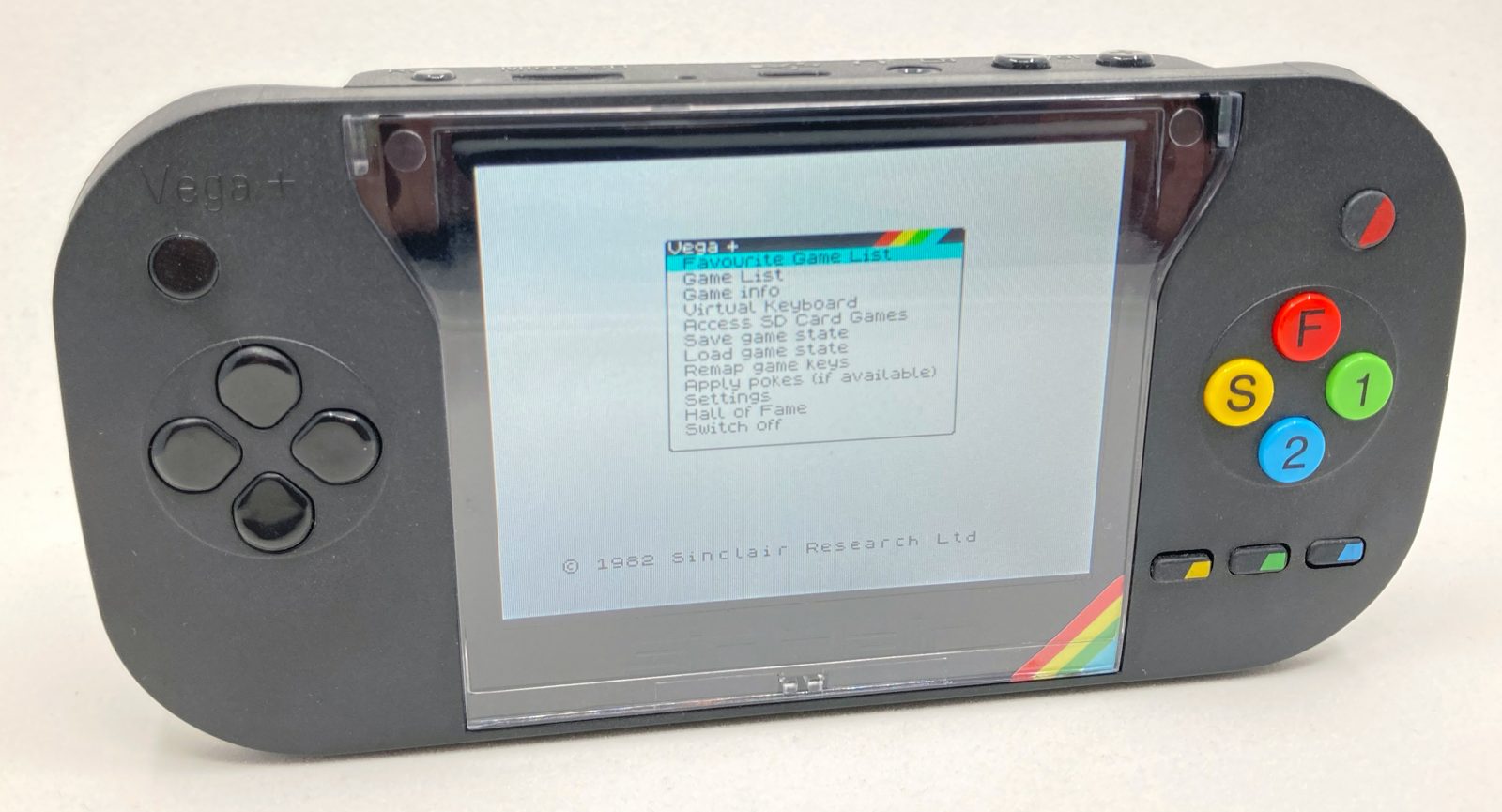
The Vega+ units that did ship are, perversely, collectors’ items now — the photograph at the top of this article is one of them, a real backer unit with its screen film still on, photographed in August 2018. They surface occasionally, these small black rainbows, and they sell — as artifacts of a fiasco, which is not what Rick Dickinson designed, not what 4,500 people paid for, and not what this post, in February 2016, thought it was announcing. The announcement was true. The machine in the pitch was real, the team had shipped before, and the excitement was earned. The rest of the story is a reminder the retro scene keeps relearning the hard way: a beloved name is not a company, a famous designer is not a factory, and half a million pounds is not a product.
A note on this post’s history: it originally ran in February 2016 as a 139-word announcement, written while the crowdfunding campaign was live and before any of the above had happened. It has been rewritten to tell the whole story; the announcement itself is preserved and quoted in the section above, and the post keeps its original URL and February 2016 date.