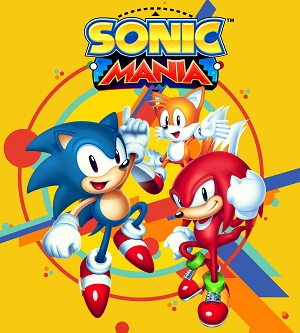
At a glance: Sonic Mania Plus · Nintendo Switch (also PS4, Xbox One, PC) · developed by Christian Whitehead, Headcannon and PagodaWest Games · published by Sega · July 2018 · 2D platformer · 1–4 players
Most nostalgia acts get one encore. Sonic Mania earned two. The 2017 original was already the impossible thing: a brand-new 2D Sonic, built by fans-turned-professionals, that didn’t merely imitate the Mega Drive games but stood beside them — better than some, argued the bravest reviews, and nobody laughed. A year later, Sonic Mania Plus took that finished, beloved game and asked a dangerous question: what if we touched it? Expansions to classics usually dilute them. Plus instead behaves like the second pressing of a great album — same songs, warmer mix, and a couple of extra tracks that turn out to be essential. It is the rare case of a revival being revived, and getting away with it.
An Encore, Literally
The headline addition is Encore Mode, a full second pass through Mania’s twelve zones with the remixes turned up. Stages are re-coloured and re-lit — familiar layouts wearing evening clothes — and their hazards are rearranged just enough to trip up muscle memory. The structural twist is the cast. Instead of a fixed hero, you collect your party as you go: Sonic, Tails, Knuckles and the two returning guests are rescued one by one and held in reserve, and you run with any two of them, tagging between the pair at a button press. A life is no longer a counter; it is a bench. Lose your active character and the next in line steps up, which turns every spare hero into a resource to be managed across a whole campaign rather than a stock of retries for a single stage.
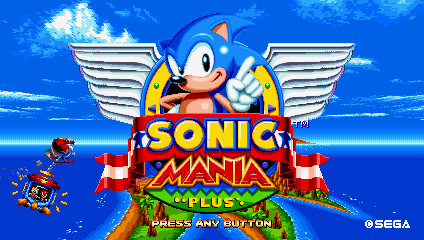
It begins, fittingly, at the very start. Plus threads a short new prologue into the package — a dash across Angel Island, the floating island where the series’ 16-bit saga opened in 1994 — before handing you to the Encore campaign proper. It lasts minutes, but as a statement of intent it is perfect: this edition is about homecomings, including the ones the original game didn’t have room for. The structure underneath is just as considered. Encore is offered alongside the original Mania Mode rather than instead of it, so the 2017 game survives intact inside its own expansion, and the newcomers can be unlocked for it too — earned through the bonus stages, then taken anywhere, including the zones they were rescued from.
Encore also swaps out the base game’s bonus stage. The Blue Spheres — glorious, but by 2018 a known quantity — give way to a pinball table, a fast, flippery tribute that suits the series’ casino DNA and plays far better than a novelty mode has any right to. Completionists still get their Chaos Emeralds the honest way, through the UFO-chasing special stages, which remain exactly as demanding and exactly as satisfying as they were in 2017.
Two Old Friends, Properly Rebuilt
The guests are the soul of the package. Mighty the Armadillo and Ray the Flying Squirrel both debuted in the 1993 arcade game SegaSonic the Hedgehog; Mighty resurfaced in Knuckles’ Chaotix, but Ray essentially vanished for a quarter of a century, surviving as a trivia answer and a missing-person poster in later games’ scenery. Plus doesn’t wheel them out as skins. Mighty arrives with his shell, which shrugs off one hit from spikes and projectiles, and a ground-pound that slams him into the earth with a shockwave — a defensive, deliberate character who changes how you read a screen full of hazards. Ray gets the better toy: an air glide modelled on the cape from Super Mario World, all swooping dives and climbing arcs, which turns open stages into flight simulators and speedrun routes into a whole new discipline. Both feel native to Mania’s physics rather than bolted onto them, and both make a second (or third) run feel like a different game wearing the same levels.
The Patch That Polished the Base Game
Plus is also a patch, and existing owners felt the benefit whether or not they bought in. The update threaded proper transitions between zones, reworked several boss encounters — most substantially the Metal Sonic fight, which gained a new phase that tips its hat to his Chaotix-era form — and made the ten-minute time limit a toggle rather than a threat. Small stuff, individually. Together it reads as a team being handed their own finished game and a short list of everything they’d have done differently with another month. That list got made. Very few modern releases get that luxury, and fewer still spend it this wisely.
Racing Your Ghosts
Around the edges, the package fills in the original’s two thinnest rooms. Time Attack now saves replays and lets you race ghost data, which converts the leaderboards from a rumour into a rival — though the boards were wiped to accommodate the rebalanced stages, a fair price, honestly charged. Competition mode stretches to four players, split-screen, with options for item boxes and stage count. Four-player Sonic races are chaotic in the way that ends friendships and starts traditions, and on the Switch — the version this review is based on — the whole thing travels: two Joy-Con, a train table, and the best portable 2D platformer of its generation becomes its best portable party argument.
The Physical Object
Plus also marked Mania’s arrival as a thing you could hold, and Sega understood the assignment. The physical edition wears a holographic slipcase over reversible cover art — one side Mega Drive, one side Genesis, so your shelf can match your childhood’s accent — and tucks in a 32-page art book. Digital owners weren’t left at the door: the Encore content arrived as a five-dollar upgrade, a price that feels less like a transaction and more like a tip jar. In an era of forty-dollar season passes, charging the cost of a coffee to double a game’s cast and add a second campaign reads as almost principled.
“Sonic Mania was the revival nobody believed could happen. Plus is the encore nobody knew to ask for — two lost friends, a second campaign, and every rough edge quietly sanded down.”
The Verdict
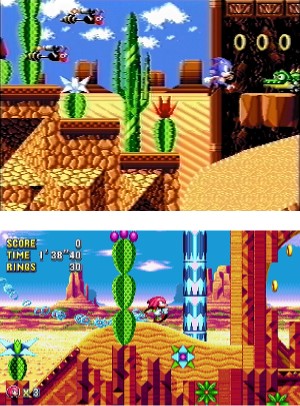
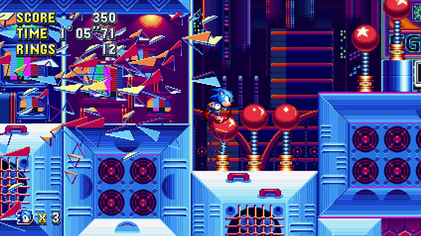
Strip Plus away and the foundation is untouched: the finest 2D Sonic ever made, a game whose new zones (Studiopolis, Press Garden, Mirage Saloon) deserve to be named in the same breath as the 1992–94 canon, and whose remixes of the classics improved on levels many of us could draw from memory. What Plus adds is not bulk but completeness — the two characters the era left behind, a campaign that justifies a replay on its own terms, and a layer of polish that makes returning to the bare 2017 version feel, faintly, like reading a first draft. If you somehow skipped Mania entirely, this is simply the version to buy, full stop. If you already own it, the upgrade is the easiest five dollars in the hedgehog’s long, expensive history.
Verdict: the definitive edition of a modern classic — an expansion that behaves like a director’s cut, restoring two lost characters and giving a perfect revival its well-earned encore.
Keep reading: Sonic Mania – The Retro Review — our original 2017 take on the base game this edition completes