
The Vectrex died in 1984. Its games industry declined to notice. While the collectors’ market was still treating the machine as a closed book — twenty-eight cartridges, a handful of accessories, the end — programmers who had grown up on its glow began writing new software for it in the mid-1990s, and they have never really stopped. Three decades later, the Vectrex homebrew scene is not a footnote to the machine’s history; it is the machine’s second library, larger than the first, still growing, and in 2026 still shipping new cartridges for a console whose youngest factory unit is over forty years old. This is a survey of that scene — who built it, what it makes, and why a black-and-white vector relic supports one of the most durable creative communities in retro gaming.
The founding father is John Dondzila, who in 1996 released Vector Vaders — the first new Vectrex game in over a decade — through his Classic Game Creations label, and then simply kept going: Moon Lander, a humane reimagining of Lunar Lander; Patriots, Missile Command’s defence given the vector treatment; and Gravitrex, a full-blooded Gravitar tribute so accomplished it is routinely mistaken for a lost GCE original. Dondzila proved two things the scene has relied on ever since: that one skilled programmer could still make a Vectrex game sing, and that an audience existed willing to pay real money for new cartridges. Around that proof, an ecosystem formed — small labels, limited runs, hand-assembled carts with printed overlays in the GCE manner, sold through community shops and at shows.
The second library
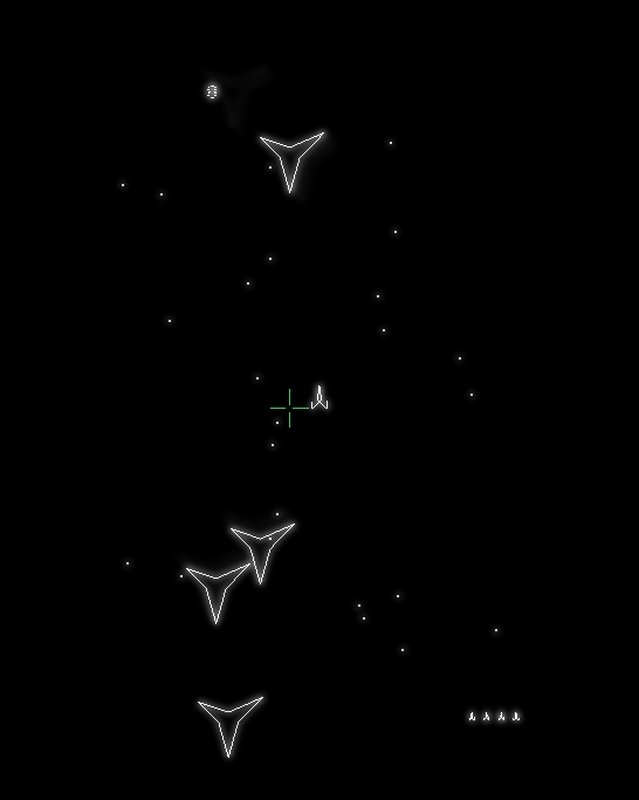
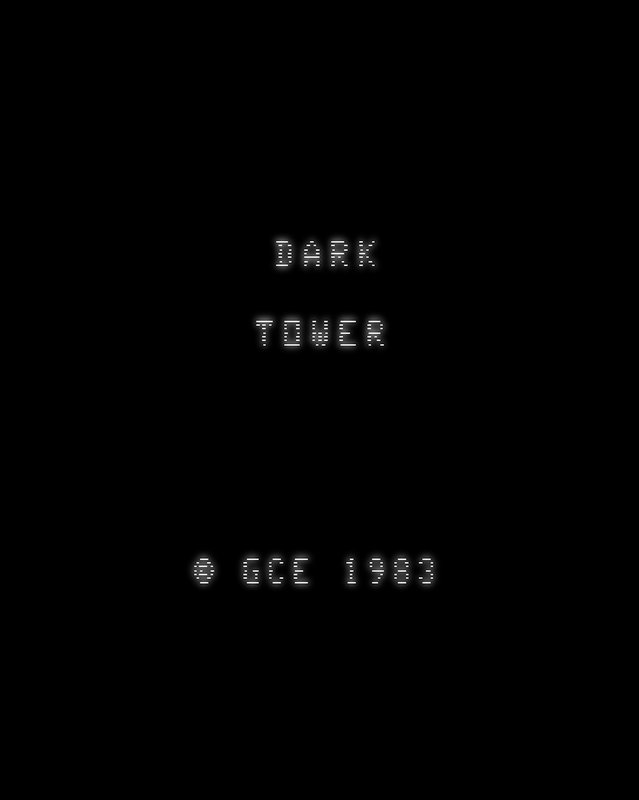
The catalogue’s range is what staggers newcomers. There are the arcade translations the eighties never shipped: Kristof Tuts, working as Binary Star Software, built Vector Pilot — a Time Pilot conversion of near-arcade quality, complete with a printed overlay in the original style — and Vectrexians, a Galaga homage that squeezes formation shooters onto the vector screen; Alex Herbert’s Protector delivered the Defender the machine always deserved. There are originals with no arcade parent at all, sequels to GCE’s own characters, puzzle games, racers, and experiments that treat the beam as an instrument. Labels like Fury Unlimited and Revival Studios turned the trickle into a trade, with production values — boxes, overlays, manuals — matching the original era’s. And the scene keeps its history honest: unreleased GCE prototypes like Dark Tower have been finished and issued by community hands, so the first library and the second now interleave on collectors’ shelves.
The tooling explains the scene’s longevity. Development for the Vectrex is, by retro standards, almost civilised: the 6809 is a beloved processor, documentation is deep, and the community built its own instruments — the Vide development environment, maintained for years by enthusiast-programmer Malban, folds editor, assembler, emulator and debugging into one workshop, while development cartridges like the VecFever let programmers test on real tubes in seconds. A scene with good tools and a real audience does not die; it professionalises. By the 2020s the results include releases of startling ambition — full productions from circles like the Vectrex Academy, whose Gyruss-inspired Gyrostronomy arrived in 2023 to reviews in the enthusiast press — and a steady calendar of smaller gems, ports in progress and works-in-development shown in community videos each year, including (at the time of writing) an in-development conversion of Pilotwings that would have been unthinkable as a commercial pitch in any era.
Why this machine, forever
Ask the scene why the Vectrex, and the answers converge. The hardware is honest: one processor, one display, no bank-switching archaeology, and a screen that makes a dozen lines look like art direction. The audience is devoted and adult, buying cartridges the way record collectors buy vinyl — as objects, with overlays and boxes, for a machine they maintain like an instrument. And the target is fixed forever: a game written for the Vectrex in 2026 runs on the same tube it would have run on in 1982, unported and unpatched, which gives homebrew a permanence no app store can offer. The multicarts and modern loading options — Sean Kelly’s long-running multicart line, the VecFlash tradition, PiTrex’s Raspberry Pi bridge to modern storage — mean new work reaches old tubes without scarcity games, while limited physical runs keep the collector’s flame lit. Both economies, the open and the scarce, somehow coexist.
A game written for the Vectrex in 2026 runs on the same tube it would have run on in 1982, unported and unpatched. No app store can offer that permanence.
It is only fair to note what this feature is not: it is not the end of the original library’s story, nor a claim that homebrew replaces it. The Christmas homebrew releases the site covered in its news pages, the prototypes, the sequels — all of it stands on the first library’s shoulders, and the scene’s best work is in constant conversation with GCE’s. What the second library changes is the tense. Every other console of 1982 is a past to be curated. The Vectrex, uniquely, has a present: new boxes on the shelf, new high scores on the tube, new programmers learning the beam. Relics do not get release calendars. The Vectrex has one.
The economics of devotion
The scene’s business model would make a publisher weep and a craftsman nod. Runs are small — dozens to a few hundred units — assembled by hand or in short factory batches, sold directly, and priced like the artefacts they are. Scarcity here is not a marketing pose but arithmetic: at these volumes, a boxed Vectrex release with a printed overlay is a labour of love with a bill of materials. Yet the model sustains multi-decade careers, which suggests the demand side understands the offer precisely — these are not software purchases, they are commissions, a standing order placed by a community with the last vector artists. Around the physical trade runs the open one: free ROM releases, public betas, source code shared between programmers, and an annual rhythm of jams, expos and online showcases where works-in-progress gather their first players.
New arrivals in 2026 enter through doors that did not exist a decade ago: cycle-accurate emulation for development, flash loading for testing on real tubes in seconds, video showcases that find a niche audience instantly, and a back-catalogue of two hundred-plus homebrew releases to learn from. The barrier to making a Vectrex game has never been lower. The barrier to making a good one — a dozen lines, perfectly placed, on a screen that forgives nothing — is exactly where GCE left it. That combination, easy entry and hard mastery, is why scenes live. The Vectrex scene is not surviving. It is compounding.
The scene in 2026
So the scene in 2026 looks like this: veteran labels still releasing, new programmers arriving through the emulators and staying for the hardware, development tools in active maintenance, and a release calendar modest by industry standards and miraculous by any other. Forty-two years after the factory closed, the correct tense for the Vectrex is the present continuous. It is being written for, tonight, by someone — and the tube they are writing for is the same one this site has just spent twenty-two articles celebrating. The second library is open. Bring a cartridge wallet.