
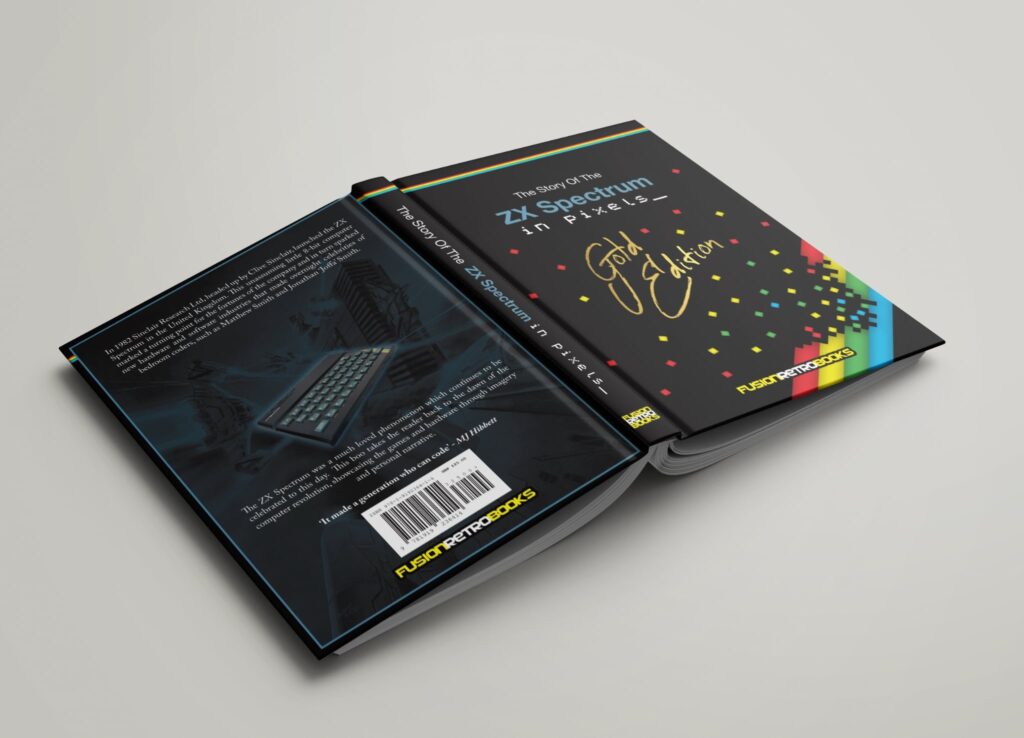
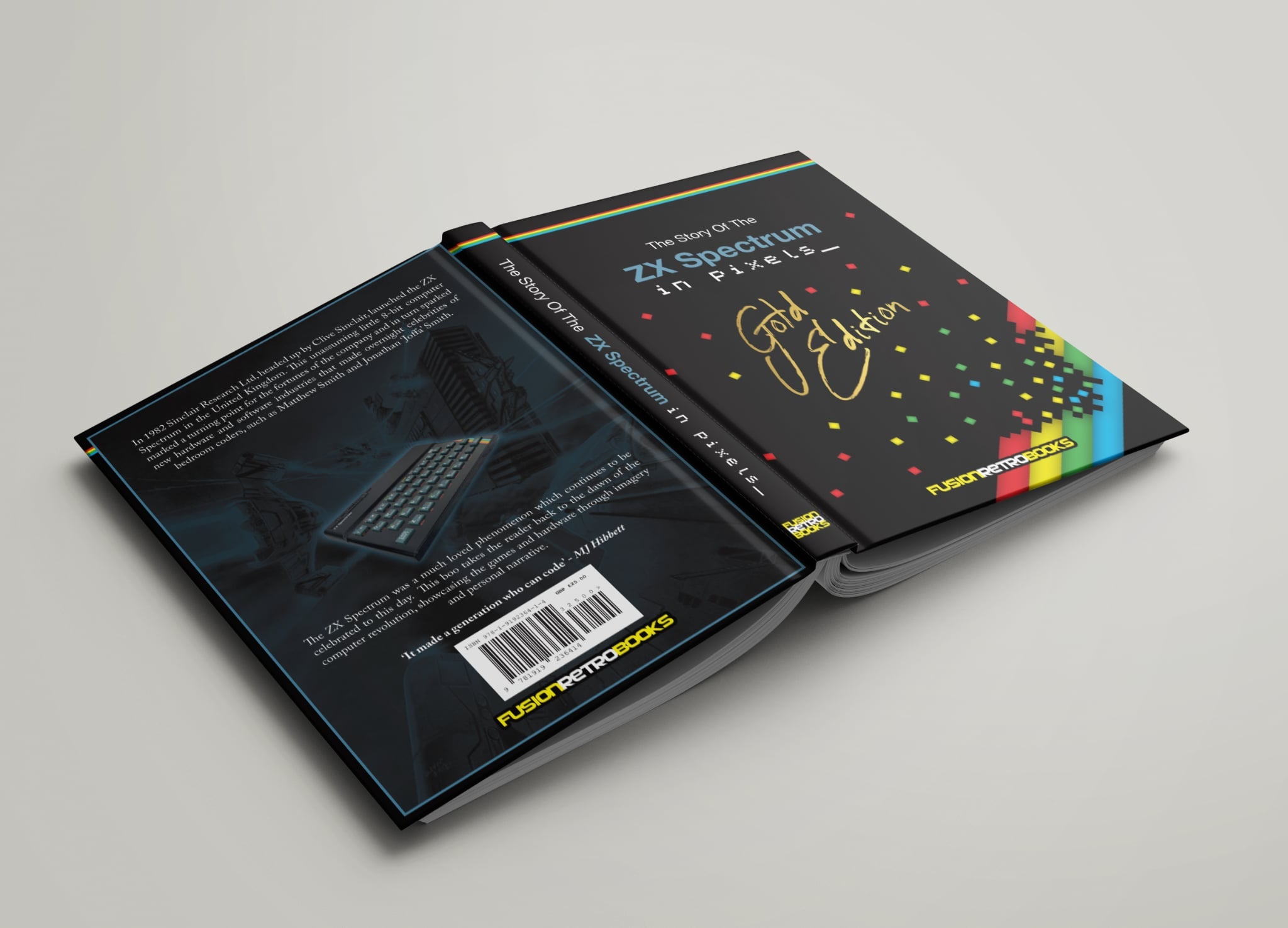
At a glance: The Story of the ZX Spectrum in Pixels · Chris Wilkins · Fusion Retro Books · hardback, 234 pages · crowdfunded via Kickstarter (about 130% of target) · published 2014
Ask a certain age of British computer owner about their defining Christmas and a familiar scene tends to surface. A year of hints has finally paid off. Under the tree sits the machine that replaces a black-and-white predecessor whose add-on memory pack fell off if you breathed near the desk — and the new one does colour. It makes noises. The demonstration tape loads in stripes and bursts, the whole family gathers round the television to watch a computer draw in more than monochrome, and a hobby quietly becomes a life. Chris Wilkins opens this book with his own version of that morning, and the shrewdness of the choice is that thousands of readers could swap in their own details without changing the shape of the story at all.
The Book the Spectrum Had Been Waiting For
Which raises an obvious question: why did that story take until 2014 to get a book like this? The Spectrum was not some cult footnote. Launched by Sinclair Research in April 1982, it put an affordable colour computer into ordinary homes across Britain and beyond, sold in the millions, and built a games library so large that cataloguing it remains a hobby in itself. A generation learned to program on its rubber keys; a British games industry effectively started in its bedrooms. Yet while other machines accumulated glossy retrospectives, the Spectrum’s publishing afterlife stayed surprisingly thin — fanzines, websites and forum threads carried the memory, but the coffee-table treatment lagged behind the machine’s importance.
Wilkins was well placed to close that gap. Through Fusion Retro Books he had already taken The History of Ocean through crowdfunded to a warm reception, proving two things at once: that the audience for serious, affectionate British retro publishing existed, and that he could deliver a finished book to it. The Spectrum project followed the same route and cleared its Kickstarter goal comfortably, landing at roughly 130 per cent of the target. That number matters. It was the market announcing, in advance and in cash, that the gap this book filled was real.
Designed Under Pressure
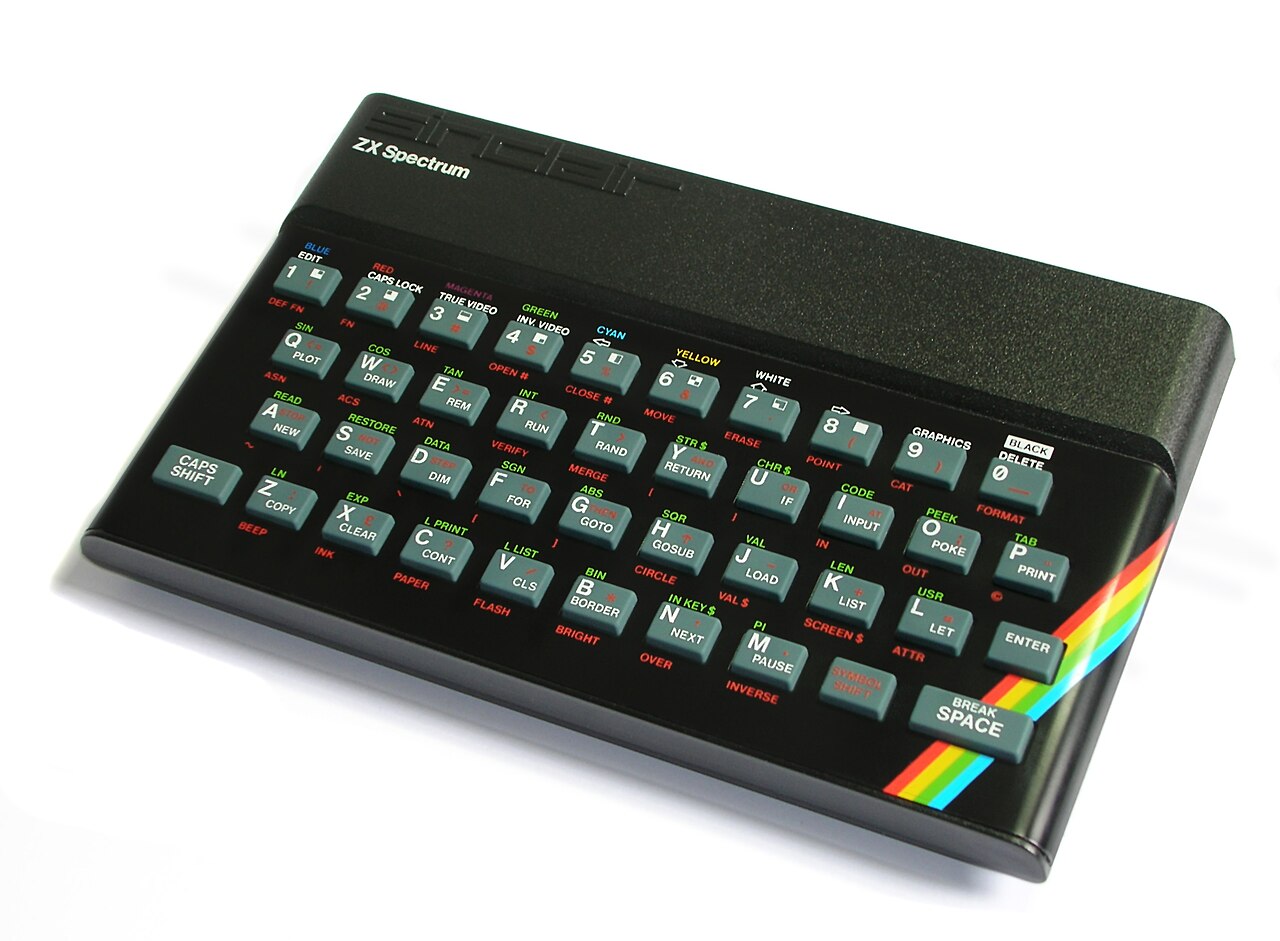
The front of the book sets personal memory beside industrial history. After Wilkins’ foreword comes a memoir from Rick Dickinson, the industrial designer behind the look and feel of Sinclair’s early machines — the ZX80 and ZX81 before the Spectrum, and other Sinclair products besides. Dickinson writes about what it meant to shape award-winning hardware inside Clive Sinclair’s famously demanding operation: tiny budgets, impossible briefs, and products that had to look like the future while costing less than the competition’s present. It is the right overture, because the Spectrum’s constraints were never accidents. Its size, its keyboard and even its rainbow were decisions, and hearing from the man who made them turns nostalgia into design history.
A Library Between Covers
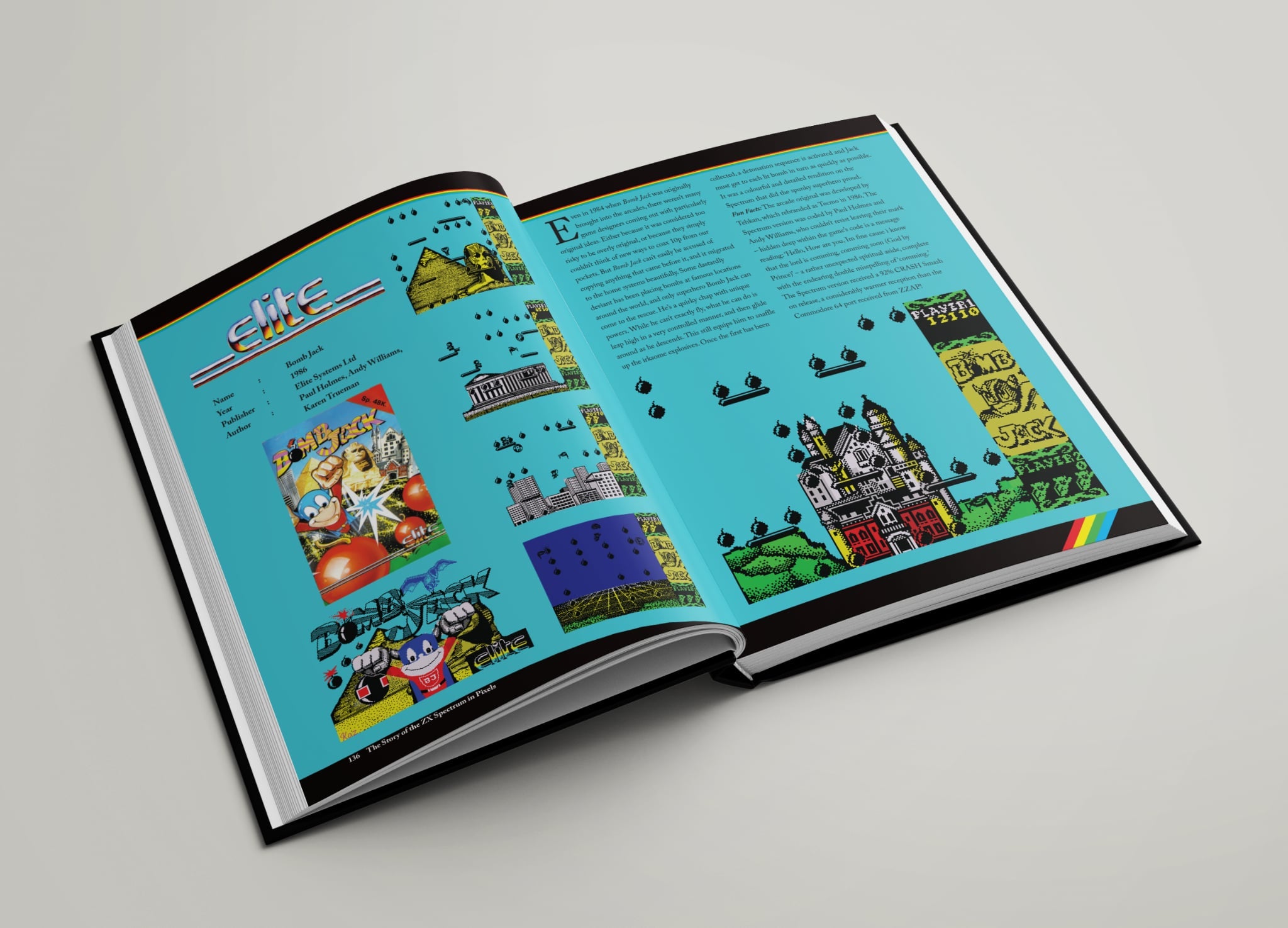
The heart of the volume, though, is the games. Each title is given a spread built from three kinds of evidence: the artwork that sold it, whether poster or inlay; the loading screen that flickered up from cassette; and the game itself in play. Around those images sit a compact account of how the title works and where it came from, seasoned with short personal memories from people who played and loved it. The formula sounds simple, and that is its strength. A Spectrum game was never just its code — it was the box on the shop shelf, the five striped minutes of anticipation, and then the bright, clashing reality. Seeing all three stages together on one spread reconstructs the whole ritual.
It is also, quietly, a defence of the loading screen as an art form. On most machines those screens were throwaway; on the Spectrum, where a game announced itself in coloured blocks while the tape hissed, artists turned a technical pause into a canvas, working inside the machine’s notorious attribute clash rather than around it. Printed large and still, those images hold up startlingly well, and the book treats them with a seriousness they rarely received at the time. For many readers the loading screens, not the games, will trigger the sharpest memories — which is precisely the point of printing all three stages side by side.
Woven between the spreads are reproductions of Spectrum advertising from the period, and they earn their place. The adverts show how these machines and games were promised to the public at the time — the breathless claims, the prices, the artwork styles — which is a different kind of history from hindsight. They also pace the book nicely, little commercial breaks between chapters of play.
Judged as a physical object, it feels considered rather than merely printed. The binding is a black hardback of 234 pages — a heft that surprises on first lifting — with the Sinclair name embossed into the cover and the machine’s rainbow flash cutting across it. Anyone who owned the computer will place it instantly; anyone who did not still gets an object that looks like it belongs on a shelf rather than in a bargain bin.
“Other machines got their glossy histories first. This is the book that finally treated the Spectrum’s library — and the generation that grew up loading it — as worth 234 hardback pages.”
The People Who Made the Games
The closing section hands the microphone to the makers. Programmers and artists who built their reputations on the Spectrum contribute memoirs, among them Steve Turner, Jonathan Cauldwell and the Oliver Twins, whose path from bedroom coding to a professional studio became one of the era’s defining success stories. These pieces do what the game spreads cannot: they describe deadlines, tools, rivalries and luck from inside the room where the work happened. The section ends fittingly with Roger Kean, who edited Crash, the magazine that reviewed, mapped and mythologised this software while it was new. Players, makers and press — the book gives each of the culture’s three corners a voice.
The Verdict
It is worth saying who this book is not for. Readers hunting for technical history — board revisions, sales figures, corporate manoeuvring — will find the human story told well here but the engineering story told lightly, and the tone throughout is celebratory rather than critical. That is a defensible editorial choice for a book funded by fans, but it does mean the volume works best as a companion to, not a replacement for, harder-edged histories of Sinclair the company.
Reservations are minor and mostly structural. A library this size cannot fit inside one volume, so any reader’s personal canon will have omissions to grumble about — and Wilkins clearly knew it, since further volumes in the “in Pixels” series duly followed from Fusion Retro Books, extending the same treatment across more of the catalogue and, in time, to other machines. Taken on its own terms, the first book is exactly what its Kickstarter backers were promised: a handsome, knowledgeable and deeply affectionate record of the computer that colourised British computing.
Verdict: an essential shelf piece for anyone who ever owned, programmed or simply played a Spectrum — the retrospective the machine deserved, built from its art, its adverts and the testimony of the people who made its games. If the rainbow stripe means anything to you, this book already has your name on it.
Keep reading: the ZX Spectrum system archive