
For more than a year, the strangest thing about Pokémon Legends: Z-A was its own name. Pokémon titles usually explain themselves: a colour, a metal, a pair of legendaries, a place. This one offered two letters, a hyphen and a shrug. Fans filled the silence with the obvious candidates. Zygarde, the serpentine legendary whose story Pokémon X and Y left conspicuously unfinished, starts with Z. AZ, the towering, three-thousand-year-old king from those same games, conveniently contains both letters when read backwards. Both theories turned out to have something to them — but neither was the real answer. The real answer was a ladder. Z-A is a ranking system: every trainer in the game’s central competition starts at the very bottom, at Rank Z, and battles upward through the alphabet until, if they are good enough, they stand at Rank A. The title was never just a pair of mysterious initials. It was the entire shape of the game, printed on the box.
A Name That Sat Unexplained for a Year
The game was first teased in February 2024 with little more than a promise: a return to Lumiose City, the Paris-inspired capital of the Kalos region, and a citywide redevelopment plan. A full year passed before players saw it properly. When the February 2025 Pokémon Presents finally delivered gameplay on Pokémon Day, 27 February, it answered a great many questions. The adventure would unfold entirely inside Lumiose. Your first partner would be Chikorita, Tepig or Totodile. Battles would happen in real time, with trainers and Pokémon moving, dodging and repositioning as attacks flew. Wild Pokémon would live in designated Wild Zones scattered through the streets. Mega Evolution, the transformation mechanic born in Kalos itself, would return. And the whole city was being rebuilt by a corporation called Quasartico Inc., under its CEO Jett, with the stated aim of making Lumiose a place belonging to people and Pokémon alike.
What the February presentation pointedly did not explain was the name. The letters sat there, unexplained, at the end of every trailer. That is worth underlining, because the eventual revelation is often misremembered as a Pokémon Presents moment. It was not. The answer arrived a month later, on 27 March 2025, during a Nintendo Direct — the news the original version of this story was reporting when it was published on 28 March. A new trailer turned its attention to what happens in Lumiose after dark, and there it was: the Z-A Royale.
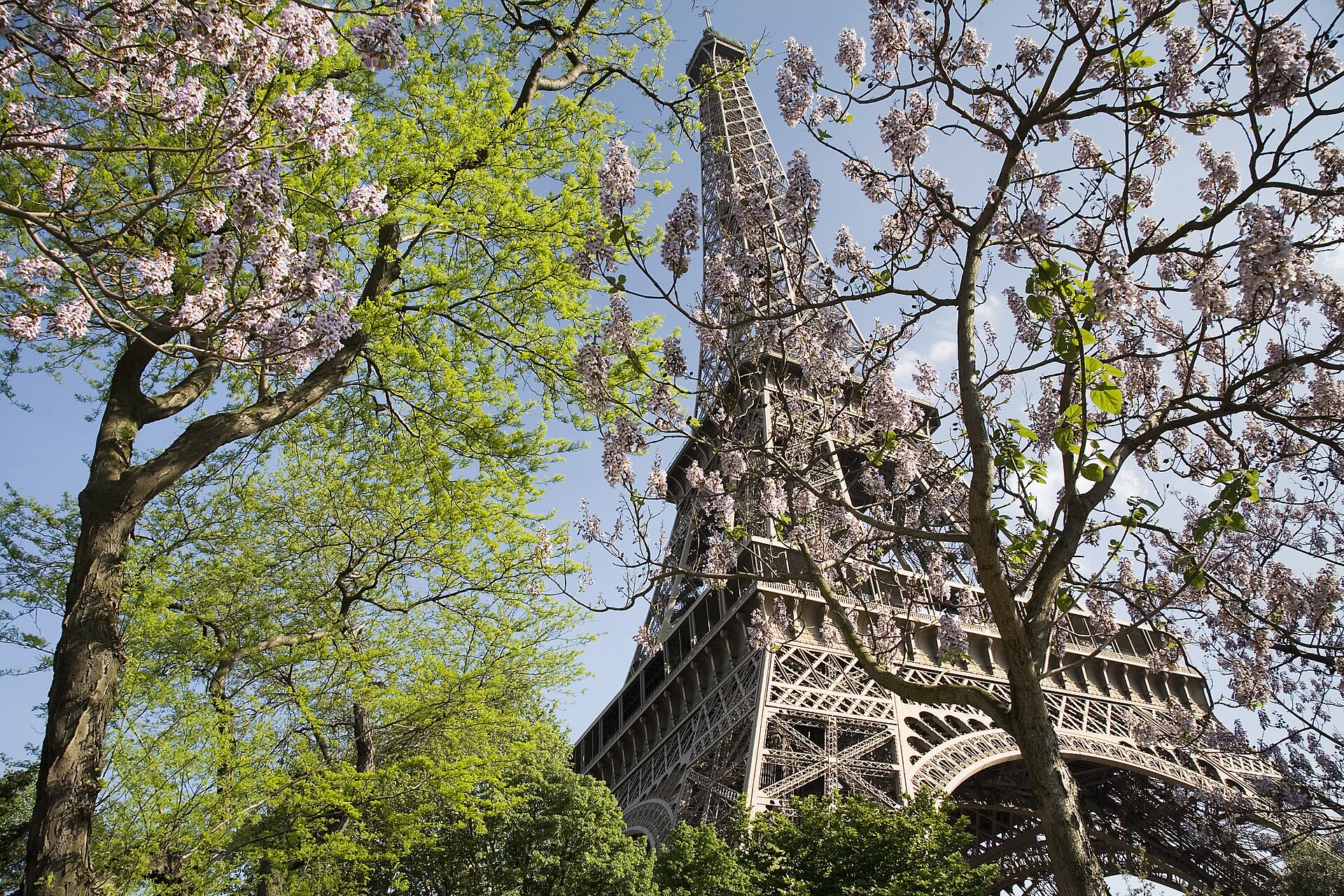
The Eiffel Tower in Paris — the real-world landmark behind Lumiose City’s Prism Tower, the centrepiece of the Kalos capital. Photo: Jorge Royan, via Wikimedia Commons (CC BY-SA 3.0).
Enter the Z-A Royale
The Z-A Royale is a nightly tournament, and Nintendo’s official description of it is pleasingly dramatic. When night falls in Lumiose, a battle zone appears somewhere in the city, fenced off in red using what the official site calls cutting-edge holographic technology. From dusk until dawn, invited trainers — the competition is framed as one for competitors whose skills have been recognised — fight inside those zones to determine who is strongest. Every participant begins at Rank Z. Win, and you climb. Keep winning across twenty-six ranks, and you arrive at Rank A. According to the official site, a trainer who reaches the top does not merely earn the honour of being known as the strongest around: apparently, they may also have one wish granted. That last detail, left deliciously vague in the pre-release material, was the story hook hiding inside the ranking system — a prize that practically guaranteed the climb would matter to the plot and not just to your pride.
So the name resolves into something almost old-fashioned. Not Z for Zygarde, not A for AZ, although the game happily lets both of those associations linger. Z-A is a direction of travel. It is the alphabet run in reverse, a table read from bottom to top, and it tells you before you have played a minute exactly what your journey will be: start last, finish first.
How the Climb Actually Works
A ranking ladder twenty-six letters deep could easily have become a pure numbers grind, so the structure Game Freak built around it matters. As Eurogamer explained in its coverage of the March Direct, battling trainers inside a night’s battle zone earns you Ticket Points. Bonus cards scattered through the zone add to the chase: complete the challenge a card specifies — win a battle a particular way, use particular tactics — and you bank extra points. Collect enough, and you earn a Challenger’s Ticket. Only then comes the step that actually moves your letter: the promotion match, a head-to-head battle against a single tough trainer who is also trying to climb. Win that, and you rank up. Lose, and it is back into the night to earn another ticket.
The battles themselves carry the series’ new flavour. The old rule that eye contact means combat still applies — if a trainer in the zone spots you, the fight is on — but the real-time system cuts both ways. Eurogamer and Game Informer both noted the trailer’s neatest trick: creep up behind an opponent who has not seen you, land a surprise attack before the battle properly begins, and you start with the advantage. In a game about climbing, that small piece of street cunning fits beautifully. The Royale is not a polite league with a fixture list. It is a nightly scramble in a fenced-off district, and it rewards the trainer who treats it like one.
Later reveals filled in the ladder’s personalities. Promotion matches are not faceless checkpoints; Nintendo’s official updates introduced opponents such as Corbeau, boss of an organisation called the Rust Syndicate, as one of the powerful trainers standing on a rung above you. Your friend and fellow competitor — Urbain or Taunie, depending on the appearance you choose at the start — is thrust into the tournament alongside you. The ranking system, in other words, is also the game’s social structure: nearly everyone you meet in Lumiose is somewhere on the same ladder.

Paris after dark, with the Eiffel Tower and Pont Alexandre III lit at night — Lumiose City’s Royale only begins at sundown, when its red battle zones appear. Photo: Getfunky Paris, via Wikimedia Commons (CC BY 2.0).
The Arceus Ancestor: Stars Before Letters
If the idea of a Pokémon game organised around a rank feels familiar, it should. Pokémon Legends: Arceus, the 2022 game that invented this spin-off line, was built on exactly the same skeleton — it just dressed it in stars instead of letters. In Arceus you joined the Galaxy Expedition Team’s Survey Corps in ancient Hisui, and your progress was measured by a Star Rank that rose as you banked research points for completing Pokédex tasks: catching species, defeating them, watching them use particular moves. Each new star brought tangible rewards in the old gym-badge tradition — higher-level Pokémon would obey you, better Poké Ball recipes unlocked, and new areas of Hisui opened up. Rank was not a side statistic. It was the gate through which the entire adventure flowed.
The Z-A Royale takes that inheritance and changes its temperament. Arceus ranked you for studying Pokémon; Z-A ranks you for beating people. The Survey Corps ladder was solitary and scholarly, earned in the tall grass with a notebook in hand. The Royale ladder is public, competitive and urban, earned under floodlights against rivals who are climbing over you as fast as you are climbing over them. Where Arceus replaced gym badges with research credentials, Z-A replaces them with something closer to a league table — and folds the replacement directly into the title, something Arceus never thought to do. It is the clearest sign of what the Legends series is for: not discarding the series’ oldest progression ideas, but re-skinning them so thoroughly that they feel like discoveries.
One City, Being Rebuilt Around You
The ranking system only works because of where it happens. Earlier Pokémon games spread their challenges across a whole region, eight gyms in eight towns. Z-A confines everything to a single city — the first Pokémon game to do so — which raised an obvious design problem the Royale elegantly solves: if nobody ever leaves town, where does the ladder live? Answer: it comes to you, nightly, in rotating pockets of the streets you already know.
The Lumiose of this game is a city mid-transformation. Quasartico Inc.’s urban redevelopment plan aims to reshape Kalos’s capital into a place where people and Pokémon genuinely share the space, and the Wild Zones are its most visible product — fenced habitats, marked in green, where wild Pokémon live in the middle of the metropolis and where you can spend your days catching and training. By day, the city is about coexistence and exploration; you stay at Hotel Z, run by the enormous and ancient AZ himself, and work alongside the friends you make there. By night, the same streets redraw themselves in red and become an arena. The day-night split gives the single-city gamble its rhythm, and the Z-to-A climb gives that rhythm a purpose: every sunset is another chance to move one letter closer to the top.
Mega Evolution, Woven Into the Ladder
No return to Kalos could dodge Mega Evolution, and Z-A does not try. The mechanic — temporary, battle-only transformations powered by a trainer’s Key Stone resonating with a Pokémon’s Mega Stone — was introduced in X and Y, and its comeback was confirmed in that February 2025 presentation. But in Z-A it is not a nostalgic garnish. It is woven into the same systems as the ranking climb. The official site describes pacifying Rogue Mega-Evolved Pokémon — wild Pokémon driven into rampages by Mega Evolution running out of control — as another way Mega Stones are earned, and those rogue encounters echo the frenzied Noble Pokémon boss battles of Arceus, with the player dodging in real time and gathering Mega Power to answer in kind. New Mega Evolutions were created for the game too, led by Mega Dragonite, revealed in the July 2025 Pokémon Presents. Climbing the Royale, then, is not separate from the Mega storyline bubbling underneath Lumiose. The higher you climb, the deeper into the city’s Mega problem you are pulled — and the wish waiting at Rank A hangs over all of it.

A Nintendo Switch 2 in its dock — Legends: Z-A launched on both the original Switch and the Switch 2 on 16 October 2025. Photo: Crisco 1492, via Wikimedia Commons (CC BY-SA 4.0).
Hindsight: How the Climb Landed
Everything above was promise. What follows is hindsight, clearly labelled: the game launched on 16 October 2025 for Nintendo Switch and Nintendo Switch 2, and we now know how the great alphabetical climb felt from the inside. The short answer is that critics admired the ladder’s frame more than some of its rungs. Review aggregator Metacritic settled at 78, generally favourable, after launch-week roundups had it sitting at 81 to 82 — at that point, as GamesRadar noted, within a point of Arceus’s 83 and among the best-reviewed Pokémon games of the Switch era. VGC gave it a perfect five stars, calling it a grand adventure and a love letter to players who grew up with X and Y, and singling out the new battle system and the Rogue Mega battles for praise. Nintendo Life, scoring it 7 out of 10, celebrated the fabulous real-time combat and the largely smooth jump to Switch 2, while lamenting that condensing everything into one location costs the game some of the series’ magic.
The Royale itself drew the most divided verdicts. On the generous side, reviewers found the loop better paced than its twenty-six letters threatened: as one Switch 2 review put it, climbing could have been tedious on paper, but large rank jumps woven into story progression kept the grind from going overboard, and bonus-card challenges gave each night’s battles variety. On the harsher side, some critics found the Royale the game’s most tedious and grind-heavy system, its trainer battles repetitive, and one OpenCritic reviewer concluded bluntly that the Royale grinds the pacing to a halt. Read together, the reviews sketch a fair summary of the experiment: as a replacement for the gym crawl, the ranking system gave a single-city Pokémon game a spine, a schedule and a story hook — and whether a given player loved it depended almost entirely on how much they enjoyed spending their nights in the red zones earning the next letter.
Which brings us back to that name. Of all the things Z-A could have stood for, a ranking ladder is the least glamorous answer and the most honest one. It promised no legendary, no ancient king, no secret — just work, twenty-six letters of it, starting from the very bottom. In an era when Pokémon experiments with real-time battles, single-city worlds and battle royales after dark, the most radical thing about Pokémon Legends: Z-A might be that its title told the truth all along. You start at Z. You finish at A. Everything in between is the game.