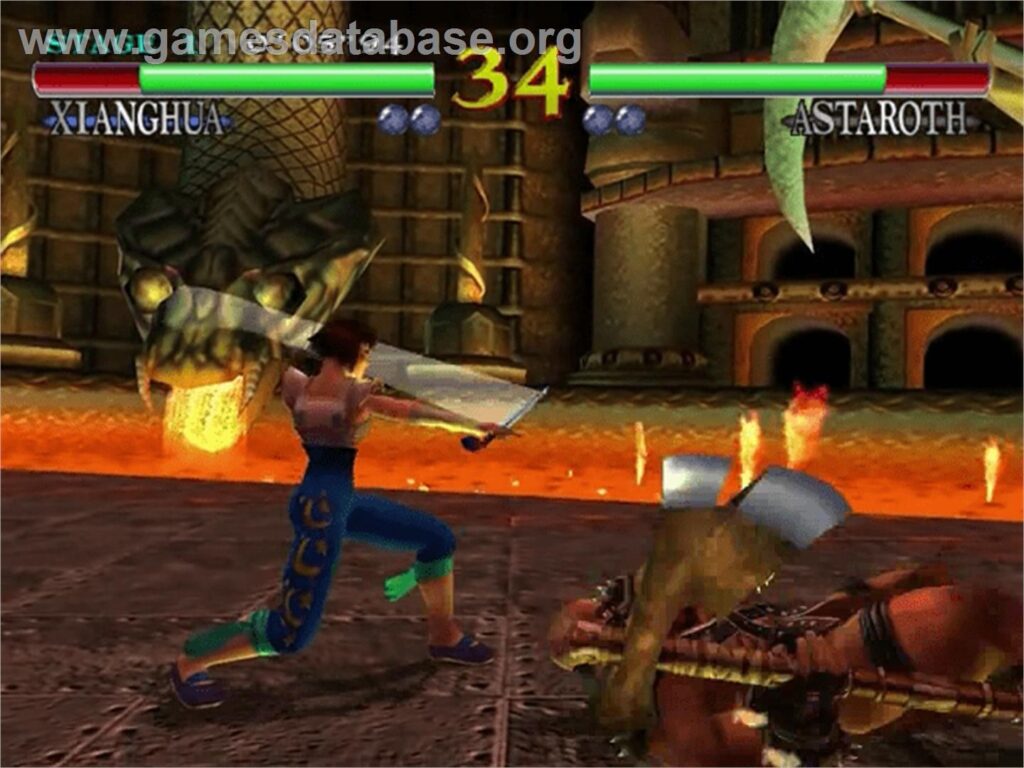
Consoles are not supposed to launch like this. When the Dreamcast arrived in North America on 9/9/99, its flagship fighter was not a compromised port but a conversion so superior to the arcade original that it reset expectations for what a home machine could do. Namco’s SoulCalibur took the 1998 arcade weapon-fighter, rebuilt its character models and stages at resolutions the coin-op never touched, and added a mountain of home content. Reviewers at the time reached for perfect scores; decades later, the remarkable thing is how little of that praise needs revising.
The premise is gothic pulp at its best: in the late sixteenth century, fighters from across the world hunt the cursed sword Soul Edge. The pirate Cervantes, the ninja Taki, the exiled knight Siegfried, the Chinese swordswoman Xianghua, the golem Astaroth — a roster of around twenty, each armed with a distinct weapon and a fighting style built around its reach. Where its predecessor Soul Edge flirted with weapon combat, SoulCalibur defines it: this is a game about distance as much as damage, about the space a halberd commands and the half-step a rapier needs.
The Eight-Way Run Changes Everything
SoulCalibur’s revolution is movement. The 8-Way Run lets you sidestep, circle and advance in genuine three dimensions at full speed, and it transforms the neutral game: whiffed vertical slashes can be walked around, ring positioning becomes a weapon in itself, and the feared Ring Out — a win by knocking your opponent off the stage — hangs over every exchange near an edge. The control scheme stays welcoming (horizontal attack, vertical attack, kick, guard), the Guard Impact parry rewards nerve, and the whole system runs with a fluidity that made contemporary fighters look like they were wading.
It is also, even now, a beautiful game. The Dreamcast version’s characters are smoother and richer than the arcade’s, stages range from a Venetian canal at sunset to a burning cathedral, and weapon trails paint every clash in light. Namco’s artists understood the hardware immediately — the famous comparison shots of the era, arcade beside Dreamcast, were not close. Combined with a soaring orchestral score, it gave the console an immediate, visual argument for its existence that Sega’s own launch line-up couldn’t match alone.
Mission Battle: The Mode That Ate Your Winter
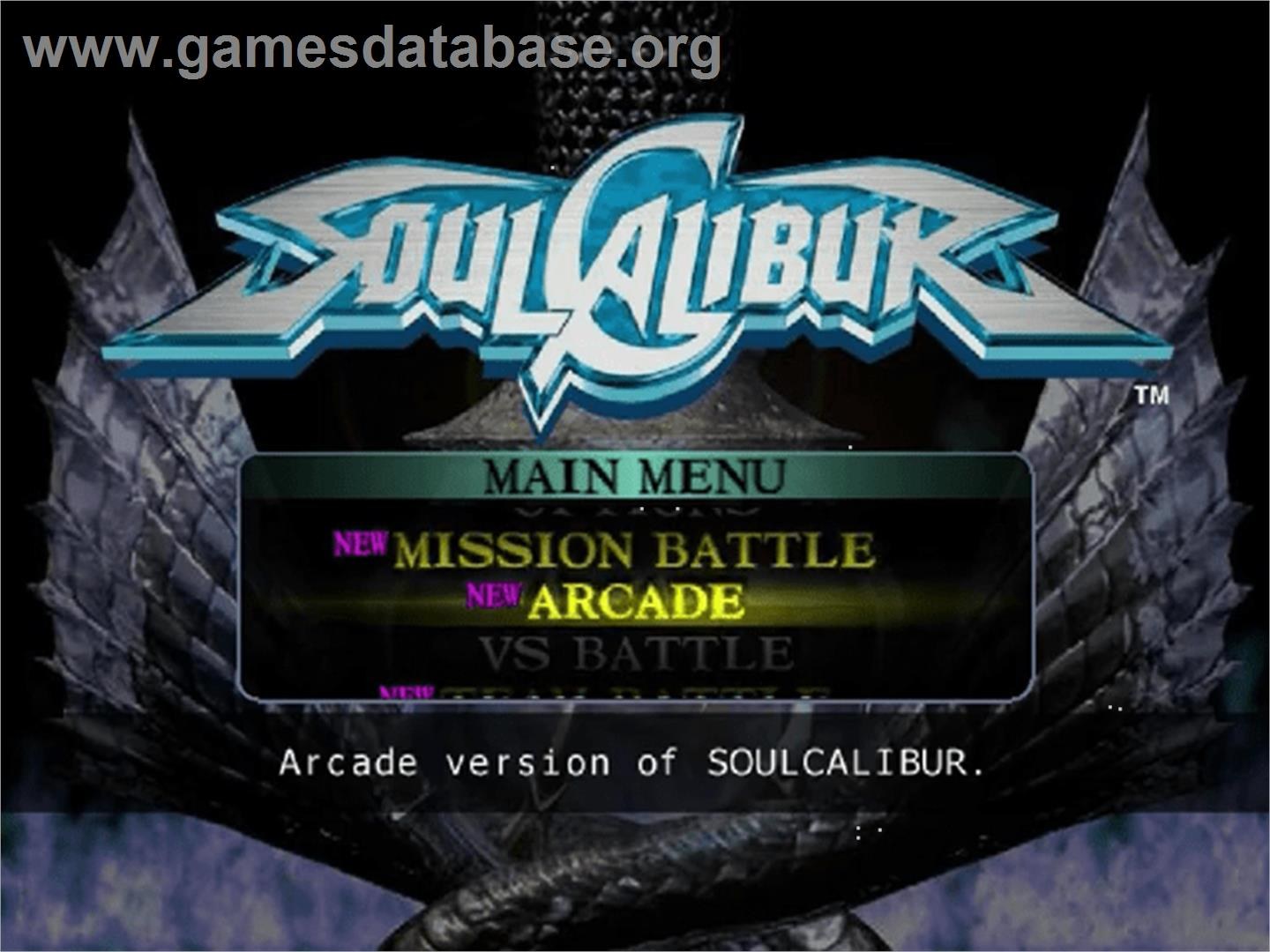
Arcade mode alone would have justified the disc. What made SoulCalibur a hundred-hour game was Mission Battle: a world-map campaign of themed fights with mutating rules — win with throws only, survive poison, fight on a stage of ice — paying out points to unlock art, stages, costumes and characters in the game’s museum. It is, in embryo, the single-player content model fighting games would chase for twenty years, and it sits alongside team battle, survival, training and a versus mode that filled a generation of living rooms.
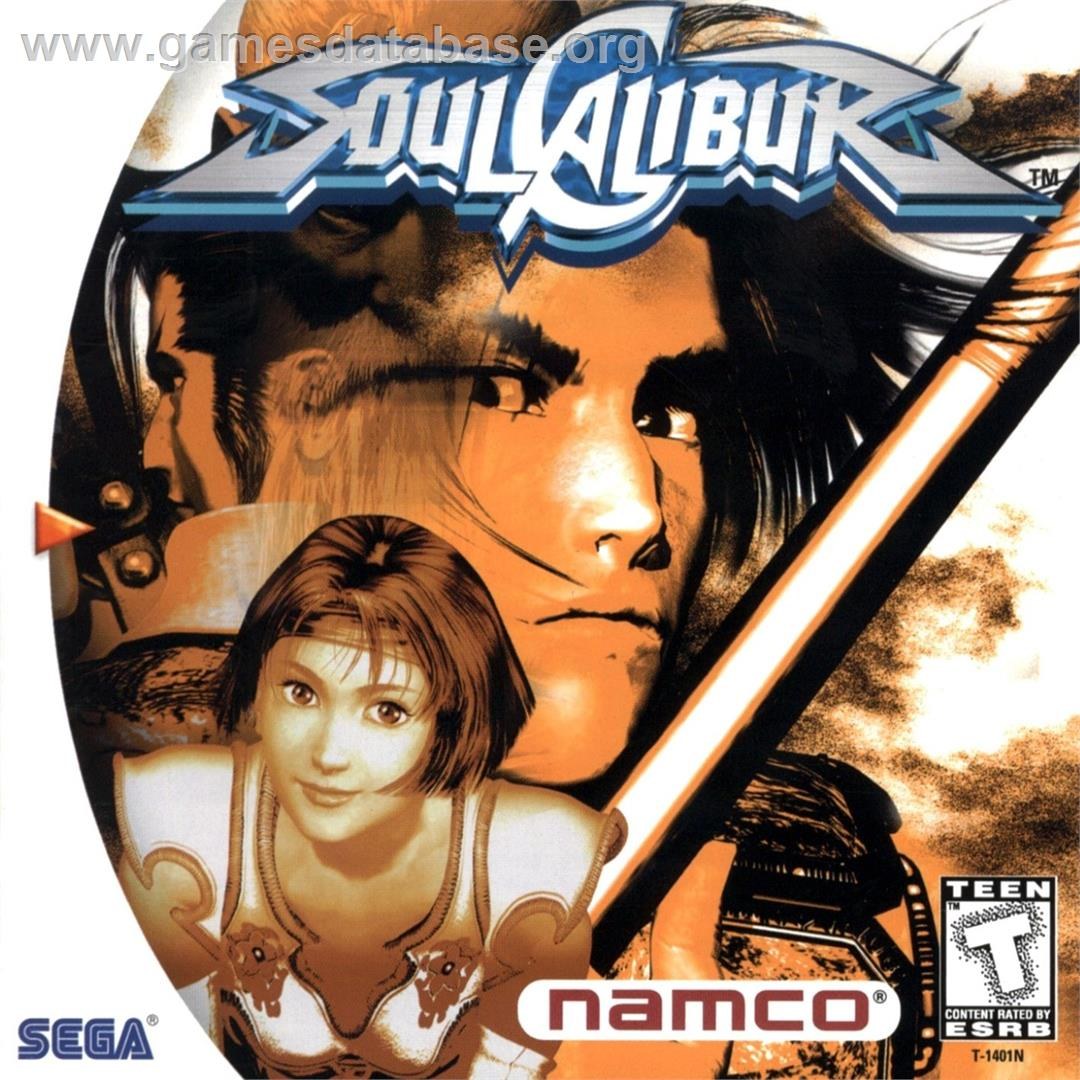
Balance purists can find their nits — a handful of characters press their advantages hard at top level, and the home port’s extras slightly shift the competitive picture from the arcade. But as a complete package, played on the hardware it was made for, SoulCalibur is as close to flawless as the genre produced in its era. The Dreamcast controller’s D-pad handles it respectably; an arcade stick, if you can find one, makes it sing.
A Roster for the Ages
Part of SoulCalibur’s staying power is that its cast became archetypes. Mitsurugi’s katana discipline, Taki’s demon-hunting speed, Ivy’s impossible sword-whip, Voldo’s… everything — each fighter reads instantly and plays honestly differently, their styles built on real weapons logic: the long weapons dominate space but suffer up close, the short blades live or die on getting inside. The Dreamcast version folds in the unlockable cast, including the mime-like Edge Master and the fiery Inferno, and its opening movie — a whirlwind tour of every fighter’s world — was the thing a generation of owners played first to show friends what the new console could do. Even the announcers and stage intros have entered the genre’s shared vocabulary: “Welcome back to the stage of history” is not a line you forget.
Time has been kind to its legacy, too. The series it launched ran for decades, and competitive players still cite this first entry’s movement system as the one later games chased. For the Dreamcast specifically, SoulCalibur served as proof of concept for the whole machine: here was an arcade game, improved in every measurable way, running at home on day one. Pair it with the console’s proper arcade stick and you have as close to a perfect conversion story as the industry has produced — a game that did not just justify a launch purchase, but made the PlayStation 2’s arrival a year later feel, briefly, like it had something to catch up to.
Playing it today, on the hardware it was built for, the striking thing is how little translation the experience needs. The fights are fast, the stages gorgeous, the museum of unlockable art and lore a reminder of when extras were earned in-game rather than sold back. Load times are brief, the presentation is confident, and versus matches still produce the shouting they produced in 1999. If the Dreamcast had a killer app in the truest sense — the game that sold the machine to everyone who saw it running — this was it, and its light has not dimmed.
Sound and Ceremony
A final word for the presentation wrapped around the steel. Composer Junichi Nakatsuru and the Namco sound team gave SoulCalibur an orchestral identity — harpsichord flourishes, martial brass, stage themes that quote the cultures each arena evokes — that elevated every bout into ceremony. The narrator’s grave introductions (“Transcending history and the world, a tale of souls and swords, eternally retold”) gave versus matches the weight of myth, and the victory replays, weapon trails streaking the dusk, were made for the era’s showroom televisions. Fighting games are remembered for their systems, and rightly so; but SoulCalibur is also remembered for how it felt to be addressed by it, and that ceremony is a large part of why a quarter-century of sequels has never quite displaced the original in the fandom’s heart.
For collectors, one practical blessing: because SoulCalibur was a launch title, copies are plentiful, and the Dreamcast disc — not a later download — is the way to own the complete Mission Battle package exactly as 1999 intended. It is the rare case where the definitive version of a masterpiece is also the easy one to get. Put it in, let the opening movie roll, and try to remember that this was once simply what a new console could do.
The Verdict
SoulCalibur is not just the Dreamcast’s best launch title or its best fighter — it is the system’s defining technical showcase and one of the finest fighting games ever made, full stop. The soul still burns.
Every console has a game that defines its launch window; very few have one that defines an entire genre’s ambitions. SoulCalibur did both before the Dreamcast was a month old in the West, and the machine never stopped being grateful.
Score: 9.5 / 10 — A tale of souls and swords, eternally retold — and still the version to own.