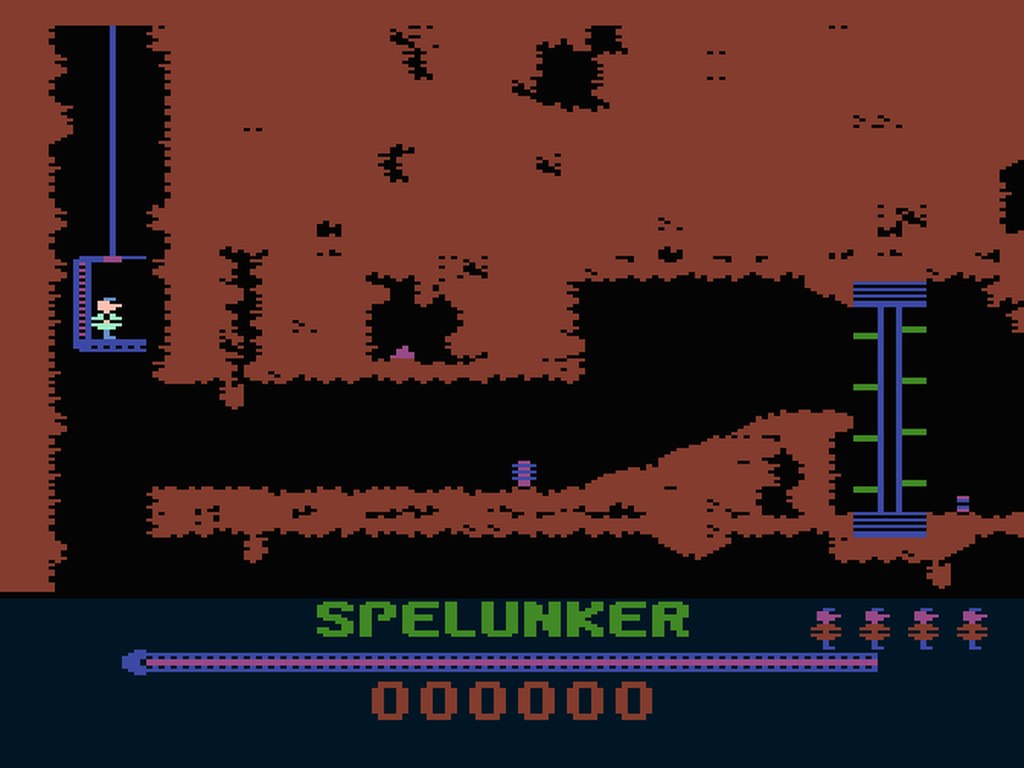
The Atari 8-bit’s canon is settled and magnificent — Star Raiders, M.U.L.E., the Lucasfilm trilogy, Boulder Dash. But the platform sold for thirteen years, its software catalogue runs into the thousands, and some of its finest hours never made the posters. These are ten of them: games that were outshone by louder siblings, published by smaller houses, or simply too peculiar to market in a sentence. None of them appears in our review line-up for this series; every one of them deserves an evening of yours.
A note on what ‘hidden’ means here. It does not mean bad, or unfinished, or obscure for obscurity’s sake. Every game below was a proper commercial release, every one plays beautifully today, and several were quiet hits in their year that history simply filed under somebody else’s name. The Atari scene was deep — Synapse alone could fill a list like this twice — and the second shelf, as ever, is where the surprises live.
1. Necromancer (Synapse Software, 1982)
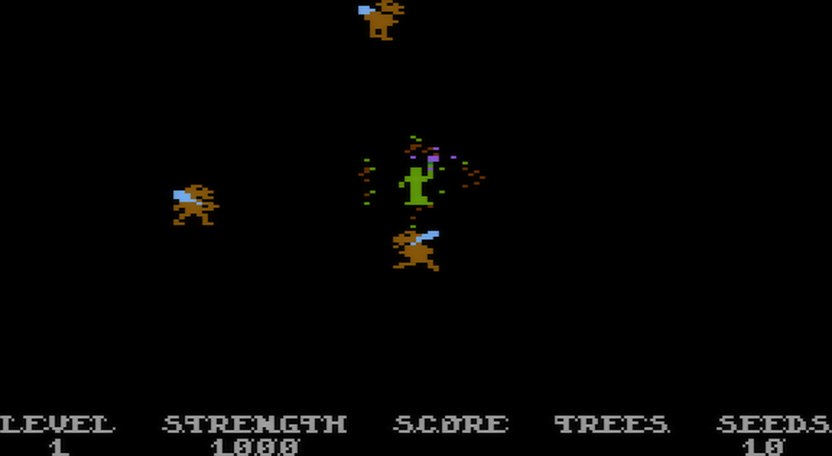
Bill Williams’ druidic strategy-arcade hybrid — grow an army of trees, then defend it from the Necromancer’s spiders.
Bill Williams (Alley Cat) made the strangest game on this list first. As the wizard Illuminar you grow a forest in real time in the opening act — planting, nurturing, racing the ogres who stomp your saplings — then defend the grown trees in a second act of arcade combat, before descending to a graveyard finale where spider eggs must be smashed between the Necromancer’s assaults. Three genres in one cartridge, a melancholy, mystical tone nobody else on the platform attempted, and Williams’ signature animation throughout. Necromancer is less a game than a short, playable myth.
2. Drol (Broderbund, 1983)
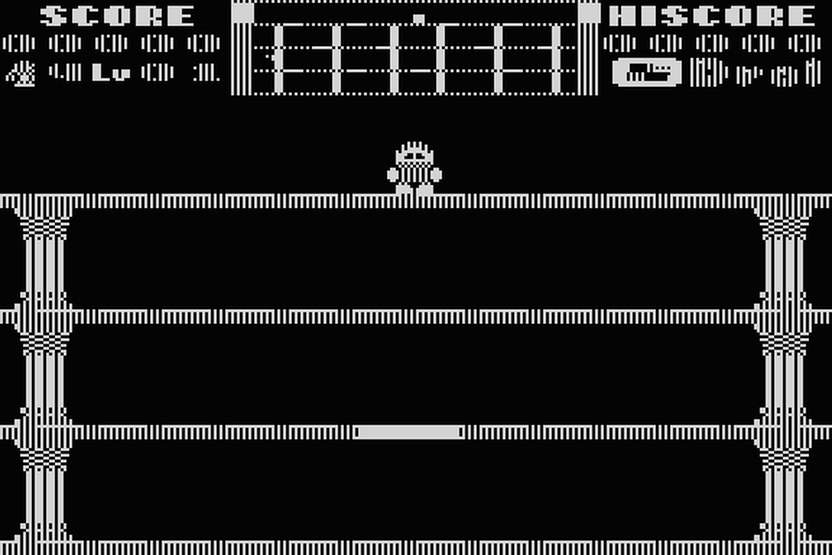
A jet-booted rescue run through a funhouse of scorpions, magnets and vacuum cleaners gone hostile.
Drol is pure arcade delirium from Aik Beng’s design and Broderbund’s polish: a little hero in jet boots crossing multi-level chambers, rescuing children and puppies from a bestiary that includes flying scorpions, snakes, magnets that drag at your metal hero and a vacuum cleaner with murderous intent. The levels scroll, the menaces stack, and the whole thing moves with a speed and colour that made C64 owners quietly jealous — this is one of the conversions where the Atari original is plainly the lead version. Frenetic, funny and much harder than its cute face promises.
3. Spelunker (Broderbund, 1984)
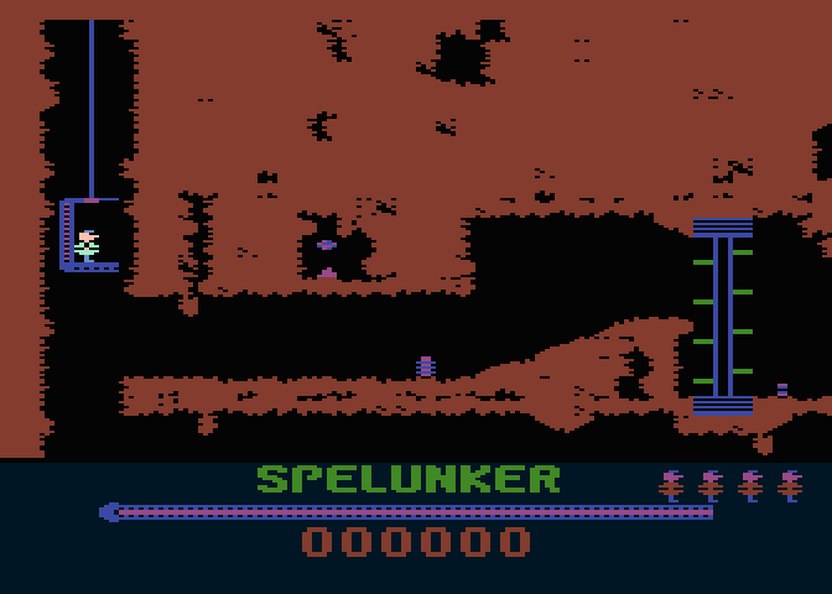
Tim Martin’s cave-diving classic: ropes, flares, dynamite, and the most fragile hero of the 8-bit age.
Everyone knows the NES version’s reputation; the Atari original, from Tim Martin via Micro GraphicImage and Broderbund, is where the legend started and where it plays best. Descend a vast, seamless cave by rope, ladder and lift, collecting treasure, blasting loose rocks with dynamite, flaring away bats and ghosts — while a hero who can be killed by a bat’s droppings or an inch-high fall teaches you humility one crevice at a time. The cave is enormous, the atmosphere thick, and the deaths are so famously unfair they become the comedy that powers one more descent.
4. Shamus (Synapse Software, 1982)
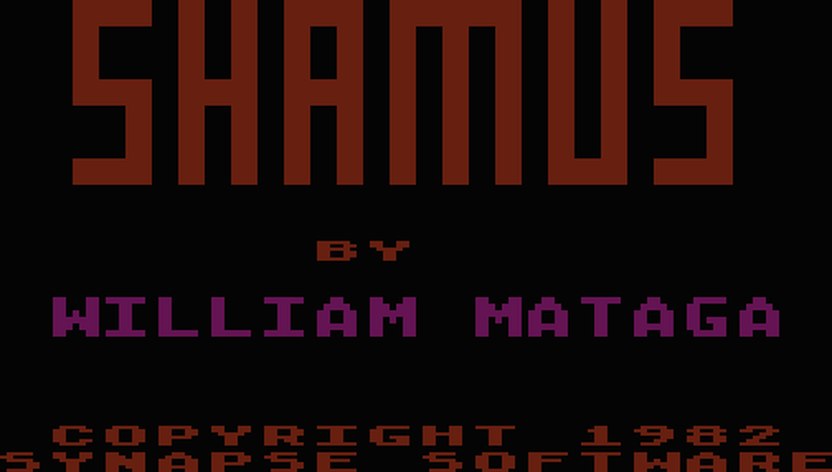
Berzerk reimagined as noir: 160 rooms, four levels, and the Shadow waiting behind the wrong door.
William Mataga’s Shamus takes the arcade’s Berzerk — a lone figure gunning through robot mazes — and gives it a trench coat, a fedora and a case to solve. Armed with ion shivs, you clear room after room of drones and droids across four colour-coded levels, hunting keys and extra lives in the walls while the indestructible Shadow periodically slides in to hurry you along, whistling its Hitchcock theme. Tighter, moodier and more varied than its inspiration, with a map large enough to demand graph paper, Shamus was Synapse’s first signature hit and it still plays like one.
5. Mr. Robot and His Robot Factory (Datamost, 1983)
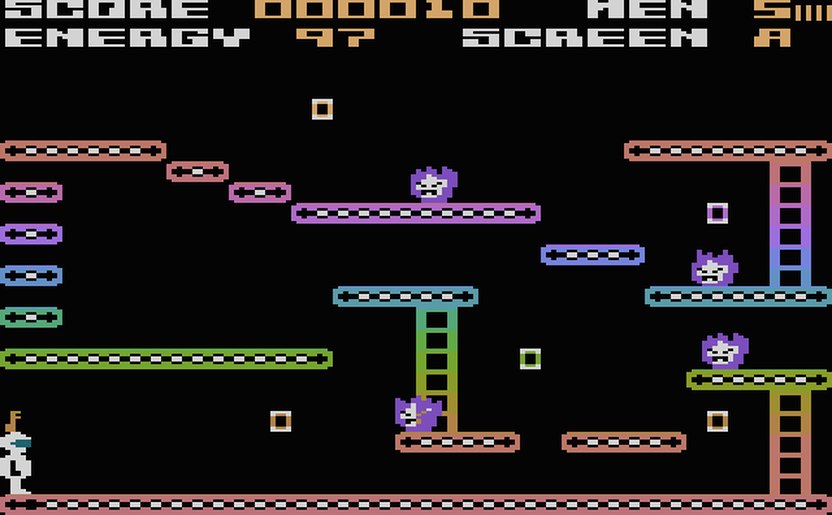
A precision platformer with a full construction kit — in 1983, it let you build the sequel yourself.
Ron Rosen’s Mr. Robot is a first-class platform game — trampolines, conveyor belts, magnets, bombs to collect and fires to dodge across 22 factory floors, all precision jumps on a hero with real momentum. But its immortality is the menu option at the end: Robot Factory, a friendly level editor that let owners design, save and share their own floors years before construction kits were a genre. The platforming holds up; the editor was a glimpse of the future shipped in a jewel case.
6. Preppie! (Adventure International, 1982)
Frogger goes to the country club: Russ Wetmore’s droll, beautifully animated hop across the fairways.
Russ Wetmore’s first hit takes Frogger’s crossing-game skeleton and dresses it in plus-fours: Wadsworth, a preppie golfer, must retrieve golf balls from a fairway patrolled by golf carts, lawn mowers, bullfrogs and one very committed alligator in the water hazard. It charms because of the details — the swaggering walk, the comic timing, Wetmore’s little musical quotations between levels — and because underneath the joke is a ruthlessly well-tuned arcade game. Preppie! made its author a star of the platform’s early scene, and its sequel doubled down on the mazes.
7. O’Riley’s Mine (Datasoft, 1983)
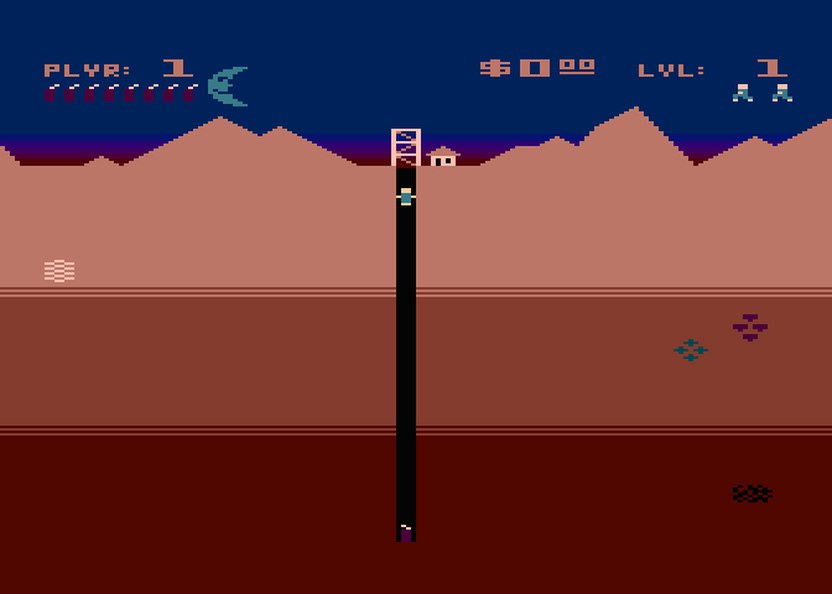
Dig for treasure against a rising flood — the most stressful vertical race on the system.
Mark Riley’s gem digs where Boulder Dash flies: you are an Irish prospector tunnelling down through earth for gold, oil and gems, and the mine is flooding from the bottom up. Every shaft you dig is a decision the water will grade: go deeper for the rich seams and risk the flood cutting off your climb, or bank modest hauls and survive. The monsters patrolling the tunnels add teeth, but the water is the villain — a wall of consequence rising at exactly the speed of your greed. A small game, perfectly formed, and panic in its purest 8-bit form.
8. The Tail of Beta Lyrae (Datamost, 1984)
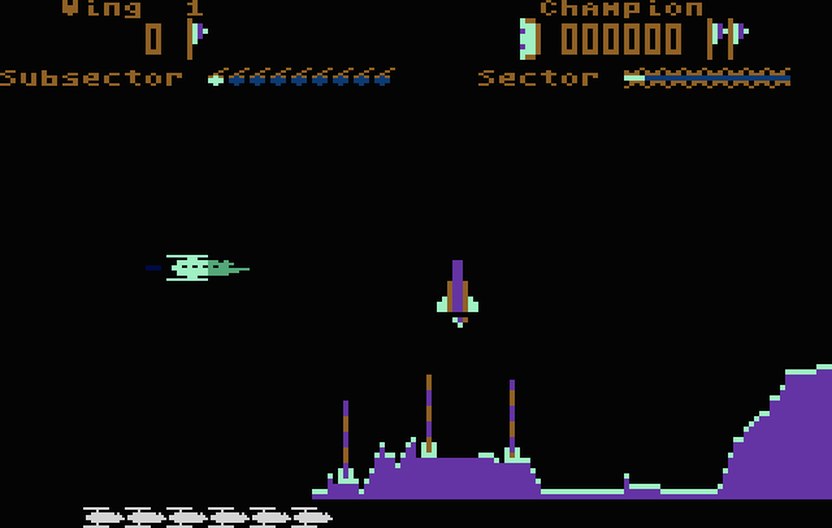
Philip Price’s silky parallax shooter, with a soundtrack that evolves as you play.
Philip Price — later of Alternate Reality — announced himself with this side-scrolling shooter whose landscape scrolls in layered parallax that still looks expensive, over an alien surface studded with installations to destroy. What players remember longest is the music: the score adapts and develops as you progress, a living soundtrack years before the industry had words for it. As a shooter it is demanding rather than deep, but as an audiovisual experience on stock 1984 hardware, Beta Lyrae was a flex the whole scene noticed.
9. Whistler’s Brother (Broderbund, 1984)
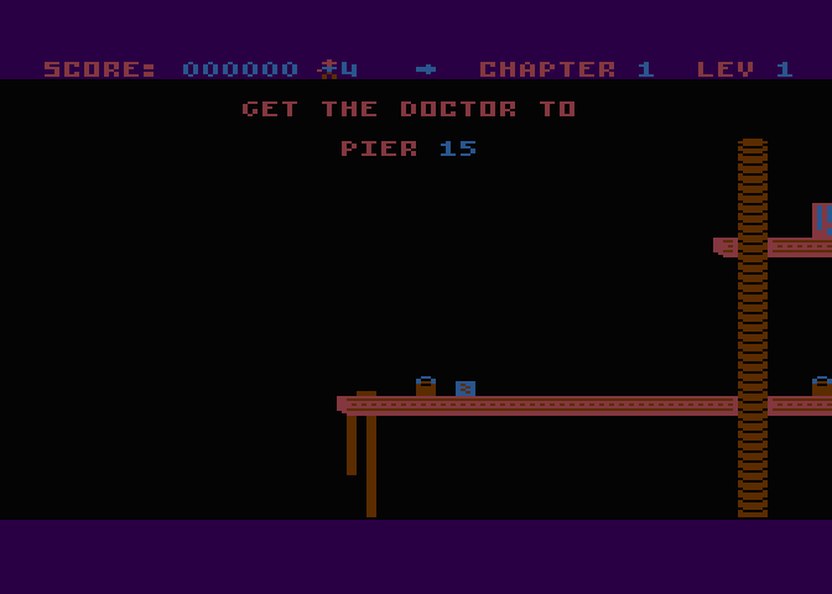
The platform game where you do not control the hero — you whistle at him, and pray.
Louis Ewens’ Whistler’s Brother is built on the most original control idea of its year: your character, the explorer, is competent; his brother Fenton, who follows you through the jungle ruins, is a daydreaming liability who wanders, dawdles and drifts towards hazards unless you whistle to call him back into line. You climb, jump and plan two moves at once — your route and the shepherding of a man with the survival instinct of a houseplant. Equal parts platformer and escort puzzle, it anticipates a whole genre of companion games, and its comedy is completely intentional.
10. The Pharaoh’s Curse (Synapse Software, 1983)
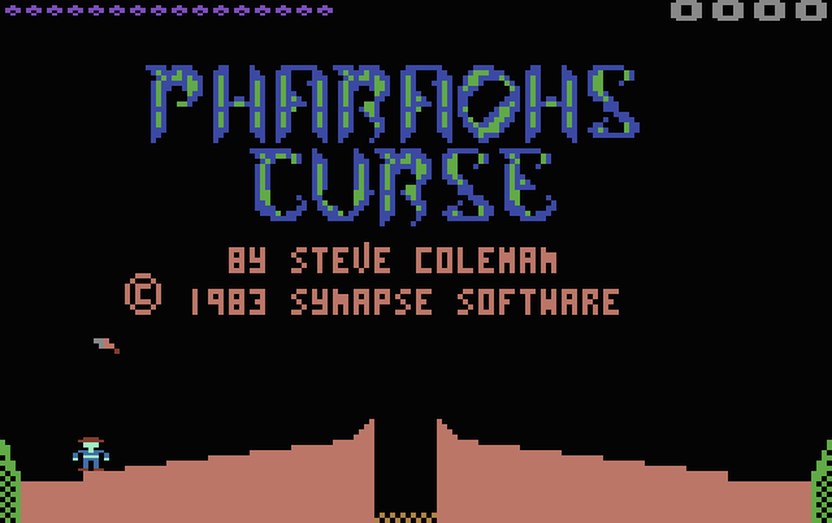
Sixteen treasures, one tomb, one mummy: Peter Meyer’s tight, trap-riddled tomb-raider.
A year before Montezuma made pyramids famous, Peter Meyer’s Pharaoh’s Curse sent its explorer into a multi-screen tomb after sixteen treasures, through rooms rigged with traps, lifts and falling blocks, hunted all the while by a mummy that appears with the regularity of fate and a bird with similar opinions. Compact where Montezuma is sprawling, The Pharaoh’s Curse is the connoisseur’s tomb game: every room a mechanism, every treasure a route to rehearse, and a difficulty that earns its curse honestly. Synapse’s early catalogue really was unfairly deep.
A note on sources and versions
A word of collector’s caution that applies to this whole list: the Atari 8-bit’s library lived several lives — full-price disk releases, budget reissues, European editions, APX mail-order runs — and the same title can exist in noticeably different builds. Where a game appears on both cartridge and disk (Shamus and Preppie! among them), expect the disk versions to carry the extra polish; where a European publisher re-released an American title, expect the manual to be thinner and the price, then and now, kinder. None of these ten is a rarity-trap — that was a selection principle, not an accident — but condition and completeness still separate the £10 copy from the £60 one, and for play (as opposed to shelving) the £10 copy is every bit as good. The gems were never precious. That is rather the point of them.
Playing them in 2026
None of these ten is hard to play today, and none requires a collector’s budget. All were common enough in the platform’s long commercial life that original disks and cartridges circulate steadily; all load happily from the modern storage options covered in our Atari 400/800 buying guide — an SIO2SD or FujiNet and a disk image will take you from switch-on to Necromancer’s forest in under a minute. A handful of notes for the road: Necromancer, Shamus and Preppie! date from the 400/800’s first years and are happiest on machines (or emulator settings) with the original OS in reach, though most surviving copies run anywhere; Spelunker rewards a light touch and a save-state conscience you should feel free to ignore; and Mr. Robot’s editor saves to disk, so give it a blank image of its own and keep your creations — sharing home-made Robot Factory floors was the point in 1983, and the scene still trades them.
One more recommendation, offered in the spirit of the list: play them on a real joystick, in the dark, in release order, and notice how the platform’s personality assembles itself — Synapse’s wit, Broderbund’s polish, Datamost’s ingenuity, the young designers everywhere doing the best work of their lives for an audience of a few hundred thousand. The canon tells you what the Atari 8-bit was famous for. The second shelf tells you what it was like.
Honourable mentions, fiercely argued
Every list like this one is a fight postponed, so here is the bench, any member of which could main-event a second volume: the Datasoft strategy shelf rewards an autumn; Bounty Bob’s first expedition is a classic rather than a gem, but it is scandalously less played than its sequel; the APX catalogue holds a dozen more Christensen-shaped surprises for the truly committed; and the 1983 class of Synapse alone could fill a list of its own. If your favourite is missing, the likeliest explanations are that it is famous, that we have reviewed it elsewhere in this build-up, or that one of us is wrong in a way we will happily argue about in the comments.
A final note on sequencing: these ten were chosen to be played, not ranked. The Synapse cluster in the middle is a deliberate education in one studio’s voice; the bookends — Necromancer’s slow dread, The Pharaoh’s Curse’s sunny sprint — set the platform’s range before your feet are wet. Play them in a month, argue about them for a year.
Ten games, ten arguments for spending a month on the second shelf. The canon will keep; these are the cartridges the canon-keepers pass hand to hand, with the particular pride of people sharing a secret that was never really secret — just waiting, patiently, in the catalogue’s back pages since 1983.