Book: Super Red Green Blue · Author: Robert Jones · Format: Novella · Published: 2014
The rare retro book that isn’t a picture album — a story about why the games shop mattered, told from behind the counter.
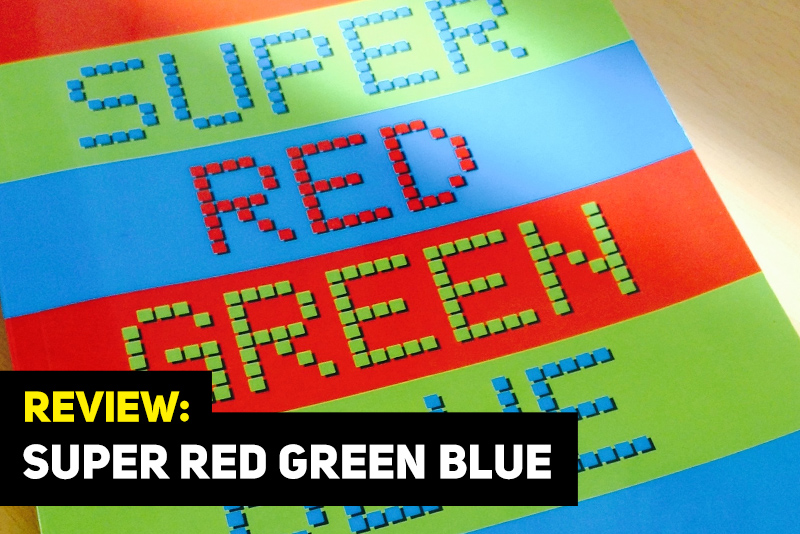
The retro shelf is not short of beautiful books. The last few years have given us lavish visual compendiums for the Mega Drive, the SNES and the Commodore 64, and gorgeous art volumes that treat screenshots like gallery pieces. What that shelf almost entirely lacked, until Robert Jones came along, was a story. Super Red Green Blue — Jones’ debut novella — is the narrative answer: a semi-autobiographical tale of Steve, a burned-out ex-staff writer for a popular games magazine, who walks away from journalism to open a second-hand games shop in a slightly downtrodden corner of London.
It’s a premise that will make a certain generation of British gamers go misty-eyed, because the independent games shop was a genuine institution: part retailer, part clubhouse, part pawn shop for dreams. Jones knows this world from the inside — the trade-ins, the regulars, the strange economics of pricing a boxed SNES game for a customer who remembers paying less for it new, back when it actually was new — and he writes about it with the easy authority of a man who has stood on both sides of the counter.
From Magazine Pages to Shop Floor
The novella’s engine is its double perspective. Steve’s old life in games journalism — deadlines, review scores, an industry professionalising itself away from the bedroom-coder world it grew from — rubs constantly against the shop’s slower, stranger rhythm. Where the visual compendiums freeze retro gaming in perfect pixel stills, Jones is interested in what the culture felt like as a lived thing: the friendships struck over counters, the collections built one trade-in at a time, the way a shop becomes the unofficial headquarters of a neighbourhood’s gamers.
Because it’s a novella rather than a memoir, Jones can compress and heighten: characters arrive as types the reader will recognise instantly — every games shop had them — and the shop itself becomes a small stage on which the whole story of British gaming, from 8-bit boom to disc-era decline, plays out in miniature. The semi-autobiographical tang keeps it honest. This is an elegy, but a warm one; the book mourns the high-street games shop while it’s clearly delighted such places existed at all.
Part of a Bigger Story
Super Red Green Blue arrived in the middle of a genuine publishing moment. The early 2010s saw retro gaming’s memory business industrialise: Bitmap Books’ visual compendiums, Read-Only Memory’s lush Sega volumes, and a wave of anniversary retrospectives in the specialist press all testified to a readership hungry for its own history. Almost all of that output was nonfiction — hardware histories, screenshot albums, interview collections. Fiction lagged oddly behind, even though the material was perfect for it: the British games story has a built-in narrative arc, from bedroom coders and mail-order cassettes through the games-shop high street to the supermarket-and-internet era that swept it all away. Jones, a freelance journalist writing from inside the trade, spotted the gap — and the semi-autobiographical form let him fill it with the texture only a participant has: the reps and regulars, the trade-in dramas, the peculiar social contract of a shop where the customers often knew the stock better than the staff.
Read against its nonfiction shelf-mates, the novella does something they structurally cannot. A compendium can show you a thousand screenshots and never tell you what the shop smelled like on a rainy Saturday, or how it felt to price a stranger’s childhood and watch them decide what it was worth. Fiction can. Steve’s shop — in its downtrodden corner of London, kept alive by regulars and ritual — stands in for hundreds of real shops that closed without memoirs, and the book becomes a kind of archive of the ordinary: the conversations, kindnesses and petty rivalries that constituted gaming culture long before it had forums to fossilise itself in.
Themes That Linger
Two ideas give the slight book its aftertaste. The first is the second-hand economy as a social system: pre-owned games in the book are never just stock — they’re previous lives, passed along, and the shop is the switchboard where one player’s finished adventure becomes another’s first. The second is professional nostalgia: Steve’s magazine years echo through the shop years, and Jones writes with real ambivalence about an industry that grew up and left some of its best people behind in the small rooms — the indie shops, the local press, the convention stalls — where the culture actually lived. It adds up to a gentle, clear-eyed argument that gaming’s history isn’t only in its software. It’s in its rooms, and its people, and the counters they stood at.
Who It’s For
If your retro reading is currently all coffee-table hardware photography, Super Red Green Blue is the perfect counterweight — short, humane and funny, with a bookshelf’s worth of period detail smuggled inside the fiction. Readers who worked in games retail or magazines will find it almost painfully recognisable; readers who merely shopped there will find the view from behind the counter revelatory. It doesn’t pretend to be a history book, and that’s its charm: the histories tell you what the games were. This tells you where they lived.
The Company It Keeps
It’s worth placing Super Red Green Blue in the small tradition it belongs to, because the tradition is thinner than you’d expect. Games culture produced mountains of memoir-adjacent journalism and very little fiction that treats the culture itself as the subject. The closest shelf-neighbours work by contrast: Console Wars dramatised the Sega–Nintendo boardroom war as narrative nonfiction, all sourced quotes and reconstructed meetings; the British scene’s own mythology lives mostly in documentaries and magazine retrospectives. A novella that simply invents a shop, stocks it with recognisable human beings and lets the era breathe through them was — and largely remains — a novelty. That Jones kept it short is part of the design. The book reads in an evening, the length of a really good conversation in the shop it describes, and its brevity is why its scenes stick: the pricing of a childhood, the regular whose visits structure a week, the quiet understanding that the shop’s real inventory was never the cartridges.
For today’s reader there’s a second pleasure the original audience couldn’t have had: the world the book elegises has itself become retro. The independent games shop has nearly vanished from the high street, surviving in market stalls, retro specialists and a handful of beloved holdouts, while the trade-ins that were its lifeblood moved to apps and auction sites. Super Red Green Blue now reads as a period piece about a period piece — a book about people who were nostalgic, written at the moment their nostalgia was still a living business. That double exposure gives it a documentary value its author could only half have intended, and it’s the strongest reason to pick it up now rather than in 2014.
Verdict: 8/10 — A slight book in page count only. Super Red Green Blue captures the social world of retro gaming better than books five times its size, and it deserves a place on the shelf next to the compendiums it gently out-narrates.