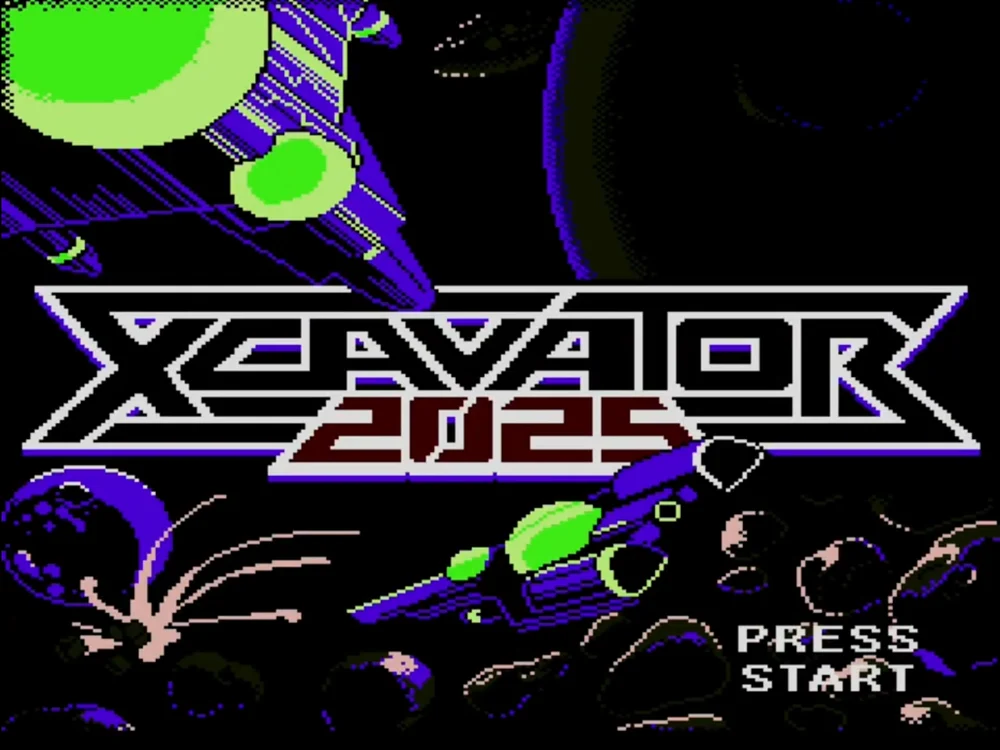
Most “lost game” stories end the same way: a prototype surfaces, screenshots circulate, and the thing itself stays legally and physically out of reach. Xcavator’s story ends differently. A game written in 1991, rejected by every publisher who saw it, and archived for three decades has been finished by historians, pressed onto a real NES cartridge — and sold to fund the preservation work that saved it.
A game nobody wanted
In 1991, at Incredible Technologies in Illinois — the coin-op company behind Golden Tee Golf and Big Buck Hunter — programmer Chris Oberth built a game called Xcavator. It’s an arcade digging game with a sci-fi streak: you pilot a mining craft down into the earth, excavating buried riches while avoiding the things that live underground — “as unforgiving as one might expect from games of that era,” as iam8bit’s own description warns. A2Central’s writers, watching the footage, heard echoes of Solar Jetman, Cavern Creatures and Yar’s Revenge in its floaty, thrust-and-dig play.
Incredible Technologies shopped it to publishers across the country. Nobody bit. So Xcavator was, in the press release’s quietly devastating phrase, “quietly archived and never looked at again” — one more finished-enough game from the 8-bit gold rush that the market simply declined. The NES was a brutally gated ecosystem in 1991: no publisher deal, no chip order, no game. The code went into storage, and the industry forgot it had ever existed.
The programmer
Oberth deserves more than a footnote in his own rescue story, because he was there at the beginning of everything. He started in the late 1970s writing commercial games for the Apple II — more than a dozen titles for Datamost and others before the decade turned — and in 1982 he designed Anteater for Stern, the coin-op dig-’em-up that made his name: an anteater’s tongue snaking through an anthill, eating ants and dodging everything that wanted to eat it back. Minefield, Tazzmania, Armored Car and Rescue followed in the arcades; later he worked for Epyx and Mindscape, and his career ran all the way to the PlayStation 2 era.
His obituary, when he died in 2012, carried a line his family chose and the preservation world has quoted ever since: “He was an original Apple programmer, made an anteater game and was passionate about making & playing games.” Xcavator was made by a man who had been shipping games for thirteen years when he wrote it — not a hobbyist’s doodle, but a veteran’s work that the market turned away.

What you actually play
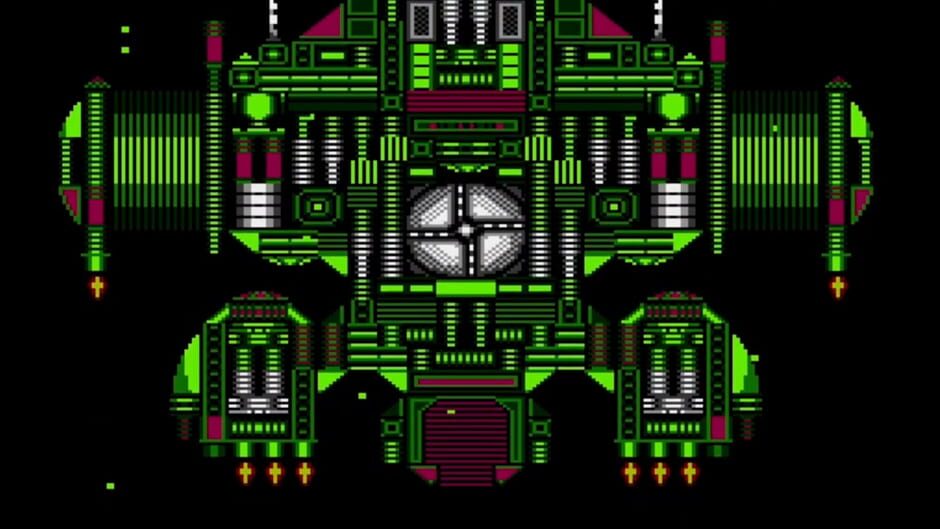
So what is Xcavator, as a game? iam8bit calls it “an arcade-style action game about digging underground, exploring under the surface, and avoiding the enemies that dwell there” — you pilot a mining craft with a floaty, thrust-driven feel (more than one viewer of the reveal footage reached for Solar Jetman as the comparison), excavating buried treasure from the rock while the underground’s residents object. It is, by the publisher’s cheerful admission, “as unforgiving as one might expect from games of that era” — a 1991 difficulty curve, undiluted by modern mercy. Preview write-ups have variously filed it as action, puzzle and digging game; the honest label is the one Oberth’s own career suggests: a dig-’em-up, from the man who’d been refining the form since Anteater.
The rescue
After Oberth’s death, his family did the single most important thing anyone can do for a dead programmer’s work: they donated his development archives to the Video Game History Foundation — source code, materials and all, with their blessing to use it. Buried in those archives was Xcavator.
What the VGHF did next is the part that lifts this from a reissue to a piece of craft ethics. Rather than porting the game or rebuilding it in a modern engine, the Foundation partnered with Mega Cat Studios (with Retrotainment Games) to finish it “using the tools and environments that Oberth would have utilized himself” — period-authentic 1991 development practice, guided by Oberth’s own remaining materials, staying true to his original vision. The line in the announcement that our stub of a post managed to preserve says it exactly: the game was rebuilt “using the tools and environments it would’ve been developed with in the first place.” And in a gesture that closed the legal circle, Incredible Technologies donated the game’s rights to the Foundation, so the company that couldn’t sell Xcavator in 1991 could help it raise money in 2025.
Nor is this the Foundation’s first Oberth excavation. In 2020 the VGHF reconstructed his unreleased NES version of Days of Thunder and released it as a limited cartridge to raise funds for Oberth’s widow, later publishing that source code openly. Xcavator is the bigger, public sequel to that act of repair — the same method, this time pointed at funding preservation itself.
The cartridge
The release, announced as the closing reveal of the Day of the Devs: The Game Awards Edition showcase on December 10, 2025, is being handled by iam8bit: a premium physical NES cartridge — classic grey shell, period-styled box and label — with a 14-page manual written by the VGHF covering the game, Oberth’s career and the recovery. It costs $100, pre-orders run to January 10, 2026, and cartridges ship in Q2 2026.
And here is the number that makes the price make sense: 100 percent of the profits go to the Video Game History Foundation and its preservation mission. Foundation founder Frank Cifaldi: “The original Xcavator prototype is a rare glimpse at the struggles of an indie developer trying to break into the console industry during the 8-bit golden age. The world wasn’t ready for it in 1991, but thanks to Oberth saving his work — and to his family for getting it into archivist hands — 2026 will be the year that his work finally sees the light of day.”

There’s one more commitment in the announcement worth underlining, because it separates this project from mere collectible manufacture: the VGHF says the original prototype and source code will be made available for free. The cartridge is the fundraiser and the artifact; the history itself stays open. That’s how a lost game should come back — excavated with its author’s own tools, finished in his spirit, sold to fund the next rescue, and given away to everyone who just wants to study it. Somewhere in that sentence is the whole argument for game preservation, finally with a happy ending you can hold in your hands.
Xcavator 2025 is by Chris Oberth (1991) and Mega Cat Studios with the Video Game History Foundation (2025). This article keeps the post’s original URL and its December 10, 2025 date — announcement day. The pre-order window runs to January 10, 2026, with cartridges to follow in Q2 2026.