Every games console you have ever owned descends, in one specific and traceable way, from a decision made in the mid-1970s inside Fairchild Semiconductor — the decision that a game should be software, stored on a removable cartridge, separate from the machine that plays it. The man who led the engineering team that made that decision work was Gerald Lawson, known to everyone as Jerry, and the strangest thing about his story is how long it took the industry he founded to learn his name. The cartridge era has inventors the way the aeroplane has the Wright brothers; for decades, Lawson’s share of it was a footnote. This is the engineer who put games on cartridges, and the machine he built to prove it could be done.
Lawson came to Fairchild from the world of big electronics, by way of the United States military’s technical training and a series of engineering posts, and — a detail that matters — by way of the garage. Like many of the Bay Area’s defining engineers, he built things at home: he is credited with one of the earliest microprocessor-based coin-operated games, a demolition-derby machine constructed before Fairchild ever asked him about television games. When Fairchild’s semiconductor division began exploring the home game market, it was Lawson who ended up directing the engineering and marketing of the video game division that produced the Video Entertainment System — the machine the world now knows as the Channel F.
The problem nobody had solved
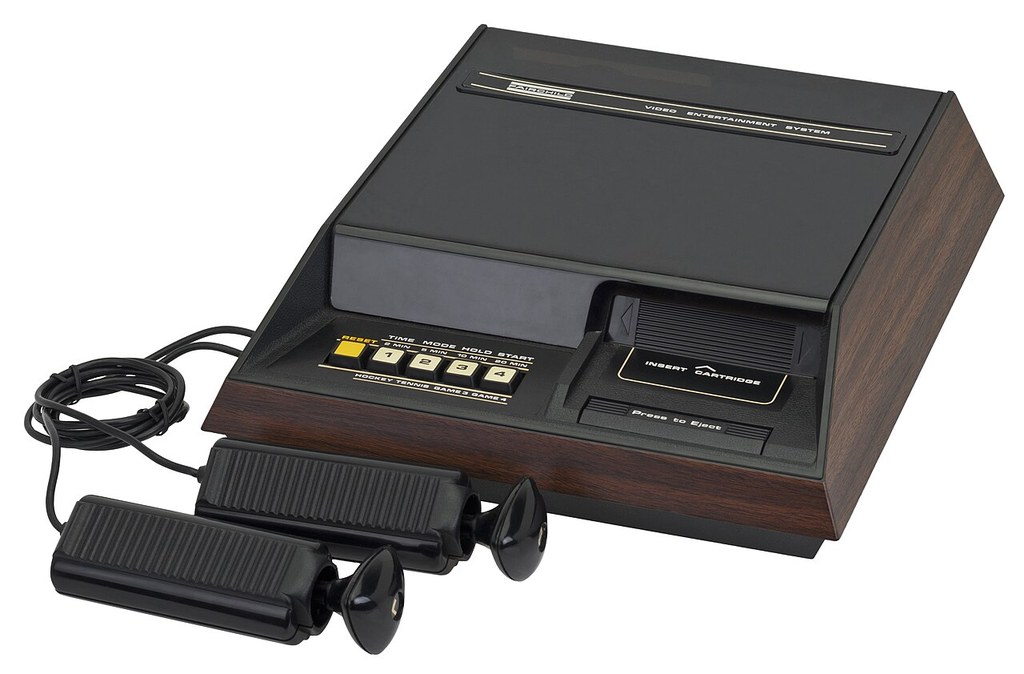
Understand what the cartridge required solving. Before 1976, a home game console was its games: dedicated circuitry, one machine per pastime, or at best the Magnavox Odyssey’s circuit-swapping cards that reconfigured hardware already in the box. Fairchild’s F8 microprocessor made a different idea possible — a general-purpose computer in the living room, running programs stored on ROM chips — but somebody had to make removable ROM safe for the public. The standing fear in the industry was electrostatic and mechanical: consumers plugging bare circuit boards in and out would fry chips, bend contacts and generate returns by the truckload. The Videocart — a chunky yellow shell, deliberately reminiscent of an 8-track tape, with its contacts protected behind a spring-loaded door that only opened inside the console — was the answer Lawson’s team shipped. Inside were the PSU chips carrying the program. Outside was a product a child could handle. Every cartridge since, from the VCS to the Switch, lives downstream of that packaging decision: the software survives the customer because the customer never touches the software.
Lawson was also a member of the Homebrew Computer Club, the legendary Silicon Valley hobbyist circle whose other attendees were busy founding personal computing — a Black engineer from Queens, in the rooms where the Apple era was being sketched, carrying the games industry’s founding idea in the same hands. The Channel F launched in November 1976, nearly a year before Atari’s VCS, with built-in games, a pause function and the cartridge slot that would define the next three decades of the medium. The machine sold respectably and lost its war anyway, as this site’s flagship history recounts; Fairchild, a chip company at heart, sold the system to Zircon in 1979 and returned to semiconductors.

The F8 and the team around him
Lawson did not work alone, and his own accounts never claimed otherwise: the Channel F was a Fairchild team effort built on the company’s F8 microprocessor system, with the console’s industrial design — the woodgrain case, the cartridge that aped an 8-track — the work of designers including Nick Talesfore. What the record consistently assigns to Lawson is the system’s engineering leadership and, crucially, the cartridge concept’s championing inside a company that had to be persuaded a semiconductor firm belonged in the games business at all. That distinction matters for how credit should be shared: not a lone genius with a soldering iron, but the engineer-manager who carried an idea through an institution — which is, in the end, how most consequential technology actually gets built. The games industry’s later habit of crediting individuals over teams makes Lawson’s story easy to mistell in both directions: he was neither the whole story nor a mascot for it. He was the person in the room where the cartridge decision was made who made sure the decision survived contact with manufacturing, marketing and fear. Histories of the medium that have been revised in the last fifteen years have converged on exactly that formulation, and it is the one his family’s and colleagues’ testimony supports: the team built the machine; Lawson led the team; the cartridge was the idea he would not let die in committee.
Videosoft, and the long quiet
Lawson’s own story continued past the sale. In 1980 he founded Videosoft, one of the earliest independent game development companies — and among the first Black-owned firms in the industry — to make games for the very rival that had beaten his machine: Videosoft developed software for the Atari 2600. The pattern is worth noticing, because it is the pattern of the true inventor: the platform was never the point. The point was that games were programs, programs lived on cartridges, and cartridges could be made by anyone for any machine — a creative economy Lawson spent the rest of his career quietly working inside, consulting and engineering long after Fairchild’s console had become a trivia answer.
The cartridge was not a container. It was the idea that a game is a program — and Jerry Lawson’s team was the first to make that idea safe to sell.
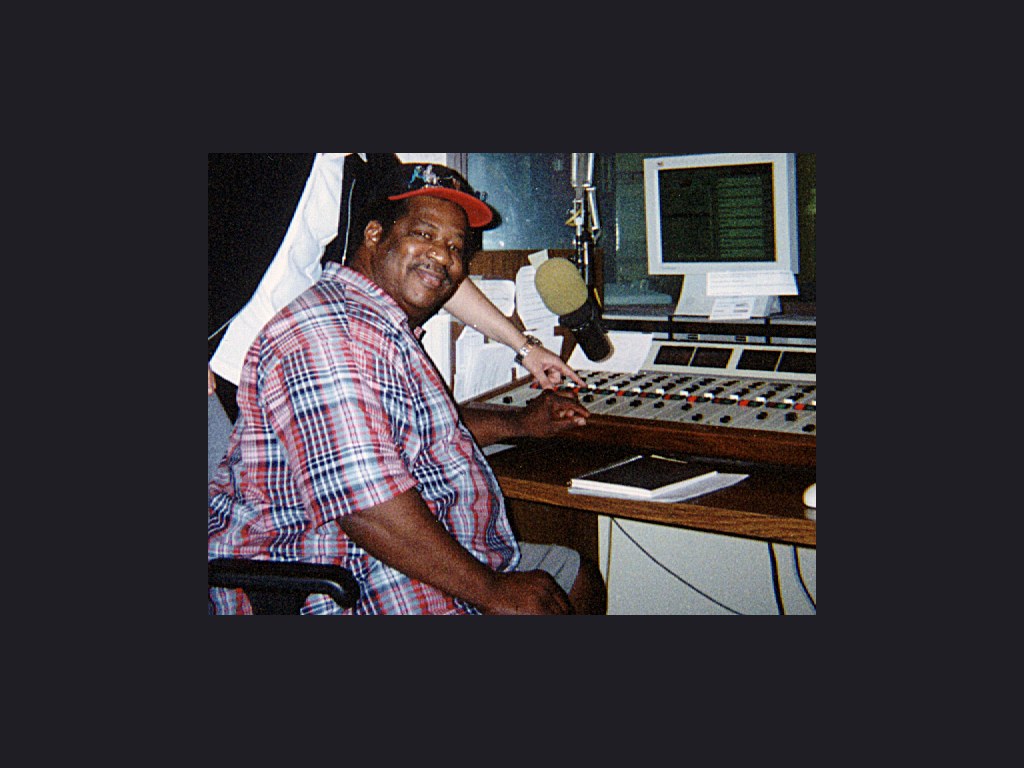
Recognition arrived late and then all at once. In March 2011 the International Game Developers Association honoured Lawson as an industry pioneer at the Game Developers Conference; he died weeks later, in April 2011, aged 70. The tributes that followed — and the louder ones that have kept following, including a Google Doodle on his birthday in December 2022 that let the world make tiny games in his honour — have steadily re-written the popular history: the father of the video game cartridge is now routinely named, pictured and taught. It should not have taken thirty-five years. But the correction, when it came, had a completeness about it that the first draft of history rarely achieves: the man in the photographs, holding the machine with the slot in the front, is exactly the man the engineering record always said he was.

Why he matters more than his console
The Channel F itself, this site’s reviews will tell you, is a fascinating, limited, loveable machine that history outran within five years. The cartridge is not limited, and history has never outrun it. Removable program media defined console gaming from 1976 until the download era — and even the download era is Lawson’s idea dematerialised, software decoupled from hardware, a library bigger than any box. Every collector’s shelf of yellow Videocarts, grey NES slabs and Switch cards is a monument to one engineering team’s solution to a static-electricity problem. The engineer who led that team also happened to break, almost without remark at the time, one of American technology’s most durable barriers — a Black man directing a flagship product at a major semiconductor firm in 1976, in an industry that would take half a century to discuss the fact properly.
So: the next time a cartridge clicks into a slot — any slot, any decade — that small mechanical satisfaction has an author. His name was Jerry Lawson, he worked for a chip company, and he put the games on the cartridges so the machine could be anything. It still can. That was the point.