Most remaster announcements begin with a trailer and a release date. The Tales of series has to begin somewhere less glamorous: with a search party. Before Bandai Namco can polish a classic JRPG for modern machines, somebody first has to work out whether the company can still lay its hands on the game’s original source code at all — and, if it exists, which cupboard, server or former development partner it has been sitting with for the last twenty or thirty years.
That unusually honest admission came from Yusuke Tomizawa, the general producer of the Tales of series, during a panel discussion at Tokyo Game Show 2025. Reported by Automaton West on September 29, 2025, his remarks explained a puzzle fans had been turning over since the Tales Remastered Project got under way: why are these re-releases arriving in such a scrambled order? Graces f before Xillia, Xillia before far older games, and nothing like a tidy march from the first entry forwards. Tomizawa’s answer was that the order has very little to do with chronology and almost everything to do with what his teams can actually find.
“We have to start by finding out where the source code is”
Speaking on the panel — his comments begin around the 34-minute mark of the session, as translated by Automaton — Tomizawa said Bandai Namco is now producing remasters at a larger scale and faster pace than ever before, but that the age of the series works against it. The Tales of games date back to 1995, and different entries were built by different development studios over those three decades. His summary deserves quoting directly, because no paraphrase quite captures the candour: “we have to start by finding out where the source code is” and who is managing it, he said, calling the situation “a bit embarrassing” — and adding that even when the original data is tracked down, it can be full of gaps that take months of analysis to deal with.
Read that again and consider what it means in practice. A remaster is normally the cheapest, safest kind of release a publisher can make: the design is finished, the art exists, the audience is proven. But that maths only works if the underlying code survives in a usable form. If it does not — if a project was archived incompletely, handed between studios, or built with tools nobody maintains any more — the “simple port” quietly turns into archaeology. Engineers must reconstruct how systems behaved, fill holes in the data, and verify their reconstruction against the finished game running on old hardware. None of that work appears on a store page, and all of it has to happen before the visible work of upscaling, interface tweaks and quality-of-life features can even start.
Tales of is especially exposed to this problem because of how long and how widely it has travelled. The series began with Tales of Phantasia on the Super Famicom in Japan in December 1995, and went on to appear on the PlayStation, PlayStation 2, GameCube, PSP, Wii, PlayStation 3 and beyond — a trail across almost every major Japanese hardware generation. Each jump meant new tools, new formats and, often, different hands doing the building. A catalogue that sprawling is a gift for a remaster programme in commercial terms. In archival terms, it is a filing system assembled by several different organisations across thirty years, which is roughly what Tomizawa was describing.
It is the same disease, in a different company, that we charted in our coverage of Final Fantasy Tactics: The Ivalice Chronicles (see our pieces on posts 13012 and 16674), where Square Enix discovered its 1997 original’s master data no longer existed and had to rebuild around surviving versions and even fan-kept records.
Xillia, the worked example

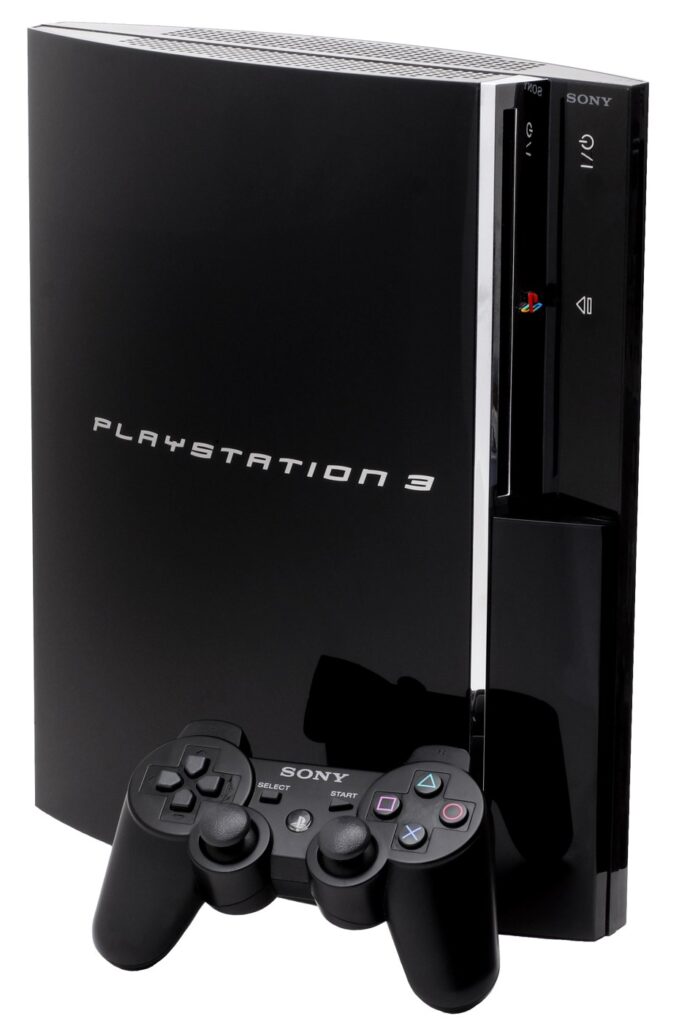
An original PlayStation 3. Tales of Xillia lived exclusively on this machine for fourteen years, which is exactly the kind of single-platform captivity the Remastered Project exists to end. Photo: Wikimedia Commons.
Tales of Xillia Remastered, which launched on October 31, 2025 for PlayStation 5, Xbox Series X|S, Nintendo Switch and PC, is the clearest worked example of the programme Tomizawa was defending. The original Xillia was the series’ thirteenth mainline entry and its fifteenth-anniversary title, released for PlayStation 3 in Japan in 2011 and in the West two years later. It follows two leads — medical student Jude Mathis and Milla Maxwell, the human vessel of the Lord of Spirits — through the world of Rieze Maxia, where humans and spirits share the mana that powers everything, and where the kingdom of Rashugal’s spirit-draining Lance of Kresnik threatens that balance. Players pick one protagonist at the start and see the shared story from their side of the party splits.
Until the remaster arrived, that game had spent its entire life locked to a single, discontinued console. The 2025 version freed it with the now-standard package for this project: refreshed presentation, an autosave, destination markers, the option to switch random encounters off, access to the Grade Shop from the start rather than only in a second run, and the original’s downloadable costumes and bonus items folded into the box. None of those features is revolutionary, and that is rather the point. The project’s promise is availability with sensible modern manners, delivered regularly — and Xillia shows both the value and the friction of that promise. Even here, on a comparatively young PlayStation 3 title, the Nintendo Switch edition targeted 30 frames per second throughout, a step down from the original hardware’s 60fps battles, which tells you that “the code was found” and “the port is effortless” are two very different statements.
The warning sign: Symphonia’s troubled port
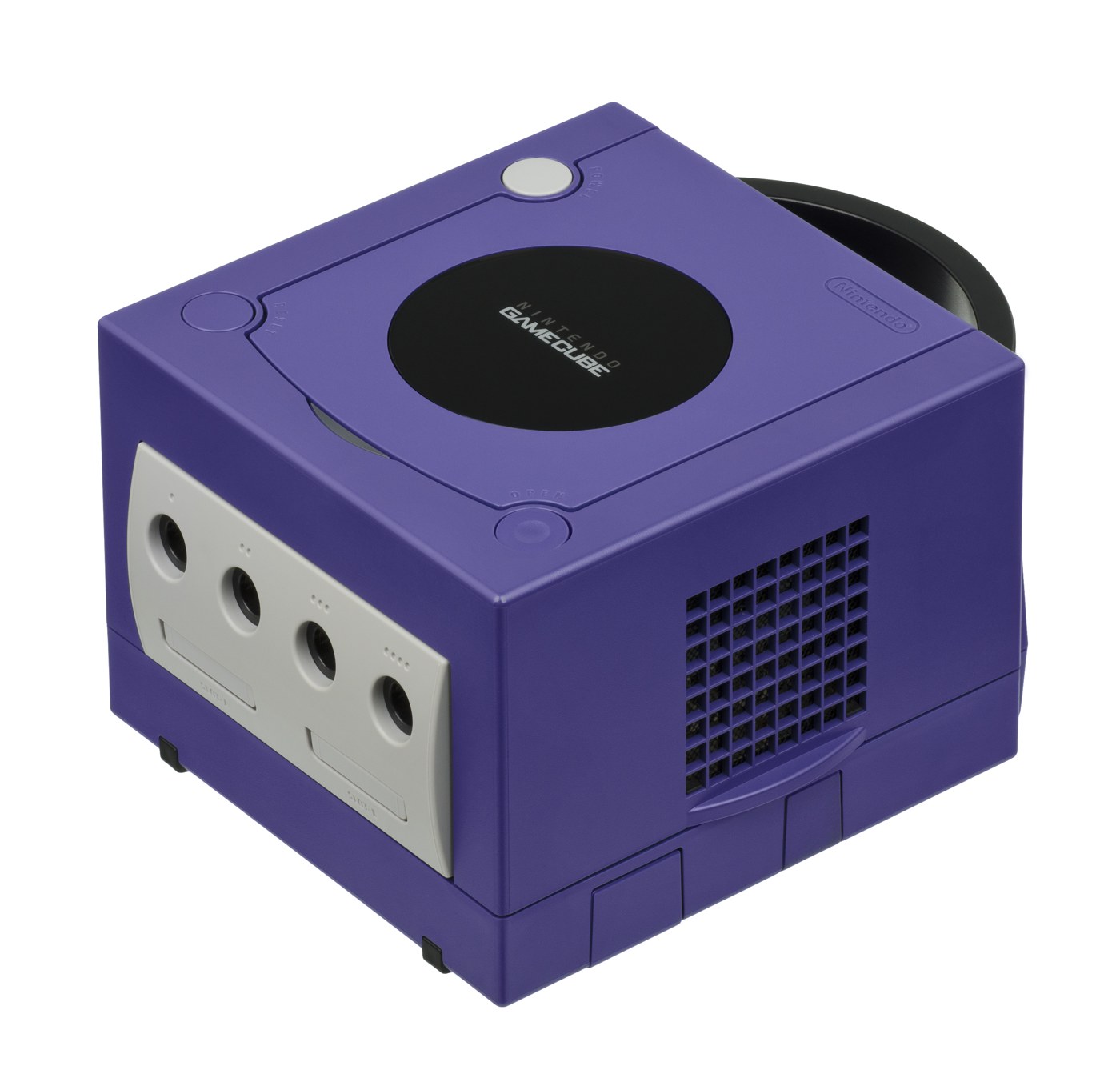
A Nintendo GameCube. Symphonia debuted here in 2003 at 60fps — a standard its 2023 remaster, built from the later PlayStation 2 version, never matched. Photo: Wikimedia Commons.
Fans did not need convincing that older Tales of material can fight back; they had already watched it happen. Tales of Symphonia Remastered arrived in February 2023, before the Remastered Project formally existed, and became the cautionary tale for everything that followed. The new version was based on the PlayStation 2 edition rather than the GameCube original, which capped it at 30 frames per second where the 2003 release had run at 60. On Switch in particular, players reported long loading times, an unsteady frame rate, broken or missing textures and other glitches, and within days Bandai Namco had issued a public apology, confirming problems with the version on sale and promising an investigation. Further patches followed in May and August 2023, fixing slowdown, freezes and crashes among other issues.
Symphonia matters to this story because it demonstrates the other half of Tomizawa’s problem. Choosing which surviving version of a game to build from is an archival decision with visible consequences. The GameCube, PlayStation 2, PlayStation 3 and PC editions of Symphonia are not interchangeable piles of content; they differ in performance, features and feel. Pick the wrong foundation — or the only foundation you can fully account for — and the remaster inherits limitations that players will measure against their memories of a machine from two decades earlier. When Tomizawa talks about gaps in recovered data taking months to analyse, this is the sort of fork in the road he is talking about, multiplied across a thirty-year catalogue.
A project built to work out of order
The Remastered Project itself was launched in October 2024, in the run-up to the series’ thirtieth anniversary, with a dedicated development line and a pledge, repeated by Tomizawa during the anniversary broadcast that December, that remastered titles would keep coming “fairly consistently.” Its first release was Tales of Graces f Remastered on January 17, 2025 — the twelfth mainline entry, a game that began life on the Wii in 2009 before its expanded “f” edition reached PlayStation 3. Xillia followed that October. On paper, twelfth entry, then thirteenth: almost orderly. The illusion did not survive contact with the schedule after that.
Tomizawa has been open about the method. Rather than queue titles chronologically and let one difficult excavation block the whole line, Bandai Namco runs several remaster projects in parallel and promotes whichever is closest to finished. He acknowledged at Tokyo Game Show that he knew some fans were asking what was going on with the release order, and admitted there had been an earlier period — a frustrating one, by his account — when insisting on chronological order had left the team unable to release anything at all. Speed and quantity, in other words, are deliberate policy: get the early games back into players’ hands as each one becomes feasible, instead of holding the easy wins hostage to the hardest dig.
Where the programme stands now
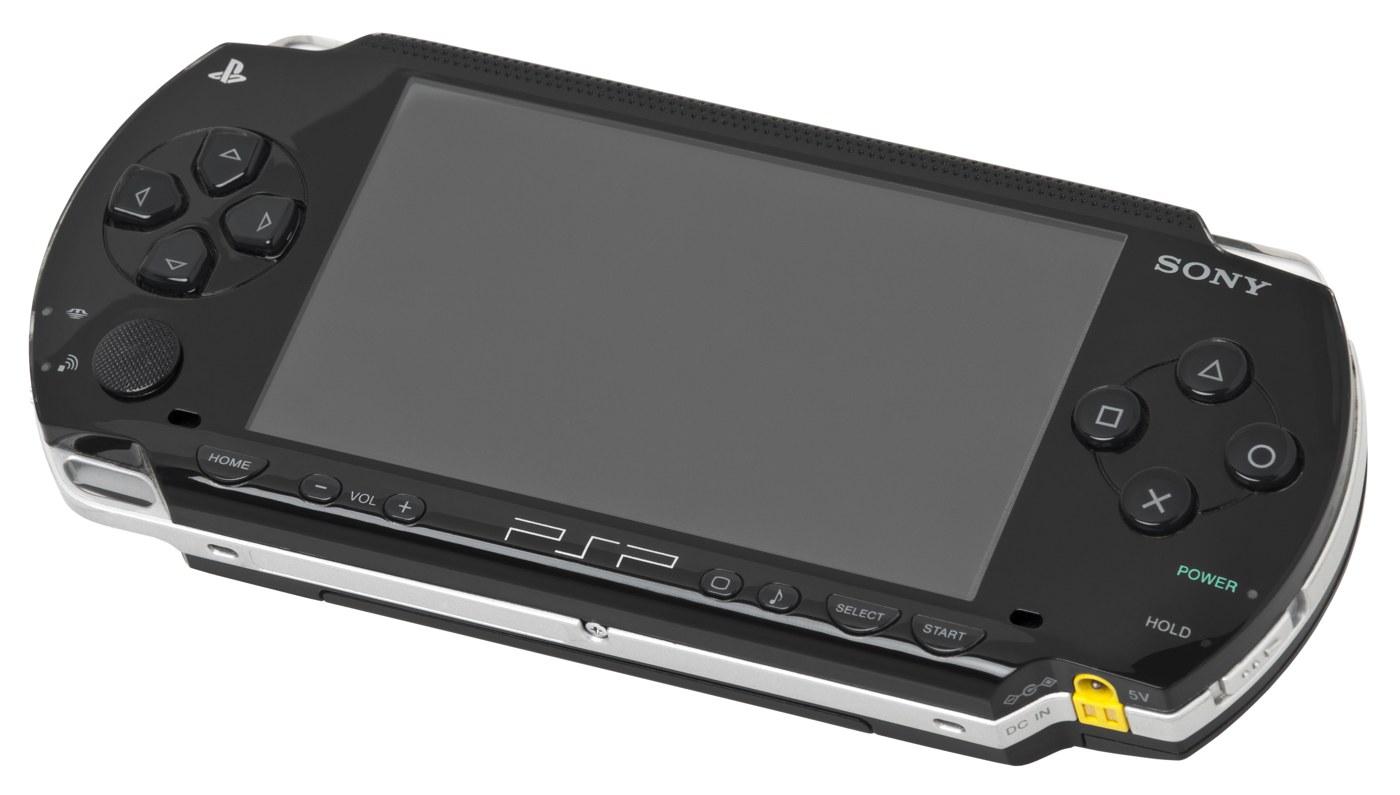
A PlayStation Portable. When Tales of Eternia returned in 2026, it was built on the 2005 PSP edition — a reminder that which version survives shapes what a remaster can be. Photo: Wikimedia Commons.
Events since that panel have played out exactly as his explanation predicted. In October 2025, around Xillia’s launch, Tomizawa confirmed to Famitsu that a Tales of Xillia 2 remaster was in development but deliberately unannounced, describing an “announce and release what’s ready, quickly” approach. Then, in November 2025, the next project release turned out to be neither Xillia 2 nor a beloved PlayStation 2 entry, but Tales of Berseria Remastered — a remaster of a 2016 game, Velvet Crowe’s dark revenge story, which launched on February 27, 2026. The choice drew genuine puzzlement, including from outlets asking why a nine-year-old title that was already playable on modern PlayStation hardware was jumping the queue ahead of games stranded for decades. Tomizawa’s Tokyo Game Show comments are the answer key: Berseria’s materials were recent, complete and workable, so Berseria is what could ship.
The balance began to shift in December 2025, when Tomizawa used the thirtieth-anniversary message — published on the anniversary of Phantasia’s release — to promise that 2026’s remaster reveals would turn toward much older classics, while again cautioning that feasibility and source availability, not release order, would decide the sequence. That promise cashed out in October 2026 with Tales of Eternia Remastered, the project’s first 2D entry, reviving the third mainline game — a PlayStation original from 2000, sold in North America at the time as Tales of Destiny II. Tellingly, it was built on the 2005 PSP version rather than the PlayStation disc, and inherited that foundation’s shape, including the loss of the original’s local multiplayer in battles. Even a success story in this programme carries the fingerprints of whichever code happened to survive best.
What remains on the wish list is long, and Tomizawa has pointedly not promised any of it on a date. Tales of Xillia 2 is confirmed to be in progress. Beyond that sit the titles fans name in every reply thread — the PlayStation 2 era in particular, and the early 2D games whose sprite work would demand far more than a resolution bump — each waiting on the same unglamorous first question. There is also, somewhere behind the remasters, a brand-new mainline Tales of game in development, which Tomizawa has confirmed exists while warning that modern development times mean it will not be rushed out to fill the gap.
The lesson buried in the embarrassment
It would be easy to treat Tomizawa’s admission as a punchline — a major publisher confessing it has mislaid its own homework. It is more useful to treat it as the most honest sentence spoken about remasters in years. The games industry spent decades treating source code as a by-product rather than an asset, and the bill for that habit is now arriving all at once, at every publisher sitting on a beloved back catalogue. Bandai Namco deserves some credit for saying the quiet part in public, and for building a programme designed around the constraint instead of pretending it away: several projects in parallel, no hostage-taking by chronology, and a release whenever one excavation reaches daylight.
So when the next Tales of remaster is announced and it is not the one you have been waiting for since the PlayStation 2 era, it is probably not a snub. It is a progress report from the archive. Somewhere, a team is still looking for the code — and, as the man in charge admitted, the looking is the job now.