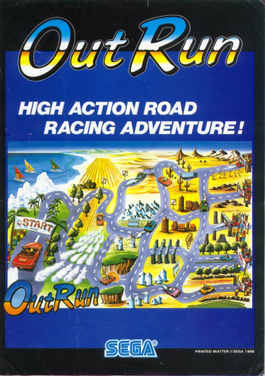
Every racing game before it had been a contest: you against rivals, you against the pack, you against the other cars. OutRun, which arrived in arcades in September 1986, is a contest against almost nothing — a clock, a sunset, and your own nerve. You are a man in a Ferrari Testarossa with a passenger beside you, the road is empty and golden, the radio is playing, and somewhere ahead the route forks. Left or right? It remains the most imitated decision in driving games, and it was made by Yu Suzuki, a man who prepared for the job by hiring a car in Frankfurt and driving around Europe for two weeks with a camera bolted to the dashboard.
Suzuki vs Namco
Suzuki joined Sega in 1983 and worked fast: his first job was Champion Boxing on the SG-1000, and by the end of 1985 he had delivered two of the defining arcade games of the decade, the motorcycle racer Hang-On and the free-flying shooter Space Harrier. But there was a standing humiliation to address. In driving games, Sega was being lapped. Namco, makers of Pole Position, owned the genre’s reputation, and while Hang-On had been a genuine hit — riders leaning into the handlebars of its sit-on cabinet — Suzuki accepted that one bike game had not been enough to take the crown.
He disliked repeating himself, so the follow-up would be a car game. And the spark, improbably, was Hollywood: The Cannonball Run, the Burt Reynolds comedy about an illegal cross-country road race. Suzuki loved it, and his first plan was to retrace its route across America, gathering scenery and reference as he went.
Four Bowls of Soup
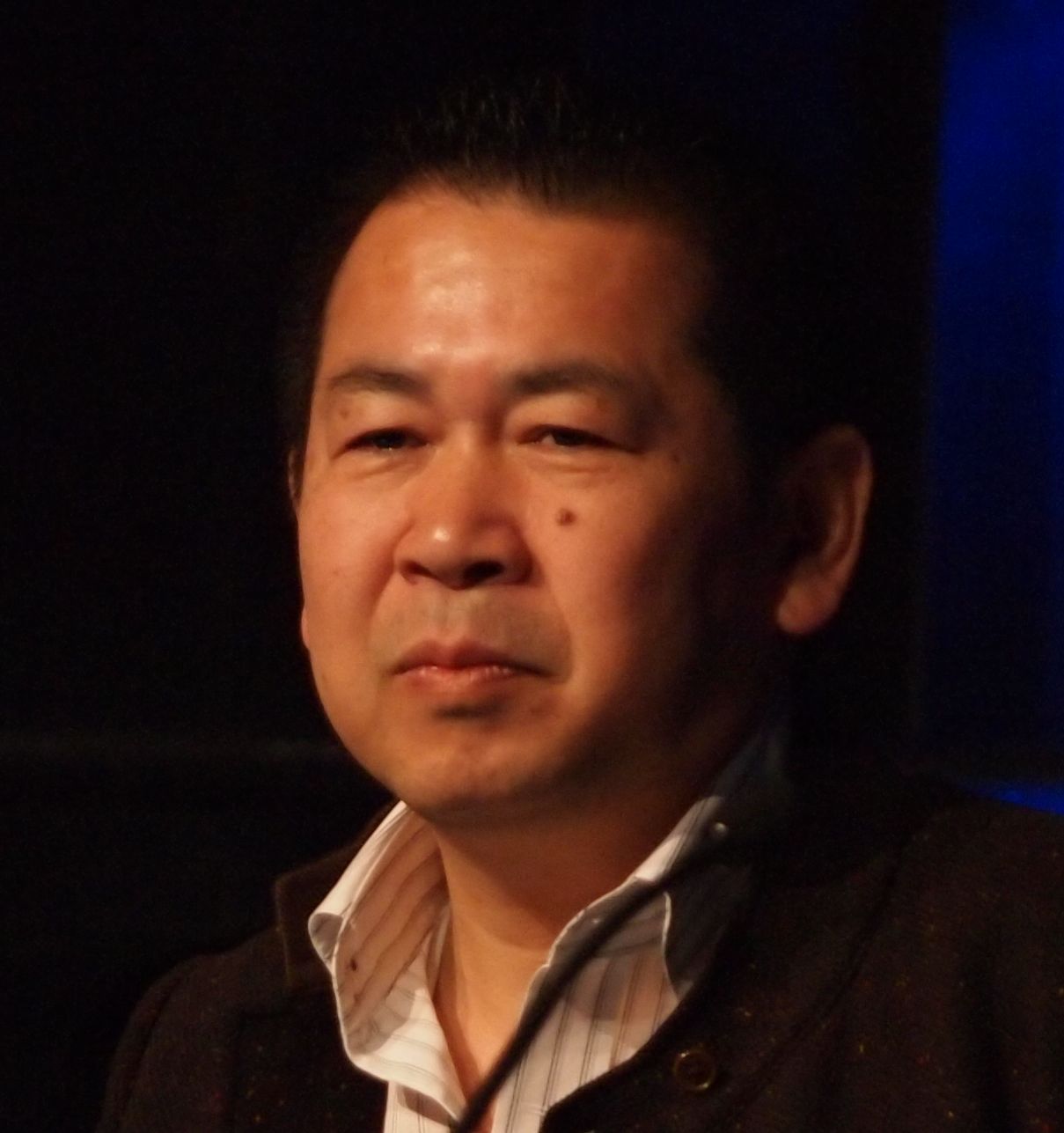
The American plan died on a practical detail: driving the Cannonball route, Suzuki realised, the scenery barely changes for thousands of miles. Europe offered a new landscape every hour. So the research trip was redrawn — a fortnight starting in Frankfurt in a hired car, video camera mounted aboard, through Monaco and Monte Carlo, over Swiss mountain roads, with hotel stops in Milan, Venice and Rome. He photographed everything, filmed the roads, and talked to local people wherever he stopped, intending those encounters to find their way into the game. Not every exchange went smoothly: ordering a meal in a language he half-knew, he asked, he believed, for one bowl of soup, and was presented with four. He retells it as a happy memory. The trip produced a remarkable artefact in itself — a Japanese designer’s snapshot of bubble-era Europe, all sunshine, money and open road, which is exactly the Europe OutRun would let you drive through. It was research conducted as a road movie: the designer as tourist, gathering a continent into a cartridge.
One Ferrari Only
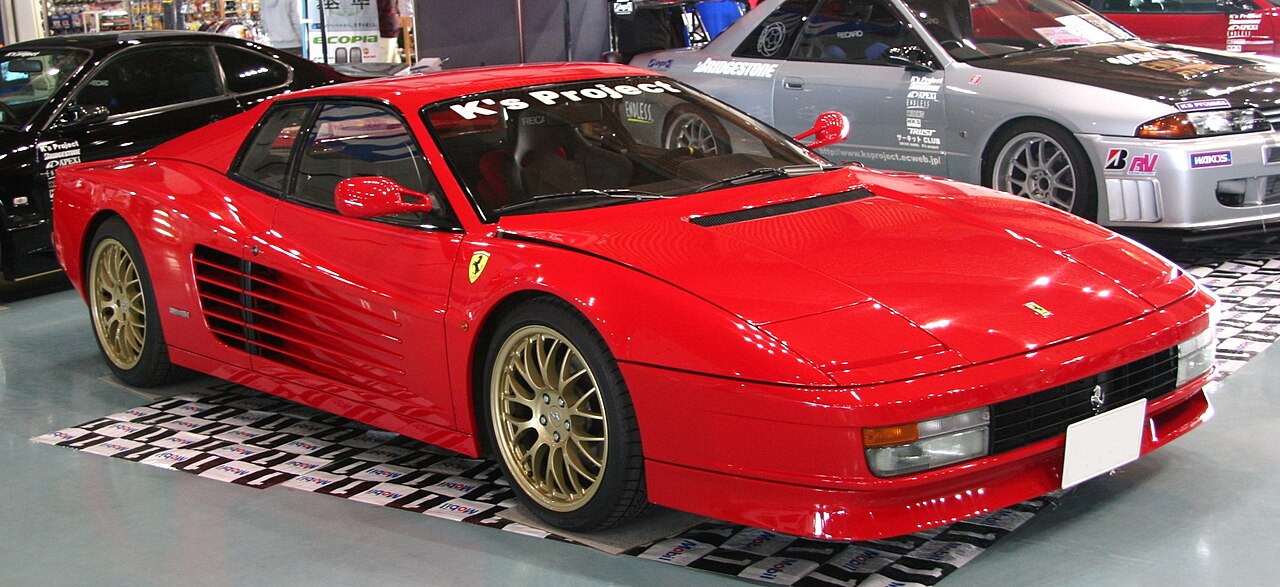
The star car chose itself in Monaco, where Suzuki first saw a Testarossa in the metal and was, by his own account, completely smitten: the flat-twelve flagship was the most talked-about car in the world, and nothing else would do. Back in Japan the team had to find one to study — no easy task, as only a handful had been imported — and eventually five of them squeezed into a small car, drove three hours to a private owner, and photographed the Ferrari from every angle at five-degree intervals, finishing by recording its engine.
Even so, OutRun is a game of glorious compromise. Suzuki has always been candid that only around half of what he planned survived the realities of budget, schedule and memory. His Cannonball vision had included a cast of eight individual characters and little story events at the checkpoints; there was supposed to be a garage of supercars with genuinely different handling. The hardware could hold one car, so the Testarossa stands alone — and the richer OutRun of Suzuki’s imagination had to wait until OutRun 2 in 2003 finally delivered the multi-car game he had sketched seventeen years earlier.
Two footnotes cling to that car. The first is that Ferrari never built the thing: the production Testarossa was a coupé, and the open-top Spider in the game is Sega’s own daydream — only a single official convertible was ever made in period, as a one-off for Fiat boss Gianni Agnelli. The second is that Sega never had a licence for any of it. The likeness was simply used, in the relaxed manner of 1986, and later re-releases have had to redraw the car into a generic red roadster to keep the lawyers calm. Neither fact has ever dimmed the fantasy. For millions of players, the definitive Testarossa is the one with no roof, a blonde passenger and somewhere better to be.
Designed to Not Discourage You
What remained after the cuts is a masterclass in a philosophy Suzuki applied everywhere: never humiliate the player for trying. The opening stretch of OutRun’s first stage is deliberately free of traffic, so a newcomer’s first seconds cannot end in a crash. Collisions, when they come, spin you out and cost you time — they do not explode your car in a fireball, a fashionable punishment Suzuki had already rejected in Hang-On. And because a race in which the leader simply pulls away and stays there struck him as dull, OutRun pits you against the checkpoint clock instead of rival drivers: the tension is constant, the opponent is you. It is a gentle philosophy for a machine that also wants your next hundred yen — in OutRun, kindness is a business model.
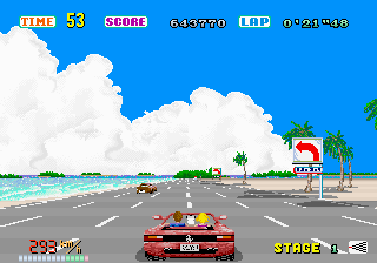
Layered over that kindness is the structure that made the game immortal. At the end of each stage the road forks, and your choice — sweeping left toward an easier route or right toward a harder one — threads you through a pyramid of fifteen stages toward one of five different finishing lines, each with its own little ending ceremony. Almost nobody sees the same OutRun twice in a row. And under everything runs the radio: three selectable tracks by composer Hiroshi Kawaguchi — Magical Sound Shower, Passing Breeze and Splash Wave — chosen on a tuner before you start, with the elegiac Last Wave waiting at the finish. A racing game with a radio station was unheard of; within a few years it was an industry standard.
The Machine Under the Bonnet
None of it would have shimmered without Sega’s hardware. OutRun ran on a bespoke board in the lineage of Suzuki’s earlier racers, built around twin 68000 processors and dedicated sprite-scaling circuitry — Sega’s “super scaler” technology, which could throw hundreds of sprites at the screen and swell them smoothly as the road rushed toward you. It is why OutRun’s world feels solid in a way rival racers didn’t: the palm trees, signs and rival cars are physical objects in a space you are genuinely travelling through, rendered at a silky 60 frames a second. The cabinet completed the illusion. The deluxe version was a sit-down cockpit with a hydraulic base that tilted and shuddered with the car, a steering wheel that fought back through the corners, and stereo speakers pouring Kawaguchi’s radio into your ears. You did not so much play it as go for a drive in it, at a hundred yen a trip. Arcades charged by the minute; Suzuki made sure the minute felt like a holiday.
The world noticed. OutRun was among the highest-earning arcade games of its year and collected the games industry’s honours, including Game of the Year at the Golden Joystick Awards — a racing game with no opponents worth the name, beating everything. The home conversions told the usual Eighties story in miniature: Sega’s own Master System version was a respectable postcard of the arcade, the Mega Drive version a few years later did the game proper justice, and the home-computer ports, farmed out in the great British conversion rush, varied from charming to barely recognisable. None of it dented the original. The arcade OutRun remains the definitive drive.
The Long Drive
OutRun made Suzuki an international star and Sega, at last, the name in racing games. Its super-scaler hardware, its hydraulic deluxe cabinet, and its sheer sunlit confidence defined the late-Eighties arcade — a bubble-economy postcard you could drive. But its deepest legacy is structural and emotional: the branching journey, the race as holiday rather than combat, the idea that a driving game could be about the trip. Every open-road game since lives in its slipstream. The reissues have never stopped: a cherished Saturn conversion in Sega’s Ages line, a 3D Classics remake for the 3DS that redrew the car just enough to dodge the licence question, and a permanent seat in every Sega compilation since. Suzuki got half of what he wanted into that cabinet in 1986. The half he got has proved to be more than enough.
Keep reading: The Pizza That Ate the Arcade: The Making of Pac-Man · the Arcade system archive