
At a glance: Muramasa Rebirth · PS Vita · Vanillaware, 2013 · Action RPG · Score: 9.0/10
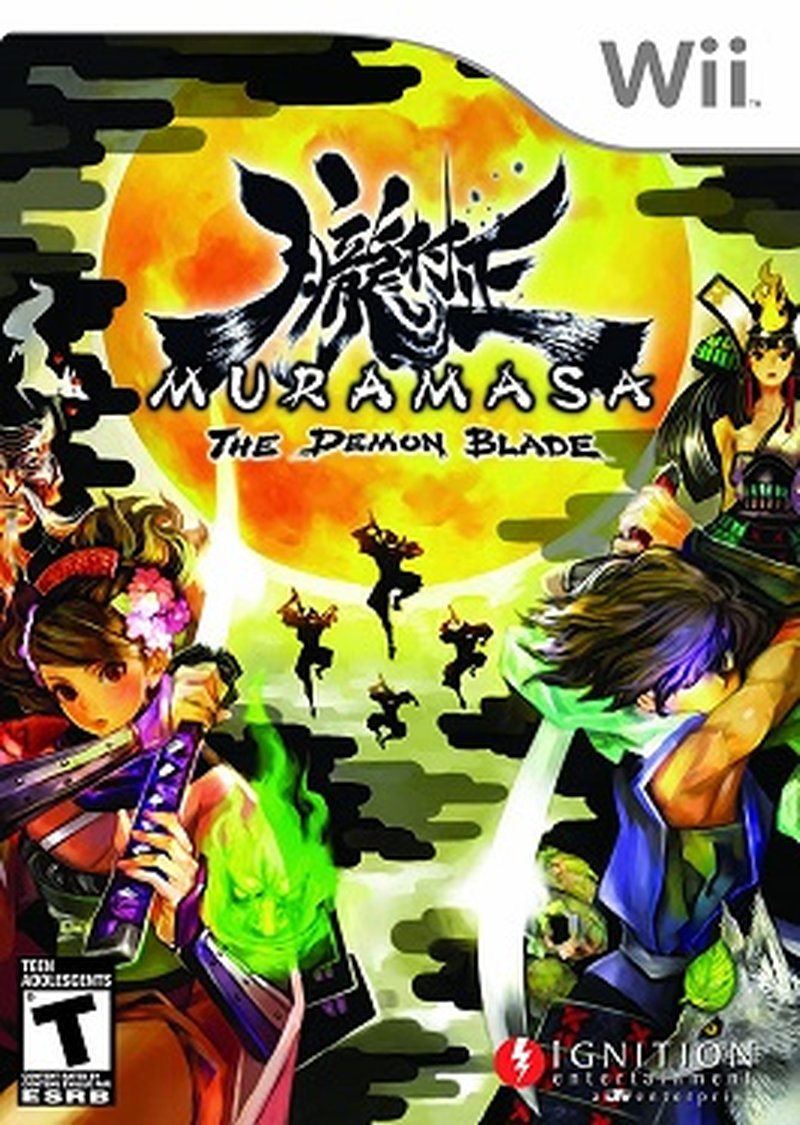
Some games are drawn. Muramasa is painted — a side-scrolling action RPG set in a myth-drenched Edo-period Japan, rendered entirely in Vanillaware’s sumptuous hand-illustrated style, where every screen is a woodblock print that learned to move: rain over bamboo groves, snow sifting through a mountain shrine, waves breaking in Hokusai curls. Rebirth is the Vita edition of the Wii’s Muramasa: The Demon Blade, and it is no lazy conversion. Aksys commissioned a complete new translation, the controls were rebuilt for a proper gamepad, the visuals were sharpened for the OLED, and four substantial Genroku Legends DLC chapters followed, each starring a new protagonist. It is the definitive version of one of the most beautiful games ever made, on the screen that flatters it most.
The structure interleaves two campaigns. Kisuke, an amnesiac ninja, and Momohime, a princess possessed by the swordsman Jinkuro, cross a branching map of feudal Japan — fighting through forests, castles, hell itself — in a story told through hot-spring interludes, village conversations and boss duels against tengu, giant centipedes, thunder gods and a very large, very angry octopus. Combat is a two-button ballet built around the Demon Blades: over a hundred forgeable swords, each with its own Secret Art, worn three at a time and swapped mid-combo as their spirit gauges crack and refill. On the higher difficulties the system reveals real depth — air juggles, parries, dash-cancels, blade management under pressure — while on the lower ones it plays as a glorious button-mashing power fantasy. Both readings are correct, and both are fun.
The OLED argument
Every Vita review in this collection discusses the screen, but Muramasa makes the discussion mandatory: this is the game OLED was invented to show collectors. The ink blacks of its night stages, the lantern oranges of its festivals, the pale gold of its wheat fields — the 1000 model’s panel renders them with a depth that LCDs, including the Vita Slim’s, audibly flatten. Rebirth runs at the Vita’s native resolution with a rock-steady frame rate, the animation’s hand-drawn frames (Vanillaware famously animates with a puppetry of layered art rather than sprites) gliding without a hitch. If a single game justifies hunting down an OLED unit in 2026, it is this one; if a single game justifies the Vita in a collection of screens, same answer. The Wii original was beautiful through component cables on a good CRT. Rebirth in your hands, at night, is better.
Vanillaware doesn’t do graphics. It does paintings that happen to be playable, and Rebirth is the gallery with the best lighting.
The Genroku Legends DLC deserves billing as co-headliner rather than footnote. Four chapters — a farmer’s rebellion led by a cat-eared peasant, a ninja’s tragedy, a vampire tale, an oni romance — each with a bespoke protagonist, new mechanics (the farmer fights with farming tools and summons; the ninja plays as a pure stealth-action throwback), new bosses and full voice acting. Together they add hours of the game’s best material and some of its strangest, most affecting writing. Buy the complete set while the store still lists them; they are the difference between a great port and a definitive edition. The retranslation, too, is a quiet triumph: George Kamitani’s script finally reads in English with the folkloric flavour the original localisation flattened.

Honest reservations
Muramasa’s flaws are structural and known: the two campaigns revisit the same regions with different routes, backtracking is frequent (mitigated, in Rebirth, by better signposting and the sheer pleasure of moving through the art), and the RPG systems — cooking, forging, stats — are lighter than the presentation promises. Bosses repeat across campaigns more than pride allows. None of this survives contact with the game’s best hour: a snowy duel at dusk, blades cracking, the soundtrack’s shamisen at full cry, your hands somehow keeping up. It is a game of moments arranged in a light framework, and the moments are among the finest on the platform.

Two blades, one Japan
The dual campaigns repay attention beyond their shared scenery. Kisuke’s story is a ninja tragedy — a boy who stole a cursed sword to save a girl and lost his memory to its price — while Momohime’s is a possession drama played, in the Rebirth translation, with real wit: the demon swordsman Jinkuro, trapped in a princess’s body, complaining his way across Japan while the princess’s own soul rides along as an increasingly assertive passenger. Their routes cross, their bosses and endings interlock (each campaign has multiple endings, gated behind carrying the right legendary blades into the finale), and the post-game White Cave of Evil trials give the combat system a proving ground worthy of it. Add the cooking — meals assembled from gathered ingredients, eaten in lovingly illustrated interludes that restore the party and, in Vanillaware tradition, make the player genuinely hungry — and the forging tree, which turns sword-collecting into a map-spanning project, and Muramasa’s light RPG framework reveals more substance than its reputation suggests.
Rebirth’s production values complete the argument. Hitoshi Sakimoto’s score mixes shamisen, flute and orchestral weight with the confidence of a composer scoring a prestige period drama; the Japanese voice cast performs the folklore straight; and the whole package — base game, four DLC epics, every quality-of-life fix — sits on a single Vita card in its Asian complete editions, region-free and English-friendly, which collectors have sensibly made one of the platform’s prize imports. Western players can assemble the same whole digitally while the store lasts. Either way, the complete Rebirth is the form this game was always meant to take: the Wii release was the sketch, gorgeous as it was. This is the painting, framed.
One more audience deserves direct address: players who bounced off the Wii original’s waggle-era compromises or its first translation. Rebirth is not the same proposition. The controls are a proper action game’s — crisp, remappable in feel, with the blade-swap and dash systems on buttons where they belong — and the script’s restoration transforms scenes that once read as flavour text into folklore with teeth. Add the difficulty ladder, which now runs from a sightseeing cruise to a one-hit-death Fury mode for the truly devoted, and Rebirth becomes that rare remaster that serves the newcomer and the returning master in the same cartridge. If Muramasa has a definitive home, and it does, you are holding the review of it.
And if all of that sounds like a lot of reverence for a side-scroller, load the first forest at dusk and count the seconds before you understand. It will not take ten.
It is worth adding, for the platform’s historians, that Rebirth was also a small landmark in how enhanced ports were sold: not as a lazy cash-in but as an act of restoration, with the publisher commissioning a new translation years after release because the first one hadn’t honoured the text. More remasters should be made with this conscience. Few are.
Verdict
Muramasa Rebirth scores 9.0/10: the Vita’s most beautiful game, a fluid, generous action RPG whose definitive edition lives here — new translation, sharpened art, essential DLC and all. Repetition in its maps keeps it from perfection; nothing keeps it from your collection. Forge the blades. Mind the gods. Mind the octopus.