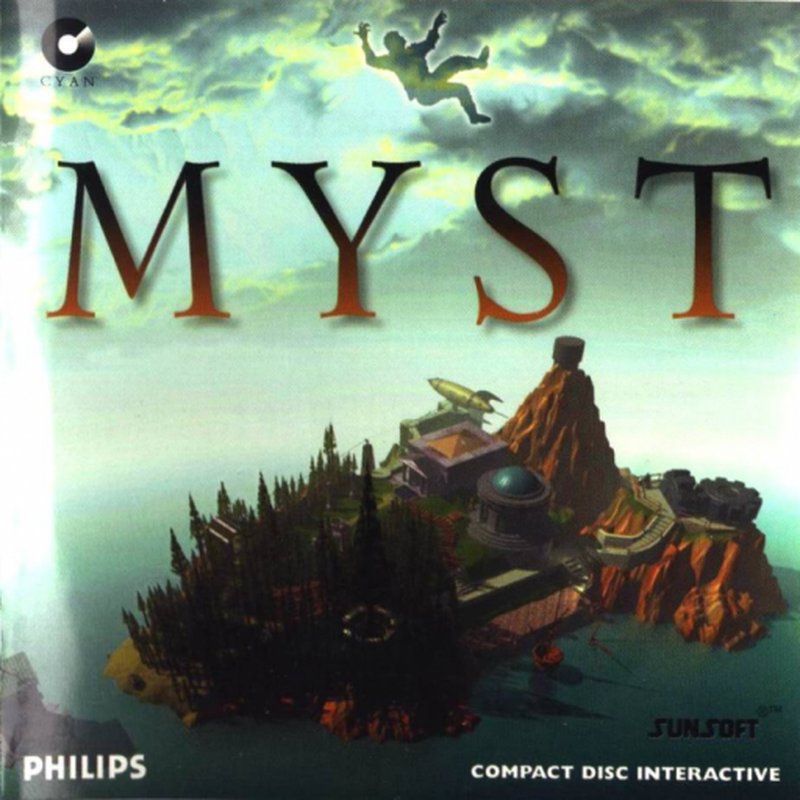
At a glance: Myst · Philips CD-i · Cyan / Philips Media, 1996 · Graphic adventure · Score: 7.5/10
By the time Myst reached the CD-i in 1996 — a Europe-only release from Philips Media, three years after Rand and Robyn Miller’s Macintosh original had become the best-selling computer game in the world — the porting story had a familiar shape: everyone wanted Myst, on everything, because Myst was the CD-ROM’s proof of concept. The question for this review is narrower and more interesting than whether Myst is a great game, which it is. It is whether the CD-i — a machine designed from birth for exactly this kind of software, a point-and-click world of still images, ambient sound and gentle exploration, played from a sofa with a pointer — could finally be the console that did it justice. The answer is mostly yes, with the deductions itemised below, and the “mostly” is more credit than most Myst ports of the era earn.
The game, for the record: you arrive on Myst Island via a linking book, alone, with no instructions, no inventory screen shouting at you and no way to die. Two brothers, Sirrus and Achenar, are trapped in red and blue books, each begging you to free him and accusing the other. Across five Ages — the mechanical, arboreal, watery and stony worlds of Channelwood, Mechanical, Stoneship, Selenitic and Myst itself — you solve environmental puzzles of sound, machinery and observation, gather pages, and eventually decide whom to believe. Cyan built it in HyperCard with rendered stills and video overlays, and its design creed — the world is the interface, the puzzles are the place — changed adventure games permanently.
The sofa problem, solved and unsolved
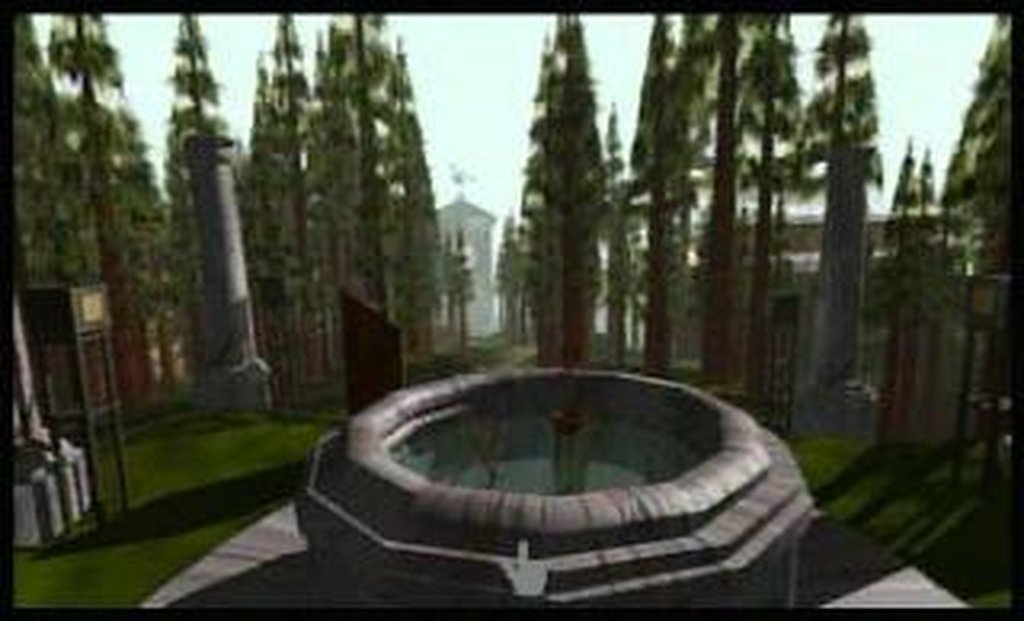
The CD-i’s advantages are real. Myst was designed for a mouse, and the CD-i is the one console of its generation whose controller philosophy — a pointer, drifting across a television — is a legitimate mouse descendant rather than a D-pad compromise. Navigation in the CD-i version is point-and-click in the true sense: move the cursor, click the hotspot, glide to the next rendered view. Played with the CD-i mouse or a steady hand on the trackball or thumbstick, the game settles into exactly the contemplative rhythm Cyan intended, and the big television presentation of the rendered Ages — Myst Island’s library, rocket and sunken ship; Channelwood’s wooden walkways in the trees — suits the game’s picture-book grandeur better than a small monitor did.
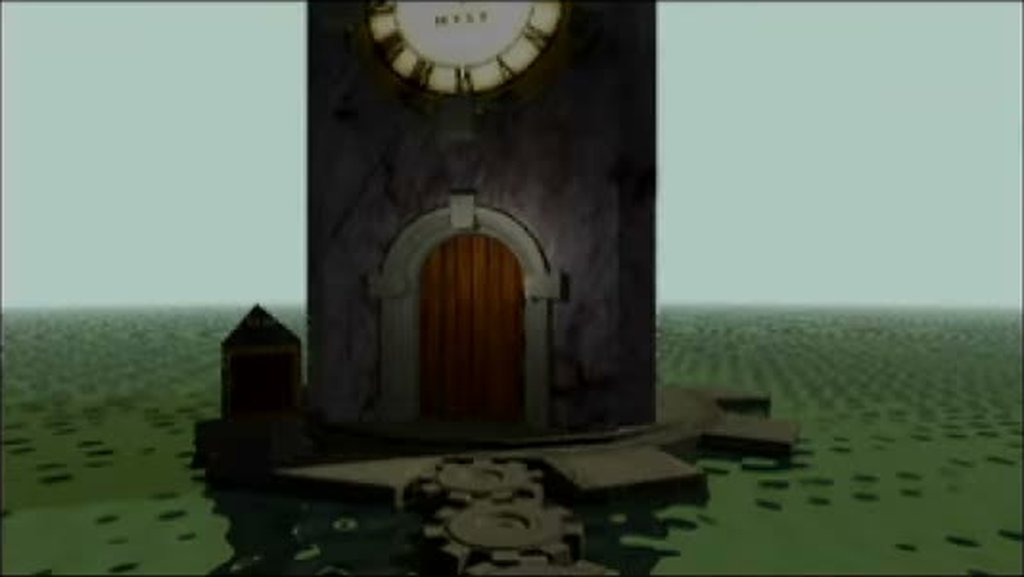
The taxes are the era’s usual two. Loading: every transition is a disc read, and while the CD-i version is no worse than its console contemporaries, a game built on frictionless drifting notices every second of seek time — the Selenitic Age’s sound-matching trek and the Mechanical Age’s rotations become exercises in patience as much as observation. And resolution: the rendered stills, authored for computer monitors, soften on a television through the CD-i’s video output, and some of the game’s most important details — the scribbled notes, the page text, the small mechanical readouts — sit at the edge of legibility. Myst is a game about reading a world closely. Anything that blurs the reading is a gameplay issue, not a cosmetic one.
A 1996 port of a 1993 argument
Timing is the other deduction, and it is not the port’s fault so much as the platform’s biography. In 1993 Myst was the future arriving early. By 1996 the CD-i was a format in managed decline — Philips would end active development that year — and this release has the air of a catalogue being completed rather than a market being addressed. Europe only, no fanfare, a masterpiece arriving quietly at a platform whose moment had already passed. There is something poignant in it: the machine that Philips had designed in the eighties for interactive multimedia finally hosting the most famous interactive multimedia title ever made, just as the industry moved on to real-time 3D and left both of them behind.
Myst on CD-i is the format’s homecoming: the game the machine would have been designed for, if the machine’s designers could have known. It arrived three years late to its own ideal home, and it is still one of the best addresses on the street.
Performance comparisons, briefly, for the port-shoppers: the CD-i version keeps the original’s structure and content intact, unlike some later handheld and remake treatments that reworked puzzles; it lacks the extra Age that realMyst would add years later, which no 1996 port had; and its video sequences of the brothers — the live-action performances that carry the entire moral weight of the ending — decode cleanly, since video was the platform’s home turf. What it cannot match is the PC original’s crispness, and what it adds is the sofa, the television and the pointer. For this game, of all games, that trade is defensible.

The brothers on the television
One element of the port deserves specific praise, because it is where the platform’s video heritage pays off in the game’s own currency. Myst’s storytelling lives in its live-action sequences — Sirrus and Achenar pleading from their prison books, Atrus in the game’s devastating late scenes — filmed actors composited into the rendered world. On the CD-i, a machine whose entire second act was built around decoding video, those sequences play with a confidence some computer versions of the day, juggling codecs and drive speeds, could not match. The moral engine of the game — two charming liars, one decision — arrives intact, and on a television, at living-room scale, the brothers’ performances have a theatrical presence that the desktop never gave them. It is a small thing. In a game this quiet, small things are the whole inventory.
The port also preserves, by arriving late and European, a certain purity: this is the 1993 design unrevised — no added Age, no reworked puzzles, none of the later editions’ second-guessing. Historians of the game will find the CD-i disc a clean specimen of the phenomenon as it first existed, and there are not so many of those left in the wild that another can be treated casually.
A closing note for the port-completists: the CD-i edition’s European-only release makes it one of the scarcer Myst variants in the wild, and its Philips Media packaging — sold as much to the reference-shelf buyer as to the games buyer — captures the moment the two audiences the format served finally met on one disc. As a game it scores as above. As an artefact of the format’s whole argument with itself, it might be the single most representative object Philips ever shipped.
Verdict
Myst earns 7.5/10 on CD-i: the design is a landmark, the control translation is the most natural of any console port of its era, and the deductions — loading friction, softened detail, a late and quiet release on a dying format — are the platform’s, not the game’s. If you collect CD-i, this is one of the discs that explains what the machine was for. If you have never played Myst, this version will still show you why it mattered — a little more slowly, and a little more softly, than it should.