
It is the most revealing small story in modern Nintendo history, and it stars two men who were supposed to be rivals. Shuhei Yoshida, for years the beloved public face of PlayStation’s studios, has retold how Shigeru Miyamoto – Mario’s creator, Nintendo’s creative conscience – once presented him with Star Fox Zero on the Wii U and asked, in effect, for the truth. Yoshida’s dilemma, delivered with the wince of a man reliving an awkward dinner, was instantly quotable: should I say my honest reaction? The anecdote did the rounds because everybody already knew the answer he was too polite to give.
Star Fox Zero, released in April 2016, was the Wii U era distilled into a single game: a legendary designer pursuing a genuinely original idea – two screens, cockpit view on the GamePad, television for the cinematic angle – on hardware the audience had already declined, with controls that divided players down the middle. This feature uses Yoshida’s story as its doorway and walks through the whole saga: what Miyamoto was trying to build, why it landed so awkwardly, and what the honesty of two old rivals tells us about the Wii family’s most experimental years.

The experiment, explained fairly
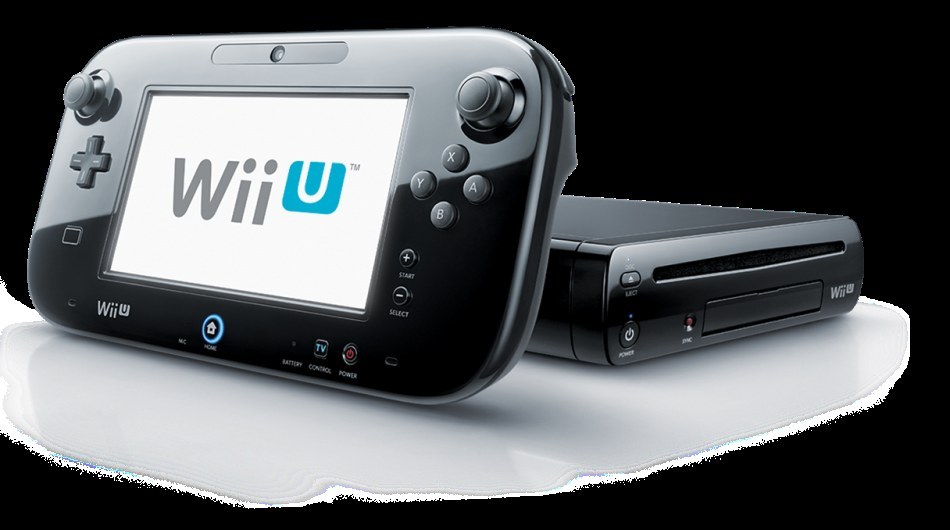
First, the idea itself, because it was not foolish. Star Fox Zero asked players to fly with the television screen showing the dramatic view while the GamePad, held up and moved by gyro, showed the cockpit – aiming through it, seeing what Fox saw. Miyamoto, who had championed the Wii U’s two-screen thesis from the start, believed this dual perspective was the GamePad’s killer application: not a map, not a menu, but a second set of eyes. In demonstrations, guided by Nintendo’s own staff, it could feel revelatory, like sitting inside the Arwing rather than puppeteering it.
The problem was the gap between demonstration and living room. Reviews and players reported the same friction: attention split between screens at the worst moments, a mandatory control scheme with no conventional alternative, motion aiming that demanded constant recalibration of the player’s mental model. The game beneath the experiment was often handsome and sincere – a reimagining of Star Fox 64’s routes, made with PlatinumGames, full of transforming vehicles and franchise affection. But Star Fox Zero could never be played casually, and a series built on pick-up-and-play arcade joy had been fitted with a pre-flight checklist.
Why Miyamoto pushed anyway
To understand the stubbornness, remember whose console the Wii U was. Miyamoto’s career is a sequence of control revolutions he willed into being against sensible doubt: the analogue stick’s first great showcase, motion control itself. The Wii – where his instincts had been vindicated to the tune of a hundred million consoles – taught him that players will learn a strange interface if the game justifies it. Star Fox Zero was an attempt to spend that same capital on the GamePad, to prove by flagship example that two-screen play was a frontier and not a gimmick, a word he had heard before.
There is also institutional truth in the story. By 2016 the Wii U was failing publicly, and Nintendo’s internal champions were still, honourably, trying to demonstrate the machine’s premise rather than abandon it. Star Fox Zero shipped alongside its tower-defence companion Star Fox Guard, another GamePad thesis in miniature. Read generously, the project was a great designer refusing to let his console die unexamined. Read critically, it was a great designer mistaking a fascinating prototype for a finished consumer product. The Yoshida anecdote endures because it contains both readings, in one polite man’s facial expression.
The honesty of rivals
What elevates the story above gossip is Yoshida himself. This was not a fan or a critic but the head of a competing platform’s studios – precisely the audience whose respect Miyamoto’s generation of Japanese designers has always quietly sought. The two men belong to a small, aging guild of builders who grew the modern industry in parallel, and their mutual candour, however awkward in the moment, is the guild’s etiquette: you show your rival your work, and you brace. Yoshida’s retelling is affectionate, not triumphant, which is why Nintendo fans shared it so widely. It reads as respect conducting an autopsy.
It also captures something the Wii era embodied at its best: a Nintendo confident enough to be weird in public. The same company that asked the world to bowl with a television remote asked PlayStation’s boss to judge a two-screen space shooter, knowing the verdict might sting. Corporate history is usually written in victories. This little exchange – one legend asking, one legend hesitating over his honesty – is the sound of the industry Nintendo built with the Wii, grown old enough to ask itself hard questions out loud.
Star Fox Zero’s second life in the argument
Time has been kinder to Zero than its launch was. Freed from carrying the Wii U’s hopes, it is increasingly discussed as an interesting failure – the valuable kind, whose experiments echo. Dual-perspective play, gyro aiming as a first-class citizen, the insistence that a controller can be a viewpoint: all of these ideas live on, refined, across modern Nintendo design, and gyro aiming in particular is now simply how a generation plays shooters on Nintendo hardware. The Wii U’s thesis failed as a product and succeeded as research, and Star Fox Zero is its most cited paper.
The game also remains stranded, notably, on its original hardware – one of the few major Nintendo titles the great Switch rescue operation never reached, its GamePad marriage too deep to annul. For collectors and the curious, that makes an original Wii U copy the only ticket to a genuine historical document: the last big swing of the two-screen era. Play it with patience, ideally with a friend reading this story over your shoulder, and the design’s ambition shows through its awkwardness like bone through skin.

A series still waiting for orders
Star Fox itself remains the story’s unresolved thread. The series has not received a wholly new mainline entry since Zero, its characters sustained by Smash Bros. appearances, a well-liked Starlink cameo for Fox, and the retro libraries’ preservation of its 16-bit and Nintendo 64 peaks. Fans read the Yoshida anecdote with a particular ache, because it seems to confirm that the last attempt to revive the series misfired in the one way that mattered: it asked players to admire an idea before it let them enjoy a game. The characters, the voices, the barrel-roll grammar of the series are all intact and beloved. What is missing is a control scheme nobody has to apologise for.
And yet the Wii family history counsels patience. Fire Emblem was one disappointing launch from cancellation before Awakening; Metroid slept for years before its acclaimed returns; Xenoblade’s biggest game spent nine years in a locked room. Nintendo’s catalogue has a habit of surviving its own experiments. Somewhere in the company’s future there is presumably a Star Fox that learns Zero’s lessons – gyro aiming as an option with honour, spectacle first, thesis second. When it arrives, the honest reaction of an entire fanbase is easy to predict, because Miyamoto’s old rival has already modelled the alternative.
Honest reactions, all round
So what should Yoshida have said? The fans who retell the story have, in effect, answered for him over the years, with the honesty of people who bought the game anyway: that the flying was thrilling and the interface exhausting, that Miyamoto’s nerve was admirable and his insistence costly, that Star Fox deserved either a simpler return or a braver one than a compromise wearing both costumes. That is an honest reaction, and it is not a cruel one. It is what you say about work by people you respect, which is the entire reason the question was asked across enemy lines.
The Wii family’s story is full of such moments – wild ideas, asked aloud, judged honestly by the market and by peers. Most of them, from the Wii Remote onward, were vindicated so completely we forget they were gambles. Star Fox Zero is the reminder that the same company, the same designer and the same courage produced the misses too, and that a rival’s wince can be a kind of tribute. Should he say his honest reaction? He was asked by Miyamoto. There was only ever one respectful answer, and the whole industry is still giving it.