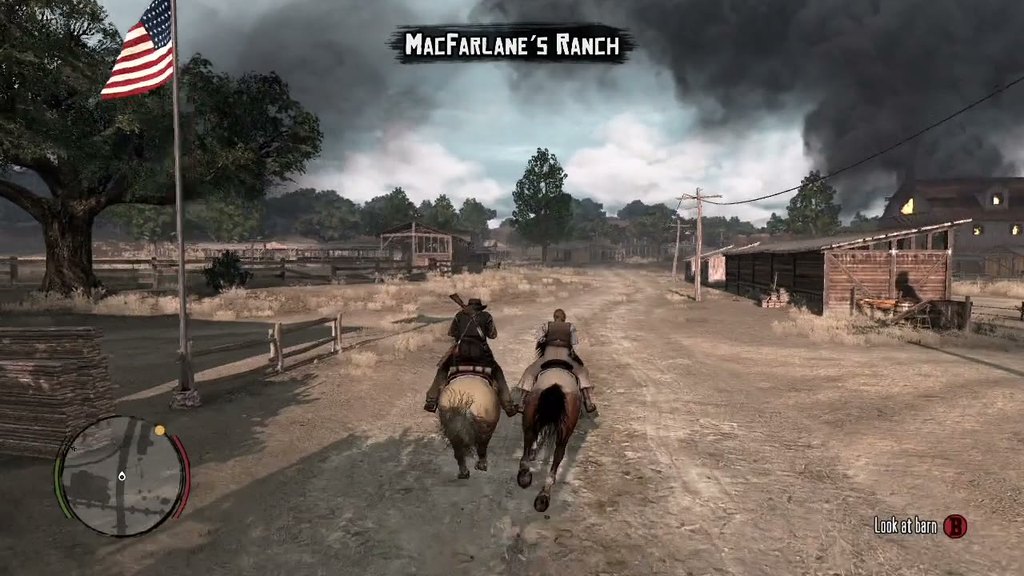
At a glance: Red Dead Redemption · Xbox 360 · Rockstar San Diego / Rockstar Games, 2010 · Open-world western · Score: 9.5/10
Every open-world game is about a place, but Red Dead Redemption is about a time — and the time is ending. The year is 1911. The frontier is being fenced, the automobile has arrived in Blackwater, and former outlaw John Marston is dragged out of retirement by federal agents who hold his family hostage against one job: hunt down the surviving members of his old gang. What follows is the finest western ever made in any medium outside film, and the Xbox 360 version — the lead console version, crisper and smoother than its PlayStation 3 counterpart — is the way its generation experienced it best.
The dying West, county by county
Rockstar built three territories and let them tell the story geographically. New Austin is the classic frontier: scrub, mesas, the town of Armadillo dying of plague and indifference. Nuevo Paraíso takes Marston into a Mexico tearing itself apart in revolution, where both sides want his gun and neither deserves it. West Elizabeth closes the map in alpine forests and the paved streets of Blackwater, where the modern world waits with its telephones and its firing squads. The campaign moves through them like a novel — episodic, character-rich, funny when it wants to be (the snake-oil salesman Nigel West Dickens, the grave-robbing Seth) and devastating when it counts. The final act, in which the game slows down and asks you simply to live the life Marston fought for, is one of the most admired sequences in the medium; its ending is discussed, still, in the tones people reserve for literature.
Dead Eye and the honour economy
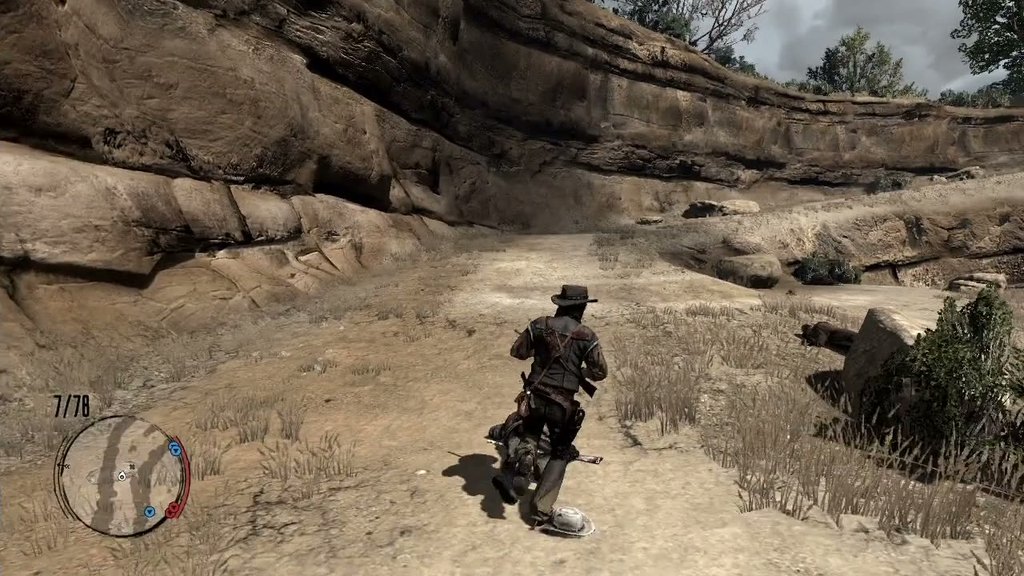
As a game, Red Dead translates GTA’s systems into a slower, more deliberate register that suits the setting perfectly. The signature mechanic is Dead Eye, Marston’s bullet-time focus that evolves across the story from a simple slow-down to a painter’s tool for marking targets — duels at dawn, ambushes in canyons, and stagecoach robberies all flow through it. An honour and fame system quietly judges everything: help strangers, return bounties alive and the West treats you as a legend; rob trains and shoot witnesses and prices, posses and newspaper headlines adjust. Random encounters — ambushes, hangings, lost travellers, duels — fill the wilderness with authored-feeling incident, and the hunting and wildlife simulation (cougars remain, nearly twenty years on, a byword for video-game terror) makes the empty miles between missions feel lived in rather than empty.
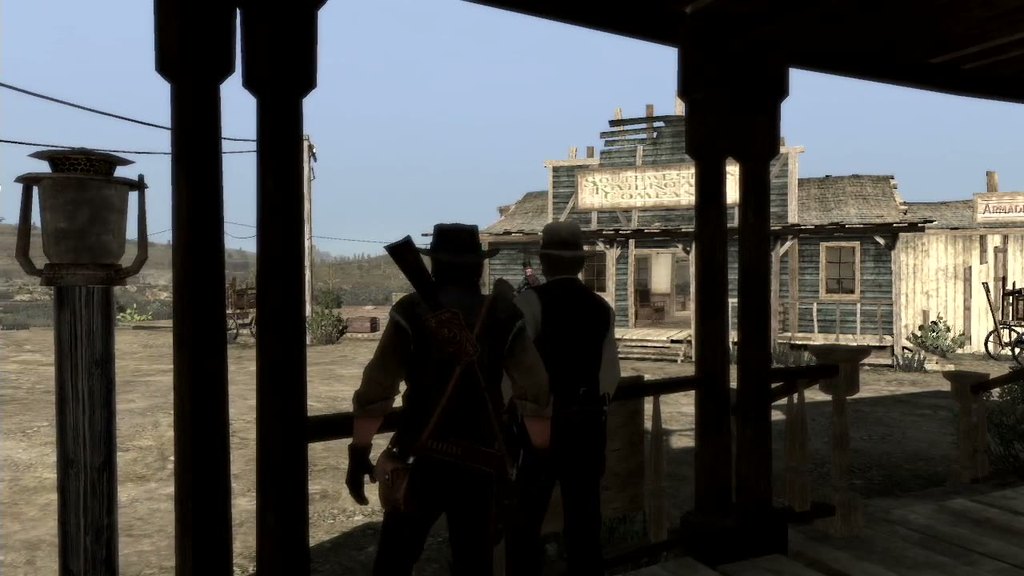
The economy of distractions is pure Rockstar: poker and liar’s dice in every saloon, five-finger fillet, horseshoes, bounty boards, treasure maps, challenges for hunting, survival and marksmanship that unlock outfits and gear. The soundtrack — Bill Elm and Woody Jackson’s twanging, echoing score, swelling only when the story earns it, most famously as you cross into Mexico — is the era’s finest.
The technical West
On the 360 the game ran at a full, stable clip with draw distances that let you read a landscape like a map, weather that rolls across counties, and a day-night cycle that turned every ride home into a painting. The multiplayer — free-roam posses, shootouts and one of the era’s best cooperative packs in Outlaws to the End — extended the West for years, and the Undead Nightmare expansion (a standalone ghost story of a zombie plague on the frontier) may be the single best DLC of the generation. The original servers have quietened now, but the single-player West is entirely intact on the disc, which is where the game’s heart always was.
The small stories are the big ones
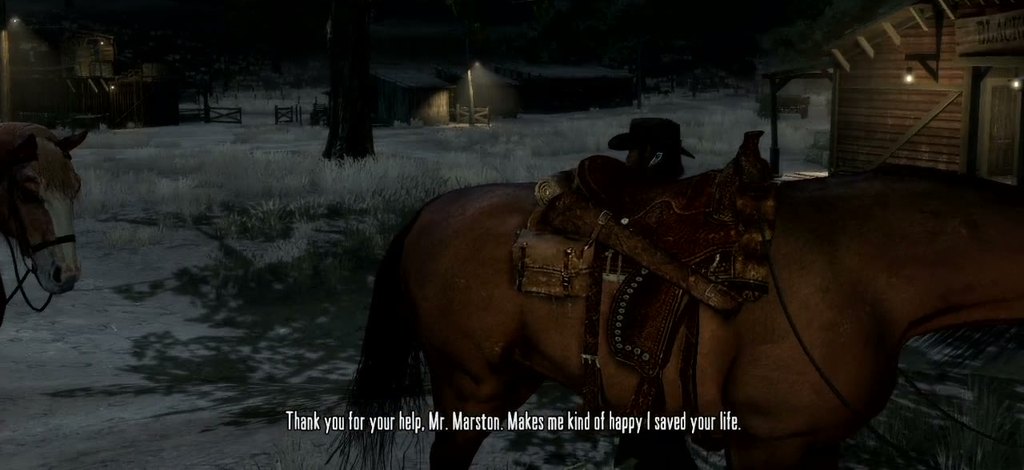
For all its epic scope, Red Dead’s most quoted moments are its smallest. The Stranger tasks — a dozen vignettes found by roadsides and in saloon corners — are miniature morality plays: a cannibal in the hills, a woman waiting decades at a ruined homestead, a flying-machine dreamer on a cliff, a man in a black suit who knows things he shouldn’t. None of them is explained. All of them are remembered. They show a writing team confident enough to leave mysteries unresolved and players trusted to sit with them, and they colour the whole map: after a few Strangers, you ride everywhere a little slower, watching the roadsides.
The hunting deserves its sentence too — an ecosystem of dozens of species, from armadillos to grizzlies, tied to challenges that unlock the game’s best gear and teach the map better than any mission. Legendary animals stalk specific valleys. The famous cougar ambushes — silent, two-hit, always behind you — became a shared trauma of the generation, a reminder that in this West, nature is not scenery. It is the oldest resident, and it does not care about your story at all. That indifference, woven through a game about a man the world is forgetting, is the whole thesis in one mechanic.
The 360 version, specifically
A note on why this review covers the Xbox edition with such confidence: in 2010 the two console versions were not equal, and everyone knew it. The 360 was Rockstar’s lead platform for the game, and it shows — a cleaner image, more stable performance in the busy towns, and grass and detail drawn further into the distance. Comparison pieces of the day scored it a clear, if friendly, win. The game later reached near-legendary second status through backward compatibility, where the 360 code itself — this exact version — was the one enhanced and celebrated on newer hardware, a rare case of a console original being canonised rather than replaced. If you are choosing a way to own the original Red Dead, the 360 disc is not a compromise. It is the reference edition of its generation.
It also carries the era’s best post-game: having rolled credits, the West stays open — bounties refresh, the hunting challenges wait, and a certain family epilogue quest waits by a familiar hillside for players who think the story ended one scene too early. Rockstar trusted its world to hold players without a plot pulling them through it. Nearly twenty years on, it still does.
The verdict
The great American video game novel: a western about the end of the West, played at a horse’s pace and felt for years afterwards.
Red Dead Redemption is Rockstar’s masterpiece of the 360 generation and one of the defining games of its decade — a place, a performance (Rob Wiethoff’s Marston is an all-timer) and a story that trusts silence. If the shelf allowed only one open world, this would be the argument that ends the argument. Ride out. The light is perfect and it will not last.
The nine and a half is, if anything, the conservative reading: judged on world, writing, performance and the confidence of its pacing, Red Dead Redemption has a claim on the full ten that only its occasional mission repetition and the era’s checkpoint habits hold back. What is not in dispute is its shelf rank. Alongside Halo 3 and GTA IV it forms the 360’s unofficial trilogy of era-defining open achievements — and of the three, it is the one players describe, unprompted, with the word “beautiful.” Saddle up accordingly.
Score: 9.5/10