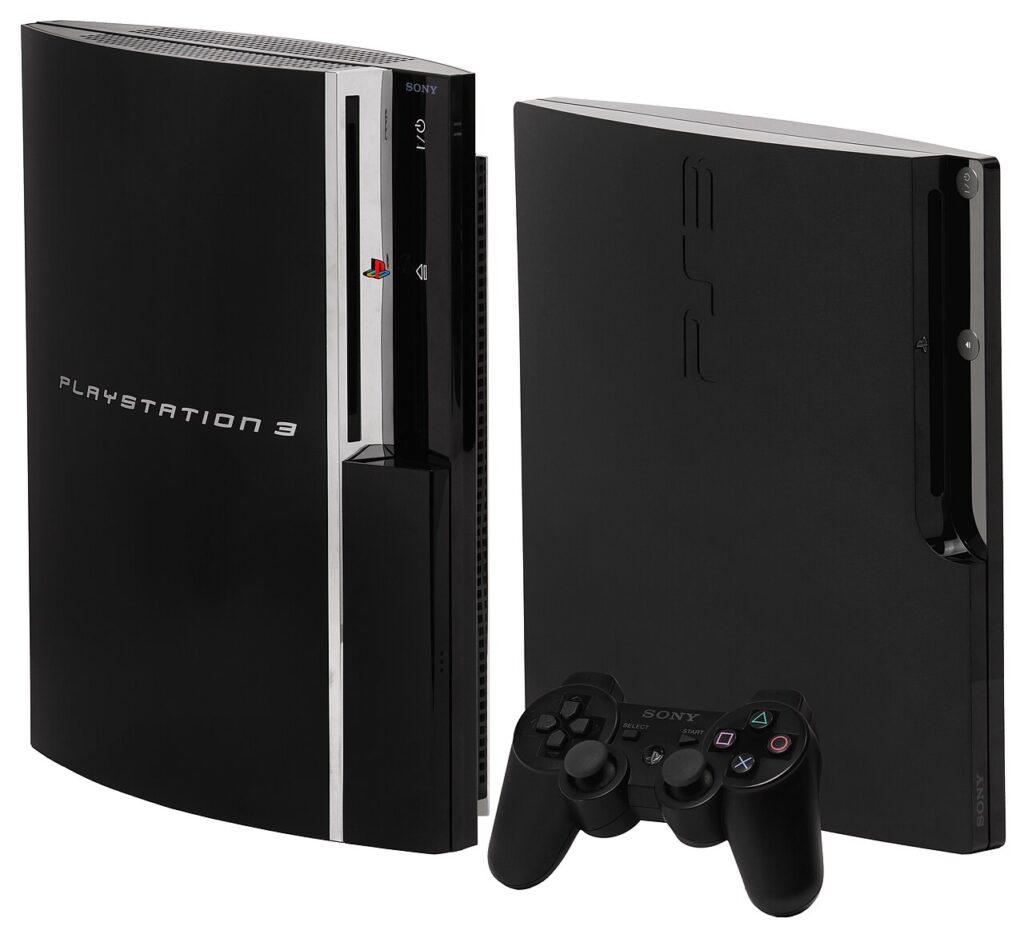
No console has ever contained more contradictions than the PlayStation 3. It was the machine that humiliated Sony – $599, “get a second job,” giant enemy crabs, a launch so rough it torched the most dominant brand in gaming history – and the machine that won the format war, bankrolled Blu-ray’s victory, ran supercomputing clusters for the US Air Force, and closed its life with The Last of Us, a generation-defining masterpiece delivered as the industry moved on. It sold 87.4 million units and still finished third. It lost Sony billions and saved its entertainment empire. Ken Kutaragi designed it as a supercomputer that would make PCs obsolete; developers experienced it as a beautiful trap. Both were right. This is the complete story of the PlayStation 3 – the most arrogant, expensive and ultimately fascinating console Sony ever built. It is also the story of how the modern PlayStation – humbler, developer-friendly, service-driven – was born from the wreckage of the old one’s grandest ideas, and why the machine the industry mocked in 2006 keeps winning arguments in retrospect.
Kutaragi’s Supercomputer: Cell, Blu-ray and the $599 Bet
The PS3 was designed from a position of absolute power. The PlayStation 2 had sold 160 million units; its successor was conceived by Ken Kutaragi – the engineer who had dragged Sony into gaming – not as a games console but as the computer that would own the living room and threaten the PC itself. Its heart was the Cell Broadband Engine, co-developed with IBM and Toshiba at a cost of hundreds of millions: a PowerPC core directing eight “synergistic processing elements,” a supercomputer-on-a-chip architecture that Sony genuinely deployed in blades and workstations. Its media was Blu-ray, Sony’s high-definition disc format, then locked in a format war with Toshiba’s HD DVD – every PS3 sold was a Blu-ray player planted in a home, and for a time the console was the cheapest Blu-ray player on the market. At E3 2005 the ambition curdled into legend: pre-rendered “target” footage (a Killzone 2 trailer the real machine would spend four years chasing), a boomerang-shaped controller, and rhetoric about the PS3 as a computer entertainment revolution. When the real price arrived at E3 2006 – $499 for the 20GB model, $599 for the 60GB – alongside the stage demo’s “giant enemy crab” and the immortal advice that consumers would want “to work more hours to buy one,” the hubris was complete. The machine underneath was real and formidable – NVIDIA’s RSX graphics, a hard drive in every unit, HDMI, full PlayStation 2 hardware inside the launch models for backwards compatibility. So was the bill: early PS3s cost Sony far more to build than even $599, with losses per console estimated in the hundreds of dollars and the division’s red ink running to billions. Sony had bet the PlayStation empire on a supercomputer. The market’s reply was a shrug.
The Humbling: Rumble Lawsuits, Worse Ports and “No Games”
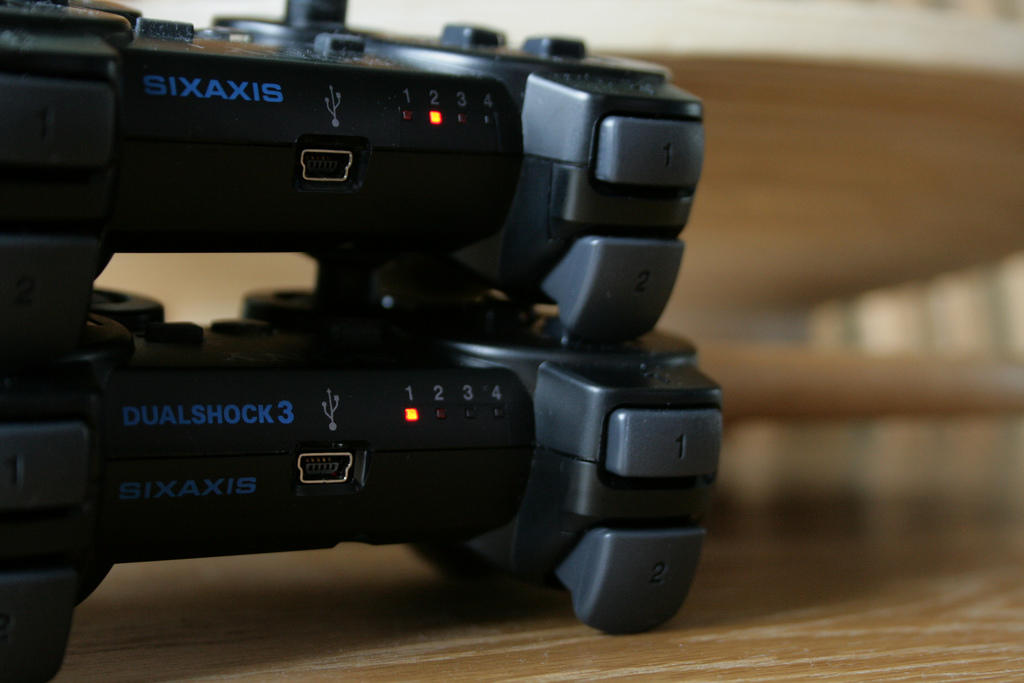
The launch – November 2006 in Japan and America, delayed to March 2007 in Europe – was the worst of Sony’s life as a platform holder. Shortages made headlines for the wrong reasons; the library (Resistance: Fall of Man honourably excepted) was thin; and the details kept wounding. The controller, SIXAXIS, had motion sensing but no rumble – sacrificed to a patent lawsuit with Immersion that Sony settled in 2007 – and felt light and cheap beside the 360 pad. Multiplatform games persistently ran worse on PS3: its split memory pool and the Cell’s alien programming model made ports an afterthought tax, a gap that became a running joke (Valve’s Gabe Newell called the machine “a total disaster on so many levels”). The PlayStation Network launched free but primitive next to Xbox Live. Sony removed the PS2’s Emotion Engine chip from European and later models to cut costs, degrading the backwards compatibility that had been a launch headline. By mid-2007 the PS3 was a distant third worldwide, Sony’s games division was bleeding, and Kutaragi – the father of PlayStation – had been moved aside, retiring from his executive roles as Kaz Hirai took over. The turnaround came from the oldest tools in the business: price cuts ($399 by late 2007), the DualShock 3 restoring rumble in 2008, and slowly, painfully, the arrival of games that treated the Cell as an instrument rather than an obstacle. The PS3’s education of Sony – developers first, humility always – would produce the PS4. First, the PS3 had to become worth owning.
The Golden Second Act: Uncharted, MGS4 and the Cell Whisperers
The PS3’s library is a tale of two catalogues. The third-party catalogue is a museum of the porting wars – games that arrived late, ran rough, or (in Skyrim’s infamous PS3 save-file saga) degraded the longer you played them. The first-party catalogue is one of the finest any console owns, because Sony’s studios learned the Cell the hard way and then played it like virtuosos. Naughty Dog’s Uncharted (2007) established the template; Uncharted 2 (2009) perfected it – a train sequence and a collapsing building that swept the year’s awards and still anchors arguments about the generation’s best game. Metal Gear Solid 4 (2008) was the era’s great event exclusive, a baroque farewell to Solid Snake that sold consoles on arrival and remained chained to the PS3 for eighteen years – a fact the site’s own coverage of its eventual ports treats as the historical anomaly it is. Around them: Killzone 2 (2009) finally shipping the E3 2005 promise; LittleBigPlanet’s creation revolution; God of War III’s scale; Heavy Rain’s divisive drama; Demon’s Souls (2009), an import-cult oddity that quietly founded the Souls genre; and at the very end, The Last of Us (2013), released months before the PS4 and still the generation’s most decorated game. Add the downloads (Flower, Journey, Wipeout HD) and the pattern is unmistakable: the PS3’s second act was authored almost entirely by Sony’s own studios, the most expensive first-party education in industry history – and the reason the console’s critical reputation inverts its commercial one. Meanwhile the hardware kept doing strange, wonderful side-quests: Folding@home turned idle PS3s into a distributed supercomputer for disease research, the Air Force’s Condor Cluster wired 1,760 PS3s into a Department of Defense supercomputer, and the machine’s “OtherOS” Linux feature – the living-room computer dream in miniature – was removed in 2010 amid hacking pressure, drawing lawsuits and a decade of resentment.
The PS3’s recovery had a geography worth recording. In continental Europe – Sony’s most loyal territory, where the brand had absorbed Sega’s old strongholds – the PS3’s combination of Blu-ray, free online and football (Pro Evolution and FIFA bundles) eventually overhauled the 360 outright, powered by a casual catalogue America mostly ignored: SingStar’s endless editions, Buzz!’s quiz buzzers, Gran Turismo’s continental cult. The generation’s scoreboard inverts by continent – Nintendo’s world, Microsoft’s America, Sony’s Europe and Japan-by-default – and the PS3’s 87.4 million was assembled accordingly, a bronze medal with gold-medal territories.
The Third-Party Squeeze and the Japan Drift
For everyone who didn’t work at Sony, the PS3 was the generation’s difficult second platform. The 360 – a year early, cheaper, built on PC-like parts – became the default development target, and the PS3 inherited the ports: sometimes late (Oblivion arrived a year behind, albeit improved), sometimes compromised (the PS3 version of Bayonetta, ported by Sega rather than Platinum, became the era’s byword for a botched conversion), sometimes simply second in the marketing queue, as Call of Duty settled into 360-first DLC arrangements. Sony executives blaming “lazy developers” did nobody any favours; the truth was architectural, and it took middleware maturity and brute familiarity – around 2009-2010, when titles like Final Fantasy XIII achieved rough parity – to close the gap. The home front drifted too: Japan, PlayStation’s fortress, cooled on expensive home consoles generally, and the PS3 spent years being outsold by its own little brother, the PSP, and by Nintendo’s portables; Capcom’s Monster Hunter, a PlayStation birthright, decamped to PSP and Wii. Sony’s answers piled up at the edges – PlayStation Move (2010) chasing the Wii’s motion audience into a market already cooling, a 3D television push that made Killzone 3 and Gran Turismo 5 stereoscopic showpieces of a fad – none of them moving the needle the Slim and the exclusives moved. The PS3’s third-party story is thus the inverse of the PS2’s: the biggest platform holder of one generation became the supplicant of the next, and its catalogue’s greatness is a first-party monument precisely because the guests rarely brought their best.
The controller carries the same arc in miniature: the SIXAXIS and DualShock 3 were the final iterations of the pad shape Sony introduced in 1997 – refined for a decade into near-perfection, then discarded when the DualShock 4 started the design over. Everything about the PS3 was the end of a lineage and the start of an education.
Free Online, PlayStation Home and the Service Bet
The PS3 was also where Sony’s business changed shape. The PlayStation Network launched in 2006 with a decision that looks more radical every year: online play was free, against Xbox Live’s paid Gold tier – a genuine consumer advantage that Sony spent the generation trying to monetize around rather than through. The Store grew from a web page into a storefront; trophies (2008) answered achievements; Remote Play let a PSP – later a Vita – stream the PS3, an idea a decade early; and PlayStation Home (2008-2015) built a full virtual world inside the console, avatar apartments and all, a metaverse prototype that drew millions of visitors, real brand money and enduring mockery in roughly equal measure before its quiet closure. PlayStation Plus (2010) found the monetization formula – “free” games monthly, discounts, cloud saves – and became the template for the subscription era Sony now dominates. The 2011 hack stress-tested all of it at once. Read whole, the PS3’s service layer is the bridge between the PS2’s disc-and-memory-card world and the modern platform business: accounts, libraries, subscriptions and social spaces all began, clumsily and sometimes catastrophically, on the machine that was supposed to be a supercomputer.
Piano Black, the Spider-Man Font and the Grill Jokes
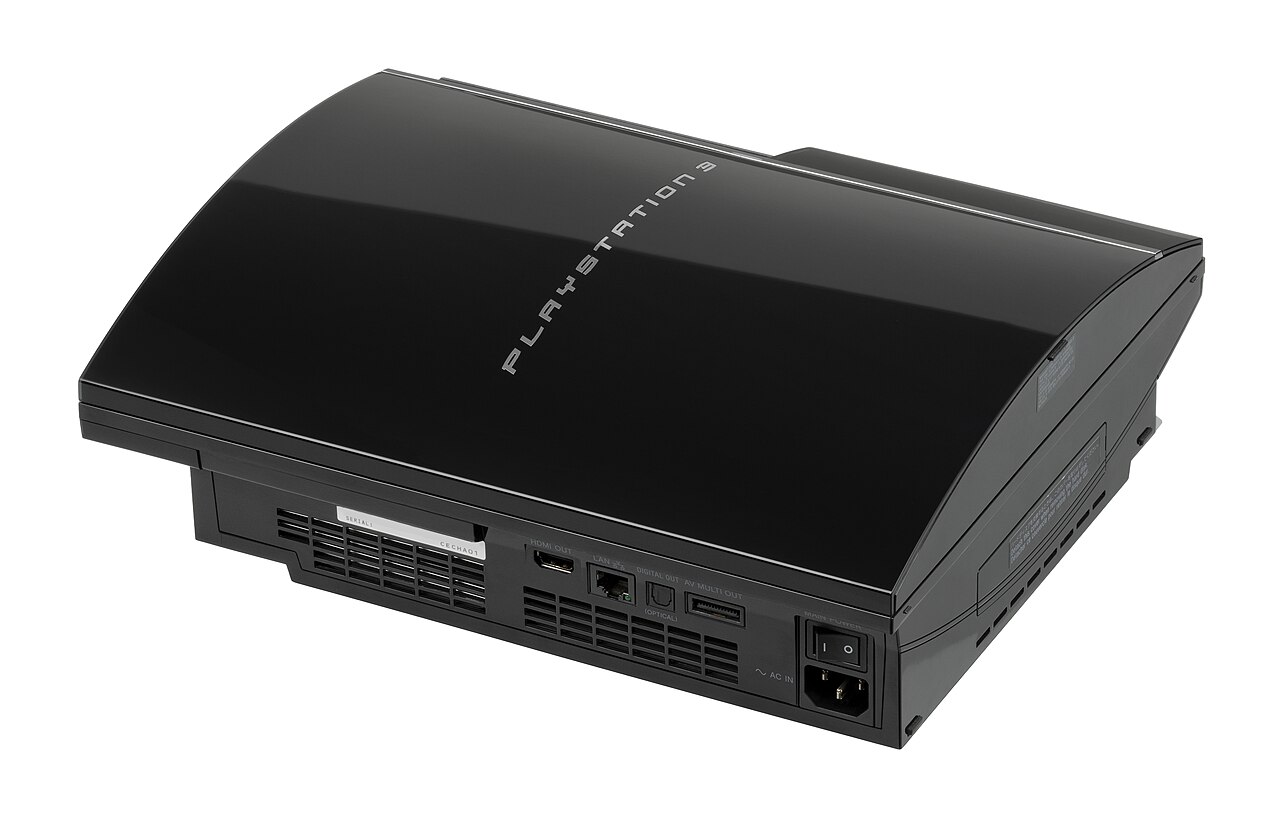
Even the PS3’s industrial design argued with itself about what it was. The launch model was a piano-black monolith – huge, heavy, convex, styled like a piece of Bang & Olufsen audio equipment for a penthouse the games industry didn’t live in – and the internet instantly nicknamed it the George Foreman grill. Its logo aped the typeface of Sony Pictures’ Spider-Man films (same studio family, same font, endlessly pointed out), a synergy flourish that embodied Kutaragi-era Sony: one company, every division, one living room. The machine ran hot and loud in its early revisions, and its model history is a cost-cutting diary – the chrome-trimmed 60GB with hardware PS2 compatibility, the matte downgrades, the card readers and USB ports quietly vanishing. The 2009 Slim redesigned more than the box: out went the Spider-Man font and the glossy arrogance, in came a sober wordmark, a matte finish and a $299 price – the humbling, rendered as product design. That the same platform could contain both objects, the penthouse grill and the apologetic slab, is the PS3’s whole biography in physical form.
The Hack, the Slim and the Long Recovery
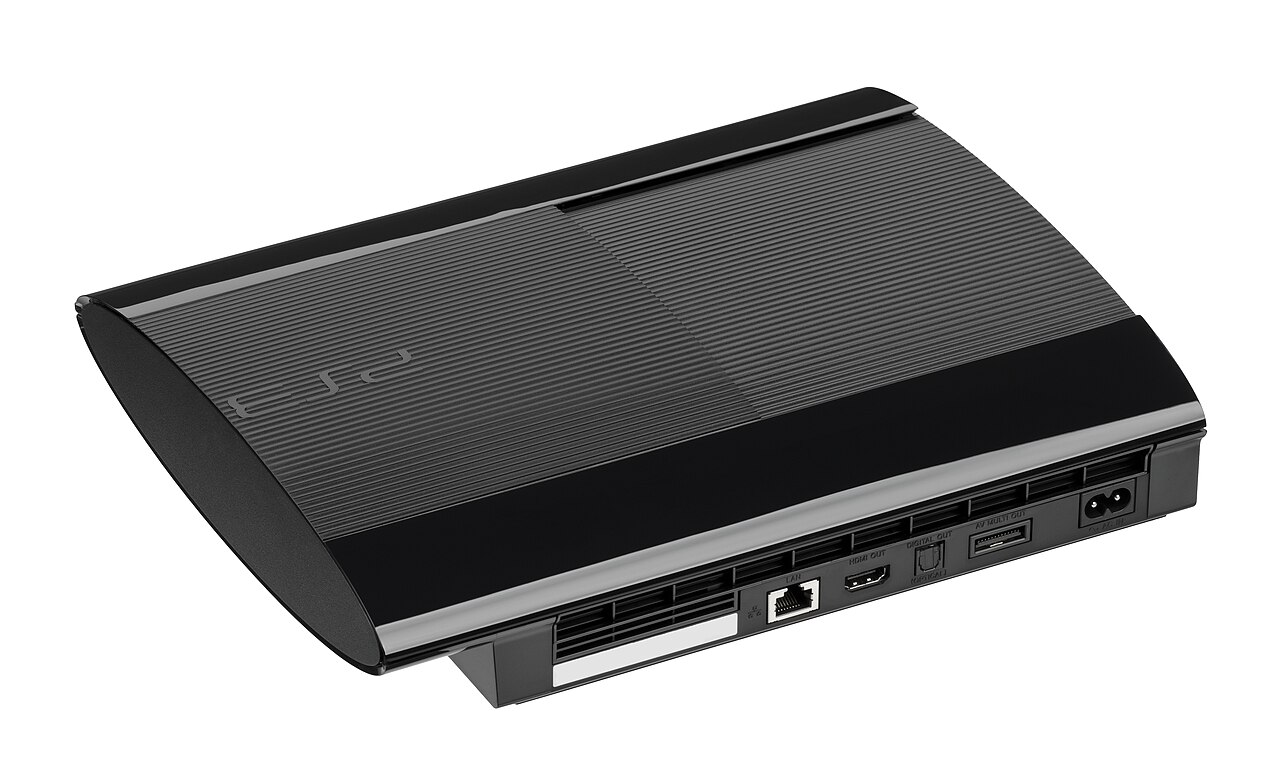
The PS3’s darkest month came in April 2011, when intruders breached the PlayStation Network and exfiltrated data on some 77 million accounts; Sony took PSN down for 23 days, testified before Congress, and rebuilt both the network and its reputation with the “Welcome Back” programme. That the platform survived its own worst-case scenario is part of its story – as is the fact that the recovery coincided with the machine finally becoming the thing it should have been at launch. The PS3 Slim (2009) – cheaper to build, $299, launched with pitch-perfect self-awareness (“It Only Does Everything,” the Kevin Butler ad campaign) – began the sales recovery in earnest; the Super Slim (2012) carried the platform into its long budget afterlife; PlayStation Plus (2010) converted free-online goodwill into a subscription business. The final ledger tells the strangest “failure” story in the industry: 87.4 million consoles (more than the NES, the Genesis and every Xbox ever sold to that date), the Blu-ray format victorious (HD DVD conceded in 2008 – the PS3’s Trojan horse had won Sony’s real war), a games division returned to profit, and first place in the generation conceded to Nintendo’s Wii and, in America, to the 360. Production ran until 2017 in Japan – an eleven-year life. The PS3 lost the console war and won nearly everything else.
Afterlife: The Un-Emulatable Console, Emulated
The PS3’s afterlife is dominated by a paradox its architecture wrote in advance: the Cell made the console so idiosyncratic that for years the only way to play its library was its own hardware – no backwards compatibility in the PS4 or PS5 (streaming aside), no easy ports, Metal Gear Solid 4 stranded for a generation. The preservation answer came from the community: RPCS3, the open-source emulator, spent a decade reverse-engineering the Cell’s behaviour, and its progress – chronicled on this very site – has turned “un-emulatable” into “nearly the whole library, often better than original.” The retro-status question has followed: Japanese gamers now vote the PS3 retro, a verdict its 2006 launch makes objectively true and emotionally absurd to anyone who queued for one. The PS3’s store wrote its own epilogue about preservation. In 2021 Sony announced the closure of the PS3’s PlayStation Store – the only legitimate channel for hundreds of digital-only games – and reversed the decision within weeks under a backlash fierce enough to become the industry’s reference case for digital preservation; the store, stripped of payment options, still operates at the time of writing, a zombie storefront kept alive by its own community. The console’s physical library, meanwhile, has gone the familiar retro route: once-bargain PS3 discs climbing as the generation’s reputation inverts, launch models with hardware backwards compatibility commanding their premium, and the system’s huge, strange catalogue – the first-party monuments, the cult imports, the licensed oddities of a pre-consolidation industry – increasingly read as the last of something. The machine’s institutional legacy is even more durable than its games: it taught Sony humility so thoroughly that the PS4 was designed as the anti-PS3 (commodity parts, developers consulted, price beneath the rhetoric), it won a format war from inside a games console, and it remains the definitive case study in how power, mispriced, is a liability – and how a first-party studio system, given time and billions, can redeem almost anything. The giant enemy crab was real. So was everything that came after.