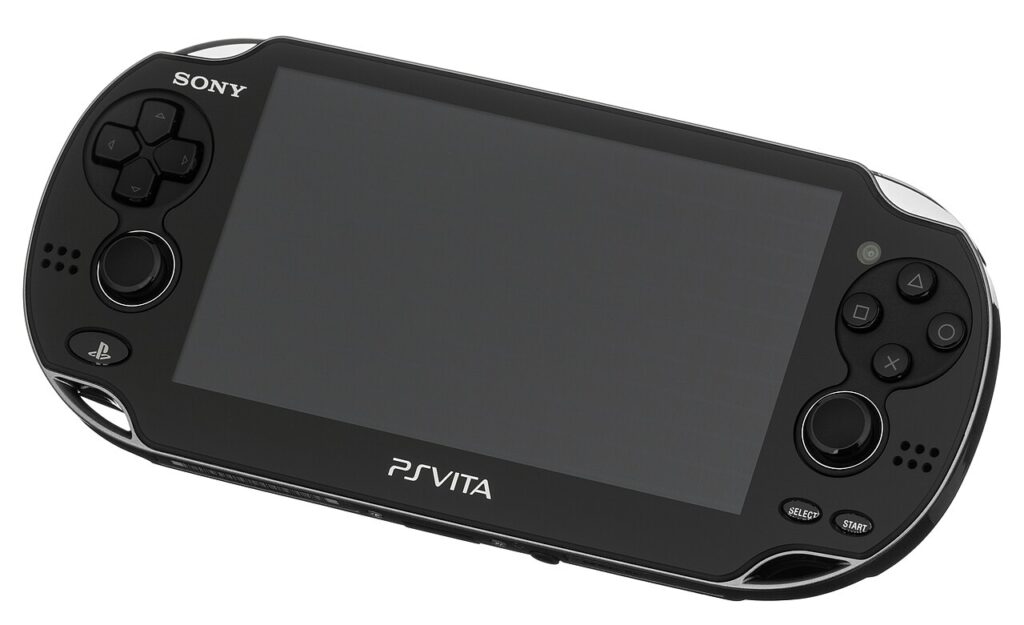
The PlayStation Vita is the best handheld that ever failed. At its 2012 western launch it was, spec for spec, the finest portable games machine ever built: a five-inch OLED screen, two real analogue sticks, a quad-core processor, touch front and back, and launch software led by Uncharted. Sony never published its final sales figure – estimates land between 15 and 16 million, a tenth of the DS, a fifth of its own predecessor – and by 2015 the company’s president was calling it a “legacy platform” in the West. And yet the Vita refused to die on schedule: sustained by Japan, adopted by the indie scene, printed in limited runs for collectors, hacked open into a homebrew paradise, and mourned so effectively that its reputation today is larger than its installed base ever was. “Vita means life,” Sony said at the reveal. The joke took a decade to land. This is its complete story – the dazzling reveal, the ambush that re-priced it before it arrived, the memory cards, the indies and imports that kept faith, the hacked second life, and the long argument about whether the Vita failed at all, or merely arrived in the wrong universe.
NGP: The No-Compromise Machine
The Vita was designed as the anti-PSP in every way except ambition. Where the PSP had one nub, the Vita – revealed in January 2011 under the codename NGP, Next Generation Portable – had two proper analogue sticks, the first handheld ever to ship them. Where the PSP’s screen had been merely lovely, the Vita’s five-inch OLED was the best display on any portable device of its year. The rest of the sheet read like a dare: quad-core ARM processor, a PowerVR GPU in PS3’s neighbourhood, front and rear cameras, front touchscreen and a rear touchpad, Sixaxis motion, optional 3G, and near-field social software (Near, Party chat) drawn from the smartphone playbook Sony had watched eat the PSP’s media lunch. At E3 2011 Kaz Hirai landed the price – $249 for the Wi-Fi model, matching the 3DS – to an audible gasp, and the demos (Uncharted: Golden Abyss bent light around the hardware’s tricks; Little Deviants showed off the rear pad) made the machine look inevitable. The strategy underneath was the PSP’s, corrected: court the core first, keep the console franchises physically present, and never again concede the “real games” argument to a phone. What the strategy kept from the PSP, fatally, was one piece of proprietary storage. The no-compromise machine had a compromise, and it was priced like a ransom.
The Launch, the Memory Card Tax and the Western Cliff
Japan launched in December 2011; the West followed in February 2012 with the strongest launch library a handheld has ever fielded – Uncharted: Golden Abyss and Wipeout 2048 as the technical standard-bearers, Gravity Rush (Japan Studio’s gravity-flipping masterpiece, and the platform’s defining exclusive) arriving alongside, plus Rayman Origins, Virtua Tennis 4 and a bench of quality no launch since has matched. Then three things happened at once. The memory cards – proprietary, mandatory for most games, and priced at up to $99 for 32GB – became the story, a tax on every owner that reviews mentioned before the games. The smartphone market, now fully detonated, absorbed the casual and midcore audiences the Vita’s $40 cartridges needed. And third parties, watching both, quietly left: the nadir was Call of Duty: Black Ops Declassified (late 2012), a cynical, broken miniature whose reception wrote the obituary template – if Call of Duty couldn’t be bothered, why would anyone else? Sony’s own studios followed the audience to the PS4; by 2014 first-party Vita development had effectively ended in the West, and in 2015 Andrew House used the word “legacy” for the platform outside Asia. The cliff was that fast. What kept the machine alive was everything Sony hadn’t planned: Japan’s mid-tier industry, the JRPG and visual-novel economy, and the independent developers who discovered that the Vita’s small, obsessive audience bought games like no other.
The Ambush and the Numbers: How the Market Re-Priced the Vita
The Vita’s commercial story was substantially written before it launched in the West, in July 2011, when Nintendo – panicking at the 3DS’s slow start – slashed its price from $249 to $169 and invented the Ambassador programme in a single press release. The Vita had been priced to match the old 3DS; it arrived, seven months later, $80 more expensive than its rival before the mandatory memory card (another $25-100) was counted, into a market Nintendo had just re-anchored. The numbers followed the script the ambush wrote. Japan’s launch was euphoric (over 320,000 units in the opening days) and then vertiginous – the famous second-week collapse to a fraction of that figure began the “Vita has no games” narrative that no launch lineup could outrun; worldwide, Sony claimed 1.2 million by the end of February 2012 and 4 million by the end of that year, respectable figures that nonetheless trailed every internal hope and all the headlines’ comparisons. Sony then made the data itself a story: combined PSP+Vita shipment reporting obscured the Vita’s individual trajectory for years, and the company never published a final total – the 15-16 million range is an analysts’ reconstruction, a silence that speaks plainly beside the PSP’s celebrated 80 million. A 2013 Japanese price cut (to ¥19,980) produced the machine’s healthiest market rhythm there, but the western die was cast: by the time the PS4 gave the Vita its Remote Play second life, the platform war for the mass-market handheld had been over for two years. The Vita’s numbers are a lesson in how launches are decided by the price of the ecosystem – cards, rival cuts, phone contracts – and not by the quality of the object, which in this case was never in doubt.
Bubbles, Near and the PS4 Lifeboat
The Vita’s software personality was as experimental as its hardware was confident. The LiveArea interface – pages of glossy bubbles for every game and app – made the touchscreen the centre of the machine’s life, and its built-in apps sketched a social handheld: Near traded location check-ins and game gifts with nearby strangers (a StreetPass contemporary, switched off in 2015), Party enabled cross-game voice chat years before the Switch’s phone-app workaround, and PlayStation Mobile (2012-2015) attempted a third storefront of small games shared with certified Android phones – an ambitious, forgotten experiment in platform sprawl. The feature that outlasted the experiments was Remote Play. When the PS4 launched in 2013, Sony made Vita remote play a system-level mandate – near enough every PS4 game playable on the handheld over Wi-Fi, demonstrated by executives streaming Knack onto the little OLED – and briefly repositioned the Vita as the PS4’s ultimate accessory. It was a genuine second wind commercially as well as creatively: Borderlands 2’s 2014 port (by Iron Galaxy, a conversion that by rights shouldn’t have run) became the platform’s last big western third-party moment and a minor sales event, and Japanese price cuts the year before had the machine regularly outselling expectations at home. The PS4 lifeboat didn’t restore the Vita’s first-party future – Sony’s studios were the ones making the games being streamed – but it clarified the machine’s final identity: not a platform, increasingly, but a beloved peripheral to everything else in games, including the PC indie scene it mirrored.
The Indie Lifeboat and Persona 4 Golden
The Vita’s second life began with a realisation inside Sony’s own indie-relations push – Shahid Ahmad’s Strategic Content team its public face – that the platform’s economics inverted the console business: a small audience of devotees, buying premium-priced games at high attach rates, on hardware with no piracy to speak of, was the perfect home for the downloadable indie wave. Hotline Miami, Spelunky, Fez, Rogue Legacy, Guacamelee!, The Binding of Isaac, SteamWorld Dig – the Vita became the connoisseur’s way to play the indie canon, its OLED and sticks flattering everything, its suspend-anywhere habits anticipating modern handheld play. The emblematic game, though, was a port: Persona 4 Golden (2012), Atlus’s expanded version of the PS2 RPG, became the platform’s best-reviewed title and its eternal system-seller, the game a decade of buyers purchased a Vita to play. Around it clustered the catalogue that defines the machine now: Gravity Rush, Tearaway (Media Molecule’s paper-craft wonder, adored and underbought), Soul Sacrifice (Keiji Inafune’s dark hunting action), Freedom Wars, Ys: Memories of Celceta, the Danganronpa trilogy, Steins;Gate, and Killzone: Mercenary – proof, arriving too late, that a portable FPS with two sticks could be excellent. In Japan the ecosystem ran deeper still: hunting games, otome and visual novels, and a Minecraft port that became one of the Vita’s biggest Japanese sellers, carrying the hardware in its home market years after the West wrote it off. The Vita had become a specialist’s machine – and specialists, it turns out, are forever.
The Library the West Half-Missed: Vanillaware, Atelier and the Dungeon Crawlers
Underneath the headline catalogue ran the Vita’s most durable stratum: the Japanese mid-tier industry adopted the machine as its home ground for a decade, and much of it reached the West late, digitally, or by fan effort. Vanillaware made the OLED sing – Muramasa Rebirth and Dragon’s Crown are still the screen’s reference images, all hand-drawn saturation – and Gust’s Atelier series effectively lived on the platform through its Plus editions. The Vita became, unexpectedly, the dungeon-crawler machine of its generation (Demon Gaze, Stranger of Sword City, Operation Abyss and their sequels, a DRPG boom that existed almost nowhere else), Falcom’s Trails of Cold Steel began as a Vita-and-PS3 pair in Japan, and Compile Heart’s factories (Mary Skelter, the Neptunia line) industrialised the visual-novel-and-fanservice economy the hardware sustained. Utawarerumono, World of Final Fantasy, Digimon Story: Cyber Sleuth – the list of substantial JRPGs whose natural home was this “dead” platform runs to hundreds, and it’s the layer that explains both the Japanese longevity and the western collector market: these were small print runs of beloved objects for an audience that never left. When western critics called the Vita a JRPG machine as a dismissal, its owners heard a catalogue description – and, increasingly, a compliment the Switch’s library would later validate at scale.
The Object Itself: Why Owners Won’t Let Go
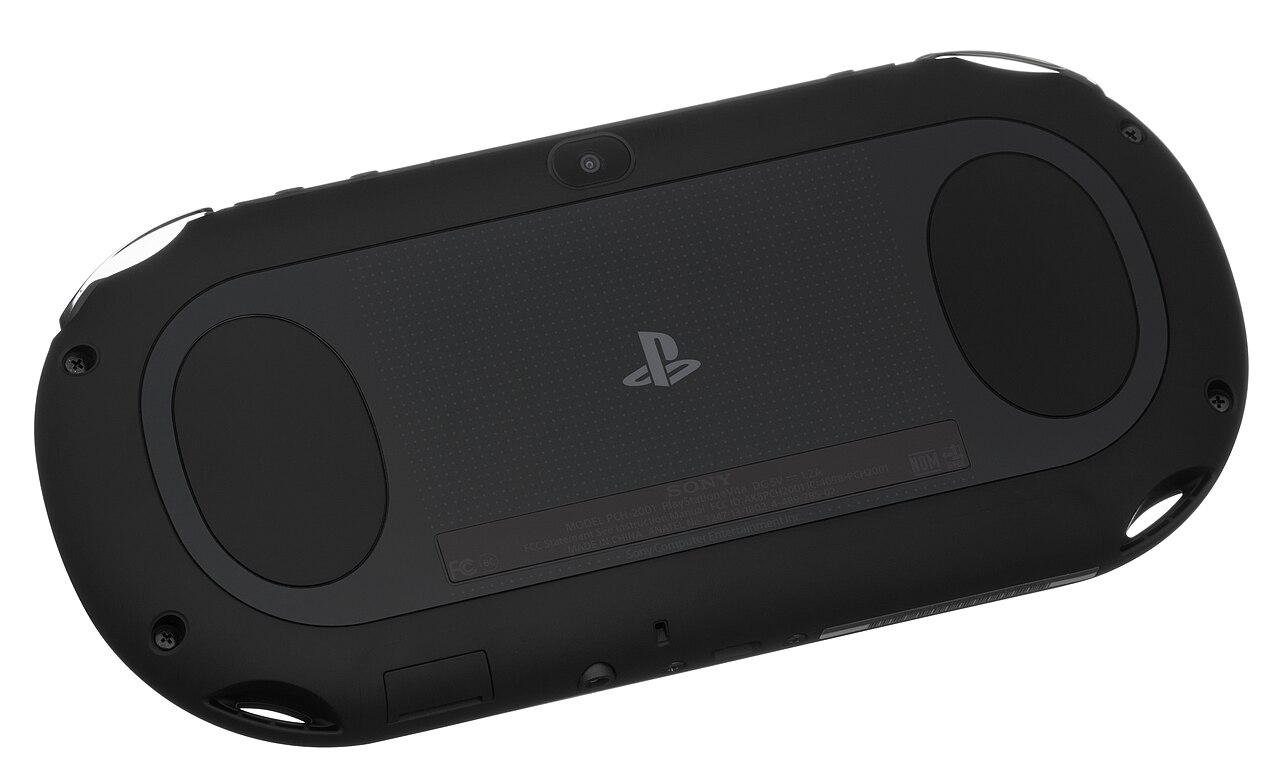
Pick up a launch-model Vita today and the cult stops being mysterious. The machine is silent (no drive, no fan worth hearing), dense in the hand in the way of good cameras, and finished with a seriousness modern handhelds rarely attempt. Its D-pad is a connoisseur’s legend – a single-piece cross, clicky and precise, that fighting-game players rank with the best ever fitted to a portable – and its sleep behaviour remains quietly miraculous: close a game, and the Vita holds it in standby not for hours but for weeks, resuming mid-jump as if no time had passed. Sony even fixed the PSP’s format sin: games shipped on small flash cards, instant and silent, the UMD’s whirring caddy retired for good. The design language – the silver-trimmed black slab, the bubble UI, the rear pad’s dotted texture – was the last flowering of the Kutaragi-era belief that a games machine should be an object of desire first and a platform second. That the belief was commercially punished does not make the object worse. It makes it rarer, and rarity plus quality is the collector market’s whole recipe. It also explains the otherwise baffling economics of the Vita’s fanbase, whose members speak of the machine the way owners speak of a great car from a discontinued marque: with mechanical sympathy, spare-parts anxiety, and no interest whatsoever in your newer, better-selling alternative.
The TV Detour and the Long Goodbye
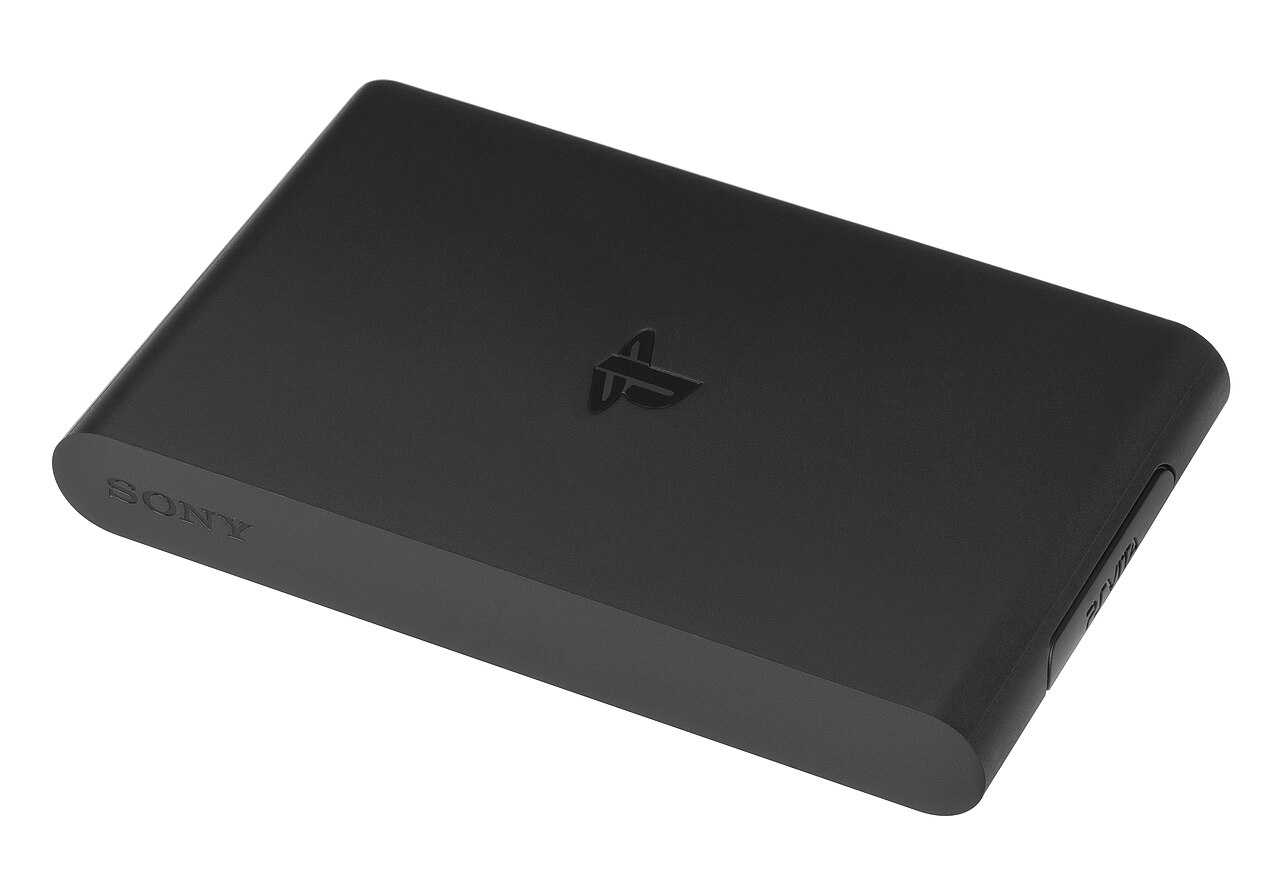
Sony’s last hardware idea for the platform was to remove the handheld: the PlayStation Vita TV (2013 in Japan, 2014 in the West as PlayStation TV) put the Vita’s guts in a microconsole the size of a pack of cards, playing Vita cartridges, PSP and PSone downloads, and PS4 Remote Play on a television. It was cheap, clever and confusingly restricted (a whitelist excluded swathes of the Vita library, including most of its touch-heavy emblematic games), and it was discontinued in the West within about two years – a footnote, though a collectible one. The handheld line itself soldiered on in Japan until production ended in 2019, by which time Sony had publicly exited the category: no successor was ever announced, and the company’s portable ambitions would resurface only as the PlayStation Portal streaming peripheral in 2023. The Vita’s store outlived the hardware in the strangest way – Sony’s 2021 plan to close the PS3, Vita and PSP storefronts was reversed for PS3 and Vita after a preservation backlash loud enough to make industry news, leaving the Vita’s shop technically alive (card payments removed, wallet-funding only) at the time of writing. A platform Sony called legacy in 2015 remained, a decade on, stubbornly unburied.
Sony’s own post-mortems were unusually candid. Shuhei Yoshida – the Worldwide Studios president and a public Vita devotee – told an EGX audience in 2015 that the climate was “not healthy” for a Vita successor because of the mobile market’s dominance, a sentence that functions as the platform’s official epitaph: the games were good, the hardware was good, the world had moved. When even the machine’s champions inside the building frame its story as environmental, the argument about what the Vita was – the finest possible answer to a question the market had stopped asking – is effectively conceded by everyone who was there.
Afterlife: Vita Island and the Homebrew Paradise
The Vita’s afterlife is the most organized fandom in handheld history. The HENkaku exploit (2016) opened the machine completely, and the community finished Sony’s homework: SD2Vita adapters abolished the memory-card tax forever, fan translations opened the Japanese library, emulator and port teams brought everything from Android titles to Grand Theft Auto to the hardware, and Vita3K pursues the platform’s emulation on PC. The physical market turned cult in real time – Limited Run Games and its peers made the Vita their flagship platform for boutique print runs, Japanese RPGs in English became five-figure print scarcities, and sealed Vita games now anchor collections the way sealed SNES games do. “Vita Island” – the fandom’s ironic name for its paradise – names the whole phenomenon: an audience small enough to fit on an island, devoted enough to sustain an economy. The historical verdict has quietly settled. The Vita did not fail because the concept was wrong – Nintendo’s Switch, a premium-priced handheld with console games, sold 150 million by perfecting the Vita’s premise with a unified library and no phone-shaped hole in the market. The Vita failed at timing, storage pricing and third-party gravity, and succeeded at everything a machine can control: the hardware, the screen, the sticks, and a library its owners still evangelize. Vita meant life. Eventually, it did.