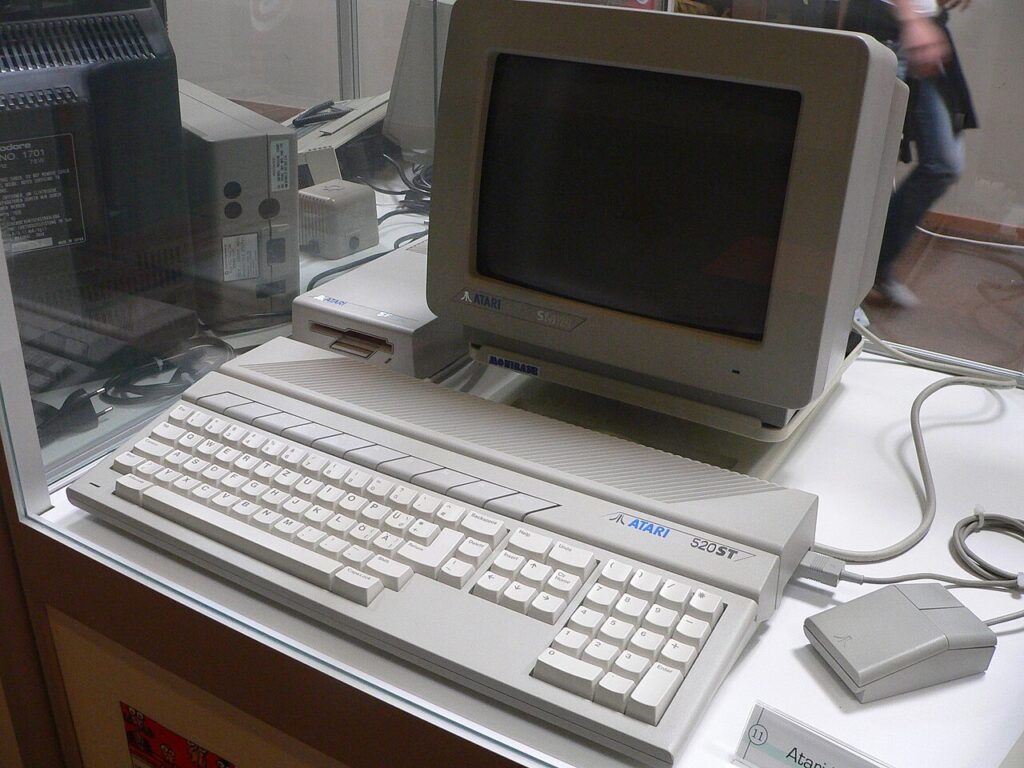
The Atari ST is the computer built out of spite, in five months, that ended up running the world’s recording studios. When Jack Tramiel was forced out of Commodore in 1984, he bought Atari’s consumer division, took Commodore’s best engineers with him, and produced a 16-bit machine that undercut the Macintosh by two-thirds – the “Jackintosh” – with one accidental feature, built-in MIDI ports, that made it the standard sequencer computer of the music industry for a decade. It fought the Amiga in the defining computer rivalry of the late eighties, gave the world Dungeon Master and Cubase, anchored German desktop publishing, and sold in the millions while its owner treated elegance as a cost centre. The ST was never the most magical 16-bit computer. It might have been the most useful. This is its complete story – the boardroom war that birthed it, the accidental ports that made it immortal, the games war it fought to a draw, and the German businessmen, British demo crews and world-famous producers who all, for entirely different reasons, swore by the same grey box.
Tramiel’s Revenge: The Five-Month Computer
The ST exists because of a corporate knife fight. Jack Tramiel, the Auschwitz survivor who built Commodore into the company that sold the VIC-20 and C64 by the million on the doctrine “computers for the masses, not the classes,” was ousted from his own company in January 1984 after a feud with chairman Irving Gould. By July he owned Atari’s consumer business, bought from Warner Communications for almost nothing plus warrants, and he brought with him the engineers who mattered – above all Shiraz Shivji, the C64’s hardware architect, who sketched a Motorola 68000 machine and had it running in a development sprint measured in months. The Atari ST (the initials were officially “Sixteen/Thirty-two,” the 68000’s architecture) debuted at CES in January 1985 and shipped that summer: 512KB of RAM, TOS in ROM with Digital Research’s GEM graphical interface on top, a 3.5-inch floppy, and a price – $799 with a monochrome monitor, against the Macintosh’s $2,495 – that earned it the nickname Tramiel’s people both loved and litigated around: the Jackintosh. “Power without the price” was the slogan, and the launch was pure Tramiel theatre: machines promised for spring were demonstrated in January and delivered by summer, a schedule Commodore’s new owners – who were preparing the Amiga, a machine Atari had originally funded, in one of the decade’s great corporate ironies – could only watch. The ensuing legal war (Atari sued over the Amiga chipset’s origins; Commodore countersued) is still the industry’s favourite boardroom saga. The machines would fight the commercial war in public.
MIDI: The Accidental Empire
The ST’s defining feature cost Atari almost nothing: two five-pin MIDI ports, in and out/thru, built into the side of the machine because Shivji’s team thought musicians might like them. It was the single luckiest specification decision of the decade. MIDI – the protocol that lets electronic instruments and computers talk – needed a cheap, reliable, timing-accurate host, and the ST was all three at a third of a Mac’s price. The software followed immediately and then monumentally: Steinberg’s Pro-24 matured into Cubase (1989) on the ST, and Emagic’s Notator – ancestor of Apple’s Logic Pro – made the platform the sequencer of record. Through the late eighties and well into the nineties, the professional studio’s furniture included an ST: Depeche Mode, Tangerine Dream and a generation of electronic producers built their rigs around it, studios kept STs running decades past obsolescence because the MIDI timing was trusted, and musicians still speak of the machine the way engineers speak of a favourite console. The same serious streak anchored the ST’s second stronghold: Germany, where the ST plus Atari’s SLM804 laser printer made a desktop-publishing rig (Calamus its flagship software) at a price German small business could not refuse, and where the machine retained a professional aura its games reputation never had in Britain. The ST was a music computer and a business computer that also played games – a portfolio neither the Amiga nor any console could match.
The Games War: ST Versus Amiga
For all the studio credibility, the ST’s public war was fought in the playground and the magazines, against the Amiga. The first round belonged to the ST by default: cheaper and a year more established, it was the lead platform of 1985-88, and its early catalogue carries the era’s signatures – FTL’s Dungeon Master (1987), which essentially invented the real-time first-person dungeon crawler and was an ST exclusive for its crucial first year; Rainbird’s The Pawn, showing off Magnetic Scrolls’ illustrated adventures; Starglider, Jez San’s wireframe marvel; Captain Blood’s beautiful French strangeness; Time Bandit, Oids, and a thousand budget curiosities. The ST’s hardware philosophy – a fast CPU and almost no custom graphics hardware – made it quicker than the Amiga at maths and 3D, and slower at the scrolling and sprites the games market increasingly demanded; the famous result was a generation of ST shooters fighting their own refresh rates while Amiga versions glided. Round two flipped accordingly: from about 1989 the Amiga became the lead games platform, the ST inherited ports, and Atari’s answer, the STE (1989), added exactly what had been missing – a blitter, a 4,096-colour palette, stereo DMA sound – to a market that had already chosen. The STE is one of computing’s great might-have-beens, a corrected machine stranded by timing. Through it all the rivalry generated the culture both machines are remembered by: playground evangelism, magazine holy wars (ST Format versus Amiga Format on the same newsagent shelf), and demo scenes – the ST’s crews pushing a blitterless machine to apparent impossibilities through sheer code – that taught a generation of European programmers their trade.
GEM, Apple Lawyers and the Two-Monitor Life
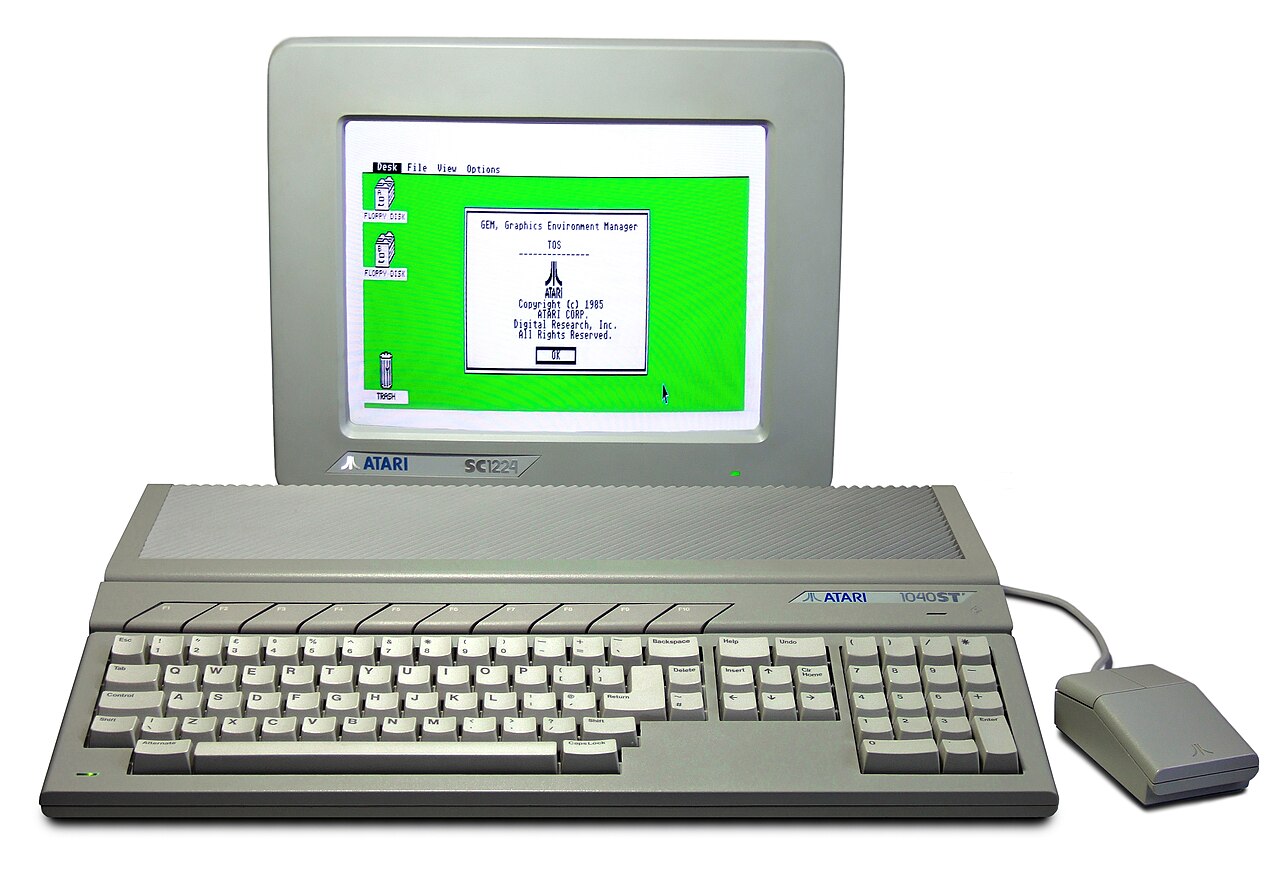
The ST’s face belonged to Digital Research. GEM – the Graphics Environment Manager, DRI’s answer to the Mac interface, built partly by ex-Xerox PARC people – gave the ST windows, icons, menus and a mouse at a price where the Mac’s equivalents were luxury goods, and it gave Apple grounds for war: in 1985 Apple sued Digital Research over GEM’s resemblance to the Macintosh interface, and DRI settled by hobbling the PC version (fixed windows, no trash can). The ST kept a fuller GEM in ROM – one of the small accidents that made its desktop feel a class above its price – though the system’s serious users developed their own aesthetic anyway: the SM124 monochrome monitor, 640×400 and pin-sharp, became so definitive of the “professional ST” that many owners ran two displays, colour for games and mono for words, swapping the plug like a gear change. TOS itself evolved in public (the “Rainbow TOS” 1.04 release, named for its coloured logo, fixed a shoebox of launch bugs), desk accessories gave the machine its multitasking illusions, and the programming culture flourished in the gaps: GFA BASIC, fast and beloved, was the ST generation’s first language; HiSoft’s Devpac served the assembly serious; STOS The Game Creator put commercial-style games within a teenager’s reach. The ST asked to be programmed in a way the consoles never did, and an outsized share of Britain and Germany’s games industry quietly started at its keyboard.
Cover Disks, Demo Crews and the PD Libraries
The ST’s culture had distribution channels all its own. The magazines – ST Format above all, with ST Action and The One fighting over the games reader – made the cover disk an institution: full games, utilities and demos glued to the front of a monthly, an economy that kept the machine’s software flowing outside retail entirely. The public-domain libraries (mail-order catalogues like Goodman’s and Floppyshop, hundreds of disks of shareware and freeware) were the app store of a postal age. And the demo scene treated the ST’s absent custom chips as a dare: The Carebears, The Lost Boys and their rivals produced demos (the Union Demo and the Cuddly Demos are the canonical artefacts) that extracted fullscreen scrolling, overscan borders removed, hundreds of colours and sampled sound from hardware specifications that said none of it was possible – sync-scrolling and border-breaking techniques invented by teenagers in bedrooms, in an arms race with the Amiga scene that pushed both machines past their manuals. The ST’s reputation as the lesser games machine never recovered from the comparison of the two machines’ shooters; its reputation among the people who coded for it never needed to. An ST owner in 1989 had a sequencer, a word processor, a programming school and a demo scene in one grey box – the “home computer” ideal, completely realised, at the last moment in history when one box could be all of those at once.
The Games Shelf: The ST Canon
The ST’s library rewards the argument that it was a thinking player’s machine. Its foundational text is FTL’s: Sundog: Frozen Legacy, a free-roaming space trader of staggering ambition for 1985, and then Dungeon Master (1987), which sold the platform to America almost single-handedly and whose expansion, Chaos Strikes Back, punished a generation beautifully. Adventure games adored the machine – a real keyboard and a big screen made it the connoisseur’s home for Magnetic Scrolls (The Pawn, The Guild of Thieves, Jinxter) and the full Infocom catalogue – and strategy flourished: Rainbird’s Carrier Command, Mike Singleton’s Midwinter (a one-man open world on a 1989 floppy), Bullfrog’s Populous arriving as an ST-Amiga twin birth. The action shelf has more muscle than the rivalry admitted: Starglider II, Jez San’s seamless planet-and-space epic; Another World in its Delphine original; the Bitmap Brothers’ ST work (Xenon 2, with Bomb the Bass on the soundtrack, proving the machine could do shooters in the right hands; Speedball 2, whose ST-versus-Amiga argument remains unsettled after thirty-five years); Jeff Minter’s Llamatron, shareware as a philosophy; MicroProse’s flight line, led by F-19 Stealth Fighter; and oddities with no other home, from Oids’ thrust-and-rescue purity to Time Bandit’s genre-hopping madness. It is a library weighted toward depth over reflexes – adventures, strategy, simulation, first-person crawling – and it explains the ST owner’s eternal confidence in the great argument: the Amiga won the arcade; the ST kept the study.
Power Without the Price: Selling the ST
The ST’s commercial geography told you what the machine was. In America, where Tramiel’s war with his own former dealer network left distribution thin and the Mac owned the “serious 68000” story, the ST was always a cult – present in music shops and Atari user groups, absent from the suburban mainstream. In Europe it was a pillar: Britain’s high-street chains sold the ST in aggressive games bundles (the Discovery and Turbo packs, boxes stuffed with a dozen titles at prices the Amiga chased all decade), France adopted it through its own strong Atari operation, and Germany, as established, ran businesses on it. The price cadence was pure Tramiel – a 520STFM under £300 by the late eighties, bundle wars fought in the pages of the same magazines that carried the cover disks – and it kept the ST commercially level with a technically superior rival for the platform’s whole life. The lesson the industry took (and keeps relearning, most recently with handheld PCs) is that distribution, price and one killer serious application can hold a technically second-best machine in a two-horse race indefinitely. The ST also benefited from being the machine parents approved of: the monochrome monitor and the word processor made it the defensible purchase no games-first rival could match, and a generation of European teenagers received one “for schoolwork” and quietly turned it into the games machine it also was. The dual identity was not a compromise. It was the product. The ST never won the argument about which 16-bit computer was better. It won the argument about which one a family, a band or a small business could justify buying – which, in the home-computer century, was the argument that paid.
The Range, the Falcon and the End of Atari Computing
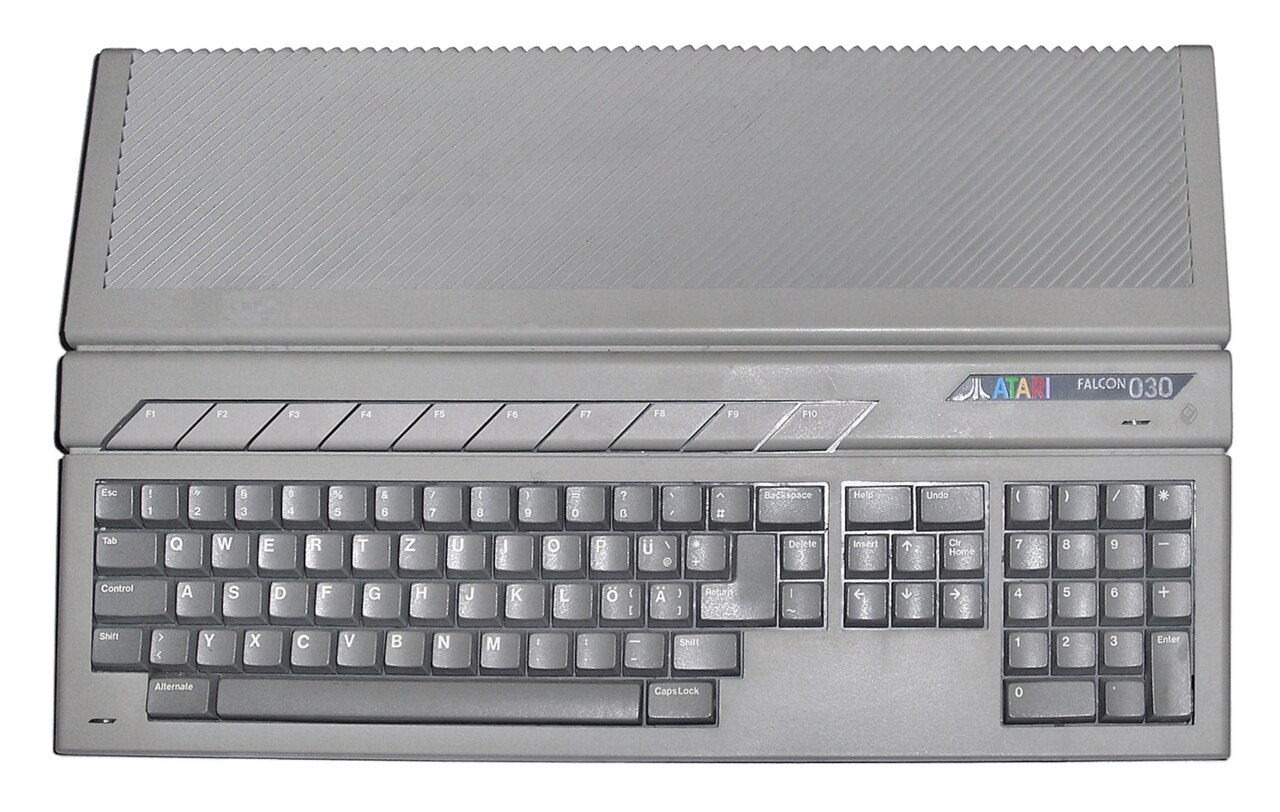
The line widened the way Tramiel lines did – value first, ambition later. The 1040ST (1986) was the first home computer with a megabyte of RAM under $1,000, the Jackintosh argument completed; the Mega ST line aimed at business desks; the STacy tried a laptop; the TT030 (1990) reached for the Unix workstation market. The finale was the Falcon030 (1992), a fascinating overreach: a 68030 with a Motorola DSP chip doing audio and graphics work years ahead of its price, true-colour modes, and multitasking MultiTOS – a multimedia computer in the modern sense, launched into a market the PC had already annexed. Atari cancelled it within a year to pour everything into the Jaguar console, and in 1996 Atari Corporation itself was merged into JTS, a disk-drive maker, ending the story that began with Pong. The ST’s German ecosystem refused the memo – clone machines (the Medusa, Hades and Milan) extended the platform for its professional holdouts into the late nineties – but the tide was Windows, and both 68000 home computers were relics by the middle of the decade. Combined ST-family sales are usually estimated around five million: fewer than the Amiga, achieved across more professions.
Afterlife: The Useful Machine, Kept
The ST’s afterlife splits along the lines of its life. Musicians kept the faith longest in the wild – STs sequenced in working studios decades on, and the machine’s YM2149 sound chip anchors a chiptune scene that treats its square waves as a genre. There is a neat technological coda: the FPGA retro scene’s founding project, the MiST board – its name a compression of Amiga and ST – began life as an effort to reimplement these two rivals in modern silicon, and its descendant, the MiSTer ecosystem, still leads with their cores; the war continues, at perfect fidelity, inside a chip. The games culture is served by Hatari, a superb emulator, by the ST’s enormous preserved software archive, and by a homebrew scene still producing for the hardware (this site has covered modern ST releases arriving forty years on – the Escape 2042 story on this very shelf). German retrocomputing keeps the professional flame, clones and all. And the great argument – ST versus Amiga, the 16-bit era’s defining fan war – continues in perfect health, because both sides were right: the Amiga was the more magical machine, and the ST was the one that did more jobs for more different kinds of people. Tramiel wanted computers for the masses, not the classes; the ST, spite-born and five months in the making, may be the purest machine he ever shipped. Power without the price. It holds up – as a slogan, as a design philosophy, and as the epitaph of the last computer a family could buy for every reason at once.