
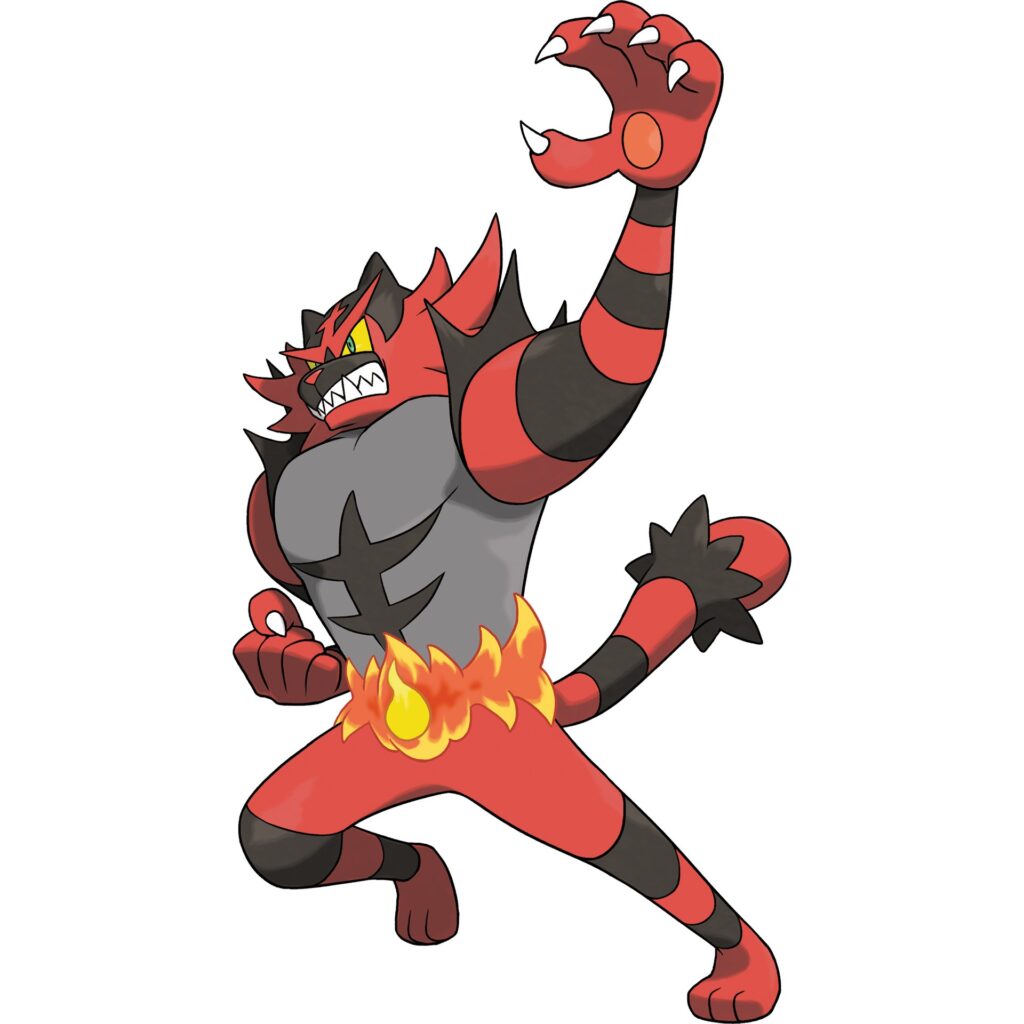
Most Pokémon Mystery Gift codes are forgettable strings of leetspeak that players copy from a website, paste into a menu and never think about again. One code, handed out in June 2025, made an entire competitive community lose its composure laughing — because it was not really a code at all. It was a punchline, encoded. To claim a championship-winning Incineroar in Pokémon Scarlet and Violet, players had to type NA1C25C0NPER1SH. Read it slowly. NAIC 25. CON PERISH. Somewhere inside The Pokémon Company, somebody had taken the funniest meme in competitive Pokémon, hidden it in an official distribution, and dared the world to notice.
The world noticed. “This is quite possibly the best special event code in the history of ever,” one fan responded, in the quote that carried the story around the internet. Another simply marvelled that the code really did say “con perish.” To understand why a sixteen-character password reduced grown competitors to helpless giggling, you have to know three things: who Wolfey is, why he was never supposed to be holding an Incineroar, and what happened on a livestream in December 2024 when an opponent realised, half a second too late, exactly whose team he was facing.
Decoding the Punchline
The distribution ran from 13 to 20 June 2025, timed to the North America International Championships — NAIC — and it gave away the Incineroar used by Wolfe Glick, universally known as Wolfey, on his way to winning the Europe International Championships in February 2025. The code’s first half is pure filing cabinet: NA1C25 marks the event and the year. The second half is the joke. During the December 2024 Grand Challenge, fellow competitor Marco Silva ran into Glick’s team on an online ladder and reacted live, on his own stream, in delighted Spanish-accented horror. First came the excitement of recognising the famous opponent. Then came the team preview, and the sight of a Perish Trap strategy — a team built around Perish Song, the move that starts a three-turn countdown to a knockout for everything on the field. The delight curdled in real time into the now-immortal line: Wolfey — Wolfey con perish — no. “Con” is Spanish for “with.” Wolfey, with Perish. The clip became the competitive scene’s favourite reaction image in text form, quoted wherever Glick’s name appeared.
So when the official code dropped six months later, it did not merely reference the meme. It made every single player who wanted the cat re-enact it — typing the opponent’s despair into their own game, one character at a time, to receive the very Pokémon from the team that inspired it. As in-jokes go, it is exquisitely constructed: you cannot claim the prize without saying the line.
The Cat Wolfe Loves to Hate
The Incineroar itself was no booby prize. It arrived at level 50, exactly as Glick ran it in Europe: Careful nature, the Intimidate ability, Safety Goggles in its paws, and a support moveset — Fake Out, Parting Shot, Flare Blitz and Protect — that has made Incineroar the most successful competitive Pokémon of the modern era. It carried the Partner Ribbon, so sending it into battle announced it as “Wolfe’s Incineroar,” and its original trainer name was simply Wolfe. On paper, a generous tribute to a champion.
In context, it was also a magnificent piece of trolling, because Glick’s public relationship with Incineroar is famously hostile. He has ranked it among his most hated Pokémon, criticised at length how its typing, ability and movepool warped the entire competitive format around itself, and sold “ban Incineroar” merchandise to fans who share the grievance. The official Play! Pokémon channel leaned all the way in, publishing its EUIC recap under the title “Wolfe LOVES Incineroar.” Glick’s response, left in the comments, was a single word in capital letters: “UNNECESSARY.”
The deepest layer of the joke had been planted two years earlier. When Scarlet and Violet introduced the Partner Ribbon — the ribbon that lets a distributed Pokémon carry its trainer’s name into battle — Serebii’s Joe Merrick had joked that the feature could one day deliver a “Wolfe’s Incineroar.” Glick replied in mock horror at the very suggestion. In June 2025 the prophecy completed itself, and the champion’s own response to the announcement was a long, resigned string of laughter in capital letters. The distribution was, by then, on rails: the funniest event Pokémon in years, honoured with the funniest code in the format’s history.
A Short History of Codes That Tell Jokes
Pokémon distribution codes have been quietly developing a sense of humour for years, and the Incineroar code is best appreciated as the peak of a form rather than a bolt from the blue. Scarlet and Violet’s password system — sixteen characters of letters and numbers, begging to be read aloud — turned every distribution into a tiny headline. Some codes are pure utility wearing a costume: LEVELUP handed out Rare Candies, REV1VE handed out Max Revives, and the joke, such as it is, is simply that the password describes the parcel. Others lean into announcement-speak: GETY0URMEW launched the great Mew giveaway of 2023 in the voice of an excited poster, and NEWM00N1SC0M1NG gave Darkrai’s arrival the ominous tone of a prophecy.
The sandwich codes deserve their own footnote in the hall of fame. Scarlet and Violet’s picnic feature — in which players lovingly assemble sandwiches of terrifying architectural ambition — produced ingredient distributions unlocked with passwords like P4LD3AP1CN1C, the game’s own name for its obsession rendered in leetspeak: Paldea Picnic. It is a code that only makes sense inside the game’s peculiar culture, which is exactly what makes it charming.

But the true ancestors of NA1C25C0NPER1SH are the champion codes: the passwords that distribute the actual competitive teams of tournament winners, each one compressing a result, a strategy and sometimes a running gag into a single string. A shiny Grimmsnarl from a Thai championship arrived under THA12022CHAMP. Nils Dunlop’s Porygon2 came with NA1CTR1CKR00M, advertising the Trick Room strategy it anchored. Juyoung Hong’s Porygon2, distributed just one week before the Incineroar in June 2025, used N01SUPP0RTPTC24 — “No. 1 Support” — a modest boast about the Pokémon’s job on the team. A championship Flutter Mane hid its Choice Specs in plain sight inside 987W1THSPECS. A Talonflame answered to F1ARR0W23MASTER, after its trainer. A Pelipper from the Latin America championships carried W1DEGUARDLA1C25, and a Jumpluff for the 2025 European championships opened with EU1C25SUNNYDAY, naming both the event and the weather it existed to set.
And then there is the code that closes the circle. In April 2024, a distribution gave away the Iron Hands used by Marco Silva — yes, that Marco Silva — under the password FAKE0UTEU1C. Fourteen months before the Pokémon Company encoded his most famous sentence into a password, it had already immortalised his Pokémon. The scene’s players had become, code by code, part of the games’ official furniture. NA1C25C0NPER1SH simply took the final step: the code stopped describing the Pokémon, the trainer or the strategy, and started quoting the community itself.
Why This One Landed
Event distributions are usually acts of generosity with a marketing department’s fingerprints on them, and players can smell the difference. What made the Incineroar distribution feel different was that every layer of it came from inside the scene it celebrated. The Pokémon was a real champion’s real team member, copied down to its effort values. The ribbon turned a two-year-old joke between a fan site editor and a champion into game text. The recap video teased the champion with his least favourite headline. And the code — the code quoted an opponent’s live, unscripted moment of despair, in his own words, half in Spanish, preserved in leetspeak for the entire player base to type.
That is not marketing copy. That is a community’s folklore being handled by people who plainly knew it, loved it, and trusted the audience to get it. The one-week redemption window — the code expired on 20 June 2025, and the Incineroar is now simply a piece of history owned by whoever typed fast enough — gives it the quality of all the best event Pokémon: a souvenir of a specific moment, proof you were there when the joke was told.
Pokémon has spent nearly three decades distributing rare creatures through every channel imaginable, from infrared beams in shopping centres to codes printed on cards in game shops. The Mystery Gift password may be the humblest delivery mechanism of them all — sixteen characters in a menu. In June 2025, for one week, it was also the funniest. Wolfey con perish. No.