Most lost games stay lost twice: once when the publisher shelves them, and again when the single surviving copy ends up in a private collection, admired, photographed and never shared. In June 2019, UWC — a wrestling game for the Nintendo Entertainment System that had spent three decades as one man’s test cartridge — refused to follow that script. Three months after its existence was revealed to a stunned retro community, its ROM image was released to the public, free for anyone to download, study and play. The game did not just get found. It got preserved, properly, and the difference between those two things is the whole story.
The release was the fulfilment of a promise made the moment the game surfaced. Its owner, collector and YouTuber Stephan Reese — known online as Archon 1981 — had said from the start that the ROM would be given away rather than sold or hoarded. When the file appeared in early June, documented down to the circuit board it came from, UWC became something almost no unreleased prototype ever becomes: a piece of history that belongs to everybody.

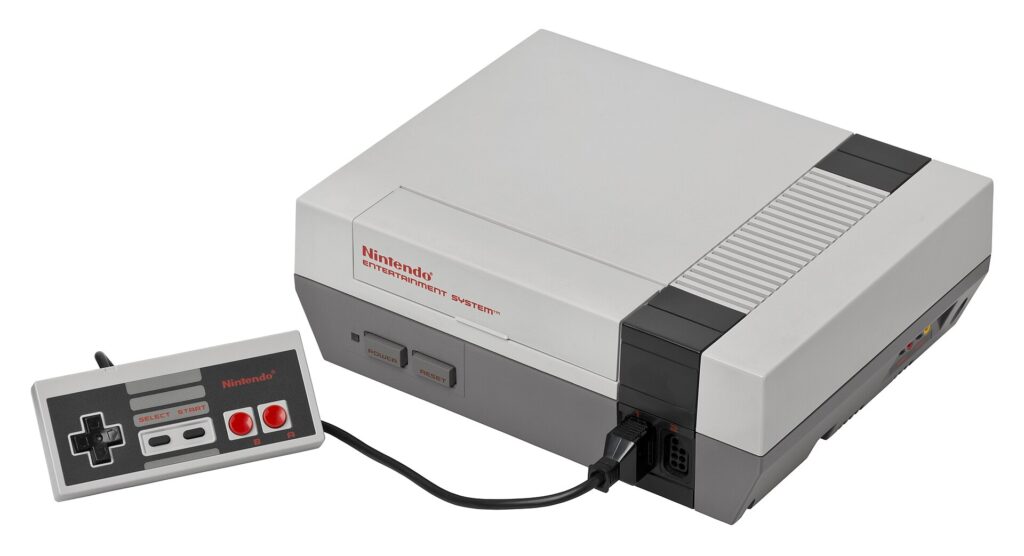
The Nintendo Entertainment System, the machine UWC was built for in 1989 — and the machine it never officially reached. Photo: Evan-Amos / Wikimedia Commons.
Three Months Earlier: A Cartridge Nobody Knew Existed
The short version of the discovery, which we covered back in March: Reese obtained the cartridge from a former Nintendo employee who had been handed it for testing back in 1989, reportedly because he happened to be a wrestling fan. When the game was cancelled, the cart simply stayed with him for thirty years. Nothing about UWC had ever been announced, advertised or previewed; historians did not know it was missing, because they had never known it existed at all.
What was on the cartridge was a remarkably complete wrestling title developed by Thinking Rabbit and slated for publication by SETA, carrying a 1989 date on its title screen. Its initials stood for Universal Wrestling Corporation — the short-lived corporate name Ted Turner’s organisation used while buying Jim Crockett Promotions, before settling on World Championship Wrestling. The roster was a time capsule of that transition: Ric Flair, Road Warriors Hawk and Animal, Sting, Bobby Eaton of the Midnight Express, Barry Windham and Jimmy Garvin among the eight playable wrestlers, across singles, tag and elimination modes at three difficulty levels.

A professional wrestling ring, empty and waiting — much like UWC’s roster of late-eighties WCW stars, who waited thirty years for their match. Photo: Lee Vilenski / Wikimedia Commons (CC BY-SA 4.0).
The $10,000 Question
Finding a one-of-a-kind prototype puts its owner at a fork in the road, and the games market is very good at pointing towards the expensive direction. Undumped rarities are the crown jewels of high-end collecting precisely because only one person can possess them; exclusivity is the product. According to contemporary reports, Reese was offered $10,000 by another collector to buy UWC — on condition that he not release it publicly. The money was, in effect, a payment for the game to disappear again.
Reese turned it down. His position, stated repeatedly from March onwards, was that the ROM would be released online for free. It is worth pausing on how unusual that stance still was in 2019. The default fate of newly surfaced prototypes was a private sale, a slow drip of screenshots, or a dump shared among a closed circle of collectors. Reese — himself a completist best known for assembling a full North American NES library — treated ownership differently: the cartridge was his, but the game, he argued by his actions, was everyone’s. Preservation only counts if somebody else can verify it exists.
Shipped to the Historians
Reese did not wait around. He later explained that when he posted his first video about the find, the cartridge had been in his hands for less than a day — and that he had already been in conversation with Frank Cifaldi of the Video Game History Foundation about another piece of footage he had unearthed. The cart was sent to the Foundation to be dumped and archived, on Reese’s terms: the specialists would secure the data, but nothing would be published until he said so.
That division of labour is the modern preservation pipeline at its best. Dumping a prototype is not plugging in a cartridge and pressing a button. The UWC cart was an EPROM board — documentation compiled for the release identifies it as an NES-UNEPROM-01 board holding a single Hitachi EPROM — and erasable chips of that era are slowly degrading whether anyone touches them or not. The Foundation digitised the game, verified the dump, and then did something no one had managed in thirty years: it played UWC through to completion, uploading footage of the full run. The game turned out to be finishable, staff credits and all; later technical analysis would note that roughly a fifth of the ROM is data the game never accesses, a fossil record of development still embedded in the code.

A UV EPROM of the type used on prototype boards of the NES era, shown here for illustration — prototype cartridges stored their code on chips like this, which slowly lose their charge over the decades. Photo: Engine9 / Wikimedia Commons (CC BY-SA 4.0).
June 2019: The Bell Rings for Everyone
The public release landed on June 8, 2019, when the dumped ROM was made available through the Hidden Palace preservation wiki with full documentation: screenshots, board and chip details, ownership history and acknowledgements crediting Reese for obtaining the cartridge and permitting its release, and Cifaldi and the Video Game History Foundation for dumping it and shepherding the whole process. On June 9, Reese posted a video to his channel announcing that the ROM was up and free to download. No auction, no reproduction cartridge cash-in, no embargo — a thirty-year-old commercial prototype, given away.
What the public received was not a fragment. Because the Foundation had beaten the game and documented its modes — single matches, tag matches and an elimination series, ramping through Beginner, Professional and Master difficulty — the release arrived with context, not just data. Players could finally judge for themselves why the title may have stalled: one longstanding theory, noted in the release documentation, is that it was shelved in favour of Nichibutsu’s rival WCW licence, which reached Japan as a Famicom game in December 1989. Whatever the reason, the verdict on UWC itself could at last be formed by anyone curious enough to load it up.

The standard NES controller — after June 2019, the only hardware anyone needed, via original systems or emulation, to finally play a game locked away since 1989. Photo: Evan-Amos / Wikimedia Commons.
Six Months After SimCity
The timing made the release feel like part of something bigger. On Christmas Day 2018 — barely half a year earlier — the Video Game History Foundation had published the lost NES version of SimCity, another cancelled Nintendo prototype recovered from surviving cartridges and released openly with deep accompanying research. Two unreleased NES games, three decades old, returned to the public within six months of each other, both handled with the same philosophy: dump carefully, document everything, share widely.
The contrast between the two cases is instructive. SimCity was a known quantity — a famous collaboration that historians had mourned for years. UWC was an unknown unknown, a game whose survival depended on a single EPROM cartridge sitting in a former tester’s possession, one house fire or one e-waste purge away from vanishing without anyone ever learning its name. Its release demonstrated the other half of the preservation argument: you cannot campaign to save what you cannot see, and private hands — however careful — are a single point of failure. The moment the ROM went public, UWC stopped being one fragile object and became indestructible information, mirrored and studied beyond any one collection.
That is the real headline of June 2019. A collector was offered five figures to keep a game secret, chose the historians over the chequebook, and a wrestling title that missed its moment in 1989 finally had its match — in front of the biggest crowd it could ever have drawn. This article is editorial coverage only and links to no downloads; that the game is out there, preserved and playable, is the point.