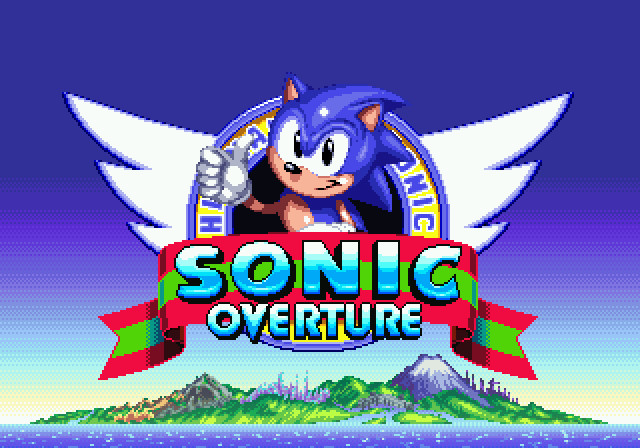
For years, the fan game scene’s favourite promise was “the real Sonic 4” — a fan-made sequel that would do what Sega wouldn’t. Sonic Overture, which began life under the name Sonic: From the Beginning and took its final shape after a change of leadership in mid-2013, aimed at something stranger and more interesting: not the game after Sonic 3, but the game before Sonic 1. A prequel, set on Christmas Island — the speck of land early Sonic lore named as the hedgehog’s home — and built, wherever possible, out of the first game’s own discarded ideas. The ambition deserves underlining: sequels and remakes are the fan scene’s comfort zone, but a prequel has to survive an audit. Everything in it is checkable against a canon its audience knows by heart, and every invention carries the burden of explaining why it vanished. Overture’s team chose the hardest possible brief, then did the reading to back it up.
Archaeology as a Design Document
The team’s method was genuine research. Sonic 1’s development left a trail of concept art, magazine previews and unused data, and Overture treated that trail as a parts catalogue. Splats, the rabbit-like badnik that appeared in pre-release coverage and survives as a sprite in the original game’s code, finally gets to patrol a stage. Sonic’s own earliest design — a rabbit — walks back in as a separate character rather than a costume. An early concept sketch of Dr Eggman in his pyjamas becomes, inevitably, the Act 3 boss costume for a stage set in the morning. A whole act grows out of a stage idea Sega never used, and the sign greeting you at the start of the game is modelled on a screenshot from an old magazine preview of Green Hill.

Even the fiction is footnoted. Since Overture happens before the first game, the team reasoned that Eggman cannot yet be powering his badniks with animals — that starts with Sonic 1 — so theirs run on “Phossil,” a play on the phosphate that is Christmas Island’s real-life export, an ingredient in fireworks. Destroy a badnik, then, and it bursts into fireworks instead of releasing a rabbit. It is a tiny detail with a real source behind it, and it tells you everything about the project’s priorities: if a choice existed in Sonic’s prehistory, Overture wanted to be able to cite it.
A 32-Bit Game That Never Was
The look follows the same logic one generation on. Rather than imitate the Mega Drive’s limits, the team drew almost entirely custom sprites and reached for the richer colour and scale of a hypothetical 32-bit sequel — the Saturn-era Sonic that history skipped. The stages are bright, dense and deliberately longer than the original’s, and the team were candid that balancing fidelity against invention was the whole job: stay close enough to the surviving material that everything feels excavated, extrapolate where the record runs out, and make it harmonise with a canon the game has to hand over to, cleanly, at the end.

Sunrise Gate, and the Weight of Going First
The public taste of all this was Sunrise Gate, the demo’s lush opening zone — all checkerboard cliffs reimagined in richer colour, waterfalls, and those fireworks fountains where badniks used to spill animals. It played the way the screenshots promised: recognisably Sonic 1’s grammar, written in a more confident hand. Behind it sat the peculiar difficulty of the prequel form itself. Every zone, character and gadget Overture invented had to be capable of disappearing before the first game begins; every joke had to land for players who know exactly where the story is going. The team talked about snow with a straight face — on Christmas Island, where else — alongside more traditional Sonic settings given their own spin, and about a game deliberately longer than the tight original, with longer acts and extra stages to hold attention. Constraint as a creative engine: that, more than the pixel art, is what made the project worth watching.
The Fractured Middle
Ask fan developers about release dates and you learn to expect weather reports, and Overture’s middle years were stormy. When the team spoke about the project in 2016, they described progress as “fractured”: a mid-development decision to abandon their original engine, Multimedia Fusion 2, for a custom in-house replacement had scattered the game into pieces that were being reassembled — “a ton of progress that isn’t public yet,” as they put it, with the new engine, in their words, “freakin’ spectacular.” A demo from SAGE 2014, the fan scene’s annual expo, remained the public face of the game: one gorgeous zone standing in for a much bigger ambition. SAGE matters to this story more than it might seem. The Sonic Amateur Games Expo is the scene’s shop window and proving ground, the place where projects like Overture, Incursion and a hundred others are measured against each other every year — and where a demo has to survive contact with the most demanding audience in fandom, players who can name the frame data of the games being homaged. That Overture’s 2014 showing is still the reference point people describe a decade later says more about its quality than any promise the team ever made.
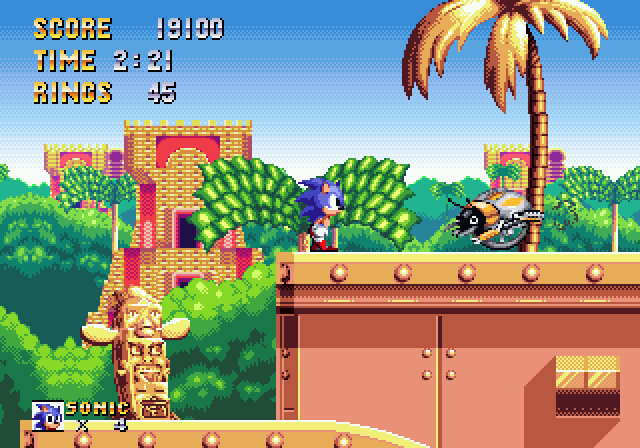
The bosses deserve their own footnote, because the team guarded them like state secrets. Sonic was, at the time of the original spotlight, the only confirmed playable character, and the encounters with Eggman were discussed mostly in warnings: whatever the first boss suggested about the game’s difficulty, players were told not to be deceived by its simplicity, with the Phossil-powered arsenal promising stranger fights deeper in. It was a very Sonic 1 attitude — the 1991 game’s own opening boss is a gentle lie about what Labyrinth and Scrap Brain will do to you — and one more sign of how thoroughly the team had internalised the design language they were excavating.
The Second Overture
Here the story takes the turn that makes Overture more than a period piece. The original project eventually went quiet, as ambitious fan games do. But the idea refused to stay buried: in late 2023, a new team — working independently of the original lead — revived Sonic Overture and presented a fresh demo, with two zones and a boss, to an audience that responded the way audiences had in 2014: by pointing at the screen and saying that this, this is what it should have looked like. A prequel assembled from a thirty-year-old game’s cutting-room floor, itself rescued from abandonment and rebuilt. Sonic has survived on exactly that kind of devotion for decades. Overture is what it looks like from the inside.
Keep reading: One Man, Ten Zones: Sonic Incursion and the 2.5D Fan Game Built in a Bedroom · Draw Your Own Green Hill: Sonic Studio and the Level Editor Sonic Never Had