Every long-running series eventually gets subjected to the ranking treatment, and in February 2024 it was Contra’s turn. Retronauts Episode 593, the “Contra Ranking Hootenanny,” set its panel the unenviable task of ordering one of gaming’s most argumentative back catalogues. We are not going to pretend to reproduce their list here — rankings episodes live and die on the arguing, and you should hear theirs in their own voices. But a hootenanny invites guests, so consider this our contribution to the noise: a substantive run through the Contra series, entry by entry, ending where every Contra ranking ends whether it wants to or not — in a fistfight over what the series is actually about.
Because here is the thing about ranking Contra. Most series rankings are arguments about quality. Contra rankings are arguments about difficulty: how it should be dealt, how it should be learned, and how much of it a player should have to eat before the game lets them see the next screen. Keep that in mind as we march. The order below is ours, the reasoning is the point, and your list — we say this with love — is wrong too.
Where It Starts: The Arcade and the NES Original
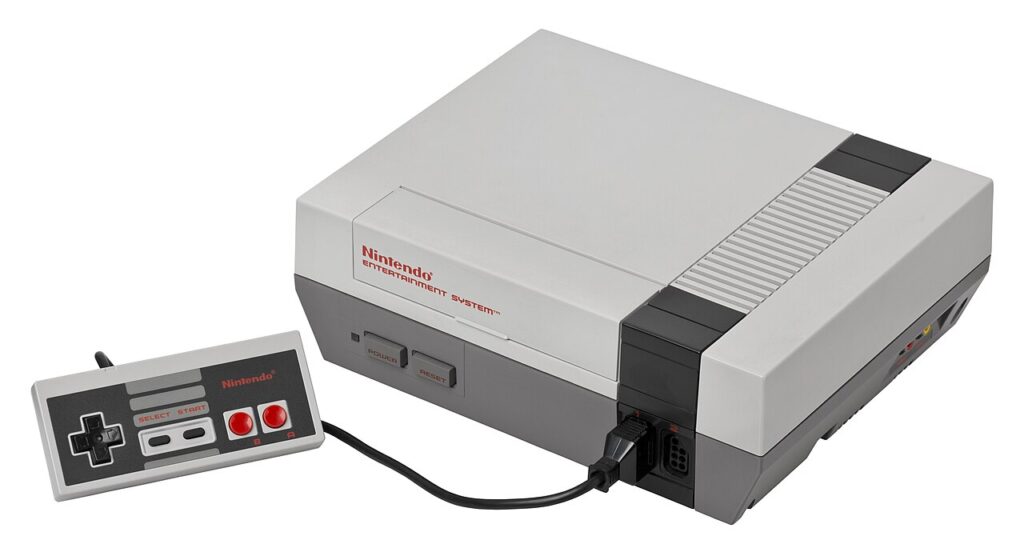
Contra began in the arcade in 1987, a run-and-gun built on the simple, perfect loop of moving right, shooting everything, and dying the instant anything touched you. It was a fine coin-op. But the version that built the legend arrived on the NES in 1988, and it is arguably the most consequential port of the 8-bit era. The home version kept the arcade’s side-scrolling stages, added texture with its behind-the-back pseudo-3D base stages, and — crucially — played beautifully with two players at once, turning a quarter-muncher into a couch ritual.
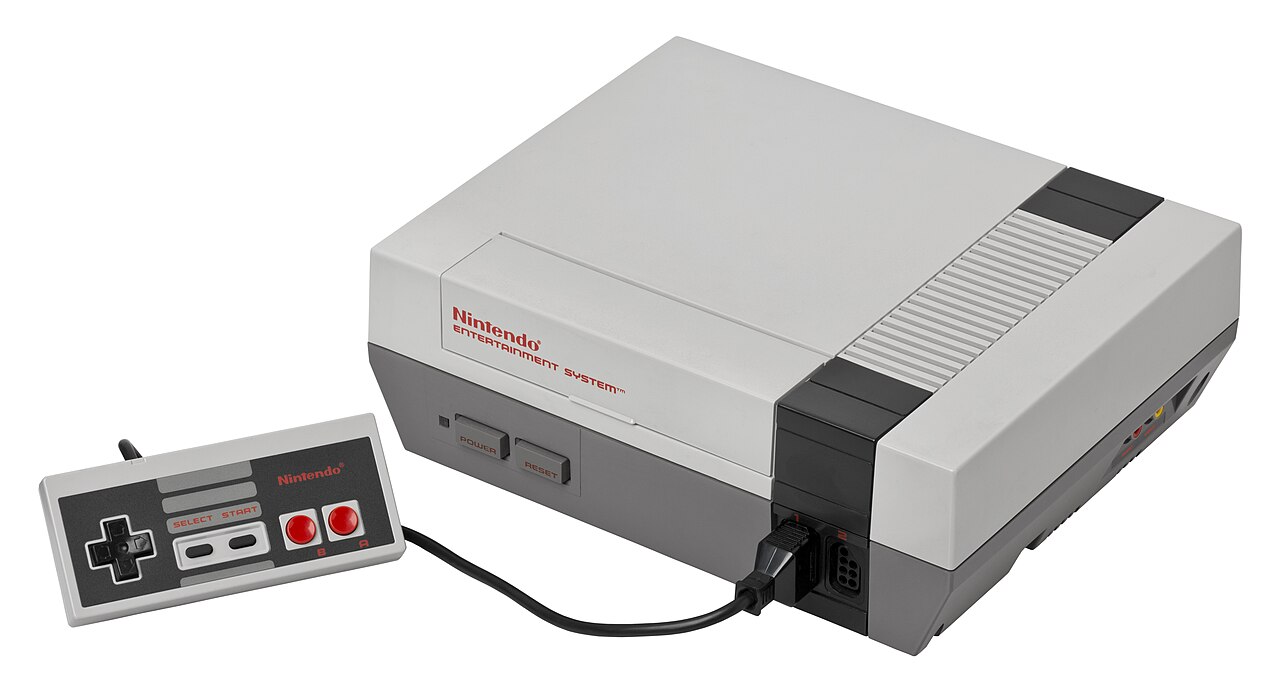
The NES, where the arcade original became a household legend and a two-player ritual. Photo: Wikimedia Commons.
The NES game also cemented the series’ defining piece of folklore: the Konami Code. Up, up, down, down, left, right, left, right, B, A, Start — thirty lives instead of three. The code had appeared in Gradius first, but Contra made it immortal, and it shapes the original’s reputation to this day. Purists rank the game on its one-credit merits; everyone else remembers it as the game the code carried them through. Both memories are true, and that tension — the game as designed versus the game as actually survived — runs through every ranking the series will ever get.
Super C and the Problem of the Faithful Sequel
Super C, the NES sequel from 1990 (following the arcade’s Super Contra), is where ranking arguments first get slippery. By most mechanical measures it is the better game: tighter stage design, overhead stages replacing the pseudo-3D bases, a spread gun that feels even more essential, and none of the original’s rough edges. Yet it almost always ranks below its predecessor, and the reason is honest — the first game got there first. Super C is the connoisseur’s pick, the one players choose when they rank with their heads. The original is the one they choose with their hearts. Neither answer is wrong, and the gap between them is a neat preview of the far bigger war coming two entries later.
Operation C: The Quiet Excellence Nobody Argues About
The strangest thing about the Game Boy’s Operation C (1991) is how rarely it comes up at all. Handheld spin-offs of console series were supposed to be compromised novelties, yet Operation C is a genuinely excellent Contra: five stages of side-scrolling and overhead shooting, a homing gun that feels generous without breaking the tension, and difficulty tuned with a fairness the series did not always manage. It asks less of the player than its big brothers and gives a complete, satisfying run in return. In a ranking obsessed with peaks, Operation C is the valley everyone walks past — and pound for pound, minute for minute, it may be the most efficiently enjoyable game on this entire list.
The Eternal Final: Contra III Versus Hard Corps
Every Contra ranking is eventually a referendum on 16-bit, and the referendum has exactly two candidates. Contra III: The Alien Wars hit the SNES in 1992 and remains the series’ great crowd-pleaser: enormous bosses, Mode 7 overhead stages, set pieces that escalate like an action movie, and a presentation that still looks expensive. It is the game most people picture when they picture Contra at its best.
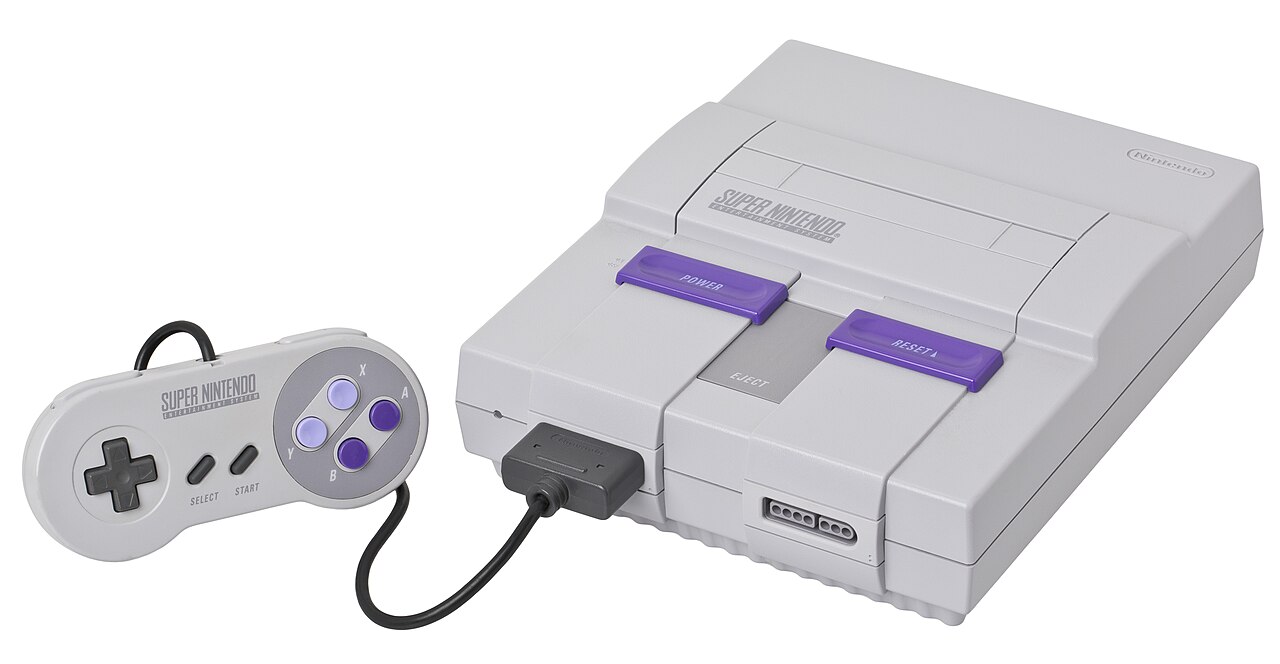
The SNES, home of Contra III: The Alien Wars and its Mode 7 spectacle. Photo: Wikimedia Commons.
Then there is Contra: Hard Corps, the Genesis entry from 1994, and the connoisseur’s counter-argument. Hard Corps is faster, denser, and more inventive — branching paths, four playable characters with distinct weapons, a slide move that changes how you survive, and boss fights stacked on boss fights with barely a breath between them. It is also brutally, almost gleefully hard; the Japanese version’s three-hit life bar tells you what the American release’s one-hit deaths were really about. Where Contra III wants to thrill you, Hard Corps wants to test you.
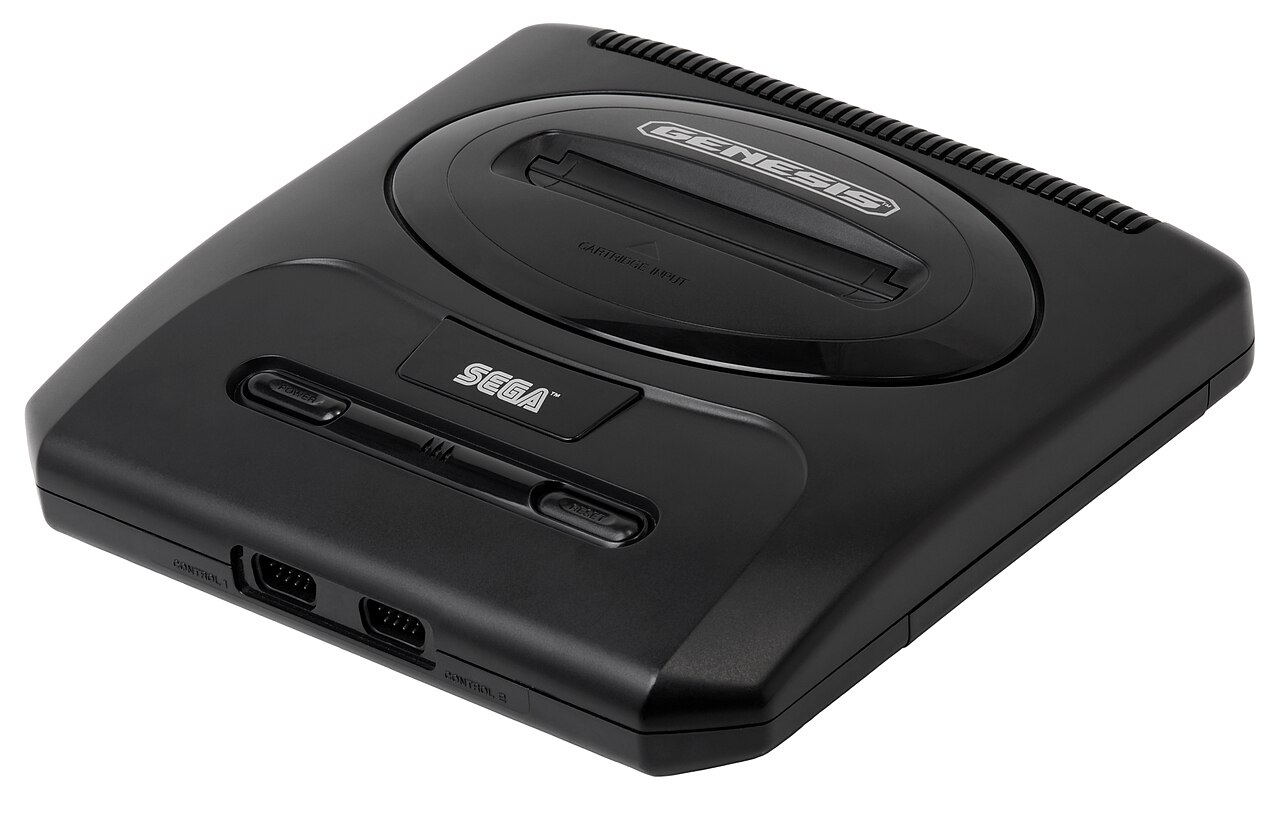
The Genesis, home of Contra: Hard Corps — faster, denser, and meaner. Photo: Wikimedia Commons.
There is no settling this one, and the Retronauts format exists precisely because there is no settling it. Pick III and you are voting for polish, spectacle, and the definitive version of the classic formula. Pick Hard Corps and you are voting for ambition, density, and difficulty as a virtue in itself. Our honest position: III is the better game to hand a newcomer, Hard Corps is the better game to argue about, and whichever one tops a given list tells you more about the ranker than the games.
The Wilderness Years, and the Long Climb Back
After Hard Corps, the series fell off a cliff. Konami handed development to Appaloosa Interactive for the PlayStation era, and the results — Contra: Legacy of War (1996) and C: The Contra Adventure (1998) — became bywords for how to mishandle a beloved series: murky early-3D visuals, sluggish control, and none of the precision the one-hit-death formula demands. When a single mistake kills you, the game owes you perfect responsiveness; these games could not pay, and they sit at or near the bottom of every serious ranking for structural reasons, not nostalgia.
The PlayStation 2 era split the difference. Contra: Shattered Soldier (2002) returned to side-scrolling with a steely, score-attack mindset and a ranking system that graded your performance — fittingly — but its severity divides players to this day. Neo Contra (2004) loosened up with overhead action and a cheerfully unhinged tone. Neither restored the crown. That took a handheld: Contra 4 (2007), developed by WayForward for the Nintendo DS, was a deliberate act of restoration — a love letter to the NES and SNES games that played across both screens and understood that the series’ difficulty should come from design, not decay. For many rankers it sits just below the 16-bit finalists, the highest a post-16-bit entry is allowed to climb.
The years since have been a coda of near-misses and one genuine floor. Hard Corps: Uprising (2011), from Arc System Works, shared DNA and a name with the Genesis classic but dressed the formula in an anime sheen that never quite convinced the faithful. And Contra: Rogue Corps (2019) — a twin-stick detour that discarded nearly everything the series stands for — now performs the useful service of anchoring every ranking’s bottom slot, sparing even the Appaloosa games the worst of it. If you want the whole saga in a box, we covered the essential early history in our Contra Anniversary Collection piece, which digs into how Konami itself chose to package these games for modern players.
Why the Ranking Is Really About Difficulty
Step back from the list-making and a pattern emerges: Contra’s entries rise and fall almost entirely on how they handle the series’ founding bargain. One hit kills you. That has been true since 1987, and it means a Contra game is a memorization exercise dressed as a reflex test — you do not beat these games so much as learn them, stage by stage, death by death, until the run lives in your hands. The great entries make that learning feel fair: deaths you can diagnose, patterns you can master, a spread gun that rewards aggression. The failures break the bargain from either direction — controls too sloppy to honor the deal, or cruelty so arbitrary that learning feels pointless.
That is why the rankings never settle. Contra III and Hard Corps are both superb students of the bargain; they simply weight its terms differently, III toward the joy of the spectacle and Hard Corps toward the purity of the test. The Konami Code, the ultimate difficulty argument, hovers over all of it: the series’ most famous feature is a sanctioned way of refusing the bargain altogether, and millions of players loved the original precisely because they could decline its terms. A ranking of Contra games is therefore never just a ranking. It is a statement about what punishment in a game is for — and on that question, as Episode 593 cheerfully proved, reasonable people with controllers will argue forever. Long may the hootenanny continue.