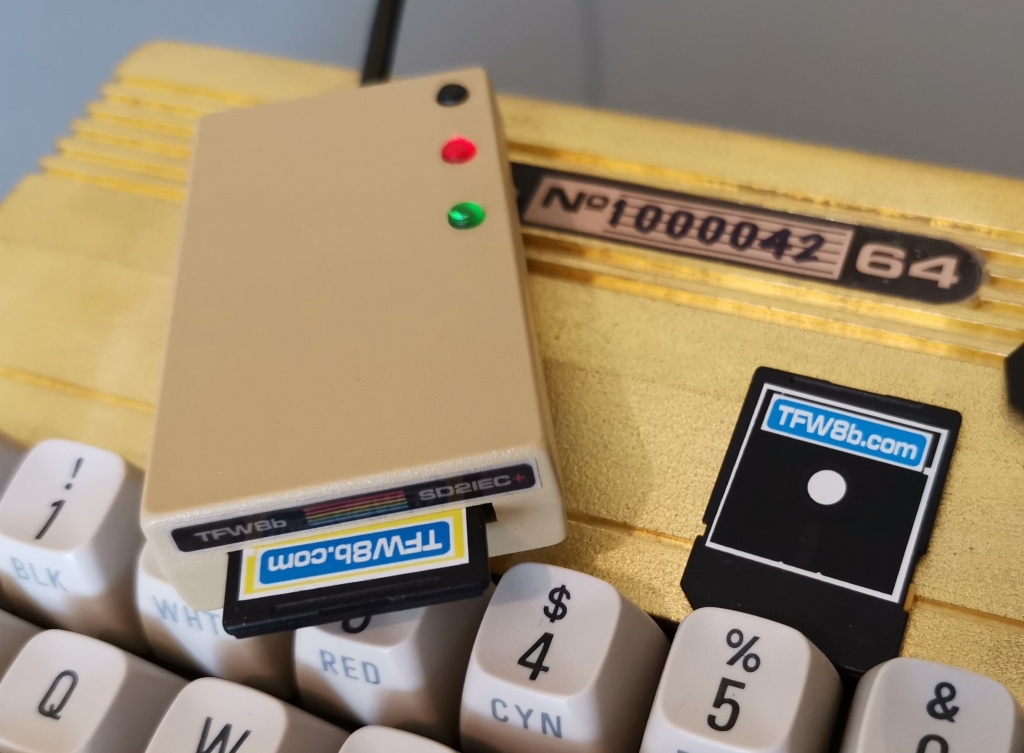
At a glance: SD2IEC + Epyx Fastload Reloaded · Commodore 64 hardware · SD2IEC by the open SD2IEC project, sold built by The Future Was 8 Bit · Fastload Reloaded is a modern reproduction of Epyx’s 1984 Fast Load cartridge · SD card storage + fast-load cartridge · reviewed 2016, revisited October 2026
Every Commodore 64 owner eventually faces the same arithmetic. The games are not the problem — four decades of software sits waiting, much of it preserved and perfectly legal to run from your own copies. The problem is the medium. Cassettes are slow and increasingly fragile. Real 1541 drives are heavy, mechanically tired and attached to disks never meant to survive forty years. What the machine needed was a way to keep its entire library on something modern, cheap and silent. What it got, and what this pairing delivers, is a little plastic box that plugs into the back and quietly replaces the lot.
A Drive That Isn’t a Drive
The SD2IEC is best understood as a translator. On one side it speaks the Commodore IEC serial protocol — the same slow, chatty language a C64 uses to talk to a 1541 — and presents itself to the computer as a disk drive, device 8, ready for the usual LOAD and SAVE commands. On the other side it reads an ordinary SD card formatted for a PC, filled with files copied over in seconds. The computer never knows the difference. It thinks it is loading from a floppy; in reality it is reading from a card that can hold thousands of disk images.
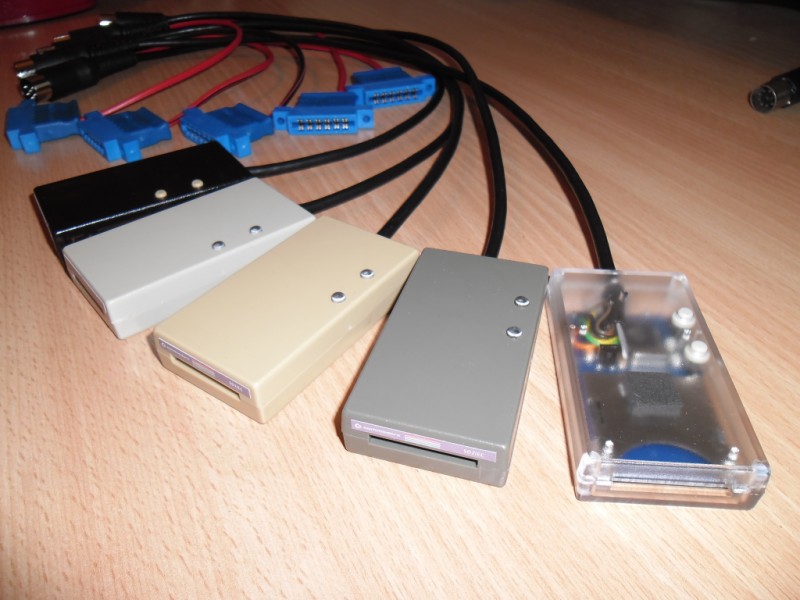
Power comes from an elegant bit of borrowing: the unit draws what it needs through the cassette port, so there is no separate supply and no extra brick under the desk. Connection is two plugs — serial for data, cassette edge connector for power — and the hardware itself is tiny, light enough to ride on the back of the machine without straining either port. The Future Was 8 Bit’s version wraps the board in a proper injection-moulded case with disk-swap and reset buttons and status LEDs, and over the years it has been offered in a run of colours, including a limited run moulded from recycled Commodore plastic. It looks like a product, not a project.
Living With the File Browser
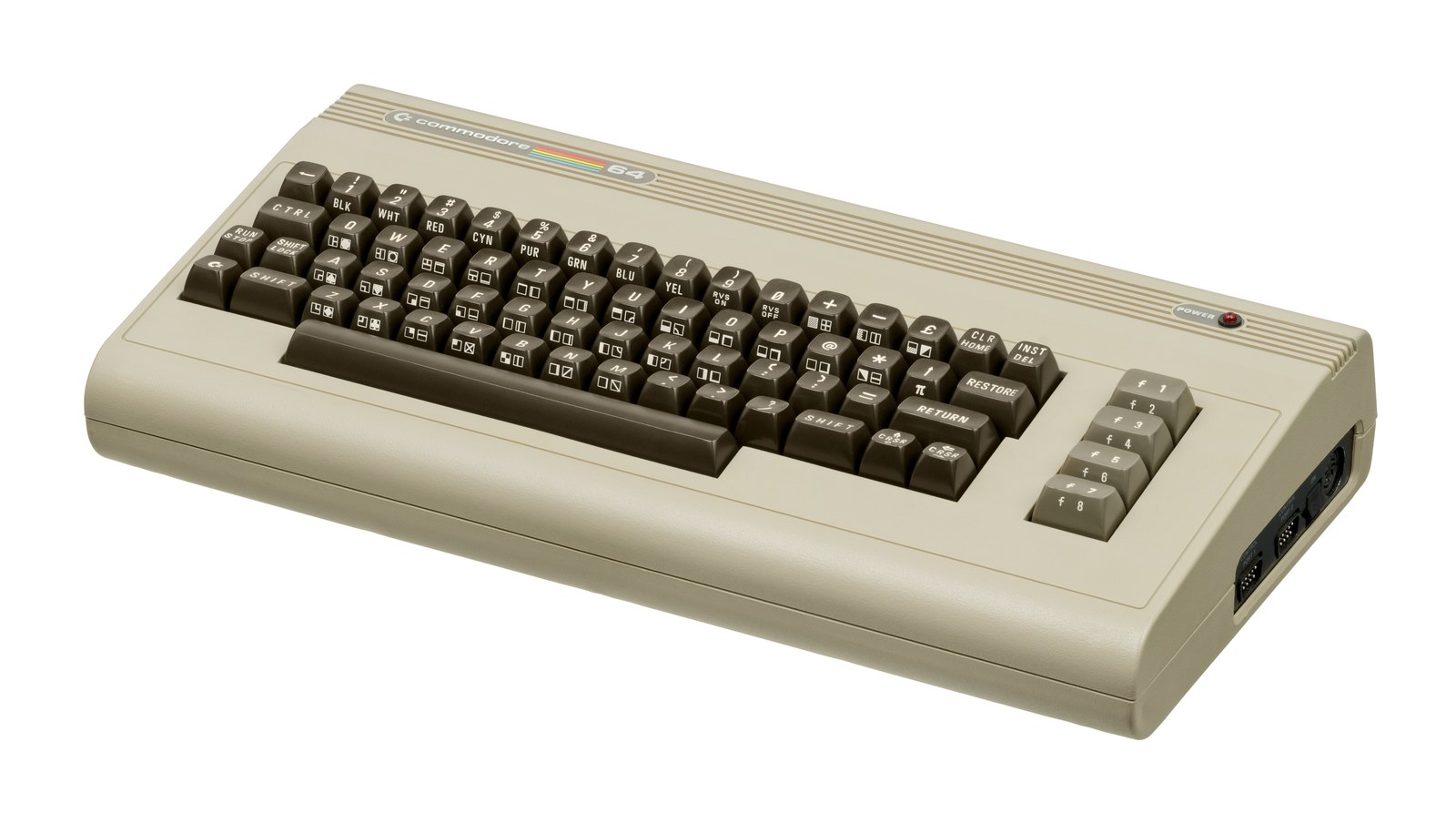
Day to day, almost everything runs through FB64, the CBM File Browser. Copy it to the root of the card alongside your software, load the first file on device 8, run it, and the browser works out which Commodore it is attached to and presents a menu of everything on the card. Cursor keys or a joystick in port two move through the list; Return or fire opens what you have chosen. Loose .prg files load directly. A .d64 disk image opens like a real disk, and you pick the program inside it.
Multi-disk games — the big adventures and the multi-side epics — need one extra step, and it is a sensible one. A plain text file called AUTOSWAP.LST sits in the same folder as the images and lists them in playing order. When the game asks for the next disk, a press of the unit’s swap button advances to the following image in the list, exactly as if you had stood up, found the right floppy and fed it into a 1541 — except you never leave your chair.
The Cartridge That Does the Heavy Lifting
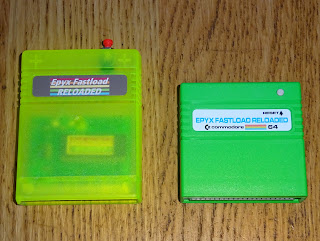
On its own, the SD2IEC inherits the C64’s greatest flaw: the IEC bus is painfully slow, and standard loading makes even a card feel sluggish. That is why the pairing matters. The Epyx Fastload Reloaded is a modern reproduction of the Fast Load cartridge Epyx released in 1984, one of the best-selling utility cartridges the C64 ever had, recreated so it works happily alongside an SD2IEC where elderly originals can be troublesome.
Slotted into the cartridge port, it multiplies loading speeds several times over — the original review of this pairing reckoned on loads eight to twelve times quicker in practice — and it changes the whole feel of the setup. With the cartridge fitted, holding the Commodore key and tapping Run/Stop drops you straight into the file browser: no typing, no syntax, just a menu. A reset button on the cartridge saves wear on the power switch and on your patience. Behind that headline speed sits the rest of the 1984 toolkit, faithfully carried over: a set of disk utilities for copying, formatting and housekeeping, a DOS wedge that shrinks Commodore’s notoriously long-winded disk commands down to a keystroke or two, and a machine-code monitor for anyone who wants to disassemble, inspect or tinker with what is in memory. It is a games accelerator and a programmer’s sidekick in the same shell. One limit to note: while the SD2IEC roams widely, the cartridge only fits the C64 and C128 cartridge ports.
The Caveat the First Review Skipped
Here is the honest part, and it deserves more than a footnote. An SD2IEC is not a 1541. A real Commodore drive is a computer in its own right, with its own processor and RAM, and a great deal of C64 software — especially later commercial releases — uploads custom code into the drive and expects it to run there: bespoke fastloaders, copy protection, loaders that stream data while the game plays. The SD2IEC does not emulate that drive computer cycle-for-cycle. It handles standard files and standard disk images superbly, and a large share of the library works without drama, but titles that lean on clever drive code can stutter, hang or refuse outright.
Cycle-exact answers exist. FPGA-based devices such as the 1541 Ultimate recreate the drive itself, processor and all, and will run almost anything you throw at them — at several times the price, with waiting lists and complexity many owners do not need. That trade-off is precisely why the SD2IEC endured. It covers the everyday majority — single-disk games, utilities, your own BASIC work, the classics most people actually load on a Friday night — for the price of a couple of pizzas, with nothing to configure and nothing to wear out. Know what it is, and it will not disappoint you. Expect it to be a 1541, and one day a stubborn loader will correct you.
“The SD2IEC did not kill the floppy disk by imitating it perfectly. It killed it by being good enough, cheap enough and small enough that most of us never looked back.”
One Box, Half the Commodore Family
Versatility is the pairing’s quiet superpower. The same SD2IEC moves between machines: it works with the VIC-20, the C16, the C64, the C128 and even the C64DTV joystick console, so a single card — and a single gadget — can serve an entire Commodore shelf, with the file browser adapting to whichever computer it finds. The Fastload Reloaded, as noted, stays home on the C64 and C128. Between them, a collector with three or four Commodores needs one storage solution, not four.
Ten Years On: The Verdict
Status check, October 2026: The Future Was 8 Bit is still trading, now at thefuturewas8bit.com, and the SD2IEC is still on sale and still a fixture of C64 desks a decade after this pairing was first reviewed here. That longevity is the review, in a way. Faster and cleverer devices have come and gone above it, but nothing has displaced it as the default first upgrade for a Commodore owner, because it solves the actual problem — getting software into the machine, quickly and without fuss — for very little money. Add the Fastload Reloaded and the two behave like a single product: one holds your library, the other makes it feel instant.
Verdict: an essential, honest piece of kit. The SD2IEC and Epyx Fastload Reloaded pairing turns a Commodore 64 from a museum piece with a media problem into a machine you will actually use every week — just buy it knowing it is a brilliant interpreter of the 1541, not a perfect clone, and keep an FPGA drive on the wishlist for the stubborn remainder.
Keep reading: the Commodore 64 system archive