At a glance: Shining Force: The Sword of Hajya · Game Gear · Sonic! Software Planning / Sega, 1994 · Tactical RPG · Score: 8.5/10
Every handheld library has a game that should not have been possible, and on the Game Gear that game is a full tactical role-playing epic. Shining Force: The Sword of Hajya — the second of the Japan-only Gaiden games, and the only one Sega localised for the West in the system’s lifetime — takes the Mega Drive series’ grid-based battles, its twelve-member army, its promotions and its town-and-story structure, and fits them, intact in spirit and nearly intact in scope, onto a cartridge for a machine that ate six AA batteries for breakfast. It is not a cut-down companion piece. It is Shining Force, on a bus.
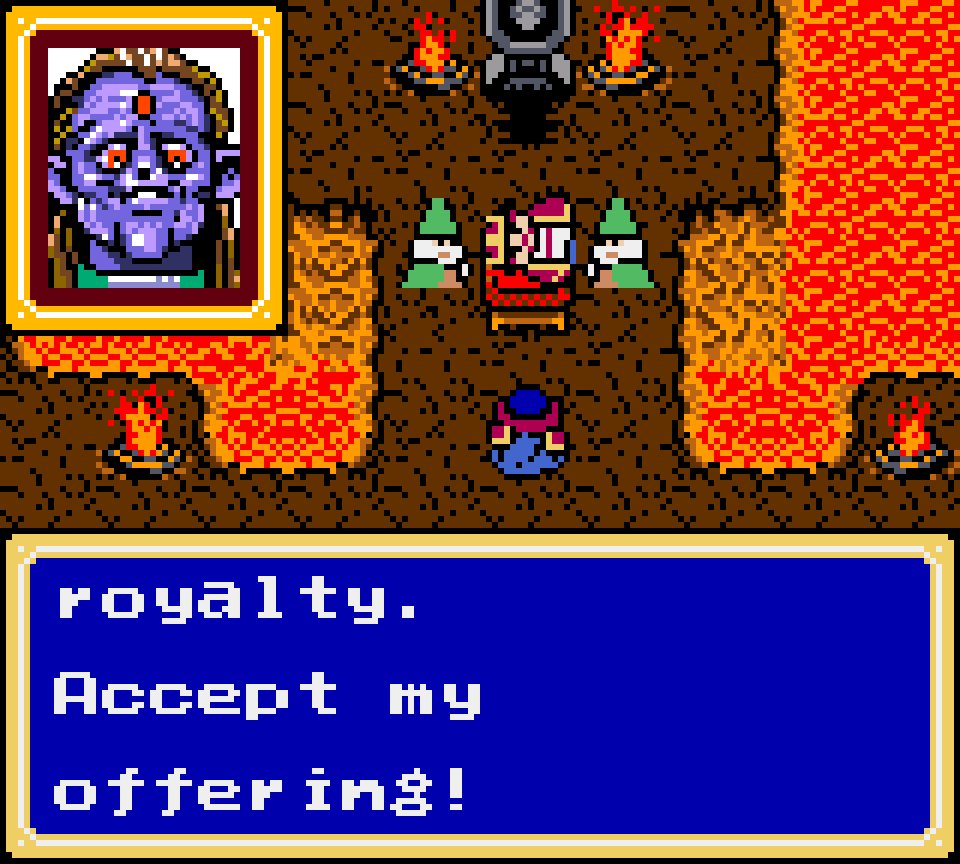
The story continues the Gaiden thread: the kingdom of Cypress, the stolen Sword of Hajya, and a young swordsman — you — leading the Cypress army against the forces of Iom. Western players met it without the first Gaiden’s context, a localisation quirk of the era, but the tale stands alone well enough: a straightforward, earnest war story of betrayal and recovery, told in the series’ clean dialogue scenes between battles. What matters is the campaign’s length and variety: dozens of battles across forests, deserts, castles and ships, with the roster growing and promoting as the war turns.
The battlefield in your pocket
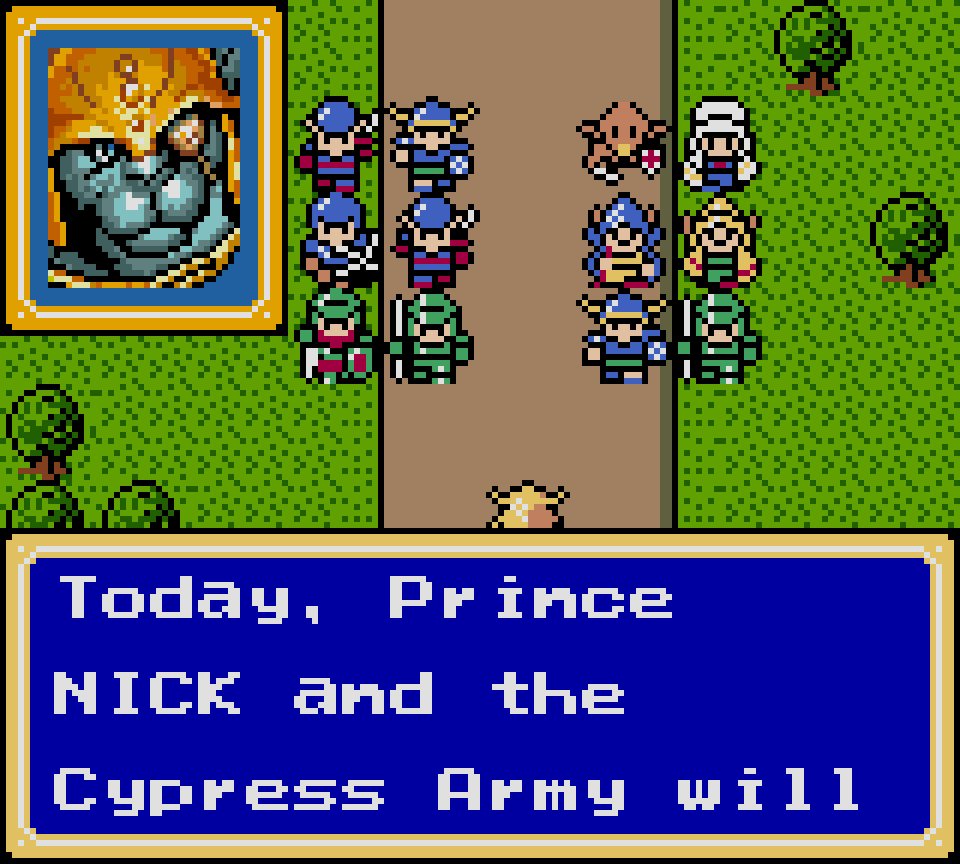
The battle system is the Mega Drive formula, faithfully translated. Units move on a grid, initiative runs by agility, terrain shapes defence, and the series’ signature class roster — knights, archers, mages, healers, birdmen, the odd hidden oddball — each earns experience per action, so the whole army develops rather than a favoured few. Promotion at level ten remains the great mid-game decision: reset to level one now for a mightier class, or squeeze more growth first? On the small screen the grids are perfectly legible, the cursor quick, and the information — ranges, stats, terrain — is a button press away. Battles are long by handheld standards, some running past half an hour, and the game wisely allows saving between them; within a battle, you commit.
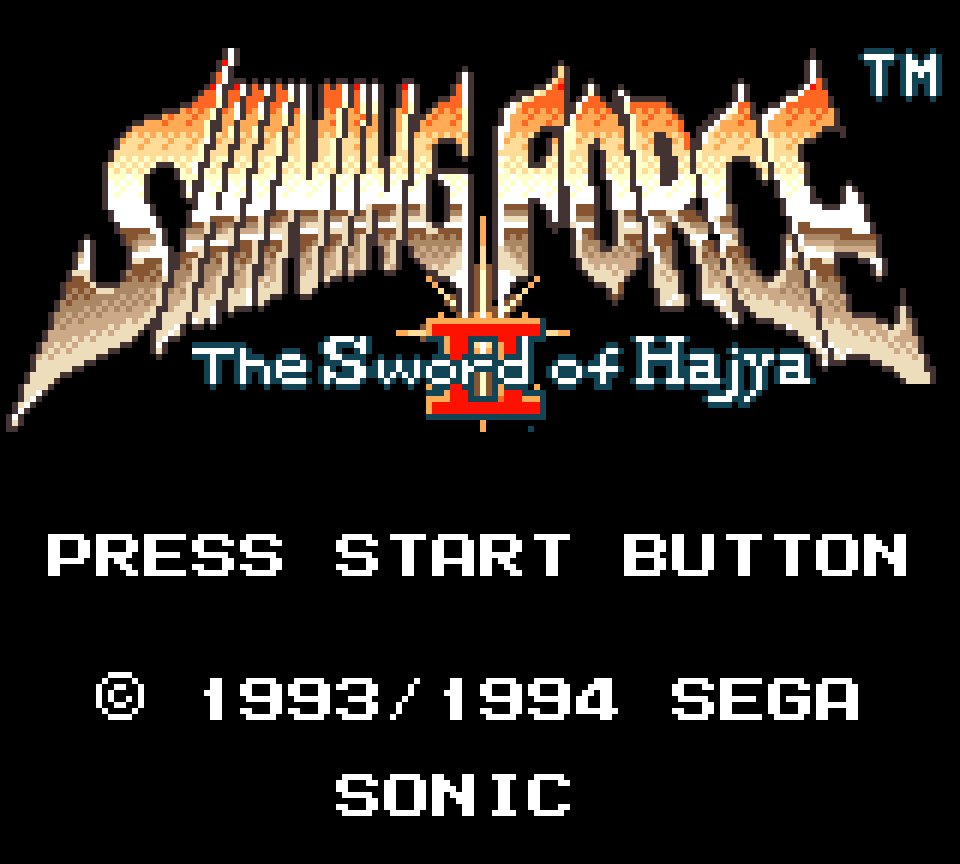
Presentation is the pleasant surprise. The Game Gear’s palette lets the Gaiden art sing: battle cutscenes — the series’ beloved close-up attack animations — survive in charming miniature, spells flare in colour the Master System could not have managed, and character portraits carry real expression. The soundtrack, all martial strings and wistful town themes squeezed through the sound chip, does heroic work. This is a game that never behaves like a compromise, and on the original hardware, headphones in, it felt like smuggling a home console RPG into a coat pocket.
Gaiden, explained honestly
Context matters for a fair verdict. The Sword of Hajya is a remake-and-sequel in one: its first half retells the original Gaiden’s campaign with refinements, its second half is new. Japanese players who had both might have felt the repetition; Western players in 1994 simply got a very large game. The localisation trims and renames in period fashion, and the plot’s connections to the wider Shining chronology are loose. None of it dents the core achievement, but a modern player should know this is a side story built from side-story parts — its pleasures are tactical and cumulative rather than revelatory.
A twelve-strong army, promotion decisions and half-hour battles — on a handheld, in 1994, with nothing essential left behind.
Where does it strain? The enemy AI is the era’s usual mixture of aggression and amnesia, and archers and mages on the opposing side will occasionally waste themselves obligingly. Difficulty is gentle for series veterans until the late battles, which spike around the Iom strongholds. The between-battle towns are functional rather than explorable in the Mega Drive manner — menus and conversations, not streets — a sensible economy that still slightly flattens the rhythm. And battery life was the true final boss: a full campaign on alkalines was a serious household investment, a fact every original owner remembers in their bones.
The system’s strategy crown
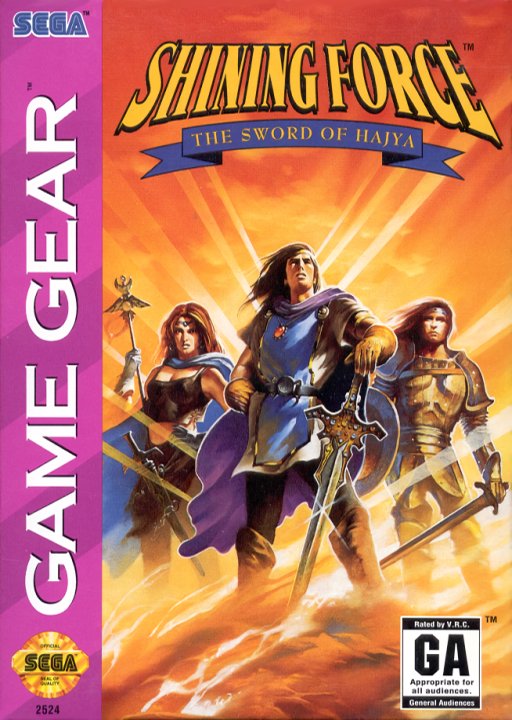
Set it against its competition and the achievement sharpens. The Game Boy had fine RPGs, but nothing with this combination of grid tactics, army management and presentation until later in the decade. The Sword of Hajya is the reason strategy fans defend the Game Gear’s library, the cartridge that turned the machine’s colour screen and memory from specs into a war room. Its later re-release on the 3DS Virtual Console introduced it to a second audience, and it held up there for the same reason it holds up now: the fundamentals — positioning, promotion timing, combined arms — are timeless.
Army building, the quiet addiction
The roster is where the hours go. Beyond the story recruits, the game hides the series’ traditional oddities — a creature to raise, a late-game powerhouse for players who explore the between-battle conversations — and it respects the Shining rule that everyone is worth training because the promotion system multiplies patience. Weapon choices matter, the item economy is tight enough to make shops feel like decisions, and the classic dilemma of the healer’s experience — earned action by action, so your healers must be fed turns like plants — gives every battle a second, private metagame. None of this was standard on handhelds in 1994. Most of it is why the cartridge still commands respect, and a price, today.
It is also, quietly, a brave localisation story. Sega of America published a niche tactical RPG for a handheld whose Western market was cooling, translated a sequel whose predecessor we never got, and trusted the game to find its people. It did — slowly, by word of mouth, and then permanently. The Sword of Hajya’s modern reputation, burnished by its Virtual Console afterlife, rests on exactly the qualities its first owners discovered: this is not the portable imitation of a console strategy game. It is the console strategy game, at full size, in a smaller box.
The save system deserves its footnote of respect: battery-backed progress with the ability to suspend between battles turned the Game Gear into a machine you could wage a war on in bus-length instalments — precisely the use case the hardware was sold on and so few of its RPGs honoured this completely. Add the series’ graceful habit of letting a defeated army retreat, regroup and return rather than punishing a loss with an erased evening, and you have a campaign designed by people who understood portable play in their bones. The cartridge is a tactics game and a lesson in format design in the same box.
One honest line on availability: the cartridge has never been common in the West, and its price reflects a small print run meeting a permanent audience. It is the one Game Gear purchase in this series where the advice is simply to buy it when you see it fairly priced, because you will not see it often — and you will never regret the army it gives you to command.
Verdict
The Sword of Hajya is the Game Gear’s essential RPG: a complete, confident tactical campaign that loses almost nothing in translation from the home consoles and gains the peculiar thrill of portability. Gentle AI, menu-bound towns and a legendary appetite for batteries are its honest faults. Everything else — the classes, the promotions, the battle animations, the sheer hours of war it packs into a pocket — is the series at its handheld best, and a cornerstone of any serious Game Gear shelf.