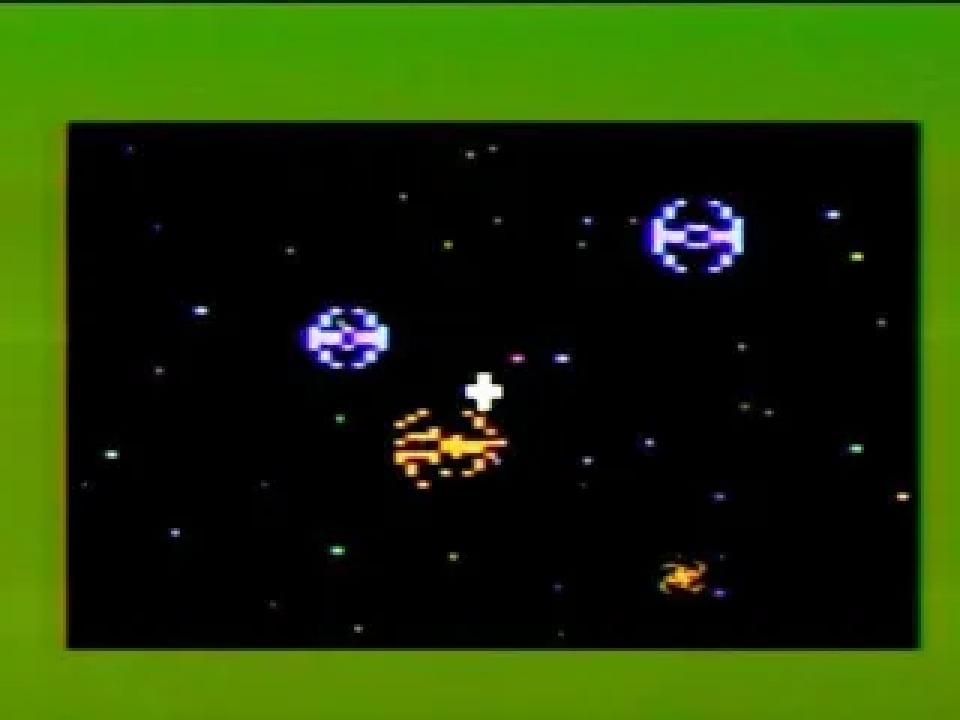
At a glance: Space Spartans · Intellivision (Intellivoice required) · Mattel Electronics, 1982 · Space strategy/action · Score: 8.5/10
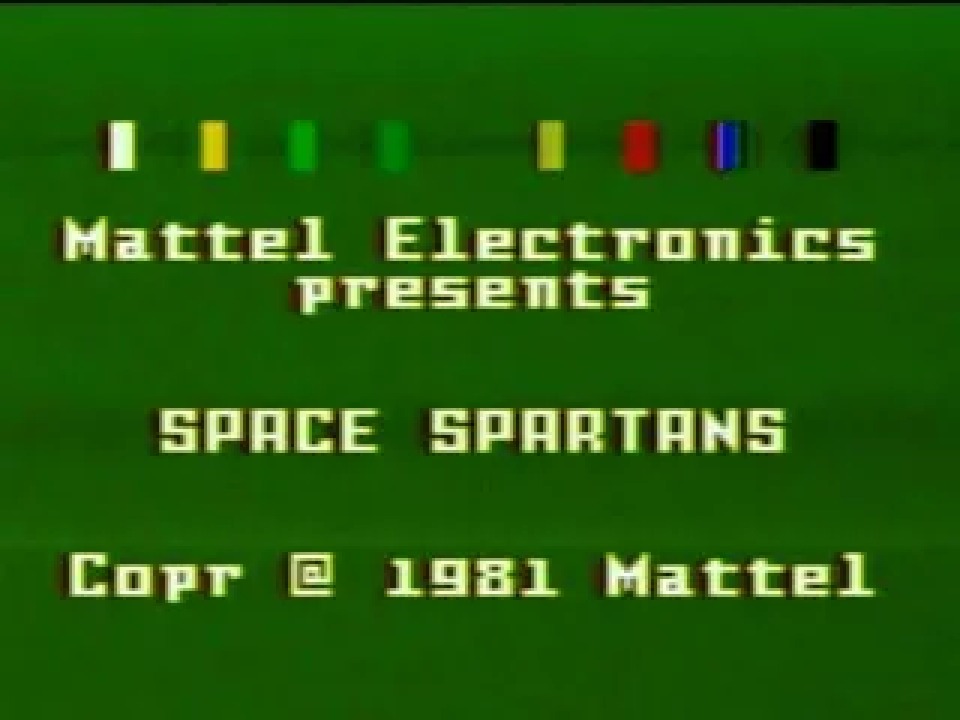
Every Intellivoice owner remembers the first time the machine spoke to them unprompted, and for many it was this game, booting up with a cheerful synthesised greeting that announced, in 1982, that your television had acquired a crew member. Space Spartans — developed for Mattel by APh Technological Consulting, with William Fisher and Steve Roney among its credited programmers — is the Intellivision’s answer to Atari’s Star Raiders: a first-person space war of sector maps, starbases, energy management and dogfights, rebuilt around a talking ship’s computer that narrates the battle. It remains the most complete space-combat game on any console of its generation, and the case for it starts with how much game there is.
A war in three screens
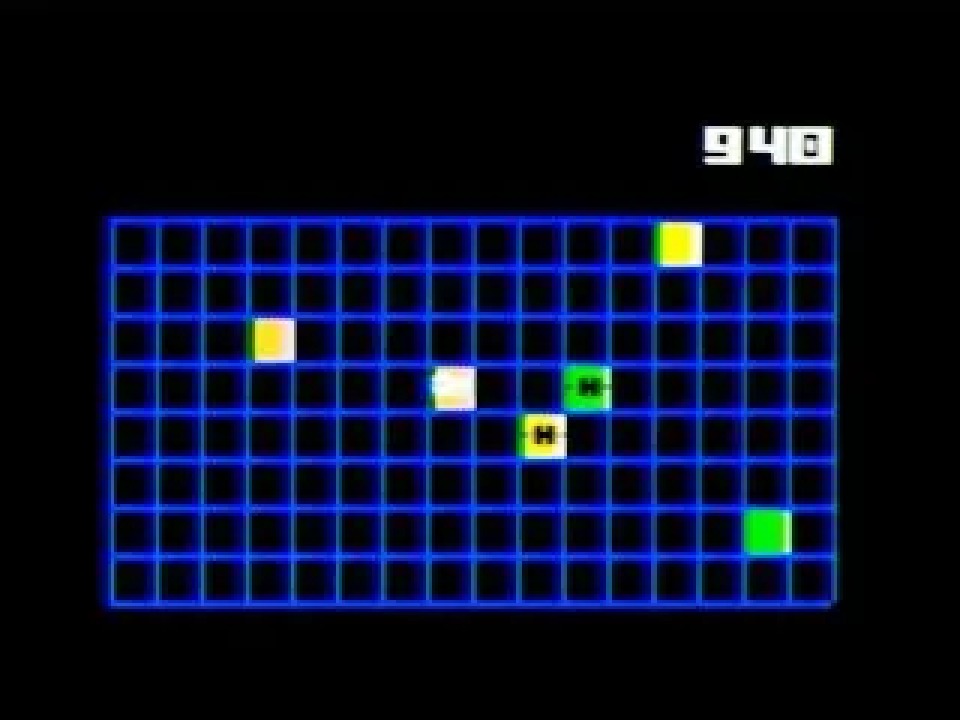
The war is fought across three interlocking views. The sector map shows the theatre: a grid of space containing your starbases, your ship, and the alien squadrons converging on both. The strategy lives here — which base is threatened, which enemy fleet to intercept, when to run for repairs — because the aliens are not wandering; they are conducting a campaign against your bases, and if the bases fall, your ability to refuel, rearm and repair falls with them. Choose a destination and the game shifts to the cockpit: a first-person starfield with a crosshair, where the actual fighting happens in the Star Raiders tradition — track the enemy ships, manage your shields and laser energy, and mind the damage reports. Take hits and a third dimension of the game opens: your ship’s systems degrade, and the computer tells you about it, in voice, while you’re still fighting.
The voice integration is the deepest of the Intellivoice launch trio. Your computer announces the situation on entering a sector, reports damage to specific systems, confirms repairs and keeps up a running commentary that functions as a genuine second information channel — precisely the B-17 Bomber trick, transposed to science fiction. Because the visuals must stay abstract (a starfield, a few ship shapes, a grid), the voice does heavy lifting for atmosphere: the ship feels crewed, the war feels reported, and a bad engagement has a narrator. It is difficult to overstate how far ahead of the home market this was. Arcade cabinets had begun to talk; no home game had built its entire information design around speech.
Systems, damage and the long war
What separates Space Spartans from simpler space shooters is attrition. Your ship is a bundle of systems — shields, lasers, engines, computer — and combat damage breaks them individually. A crippled ship must limp to a surviving starbase for repairs, which costs time the aliens use to press their attacks elsewhere. Energy is spent on everything: moving, fighting, shielding. The game thus plays as a genuine campaign of logistics punctuated by dogfights, closer in spirit to the mainframe space-war tradition Star Raiders drew on than to the fixed shooters of the day. Difficulty settings scale the enemy’s numbers and aggression, and the higher settings produce wars that are honestly in doubt — a quality almost no console action game of 1982 could claim, in a format where you could also lose slowly, base by base, over a long evening.
The controls carry all this on the standard Intellivision handset: the disc steers and aims, the keypad handles the systems and screen-switching that the overlays spell out. It is a full-overlay game, one of those cartridges that reminds you the keypad was designed for exactly this kind of simulation density. New players should expect a learning session with the manual open; veterans will tell you the layout becomes second nature, and that the physical act of punching up the map, reading the war, and dropping back into the cockpit is part of the game’s enduring tactile pleasure.
Presentation: the reported war
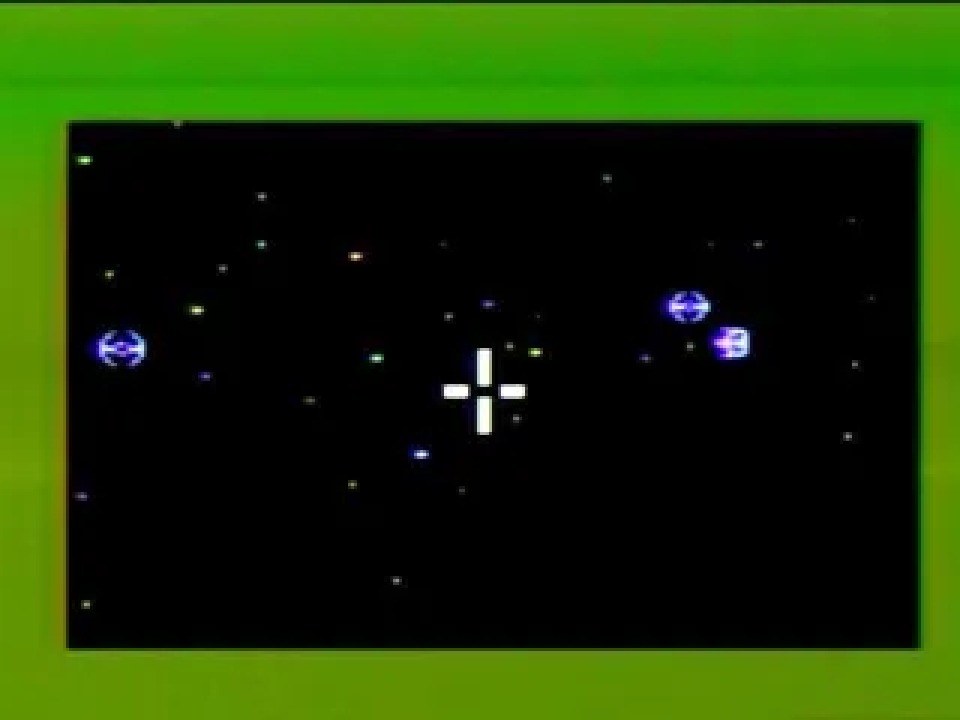
By the standards of its shelf-mates, Space Spartans is austere: black space, blue grids, small bright ships. Its spectacle is verbal and structural rather than visual. But the austerity has aged gracefully — nothing here looks broken or flickery, the starfield combat is fast and readable, and the enemy ships, angular little cruisers that grow as they close, have real menace. Above all, the game sounds like the future as 1982 imagined it: the flat, tireless computer voice is the sound of every starship bridge television had taught the audience to expect, piped through your own TV at last.
The APh connection, and the Star Raiders question
Space Spartans came from APh Technological Consulting, the engineering firm whose programmers quietly built a remarkable share of the Intellivision’s ambitious end — including the D&D games reviewed alongside it in this wave. That pedigree explains the game’s structure: APh’s people thought in systems, and Space Spartans is a systems game wearing a space shooter’s uniform. The comparison with Star Raiders is unavoidable and instructive. Atari’s classic, Doug Neubauer’s masterpiece, defined the genre on computers and the 5200; Space Spartans, arriving on a rival console with a voice module to justify, does not merely copy the template — it adds the campaign’s voice narration and leans harder into base defence and logistics. Players who know both tend to split honestly: Raiders for purity, Spartans for the fuller war. That a console cartridge is even in that argument, on a system whose owner was supposed to be the unsophisticated one in Mattel’s own advertisements’ universe, tells you how strong Mattel’s software operation had become by 1982.
One more practical virtue: the game saves its biggest pleasures for repeat campaigns rather than a single scripted arc, so the cartridge ages in the right direction — the tenth war is more interesting than the first, because the player, not the script, is what improved.
The verdict
Space Spartans is the fullest expression of the Intellivoice idea: not a shooter with speech pasted on, but a campaign game whose strategy, damage model and narration are woven through the voice module from the first design meeting. If B-17 Bomber is the line’s most impressive simulation and Bomb Squad its most original, Space Spartans is its most complete game — the one that shows what the whole Intellivision concept, brains and voice together, was aiming at. Essential for voice-module owners, and a strong reason to become one.
Practicalities for new captains: this is an overlay-and-manual game in the fullest sense, and your first campaign should be flown at the gentlest difficulty with the printed materials open — the computer’s voice will teach you the war’s rhythm faster than any tutorial the era could have coded. Give it three campaigns before judging it. The first teaches the screens, the second teaches the logistics, and the third is the one where the voice in the dark starts to feel like a colleague — which is, in the end, the Intellivoice’s whole thesis, proven in a single cartridge.
That the whole enterprise also happens to be a cracking space-war game — bases to defend, a galaxy to hold, a computer that never stops believing in you — is almost a bonus. Almost. The war, as the computer would tell you, is waiting.
Score: 8.5/10