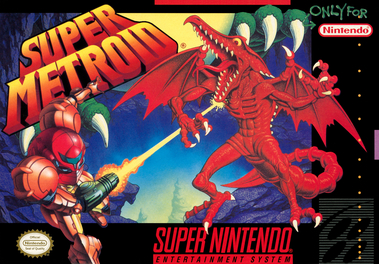
First, a correction, offered plainly because the headline on this site’s original January 2015 news item needs one. Super Metroid did not come to the Commodore 64 — not officially, not unofficially, not as a port, a demake or a conversion of Nintendo’s code. What did arrive, and what that short item was really reporting, is in some ways more interesting: an original Commodore 64 game called Hyperion, built by two of the machine’s most respected modern developers, openly inspired by Metroid‘s exploration and atmosphere, and starring a hero who could curl into a rolling ball. The resemblance was the point, and it was close enough to earn the game a Super Metroid headline it never quite deserved. This feature, published under the original item’s 2015 date, is a look back at what Hyperion actually was — and at what became of it, which the original item could not have known: it was never finished.
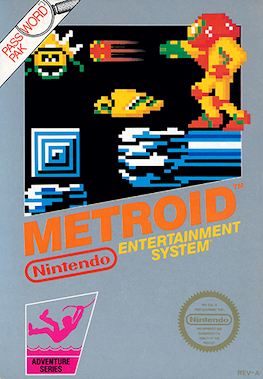
The game Hyperion was borrowing from
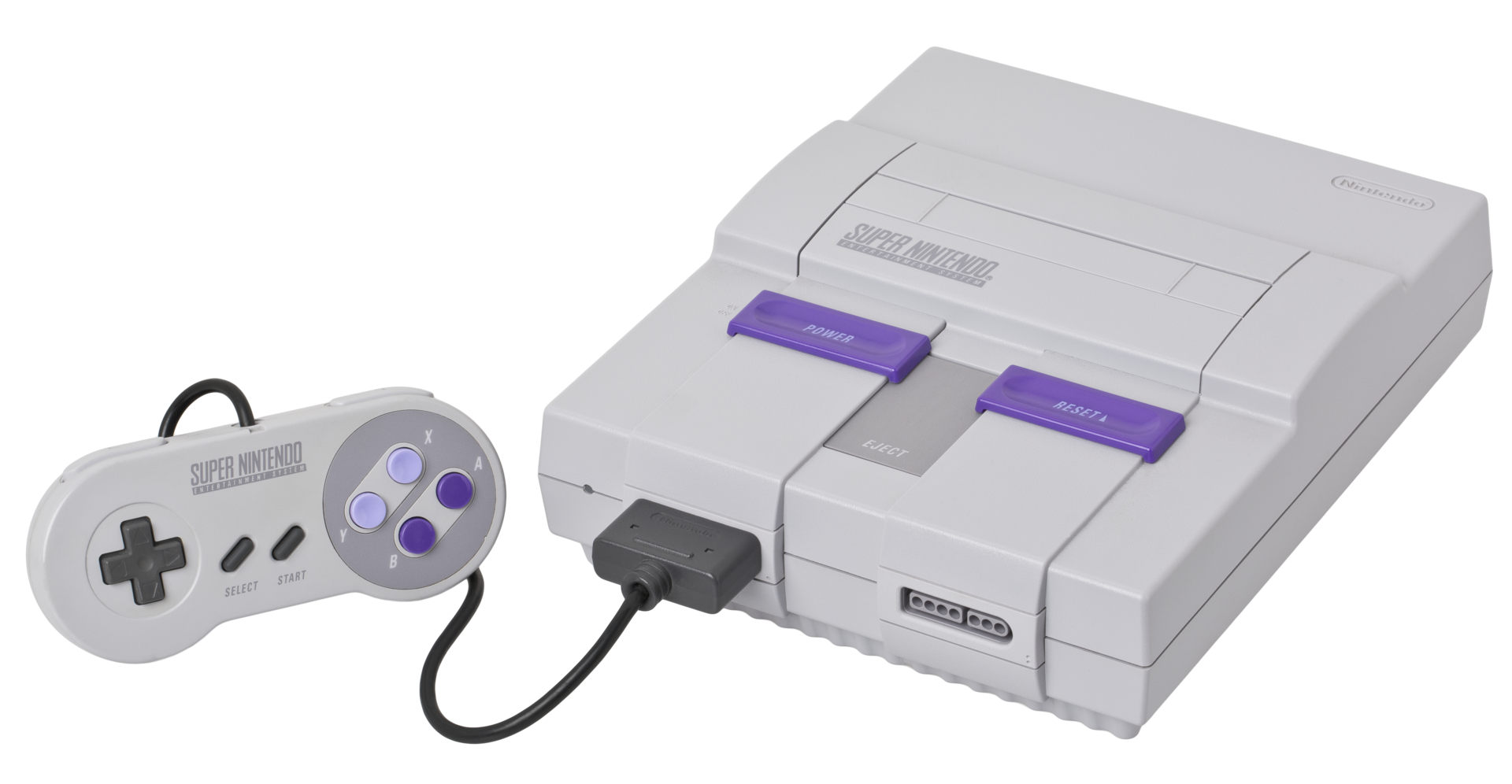
To see why a C64 developer would aim at Metroid in 2015, remember what Super Metroid represented. Released for the Super Nintendo in March 1994 in Japan and the following month in North America, it was the third Metroid game, developed by Nintendo R&D1 with Intelligent Systems, directed by Yoshio Sakamoto and produced by Makoto Kano under Gunpei Yokoi’s supervision. Bounty hunter Samus Aran returns to planet Zebes to recover a stolen infant Metroid, and the game unfolds as one vast, interconnected burrow: doors that only a new weapon can open, shafts that only a new suit can survive, a Morph Ball that turns the heroine into a rolling sphere small enough for the tunnels where the real secrets hide.
It shipped about 1.42 million copies — respectable, not spectacular — but its reputation compounded for decades. Alongside Castlevania: Symphony of the Night it is credited with founding the Metroidvania genre, and it routinely appears in greatest-games discussions. Crucially for our story, its design is a philosophy as much as a game: a world that trusts the player to explore, remember, and come back stronger. By 2015 that philosophy was in the middle of a huge revival on modern platforms. On the C64, it posed a delicious technical question. Could a machine from 1982, with a 1 MHz processor and 64 KB of memory, hold a world like Zebes?
The team: a proven C64 partnership
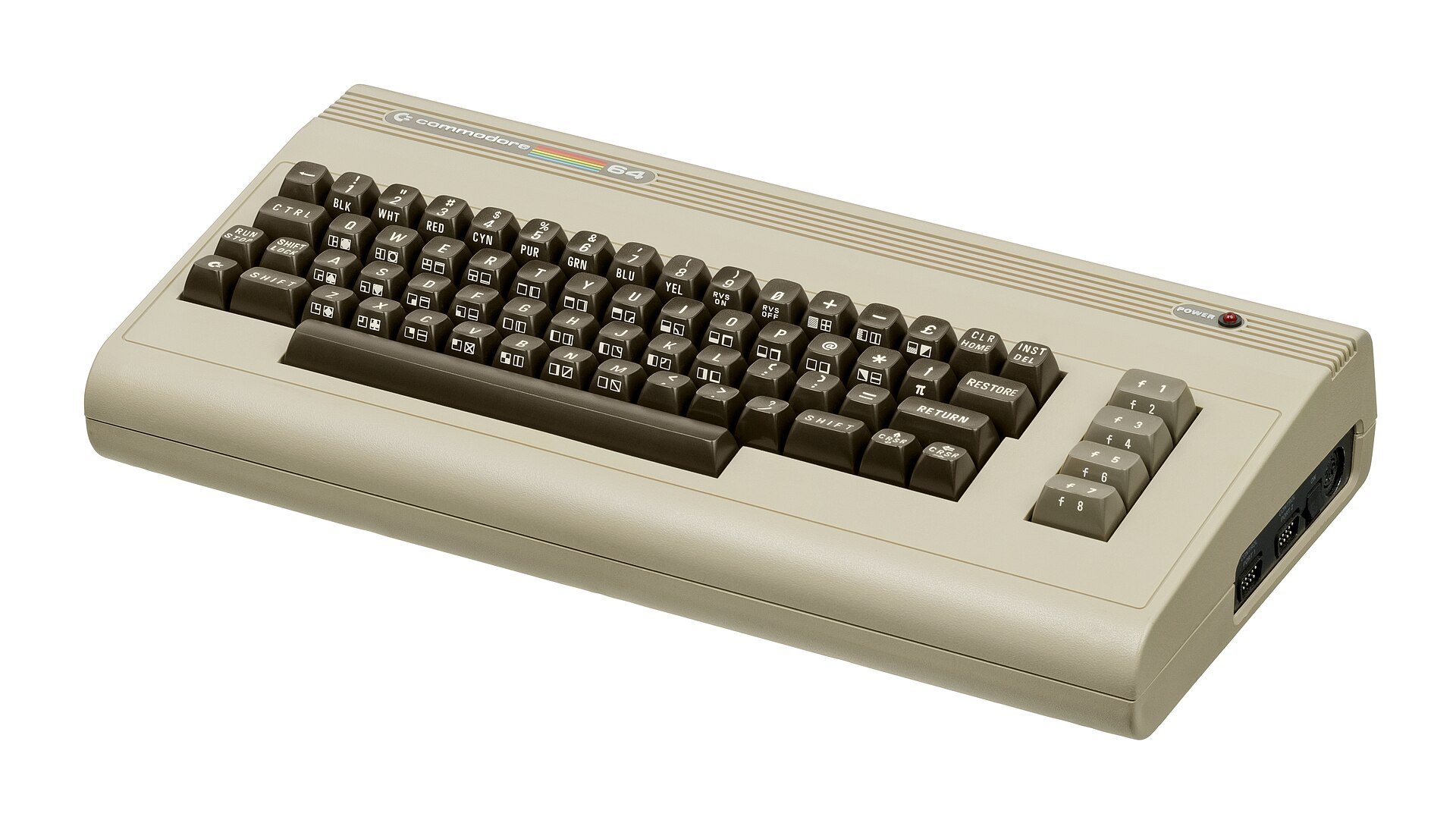
The two names attached to Hyperion were not hobbyist unknowns. Georg Rottensteiner, who works under the handle Endurion, is a prolific Austrian C64 coder, best known in the scene for Joe Gunn, a polished exploratory platform adventure in a tomb-raiding setting. Trevor Storey — credited in some places as Trevor Story, and known in the scene as Smila — is one of the C64’s most admired pixel artists, responsible for the lavish graphics of the exploratory adventure Soulless, which Rottensteiner programmed: a betrayed king transformed into a beast, searching a seventy-screen underworld for twelve hidden soul stones, published by Psytronik Software and RGCD to genuine acclaim.
That track record matters, because Soulless already proved the pair could build exactly the kind of game Hyperion promised to be: a large, flick-screen, exploration-led adventure with searching, note-taking and a map that rewards patience, squeezed into a single load. When the same partnership announced a science-fiction project with Psytronik and RGCD again attached as its expected publishers, the C64 scene had rational grounds for excitement. These were not people showing a mock-up screen and a dream. They were people who had shipped this kind of game before, on this hardware, at a standard commercial publishers rarely matched in the machine’s original lifetime.
What was actually shown in 2015
Here is where honesty about scope matters most, because the gap between what was promised and what the public ever saw is the heart of this story. What Hyperion‘s 2015 reveal consisted of was presentation material for a game in development: an impressive main menu and early in-game material showing a science-fiction arcade adventure on a grand scale, with a protagonist who could transform into a rolling ball — the unmistakable nod to Samus and her Morph Ball that set off the Super Metroid comparisons. Later summaries of the project, compiled by the C64 community, describe it in exactly those terms: presented in 2015 as a massive sci-fi adventure, and expected to rank among the platform’s biggest releases.
But a reveal is not a game. No finished Hyperion was released in 2015, or in any year after. What existed publicly was a promising start — the shop window, not the shop. That distinction was easy to blur in the excited coverage of the time, this site’s included, where an in-development tribute could be headlined as a classic blasting onto a new machine. The truth available even then was narrower: two talented developers had begun something ambitious, shown enough to prove the concept was real, and still had essentially the whole game left to build. On the C64 scene, where projects are made in evenings and weekends around day jobs, that distance between a dazzling preview and a finished release is where most legends quietly end.
The long fade, and a confirmed ending
For a while, Hyperion lived the normal afterlife of an unfinished C64 project: it stayed on the team’s to-do list. In an interview a year or so after the reveal, Storey ran through the partnership’s crowded slate — other games to finish first — and mentioned that he and Rottensteiner would be looking to finish Hyperion in its turn. It was still a live intention, just queued behind paying work and nearer projects, in a scene where both men were in constant demand.
The ending, when it came, was definitive. Community documentation records that by 2022 the developer had confirmed Hyperion was cancelled — and, unusually, that the cancellation is effectively permanent, because the work did not go into a drawer. Music and graphics created for the game were recycled into other projects, scattering Zebes-that-never-was across several unrelated releases. Its animated introduction was reworked and found a second life inside Terrestrial, a later multi-part science-fiction adventure for the C64 from the Icon64 team in association with Psytronik — a fitting home, given Psytronik’s long involvement with the same circle of developers. Even a robot enforcer design in the Hyperion material, inspired by ED-209 from RoboCop, is recorded as having marched on, in modified form, into an Impossible Mission sequel project. Hyperion was not abandoned so much as disassembled for parts, by creators too practical to let good pixels die.
Why the mirage still matters
It would be easy to file Hyperion as a cautionary tale about believing previews, and this site’s original headline earns its share of that lesson. But the project deserves a kinder reading too. The modern C64 scene runs on exactly this kind of ambition: developers with decades of experience attempting, unpaid, the games their teenage selves would have queued to buy. Sometimes the result is a Soulless — finished, boxed, reviewed, real. Sometimes it is a Hyperion — a menu, a rolling hero, a handful of screens, and a promise the calendar never kept. Both outcomes are part of how a 1982 computer stays alive in the twenty-first century. Samus never did land on the Commodore 64. But for one news cycle in 2015, thanks to two developers who had earned the right to be believed, it genuinely felt as though she might.